

What Is Stunt Driving Ontario? A Brampton Driver’s Guide
When you hear “stunt driving” in Ontario, you might picture something out of a movie. But the reality hits much closer to home for drivers in Brampton every single day. It’s not just about Hollywood-style manoeuvres; it’s a specific, serious offence under the Highway Traffic Act with immediate, harsh penalties that can disrupt your family life and career.
The most common way people get charged is for one simple reason: excessive speed. A momentary lapse of judgment on a familiar Brampton road, like Hurontario Street or Highway 410, can lead directly to your car being impounded and your licence suspended on the spot. This guide provides actionable insights for Brampton residents facing these charges, grounded in the Highway Traffic Act and the Criminal Code of Canada.
The Clear Line Between Speeding and Stunt Driving
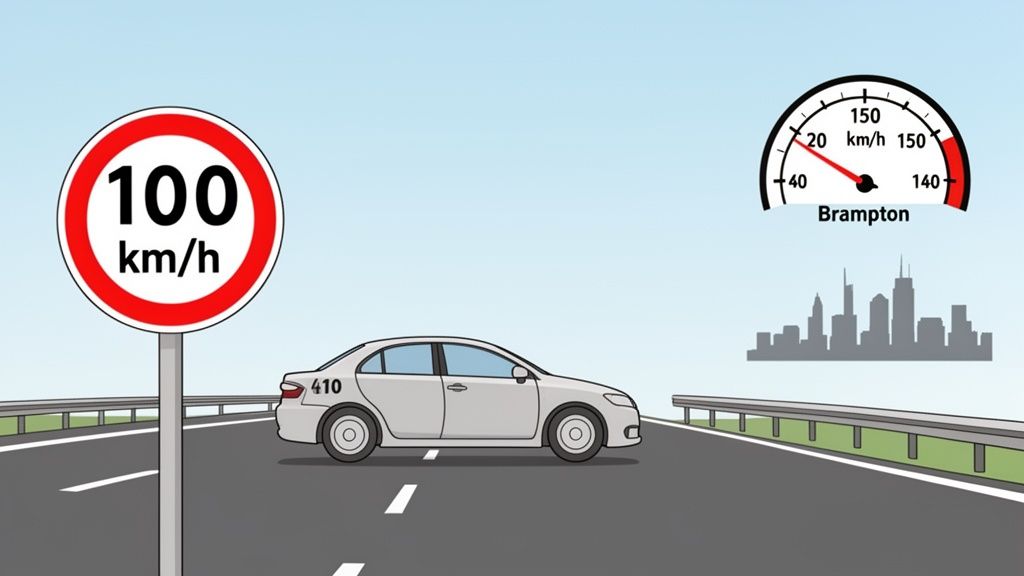
Many Brampton drivers think a stunt driving charge is only for organized street racing. The truth is, a simple commute can escalate into a massive legal headache in an instant. The law draws a very clear line. Unlike a standard speeding ticket where an officer might have some discretion, there is zero discretion once you cross the stunt driving speed threshold. The charge is automatic and the roadside penalties are immediate.
Understanding the Speed Thresholds in Brampton
To understand what stunt driving is, you need to know the exact numbers that trigger a charge. The rules are broken down into two simple categories based on the posted speed limit of the road you’re on. This table breaks down the specific speed thresholds that automatically trigger a stunt driving charge on roads you drive every day.
Ontario's Stunt Driving Speed Thresholds
| Posted Speed Limit | Speed That Triggers a Charge | Common Brampton Road Example |
|---|---|---|
| 50 km/h | 90 km/h or more | Driving on Airport Road or Dixie Road |
| 60 km/h | 100 km/h or more | Driving on Bovaird Drive or Queen Street |
| 80 km/h | 130 km/h or more | Driving on Highway 7 |
| 100 km/h | 150 km/h or more | Driving on Highway 410 or Highway 407 |
A few seconds of inattention on Highway 410 is all it takes to cross that line. This distinction is critical because it shows how easily an ordinary drive can spiral into a legal nightmare. The consequences aren’t just a fine down the road; they begin the moment you’re pulled over.
The rise in these charges is alarming. A recent analysis revealed that in 2024, Ontario police issued a staggering 13,843 stunt driving charges—a 146% increase since 2015. This data highlights aggressive enforcement in the GTA, with Brampton and Mississauga being major hotspots. You can read more legal analysis of these provincial statistics for a deeper look into the trends.
Common Actions That Qualify as Stunt Driving in Brampton
While excessive speed is the most common reason for a charge, it’s a critical mistake to assume it’s the only one. The Highway Traffic Act covers a wide range of dangerous driving behaviours, and each one carries the same severe roadside penalties. For Brampton drivers, understanding these actions is key to avoiding a life-altering charge.
Many of these offences come down to an officer’s judgment. This means a move you might consider minor could be seen very differently by Peel Regional Police, leading to an immediate 30-day licence suspension and a 14-day vehicle impoundment right on the spot.
Driving Actions Beyond Speeding
The law isn't just designed to catch racers; it targets a whole host of dangerous manoeuvres. Even a single action can be enough for a police officer to lay a stunt driving charge. Here are some specific actions that qualify as stunt driving, with real-world scenarios you might see in Brampton:
- Intentionally Spinning Your Tires: A 'burnout' or 'donut.' Accelerating so hard from a stoplight at a busy intersection like Queen Street and Kennedy Road that your tires screech and smoke is a textbook example.
- Drifting or Sliding: Intentionally making your car lose traction and slide sideways around a corner on any public road, including a large retail parking lot like Shoppers World Brampton after hours.
- Lifting Tires Off the Road: For motorcyclists, this means popping a 'wheelie.' For cars, it could be hitting a crest in the road at such a high speed that one or more wheels leave the pavement.
- Driving Too Close to Another Vehicle: This goes far beyond simple tailgating. It involves following another car at a dangerously close distance in a way that’s clearly aggressive or intimidating on a packed road like Hurontario Street.
- Preventing Others From Passing: Intentionally slowing down or straddling two lanes to block another vehicle from getting by is a specific stunt driving offence, often tied to road rage incidents.
Context is Key in Brampton
The common thread is the potential danger these actions pose to the public. Police in Peel Region are especially vigilant for this kind of driving, particularly in areas known for car meets.
An important takeaway is that your intent doesn't always matter. An officer can charge you based on the objective danger your driving creates, regardless of whether you meant to perform a stunt. Your actions are viewed in the context of public safety as defined by the Highway Traffic Act.
Ultimately, the law gives police significant power to lay a stunt driving charge for actions that have nothing to do with speeding. Each of these behaviours can trigger the same devastating chain of events, highlighting the need to drive mindfully and responsibly at all times.
Immediate Penalties at the Roadside
The moment a police officer pulls you over for stunt driving in Brampton, the consequences hit hard and fast. This isn't your average traffic stop. It’s an automatic, disruptive process that starts right there on the shoulder, long before you ever see a courtroom. These penalties are designed to be a serious, immediate deterrent.
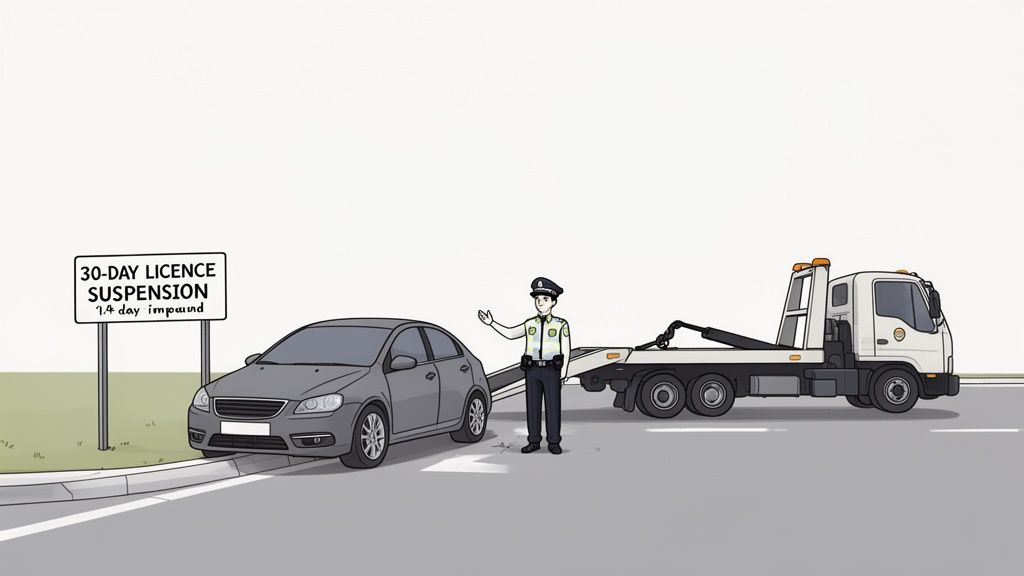
It doesn’t matter what your driving record looks like. The law is clear, and the officer has no discretion. Two things are guaranteed to happen immediately:
- Immediate 30-Day Driver's Licence Suspension: The officer will take your physical licence, and your driving privileges are suspended for a full month.
- Immediate 14-Day Vehicle Impoundment: Your car gets towed from the scene and locked away for two weeks. This happens even if the car isn’t yours.
The Harsh Reality on a Brampton Roadside
Picture it: you're stopped on a busy road like Bovaird Drive. Within minutes, you’ve lost your car and your licence. You are stranded and must figure out how to get home, get to work, or manage school runs for the next two weeks. This is a logistical and financial nightmare that directly impacts your family obligations, a reality recognized under Ontario's Family Law Act which acknowledges the shared responsibilities within a family unit.
Your responsibility for the vehicle doesn't end when the tow truck drives away. You are on the hook for all towing and daily storage fees, which can easily climb over $1,500. You cannot get your car back until that bill is paid in full.
Financial and Insurance Shockwaves
The financial pain doesn’t stop there. The minimum fine for a first conviction is $2,000. On top of that, the province tacks on surcharges when your licence is suspended: $250 for a first offence, $350 for a second, and $450 for a third.
Then comes the insurance fallout. A conviction stays on your record for years and can cause your premiums to skyrocket by 100-200% or more, putting immense financial strain on families across Brampton. You can learn more about the deep financial impact of these charges and how they affect your insurance rates.
These roadside penalties are just the beginning. They are administrative, meaning they happen automatically and are completely separate from the court-imposed penalties you’ll face later. For Brampton families who rely on their car, these immediate consequences can be devastating.
Long-Term Consequences of a Conviction
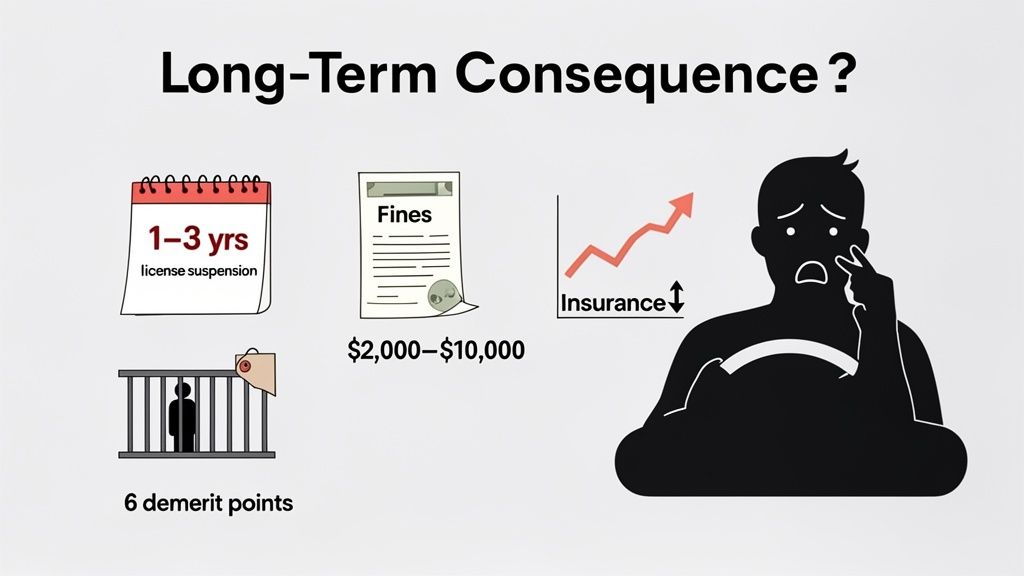
While the immediate penalties are a shock, the real fight is in the courtroom. A stunt driving conviction in Ontario carries severe, life-altering consequences. For most people in Brampton, a driver's licence is essential for getting to work, taking care of your family, and living your life. Losing it isn't just an inconvenience; it's a direct threat to your livelihood and ability to meet your family obligations.
The Financial Fallout of a Conviction
If found guilty, the financial hit is staggering. The court can impose fines designed to be punitive.
- Minimum Fine: A first-time conviction starts with a minimum fine of $2,000.
- Maximum Fine: This can climb to $10,000, plus mandatory victim fine surcharges.
The long-term impact on your insurance premiums is where the costs spiral. A stunt driving conviction brands you as a high-risk driver. This stays on your driving record for three years, and during that time, your insurance rates can double or even triple. Your current provider might refuse to renew your policy, forcing you into high-risk insurance at an outrageous cost. For a Brampton family, an extra few thousand dollars a year for insurance can be completely unsustainable.
Severe Licence and Liberty Penalties
Beyond the financial blow, a conviction brings harsh penalties that directly affect your freedom.
A conviction is a quasi-criminal offence under the Highway Traffic Act. It is a serious black mark on your driving abstract that tells insurers and authorities you've engaged in extremely dangerous behaviour.
Here’s what a conviction will add to your record:
- Mandatory Licence Suspension: You will face a court-ordered licence suspension of at least one year for a first offence. For a second offence, it can be up to ten years.
- Six Demerit Points: A conviction automatically adds six demerit points to your licence.
- Potential Jail Time: Stunt driving is not a Criminal Code of Canada offence, so it won’t result in a criminal record. However, the Highway Traffic Act gives judges the power to impose a jail sentence of up to six months. This is a real possibility, especially with aggravating factors.
The risk tied to these behaviours is well-documented. Research shows a strong link between street racing behaviours and crash risks, which is why enforcement in GTA hotspots like Brampton is so strict. You can read the full research on the link between street racing and crash risks. Facing these outcomes alone is a huge risk that can derail your career and strain your family.
Building Your Defense Strategy
Being charged with stunt driving on a Brampton road is overwhelming, but remember: a charge is not a conviction. This is the moment a carefully planned legal defence becomes your most important asset. The prosecution has evidence, but that evidence is rarely perfect. An experienced lawyer knows how to dismantle it.
The foundation of a solid defence is a deep dive into the prosecution's case. This is about holding the police and the Crown accountable to the legal standards they must follow under both the Highway Traffic Act and the Criminal Code of Canada.
Scrutinizing the Evidence
The first action is to obtain and analyze the full disclosure package from the prosecutor. This contains all evidence they plan to use against you. We immediately look for answers to critical questions:
- Were the officer's notes clear, detailed, and consistent with the charge?
- Did the officer have an unobstructed view of your vehicle?
- Are there contradictions between the officer's notes and the known facts?
Even minor discrepancies can cast doubt on the reliability of the evidence, which is a key part of fighting the charge.
Challenging the Speed Measurement Device
For most stunt driving charges, the entire case rests on a radar or laser gun reading. These devices are not foolproof. Their accuracy depends on correct operation, regular maintenance, and proper calibration.
A core element of a successful defence is questioning the reliability of the technology. If there is any doubt about the device's accuracy or the officer's training, the foundation of the Crown's case can be weakened.
Your legal team will investigate if the device was recently calibrated according to manufacturer and police service standards. They will also question the officer's training. If proper procedures weren't followed, that speed reading can be challenged and potentially thrown out.
Identifying Procedural and Legal Arguments
Beyond the evidence, the procedure the officer followed is critical. Police must adhere to strict protocols under the Highway Traffic Act and the Charter of Rights and Freedoms. Any deviation can open the door for a powerful legal argument that your rights were violated.
Objective evidence can also be a game-changer. It's always worth considering if a properly installed dash cam captured footage relevant to your case, providing an unbiased record.
Ultimately, the goal is to protect your future. A skilled defence lawyer can use these weaknesses to negotiate a better outcome, such as:
- Complete Withdrawal: Arguing for the charge to be dropped due to fatal flaws in evidence or procedure.
- Negotiation to a Lesser Offence: Strategically bargaining to have the charge reduced to something less severe, like speeding or careless driving, to avoid the mandatory one-year licence suspension.
For any Brampton driver, a stunt driving charge is a serious threat. A strategic defence is your best action to protect your licence, financial stability, and driving record.
Navigating the Brampton Court System
If you’re facing a stunt driving charge in Peel Region, you’ll be at the Ontario Court of Justice in Brampton. Understanding how the system works is the first step toward taking back control. Your case will move through distinct stages, each offering opportunities for an experienced lawyer to challenge the evidence and protect your rights.
The Court Process Step-by-Step
The journey from being charged to resolution follows a structured path. Knowing what’s coming is half the battle.
- First Appearance and Disclosure: Your initial court date is mostly administrative. Your lawyer appears for you and requests “disclosure”—all evidence the Crown has against you.
- Crown Pre-Trial: Once disclosure is received and analyzed for weaknesses, your lawyer meets with the Crown. This is a crucial negotiation phase to point out flaws and push for a better resolution, like getting the charge dropped or reduced.
- Judicial Pre-Trial: If a deal isn’t reached, the next step may be a meeting that includes a judge. This is another chance to discuss legal issues and seek a resolution before trial.
- Trial: If a fair deal can’t be made, the case goes to trial. Your lawyer will cross-examine the police officer, challenge the evidence, and present your defence.
Walking into a courtroom can be nerve-wracking. To get a better sense of the general procedures and feel more prepared, it helps to understand what to expect in traffic court.
This flowchart breaks down the core strategy for building a strong defence against a stunt driving charge in Brampton.
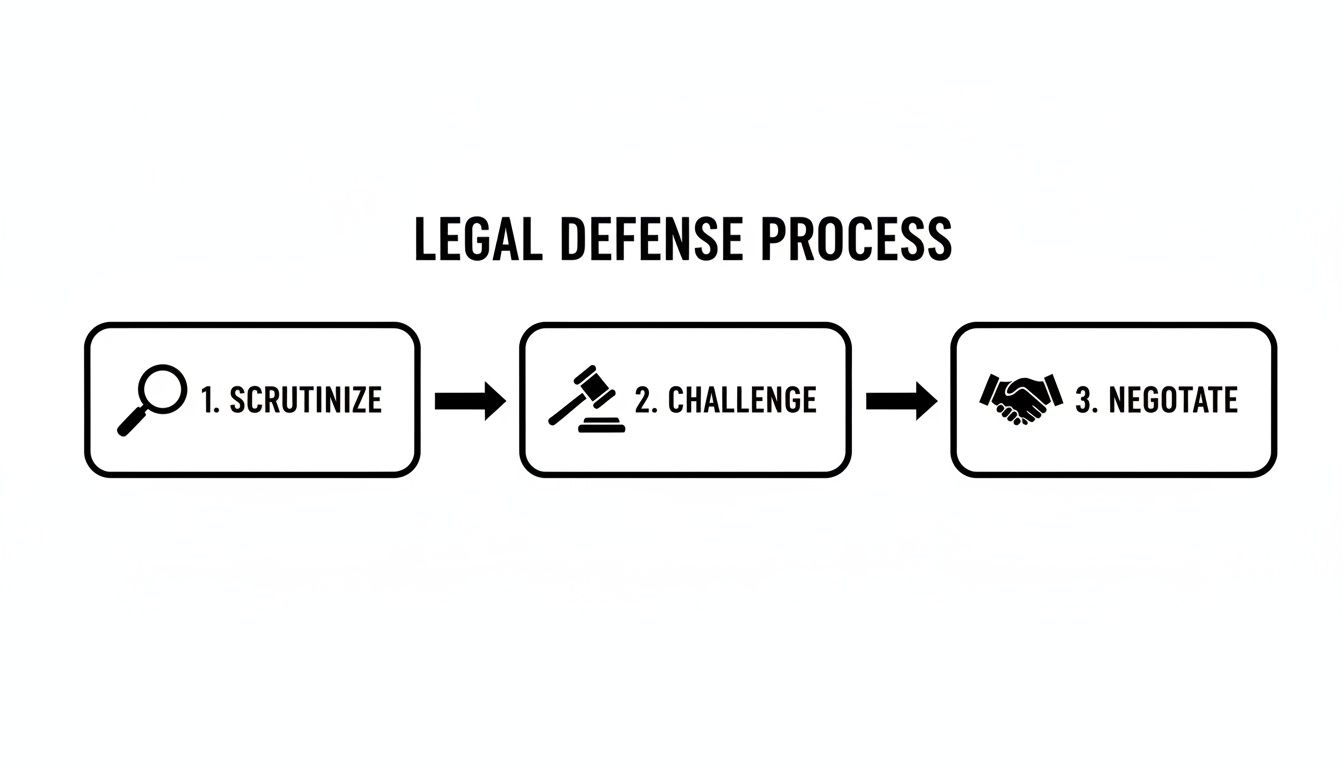
A solid defence moves from a detailed analysis of the evidence to proactive negotiation, always aiming to resolve the case in your favour before trial.
The goal is always to achieve the best possible outcome. Often, this means resolving the matter without a trial, thereby avoiding the mandatory one-year licence suspension and other severe penalties that come with a stunt driving conviction.
Successfully navigating your case through the Brampton court system demands a proactive and strategic game plan. The right legal guidance is your most actionable step toward protecting your licence, your finances, and your future.
Frequently Asked Questions About Ontario Stunt Driving
When you’re hit with a stunt driving charge in Brampton, the shock quickly gives way to a flood of questions. Here are straightforward answers to the questions we hear most often.
Can I Get My Car Out of Impound Early?
Simply put, no. The 14-day vehicle impoundment is an immediate and mandatory penalty under Ontario's Highway Traffic Act. It is non-negotiable. No lawyer, judge, or police officer has the power to shorten it.
You have to wait out the full two weeks. During that time, the towing and daily storage fees are your responsibility, and they often climb past $1,500. The impound lot won’t release your vehicle until the bill is paid in full.
Does a Stunt Driving Charge Mean a Criminal Record?
This is a common point of confusion. A stunt driving conviction does not give you a criminal record. The charge falls under Ontario's provincial Highway Traffic Act, not the federal Criminal Code of Canada.
However, while it won’t show up on a criminal background check, the consequences are severe enough to feel like it. A conviction will stain your driving record for three years and can lead to a lengthy licence suspension, crippling fines, and even up to six months in jail.
What Is the Difference Between Stunt Driving and Careless Driving?
Think of stunt driving as a specific offence, most often triggered by excessive speed—like driving 40 km/h or more over the limit in a zone under 80 km/h. The penalties are brutal, starting with a mandatory minimum one-year licence suspension upon conviction.
Careless driving is a broader charge for driving "without due care and attention." While still very serious, its penalties are generally less severe and don't come with the same mandatory licence suspensions. A primary goal for your defence lawyer is often to negotiate a stunt driving charge down to careless driving to save your licence.
Is Keeping Up with Traffic a Valid Legal Defence?
"I was just keeping up with the flow of traffic" is a common explanation, but it is not a defence that will hold up in court. The law is clear: every driver is individually responsible for obeying the speed limit.
It doesn't matter if every other car on Highway 410 was going just as fast. If you're the one pulled over, you're the one facing the charge. While your lawyer might use overall traffic conditions during negotiations with the Crown, it won't be enough to have the charge dismissed outright.
A stunt driving charge in Brampton can make you feel like your world is closing in, but you don't have to face it alone. The team at Badesha Law has the experience to challenge the evidence, navigate the Brampton court system, and fight for the best possible outcome to protect your licence and your future. If you've been charged, contact us for a consultation today. https://badeshalaw.ca/brampton-criminal-lawyer