What Is Stunt Driving Ontario? A Brampton Driver’s Guide

When you hear “stunt driving” in Ontario, you might picture something out of a movie. But the reality hits much closer to home for drivers in Brampton every single day. It’s not just about Hollywood-style manoeuvres; it’s a specific, serious offence under the Highway Traffic Act with immediate, harsh penalties that can disrupt your family life and career.

The most common way people get charged is for one simple reason: excessive speed. A momentary lapse of judgment on a familiar Brampton road, like Hurontario Street or Highway 410, can lead directly to your car being impounded and your licence suspended on the spot. This guide provides actionable insights for Brampton residents facing these charges, grounded in the Highway Traffic Act and the Criminal Code of Canada.

The Clear Line Between Speeding and Stunt Driving
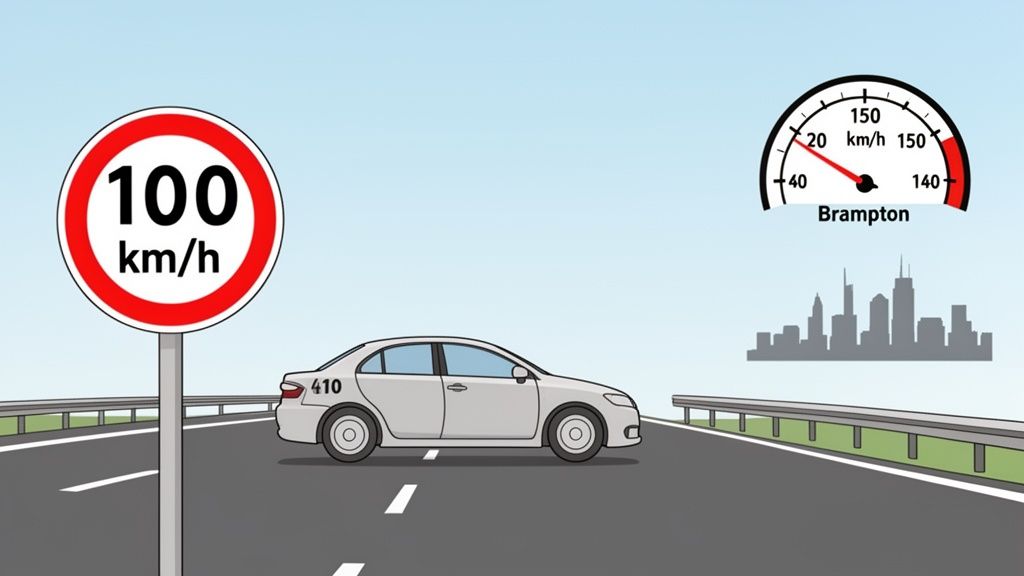
A car on a highway with a 100 km/h speed limit sign and a speedometer indicating 20 km/h towards Brampton.

Many Brampton drivers think a stunt driving charge is only for organized street racing. The truth is, a simple commute can escalate into a massive legal headache in an instant. The law draws a very clear line. Unlike a standard speeding ticket where an officer might have some discretion, there is zero discretion once you cross the stunt driving speed threshold. The charge is automatic and the roadside penalties are immediate.

Understanding the Speed Thresholds in Brampton

To understand what stunt driving is, you need to know the exact numbers that trigger a charge. The rules are broken down into two simple categories based on the posted speed limit of the road you’re on. This table breaks down the specific speed thresholds that automatically trigger a stunt driving charge on roads you drive every day.

Ontario's Stunt Driving Speed Thresholds

Posted Speed Limit Speed That Triggers a Charge Common Brampton Road Example
50 km/h 90 km/h or more Driving on Airport Road or Dixie Road
60 km/h 100 km/h or more Driving on Bovaird Drive or Queen Street
80 km/h 130 km/h or more Driving on Highway 7
100 km/h 150 km/h or more Driving on Highway 410 or Highway 407

A few seconds of inattention on Highway 410 is all it takes to cross that line. This distinction is critical because it shows how easily an ordinary drive can spiral into a legal nightmare. The consequences aren’t just a fine down the road; they begin the moment you’re pulled over.

The rise in these charges is alarming. A recent analysis revealed that in 2024, Ontario police issued a staggering 13,843 stunt driving charges—a 146% increase since 2015. This data highlights aggressive enforcement in the GTA, with Brampton and Mississauga being major hotspots. You can read more legal analysis of these provincial statistics for a deeper look into the trends.

Common Actions That Qualify as Stunt Driving in Brampton

While excessive speed is the most common reason for a charge, it’s a critical mistake to assume it’s the only one. The Highway Traffic Act covers a wide range of dangerous driving behaviours, and each one carries the same severe roadside penalties. For Brampton drivers, understanding these actions is key to avoiding a life-altering charge.

Many of these offences come down to an officer’s judgment. This means a move you might consider minor could be seen very differently by Peel Regional Police, leading to an immediate 30-day licence suspension and a 14-day vehicle impoundment right on the spot.

Driving Actions Beyond Speeding

The law isn't just designed to catch racers; it targets a whole host of dangerous manoeuvres. Even a single action can be enough for a police officer to lay a stunt driving charge. Here are some specific actions that qualify as stunt driving, with real-world scenarios you might see in Brampton:

  • Intentionally Spinning Your Tires: A 'burnout' or 'donut.' Accelerating so hard from a stoplight at a busy intersection like Queen Street and Kennedy Road that your tires screech and smoke is a textbook example.
  • Drifting or Sliding: Intentionally making your car lose traction and slide sideways around a corner on any public road, including a large retail parking lot like Shoppers World Brampton after hours.
  • Lifting Tires Off the Road: For motorcyclists, this means popping a 'wheelie.' For cars, it could be hitting a crest in the road at such a high speed that one or more wheels leave the pavement.
  • Driving Too Close to Another Vehicle: This goes far beyond simple tailgating. It involves following another car at a dangerously close distance in a way that’s clearly aggressive or intimidating on a packed road like Hurontario Street.
  • Preventing Others From Passing: Intentionally slowing down or straddling two lanes to block another vehicle from getting by is a specific stunt driving offence, often tied to road rage incidents.

Context is Key in Brampton

The common thread is the potential danger these actions pose to the public. Police in Peel Region are especially vigilant for this kind of driving, particularly in areas known for car meets.

An important takeaway is that your intent doesn't always matter. An officer can charge you based on the objective danger your driving creates, regardless of whether you meant to perform a stunt. Your actions are viewed in the context of public safety as defined by the Highway Traffic Act.

Ultimately, the law gives police significant power to lay a stunt driving charge for actions that have nothing to do with speeding. Each of these behaviours can trigger the same devastating chain of events, highlighting the need to drive mindfully and responsibly at all times.

Immediate Penalties at the Roadside

The moment a police officer pulls you over for stunt driving in Brampton, the consequences hit hard and fast. This isn't your average traffic stop. It’s an automatic, disruptive process that starts right there on the shoulder, long before you ever see a courtroom. These penalties are designed to be a serious, immediate deterrent.
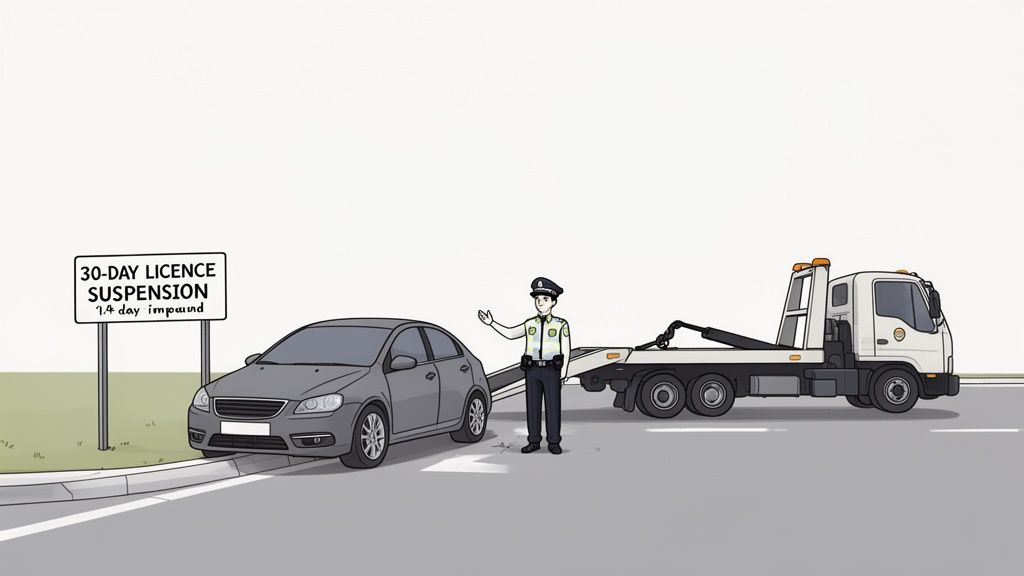
A police officer stands by a grey car and a tow truck, with a sign indicating a 30-day license suspension and 14-day impound.

It doesn’t matter what your driving record looks like. The law is clear, and the officer has no discretion. Two things are guaranteed to happen immediately:

  • Immediate 30-Day Driver's Licence Suspension: The officer will take your physical licence, and your driving privileges are suspended for a full month.
  • Immediate 14-Day Vehicle Impoundment: Your car gets towed from the scene and locked away for two weeks. This happens even if the car isn’t yours.

The Harsh Reality on a Brampton Roadside

Picture it: you're stopped on a busy road like Bovaird Drive. Within minutes, you’ve lost your car and your licence. You are stranded and must figure out how to get home, get to work, or manage school runs for the next two weeks. This is a logistical and financial nightmare that directly impacts your family obligations, a reality recognized under Ontario's Family Law Act which acknowledges the shared responsibilities within a family unit.

Your responsibility for the vehicle doesn't end when the tow truck drives away. You are on the hook for all towing and daily storage fees, which can easily climb over $1,500. You cannot get your car back until that bill is paid in full.

Financial and Insurance Shockwaves

The financial pain doesn’t stop there. The minimum fine for a first conviction is $2,000. On top of that, the province tacks on surcharges when your licence is suspended: $250 for a first offence, $350 for a second, and $450 for a third.

Then comes the insurance fallout. A conviction stays on your record for years and can cause your premiums to skyrocket by 100-200% or more, putting immense financial strain on families across Brampton. You can learn more about the deep financial impact of these charges and how they affect your insurance rates.

These roadside penalties are just the beginning. They are administrative, meaning they happen automatically and are completely separate from the court-imposed penalties you’ll face later. For Brampton families who rely on their car, these immediate consequences can be devastating.

Long-Term Consequences of a Conviction
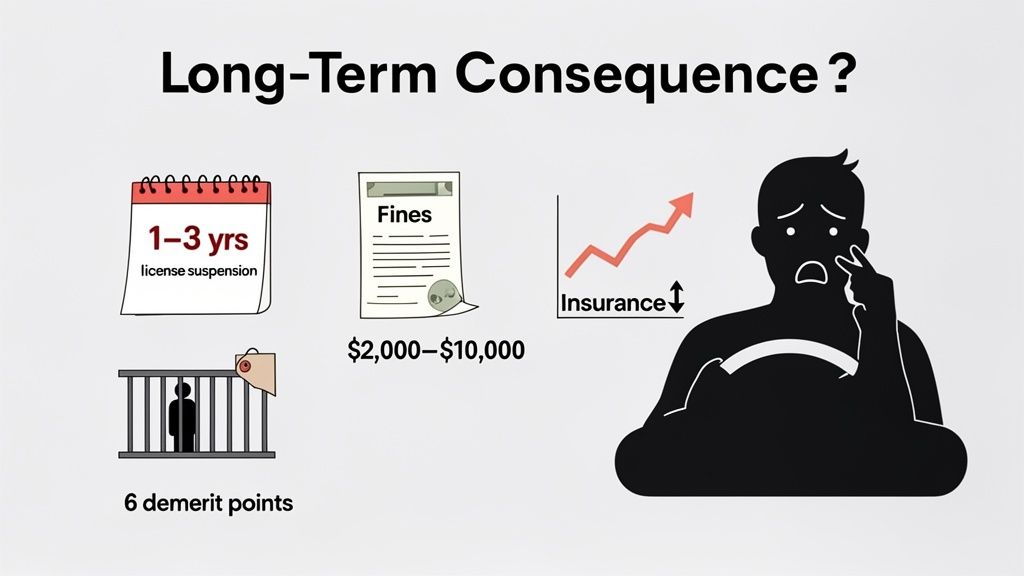
Infographic details severe long-term consequences of stunt driving: license suspension, fines, higher insurance, demerit points, and potential jail.

While the immediate penalties are a shock, the real fight is in the courtroom. A stunt driving conviction in Ontario carries severe, life-altering consequences. For most people in Brampton, a driver's licence is essential for getting to work, taking care of your family, and living your life. Losing it isn't just an inconvenience; it's a direct threat to your livelihood and ability to meet your family obligations.

The Financial Fallout of a Conviction

If found guilty, the financial hit is staggering. The court can impose fines designed to be punitive.

  • Minimum Fine: A first-time conviction starts with a minimum fine of $2,000.
  • Maximum Fine: This can climb to $10,000, plus mandatory victim fine surcharges.

The long-term impact on your insurance premiums is where the costs spiral. A stunt driving conviction brands you as a high-risk driver. This stays on your driving record for three years, and during that time, your insurance rates can double or even triple. Your current provider might refuse to renew your policy, forcing you into high-risk insurance at an outrageous cost. For a Brampton family, an extra few thousand dollars a year for insurance can be completely unsustainable.

Severe Licence and Liberty Penalties

Beyond the financial blow, a conviction brings harsh penalties that directly affect your freedom.

A conviction is a quasi-criminal offence under the Highway Traffic Act. It is a serious black mark on your driving abstract that tells insurers and authorities you've engaged in extremely dangerous behaviour.

Here’s what a conviction will add to your record:

  • Mandatory Licence Suspension: You will face a court-ordered licence suspension of at least one year for a first offence. For a second offence, it can be up to ten years.
  • Six Demerit Points: A conviction automatically adds six demerit points to your licence.
  • Potential Jail Time: Stunt driving is not a Criminal Code of Canada offence, so it won’t result in a criminal record. However, the Highway Traffic Act gives judges the power to impose a jail sentence of up to six months. This is a real possibility, especially with aggravating factors.

The risk tied to these behaviours is well-documented. Research shows a strong link between street racing behaviours and crash risks, which is why enforcement in GTA hotspots like Brampton is so strict. You can read the full research on the link between street racing and crash risks. Facing these outcomes alone is a huge risk that can derail your career and strain your family.

Building Your Defense Strategy

Being charged with stunt driving on a Brampton road is overwhelming, but remember: a charge is not a conviction. This is the moment a carefully planned legal defence becomes your most important asset. The prosecution has evidence, but that evidence is rarely perfect. An experienced lawyer knows how to dismantle it.

The foundation of a solid defence is a deep dive into the prosecution's case. This is about holding the police and the Crown accountable to the legal standards they must follow under both the Highway Traffic Act and the Criminal Code of Canada.

Scrutinizing the Evidence

The first action is to obtain and analyze the full disclosure package from the prosecutor. This contains all evidence they plan to use against you. We immediately look for answers to critical questions:

  • Were the officer's notes clear, detailed, and consistent with the charge?
  • Did the officer have an unobstructed view of your vehicle?
  • Are there contradictions between the officer's notes and the known facts?

Even minor discrepancies can cast doubt on the reliability of the evidence, which is a key part of fighting the charge.

Challenging the Speed Measurement Device

For most stunt driving charges, the entire case rests on a radar or laser gun reading. These devices are not foolproof. Their accuracy depends on correct operation, regular maintenance, and proper calibration.

A core element of a successful defence is questioning the reliability of the technology. If there is any doubt about the device's accuracy or the officer's training, the foundation of the Crown's case can be weakened.

Your legal team will investigate if the device was recently calibrated according to manufacturer and police service standards. They will also question the officer's training. If proper procedures weren't followed, that speed reading can be challenged and potentially thrown out.

Identifying Procedural and Legal Arguments

Beyond the evidence, the procedure the officer followed is critical. Police must adhere to strict protocols under the Highway Traffic Act and the Charter of Rights and Freedoms. Any deviation can open the door for a powerful legal argument that your rights were violated.

Objective evidence can also be a game-changer. It's always worth considering if a properly installed dash cam captured footage relevant to your case, providing an unbiased record.

Ultimately, the goal is to protect your future. A skilled defence lawyer can use these weaknesses to negotiate a better outcome, such as:

  1. Complete Withdrawal: Arguing for the charge to be dropped due to fatal flaws in evidence or procedure.
  2. Negotiation to a Lesser Offence: Strategically bargaining to have the charge reduced to something less severe, like speeding or careless driving, to avoid the mandatory one-year licence suspension.

For any Brampton driver, a stunt driving charge is a serious threat. A strategic defence is your best action to protect your licence, financial stability, and driving record.

Navigating the Brampton Court System

If you’re facing a stunt driving charge in Peel Region, you’ll be at the Ontario Court of Justice in Brampton. Understanding how the system works is the first step toward taking back control. Your case will move through distinct stages, each offering opportunities for an experienced lawyer to challenge the evidence and protect your rights.

The Court Process Step-by-Step

The journey from being charged to resolution follows a structured path. Knowing what’s coming is half the battle.

  1. First Appearance and Disclosure: Your initial court date is mostly administrative. Your lawyer appears for you and requests “disclosure”—all evidence the Crown has against you.
  2. Crown Pre-Trial: Once disclosure is received and analyzed for weaknesses, your lawyer meets with the Crown. This is a crucial negotiation phase to point out flaws and push for a better resolution, like getting the charge dropped or reduced.
  3. Judicial Pre-Trial: If a deal isn’t reached, the next step may be a meeting that includes a judge. This is another chance to discuss legal issues and seek a resolution before trial.
  4. Trial: If a fair deal can’t be made, the case goes to trial. Your lawyer will cross-examine the police officer, challenge the evidence, and present your defence.

Walking into a courtroom can be nerve-wracking. To get a better sense of the general procedures and feel more prepared, it helps to understand what to expect in traffic court.

This flowchart breaks down the core strategy for building a strong defence against a stunt driving charge in Brampton.
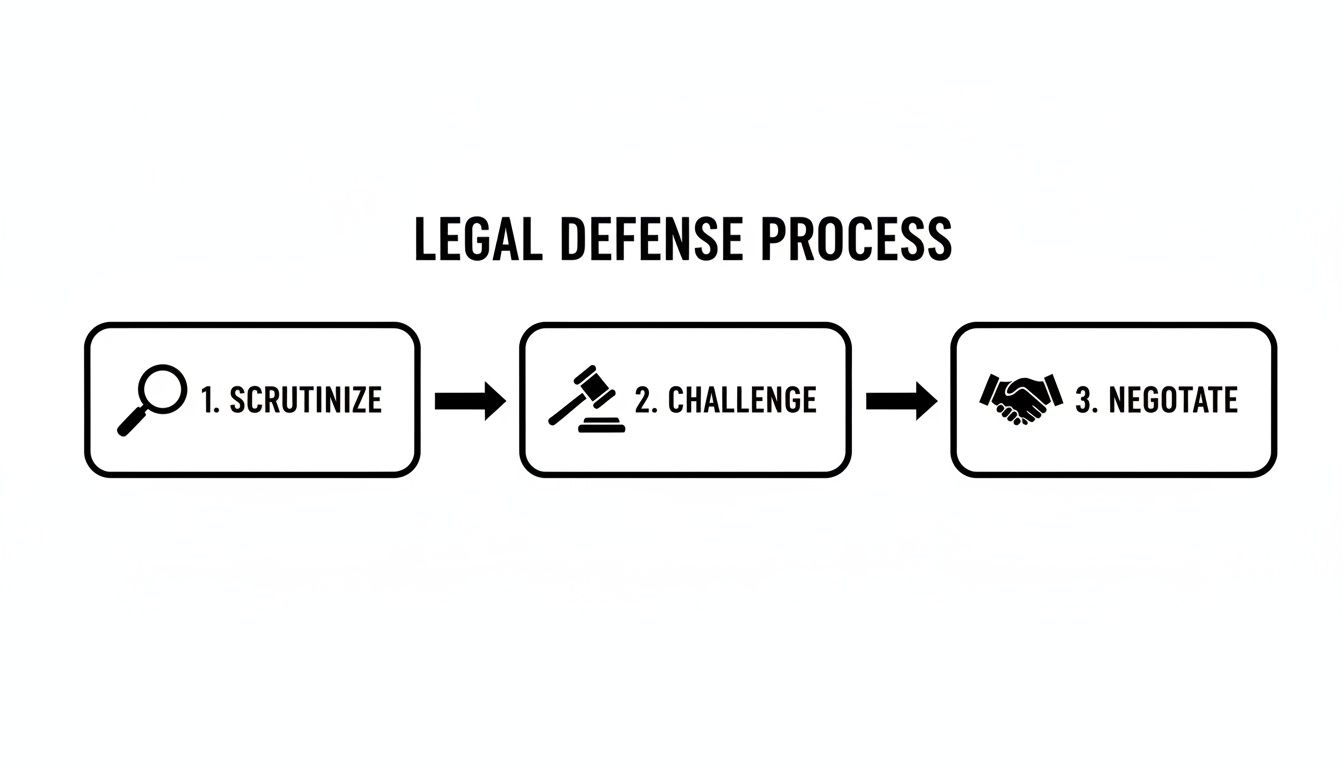
A flowchart outlining the three steps of a legal defense process: scrutinize, challenge, and negotiate.

A solid defence moves from a detailed analysis of the evidence to proactive negotiation, always aiming to resolve the case in your favour before trial.

The goal is always to achieve the best possible outcome. Often, this means resolving the matter without a trial, thereby avoiding the mandatory one-year licence suspension and other severe penalties that come with a stunt driving conviction.

Successfully navigating your case through the Brampton court system demands a proactive and strategic game plan. The right legal guidance is your most actionable step toward protecting your licence, your finances, and your future.

Frequently Asked Questions About Ontario Stunt Driving

When you’re hit with a stunt driving charge in Brampton, the shock quickly gives way to a flood of questions. Here are straightforward answers to the questions we hear most often.

Can I Get My Car Out of Impound Early?

Simply put, no. The 14-day vehicle impoundment is an immediate and mandatory penalty under Ontario's Highway Traffic Act. It is non-negotiable. No lawyer, judge, or police officer has the power to shorten it.

You have to wait out the full two weeks. During that time, the towing and daily storage fees are your responsibility, and they often climb past $1,500. The impound lot won’t release your vehicle until the bill is paid in full.

Does a Stunt Driving Charge Mean a Criminal Record?

This is a common point of confusion. A stunt driving conviction does not give you a criminal record. The charge falls under Ontario's provincial Highway Traffic Act, not the federal Criminal Code of Canada.

However, while it won’t show up on a criminal background check, the consequences are severe enough to feel like it. A conviction will stain your driving record for three years and can lead to a lengthy licence suspension, crippling fines, and even up to six months in jail.

What Is the Difference Between Stunt Driving and Careless Driving?

Think of stunt driving as a specific offence, most often triggered by excessive speed—like driving 40 km/h or more over the limit in a zone under 80 km/h. The penalties are brutal, starting with a mandatory minimum one-year licence suspension upon conviction.

Careless driving is a broader charge for driving "without due care and attention." While still very serious, its penalties are generally less severe and don't come with the same mandatory licence suspensions. A primary goal for your defence lawyer is often to negotiate a stunt driving charge down to careless driving to save your licence.

Is Keeping Up with Traffic a Valid Legal Defence?

"I was just keeping up with the flow of traffic" is a common explanation, but it is not a defence that will hold up in court. The law is clear: every driver is individually responsible for obeying the speed limit.

It doesn't matter if every other car on Highway 410 was going just as fast. If you're the one pulled over, you're the one facing the charge. While your lawyer might use overall traffic conditions during negotiations with the Crown, it won't be enough to have the charge dismissed outright.


A stunt driving charge in Brampton can make you feel like your world is closing in, but you don't have to face it alone. The team at Badesha Law has the experience to challenge the evidence, navigate the Brampton court system, and fight for the best possible outcome to protect your licence and your future. If you've been charged, contact us for a consultation today. https://badeshalaw.ca/brampton-criminal-lawyer

Ontario Careless Driving Penalties – What You Need to Know From a Brampton Criminal Lawyer

Getting a careless driving ticket in Brampton carries significant implications that many may not fully appreciate. Unlike a minor infraction, this charge comes with severe repercussions. The financial penalties alone are substantial, with fines starting at $400 and potentially reaching up to $2,000. Additionally, the charge results in six demerit points added to your driving record, which can lead to increased insurance premiums. More critically, there is the possibility of facing jail time, and your driver's licence could be suspended for as long as two years. Such outcomes can be particularly disruptive for Brampton residents who depend on their vehicles for daily commuting or work-related travel, leading to prolonged inconvenience and lifestyle disruptions.

Given these serious consequences, it is crucial for individuals facing such charges to seek professional legal advice. Consulting a criminal lawyer in Brampton can provide guidance and representation to navigate the complexities of the legal system effectively. An experienced attorney can assess your case, explore possible defenses, and work towards mitigating the impact of the charges on your life. With the potential for lasting effects on your freedom and ability to drive, obtaining knowledgeable legal counsel is an essential step in managing the situation and striving for the best possible outcome.

The Real Cost of a Careless Driving Conviction

A driver's license, a 'Careless Driving' envelope, and 'Insurance Revial' papers on a stool inside a car.

When a Peel Regional Police officer hands you that ticket, the first thing on your mind is probably the fine. And while that initial hit to your wallet is a big deal, it's really just the tip of the iceberg. A conviction under Section 130 of the Highway Traffic Act sets off a chain reaction of penalties that can seriously impact your money, your freedom, and your future.

For anyone in Brampton who needs their car for work, school, or just getting around, these consequences aren't just an inconvenience—they can completely derail your life. The conviction instantly slaps six demerit points on your licence. If you're a novice driver, that's often enough to get your licence suspended right away.

Immediate Financial and Legal Penalties

The penalties for careless driving are intentionally severe because the offence itself is taken very seriously. The court has a lot of leeway in deciding what consequences to impose, and it all depends on the details of your situation.

Here’s a quick look at what you could be up against:

  • Fines: The minimum fine is $400, but it can climb all the way to $2,000. If you get the ticket in a designated Community Safety Zone, those fines are automatically doubled.

  • Jail Time: Yes, you can go to jail. In more serious cases, a conviction could mean a sentence of up to six months.

  • Licence Suspension: A judge has the power to take away your driving privileges for up to two years.

To give you a quick summary of what's at stake, here’s a table breaking down the penalties under the Highway Traffic Act.

At-a-Glance Penalties for Careless Driving in Ontario

Penalty Type Details (Section 130)
Fines $400 to $2,000 (doubled in Community Safety Zones)
Jail Time Up to six months
Licence Suspension Up to two years
Demerit Points 6 demerit points
Insurance Impact Major conviction, significant premium increases
Record Duration Stays on your driving record for three years

This table shows just how much is on the line. It's not a minor ticket you can just pay and forget about.

A careless driving conviction is not a minor traffic violation; it's a serious provincial offence that law enforcement, courts, and insurance companies treat with significant gravity. Understanding the full scope of these penalties is the first step toward building a strong defence.

The Hidden Cost: Insurance Shock

Honestly, the most painful and long-lasting hit from a careless driving conviction is what it does to your car insurance. Insurers see this offence as a massive red flag, and they'll immediately label you a "high-risk" driver.

Here in Ontario, insurance data shows that drivers with a careless driving conviction can expect their premiums to jump by 150% or more. Why? Because insurance companies put it in the same category as a criminal offence like impaired driving.

That conviction stays on your driving record for at least three years, which means you’ll be stuck paying those sky-high rates for a long time. I’ve seen some Ontario cases where drivers’ rates went up by over 300%, costing them more than $13,000 in extra insurance payments over those three years. You can learn more about how a conviction affects insurance rates, but the bottom line is, it’s financially devastating.

What Legally Counts as Careless Driving in Ontario?

Most drivers have heard the term "careless driving," but few know what it actually means in the eyes of the law. It’s not as clear-cut as a speeding ticket, which is tied to a specific number on a radar gun. A careless driving charge is far more subjective and often comes down to a police officer's judgment of your actions.

This gray area can be frustrating, but the legal definition itself gives us a solid starting point. Under Section 130 of Ontario's Highway Traffic Act, careless driving is defined as operating a vehicle "without due care and attention or without reasonable consideration for other persons using the highway."

In simple terms, the law asks: were you driving the way a reasonably prudent person would have in the same situation? If an officer decides the answer is no, you could be facing a serious charge.

From the Highway Traffic Act to the Streets of Brampton

Let's bring this legal jargon into the real world. Forget the dense legal text for a moment and think about the roads we all drive on every day in Brampton. Careless driving isn’t just for extreme road rage incidents; it often covers common mistakes that put others at risk.

Here are a few real-world Brampton scenarios that could easily lead to a careless driving charge:

  • Weaving through traffic on Queen Street: Aggressively changing lanes during rush hour without signalling, cutting other drivers off.

  • Tailgating on Highway 410: Following the car ahead so closely that you have zero chance of stopping if they suddenly brake.

  • Getting distracted near Bramalea City Centre: Looking down at your phone, fiddling with the GPS, or trying to eat a messy lunch while navigating busy intersections with heavy foot traffic.

  • A "rolling stop" in a quiet neighbourhood: Failing to come to a complete stop at a stop sign, endangering pedestrians or cyclists you didn't see.

Any of these actions could be seen by an officer as a failure to show "due care and attention." The deciding factor is whether your driving created a potential—or actual—risk to anyone else on the road.

What Is the "Prudent Driver" Standard?

The law doesn’t demand perfection from drivers, but it absolutely holds you to a standard. This standard is based on the idea of a "prudent driver"—a legal concept for a hypothetical, reasonably cautious person. When a court looks at a careless driving charge, it measures your actions against what this ideal driver would have done.

This is a critical point: your intent doesn't matter. You can be found guilty even if you never meant to cause harm or an accident. The court focuses entirely on the act of driving itself. For example, if you spill a hot coffee in your lap, lose control for a split second, and swerve into the next lane, that could be deemed careless. It doesn't matter that you didn't intend to drive dangerously.

The core of a careless driving charge is negligence. The prosecution doesn’t have to prove you intended to be reckless, only that your driving fell below the standard of care expected of every motorist in Ontario.

A Critical Distinction: When an Accident Causes Harm

The consequences for a careless driving charge get dramatically worse when someone is injured or killed. While the standard charge under Section 130 is already serious, if your driving leads to bodily harm or death, the stakes become terrifyingly high.

This introduces a separate, more severe offence: Careless Driving Causing Bodily Harm or Death. It's still a Highway Traffic Act offence, not a criminal charge, but the penalties are designed to reflect the tragic outcome.

  • Standard Careless Driving: Fines up to $2,000, jail time up to six months, and a licence suspension for up to two years.

  • Careless Driving Causing Bodily Harm or Death: Fines skyrocket to $50,000, potential jail time increases to two years, and your licence could be suspended for up to five years.

Understanding this difference is absolutely vital. A moment of inattention that causes a minor fender-bender is one thing. That same lapse in judgment that results in a serious injury will be prosecuted far more aggressively, leading to a much more devastating Ontario careless driving penalty. This is precisely why any charge involving an accident requires you to seek serious legal advice immediately.

Demerit Points and Licence Suspensions: The Hidden Penalties

A conviction for careless driving impacts more than just your finances; it initiates a series of consequences that directly threaten your driving privileges. The immediate repercussion is the addition of six demerit points to your driving record, which can lead to significant complications for many drivers.

These demerit points are more than mere figures on a report. They serve as a method for the Ministry of Transportation (MTO) to identify drivers who pose a higher risk on the roads. Accumulating a substantial number of points signals to the MTO that you may be a potential hazard while driving. In response, the MTO has implemented a structured system of penalties intended to either catch your attention or potentially remove you from the road completely.

If you find yourself facing such a situation, consulting a Brampton criminal lawyer can be a crucial step. A knowledgeable lawyer can help navigate the legal complexities, potentially minimizing penalties and providing guidance on how to protect your driving privileges effectively.

How Demerit Points Actually Work in Ontario

The entire demerit point system is designed to correct bad driving habits or, if that fails, to remove unsafe drivers from our roads. How these points affect you depends entirely on what kind of licence you hold, which is a critical distinction for new drivers in Brampton.

  • Fully Licensed Drivers (Class G): If you have a full G licence, you have a bit more breathing room. The MTO typically won't take action until you hit nine points.

  • Novice Drivers (Class G1 or G2): For new drivers, the rules are incredibly strict. Consequences kick in after you accumulate just four points.

Think about that for a second. A single careless driving conviction and its six demerit points is more than enough to trigger an immediate licence suspension for any G1 or G2 driver. This is a wake-up call for young drivers or anyone new to Ontario's graduated licensing system.

Demerit points stick to your record for two years from the day you committed the offence. But the conviction itself? That stays on your driving record for a full three years, meaning it can haunt your insurance rates long after the points are gone.

From Warning Letters to Ministry Interviews

For a fully licensed driver, the penalties ramp up progressively. The process usually starts with a warning letter in the mail once you reach six points.

If you climb to nine points, expect a summons to attend an interview with the MTO. You'll have to sit down and explain your driving record and justify why you should be allowed to keep your licence. Hit fifteen or more points, and it's an automatic 30-day suspension. No questions asked. For novice drivers, these penalties happen much faster and are far more severe.

The path from a single poor decision to serious consequences is shorter than most people think.

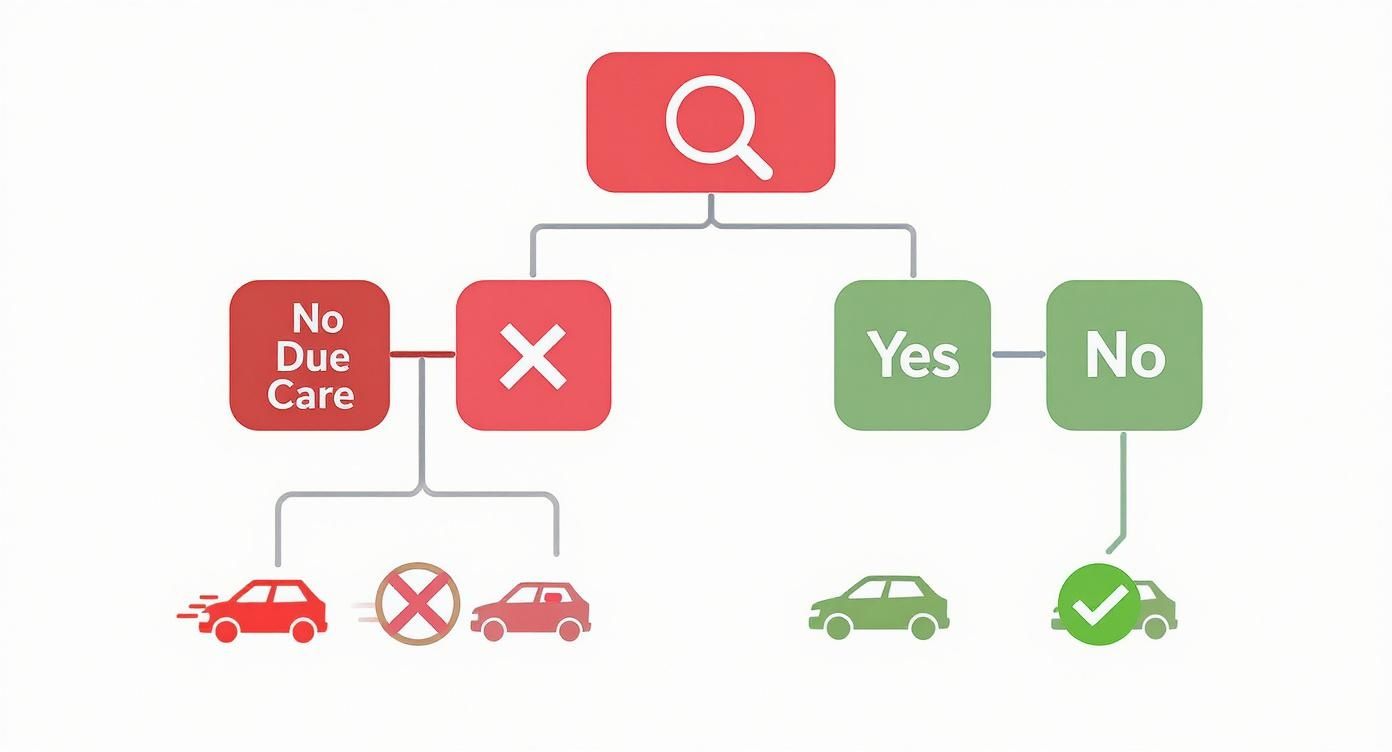
Flowchart illustrating driving outcomes: 'No Due Care' leads to penalties, while 'Yes' or 'No' leads to approved cars.

This flowchart breaks it down simply: if the court finds you drove without the "due care" required by law, the outcome is penalties. Drive responsibly, and you avoid the entire mess.

Here's a closer look at how the demerit point system impacts different drivers.

Demerit Point Consequences for Ontario Drivers

Driver Class 2-8 Points 9-14 Points 15+ Points
Fully Licensed (G) Warning Letter (at 6 points) Required MTO Interview 30-Day Licence Suspension
Novice (G1/G2) Warning Letter (at 2-3 points) 30-Day Licence Suspension (at 4 points) 60-Day Licence Suspension & MTO Interview (at 9 points)

As the table shows, the consequences escalate quickly, especially for new drivers who have very little margin for error.

Court-Ordered Licence Suspensions

On top of the MTO's demerit point system, the judge who convicts you has the independent power to suspend your licence. This is a completely separate penalty that can be handed down no matter how many points you currently have.

A judge can suspend your licence for up to two years for a standard careless driving conviction. If you're convicted of the more serious offence of "Careless Driving Causing Bodily Harm or Death," that suspension can be as long as five years.

Losing your licence for that long is life-altering, especially in a commuter city like Brampton. It impacts your ability to:

  • Get to work and earn a living

  • Manage family duties like school runs and appointments

  • Maintain your independence and social connections

The ripple effect is enormous. Arranging alternative transportation for months or years is a logistical nightmare and a huge financial burden. This is a massive part of the overall Ontario careless driving penalty.

The Long-Term Stain on Your Driving Record

A frequently neglected consequence of a careless driving conviction is its lasting impact. Such a conviction stays on your public driving record for three years from the date of the guilty verdict. During this period, whether you are applying for insurance, seeking employment that involves driving, or interacting with law enforcement during a traffic stop, the conviction remains prominent. This label designates you as a high-risk driver, resulting in elevated insurance premiums and diminished opportunities, even after the financial penalty has been settled. If you find yourself facing such a situation in Brampton, consulting with a criminal lawyer, such as those at Badesha Law, can provide valuable guidance and assistance in managing the repercussions.

How Distracted Driving Can Escalate to Careless Driving

A quick glance at your phone or a moment spent adjusting the GPS seems minor, right? But in the eyes of the law, that small act can snowball into a far more serious careless driving charge. It's a critical distinction that many drivers in Brampton overlook, often with devastating legal and financial fallout.

The line between a simple distracted driving ticket and a life-altering careless driving charge is thinner than most people realize.

This escalation usually happens when a momentary distraction leads to a dangerous situation on the road. A police officer isn't just looking at the act of you holding a phone; they're evaluating the consequence of that action. If you swerve into another lane on Steeles Avenue, fail to brake in time for slowing traffic on Highway 410, or nearly hit a pedestrian near Shoppers World Brampton, your distraction is no longer a simple offence. It has become a clear and present danger to others.

The Officer's Perspective

When a Peel Regional Police officer decides to lay a careless driving charge instead of a distracted driving ticket, they are making a judgment call based on the risk your behaviour created. They’re trained to assess whether your driving fell below the standard of what a reasonably prudent person would do.

Here are a few common distractions that can quickly get upgraded to a careless charge in Brampton:

  • Using a Handheld Device: If texting or talking on your phone causes you to drift, run a red light, or make an erratic move, expect the charge to be upgraded. The officer will note the dangerous outcome, not just the phone use.

  • Interacting with In-Car Technology: Getting lost in your infotainment system or fiddling with the GPS for too long can easily lead to a near-miss or a collision. That’s careless driving.

  • Eating, Drinking, or Grooming: Any activity that takes one or both hands off the wheel—and your focus off the road—can be deemed careless if it compromises your control of the vehicle.

The officer’s notes will focus on how your distraction endangered other people, which is exactly what the prosecution needs to prove a careless driving charge in court.

A Growing Danger on Ontario Roads

There's a reason law enforcement takes this so seriously, and it's backed by some alarming statistics. Distracted driving has become a massive road safety issue, even surpassing impaired driving as a leading cause of traffic fatalities in Ontario.

In fact, 1 in 5 road fatalities are now attributed to driving while distracted, and deaths from these collisions have doubled since 2000. Tens of thousands of accidents are caused by this behaviour in Ontario every single year—a trend that authorities are fighting with much stricter enforcement. You can discover more insights about the dangers of distracted driving in Ontario and its impact on road safety.

The moment your distraction forces another driver to slam on their brakes or swerve to avoid you, you have crossed the line. From a legal standpoint, you are no longer just distracted; you are driving without the "due care and attention" required by law.

Avoiding the Split-Second Mistake

Ultimately, the responsibility of preventing this escalation lies in understanding that no message, phone call, or snack justifies the associated risks. A ticket for distracted driving is already a costly affair, but being charged with careless driving carries much more severe consequences under the Ontario Highway Traffic Act. This includes a penalty of six demerit points, significant increases in insurance premiums, and the possibility of facing jail time.

The most practical approach to avoid such consequences is straightforward. Prepare everything before you begin your journey. This means setting up your GPS navigation system, choosing your playlist, and finishing your coffee before you engage the vehicle's drive mode. In a city like Brampton, where traffic conditions can be unpredictable and change rapidly, maintaining undivided attention is not just a prudent practice—it serves as your most effective safeguard against a charge that could impact your record for years to come.

What to Do After Being Charged in Brampton

A person is writing notes in a notebook next to a driving summons document, coffee, and a phone with law Firm contact.

The moments after a police officer hands you a summons for careless driving are almost always filled with stress and uncertainty. Your mind is probably racing, but it’s critical to understand that the actions you take right now can dramatically shape the outcome of your case.

How you respond in these first few hours and days really sets the foundation for your entire defence.

The most common mistake drivers in Brampton make is treating a careless driving charge like a simple parking ticket. They look at the fine and think about just paying it to make the whole thing go away. This is a massive error. Paying that ticket is an admission of guilt, and it unleashes the full force of the Ontario careless driving penalty—we're talking six demerit points, a conviction on your driving record, and a painful hike in your insurance premiums.

Your Immediate Action Plan

First, take a deep breath. It's essential to move from reacting emotionally to taking proactive steps. Avoid hasty decisions. Instead, concentrate on collecting comprehensive information and recording every detail of the incident. This approach will help you regain control and avoid common errors.

The most crucial document in your possession is the summons or ticket itself. Thoroughly review each detail on this document.

  • Verify for accuracy: Examine the date, time, and location of the alleged offense carefully. Ensure your personal details, such as your name and address, are correctly spelled.

  • Identify the charge: Ensure the charge is listed under Section 130 of the Highway Traffic Act.

  • Locate your court date: Determine the response deadline and the date for your initial court appearance. Missing this could lead to an automatic conviction.

This document outlines the official allegations against you. Even minor discrepancies or errors could play a significant role in your defense. Consider consulting a criminal lawyer in Brampton for guidance through this process and to strengthen your defense strategy.

Preserve Your Memory of the Incident

As soon as you get home, sit down and write out everything you can remember about what happened. Memories fade incredibly fast, and a detail that seems minor now could become vital down the road. Make your notes as thorough as possible.

To jog your memory, ask yourself these questions:

  • What were the road and weather conditions? Was it raining, sunny, icy?

  • What was traffic like? Was it heavy rush hour or a quiet side street?

  • Where exactly were you, and what were you doing in the moments before being pulled over?

  • What did the police officer say to you? What did you say back?

  • Were there any witnesses? Think about passengers in your car or even other drivers nearby.

Jot it all down, even if it doesn't seem to help your case. The more detailed your account is, the better equipped your legal representative will be to find potential weaknesses in the prosecutor's argument.

The most powerful tool you have immediately after being charged is your own detailed memory. Documenting the scene, the interaction, and the context while it's fresh provides the raw material for building a robust defence.

Why You Must Seek Legal Advice Immediately

Once you’ve reviewed the summons and written down your account, the next step is non-negotiable: contact a legal professional who specializes in traffic law and is familiar with the A. Grenville and William Davis Courthouse in Brampton. Trying to handle a careless driving charge on your own is like walking into an exam you haven't studied for—you’re at a huge disadvantage.

An experienced lawyer or paralegal can immediately get to work.

  1. File on Your Behalf: They'll handle all the initial court filings, making sure you don’t miss any critical deadlines.

  2. Request Disclosure: Your legal counsel will formally request all the evidence the prosecutor has against you. This includes the police officer’s notes and any witness statements. You are legally entitled to see this evidence, and it’s often where the key to a strong defence is found.

  3. Analyze the Case: They are trained to spot inconsistencies in an officer's notes or identify legal arguments you would never see on your own. For example, was the officer's view of the incident clear? Do their written notes match what they told you?

Navigating the Brampton legal system requires local knowledge. A professional who regularly appears in the Brampton courthouse understands how local prosecutors operate and the specific procedures of that court. This local insight, which a firm like Badesha Law can provide, is invaluable when negotiating to get a charge reduced to a lesser offence or, in some cases, withdrawn entirely. Taking this step promptly is the single best investment you can make in protecting your licence, your record, and your financial future.

Got Questions About Your Careless Driving Charge?

If you’ve just been handed a careless driving ticket in Brampton, your head is probably spinning. The uncertainty can be paralyzing, so getting clear, straight-up answers is the first step toward getting a handle on the situation. Let’s tackle the most urgent questions we hear from drivers in Brampton facing this serious charge.

Can I Actually Go to Jail for Careless Driving?

Yes, and this is the wake-up call for many people. Jail time is a very real possibility for a careless driving conviction in Ontario. It's not just a beefed-up speeding ticket. The Highway Traffic Act gives judges the power to sentence a driver to up to six months in jail for a standard careless driving conviction under Section 130.

Now, this isn't the outcome for every case. A judge usually reserves a jail sentence for the most extreme situations—think incidents involving incredibly reckless behaviour, crazy high speeds, or accidents that show a complete disregard for everyone else on the road. Still, the fact that it's on the table shows just how seriously the Brampton courts take this charge.

And if the incident was even more severe, leading to a charge of "Careless Driving Causing Bodily Harm or Death," the stakes get much higher. The maximum jail time jumps to two years. Whether a judge considers jail depends entirely on the facts of your case, your driving record, and the arguments made in court. This is exactly why getting an experienced lawyer involved isn't just a good idea—it's essential to protect yourself from the worst-case scenario.

Will a Careless Driving Conviction Get Me Fired?

It absolutely can. The fallout from a careless driving conviction can spill over from the courthouse directly into your workplace, and for anyone who drives for a living in Brampton, the consequences can be swift and severe.

  • Commercial Drivers: If you drive a truck, bus, delivery van, or any kind of company vehicle, a careless driving conviction is often a career-ender. The insurance companies that cover commercial fleets simply won't accept that kind of risk, making you unemployable in that role.

  • Daily Commuters: Even if your job is in an office, how do you get there? A long licence suspension could make it impossible to commute. In a city like Brampton, where public transit doesn't work for everyone, losing your licence can mean losing your job.

  • Future Job Hunts: More and more employers are asking for a clean driving abstract as part of their hiring process, even for roles that don't involve driving. A careless driving conviction is a massive red flag that could get your application tossed in the bin.

While a careless driving conviction isn’t a criminal record, don’t let that fool you. Employers and their insurance companies see it as a serious liability. Never underestimate the threat it poses to your livelihood.

Is It Really Worth Hiring a Lawyer for a Careless Driving Ticket?

For a charge this serious, bringing in a lawyer or a licensed paralegal who lives and breathes traffic law is almost always a smart move. When you start adding up the long-term costs of a conviction and compare it to the cost of legal help, the value becomes obvious.

Think about the financial hit you're facing if convicted:

  • Fines that can go up to $2,000 (or even higher if someone was hurt).

  • Insurance premium hikes that can easily cost you thousands of extra dollars over the next three to five years.

  • The potential loss of your job and income.

A sharp legal professional who knows the ins and outs of the Brampton courts understands the local procedures and has built relationships with the prosecutors. They can dissect the evidence against you, spot weaknesses, and negotiate to get the charge knocked down to something less serious, like an "unsafe lane change." A lesser charge means fewer demerit points and a much smaller hit to your insurance. In some cases, they might even find a way to get the charge thrown out completely. Walking into that courtroom to face a trained prosecutor by yourself is a huge, and unnecessary, risk.

What's the Difference Between Dangerous Driving and Careless Driving?

This is probably one of the most important distinctions in traffic law, because the consequences are worlds apart.

Careless Driving is a provincial offence under Ontario's Highway Traffic Act. If you're convicted, you're looking at penalties like fines, demerit points, and maybe a licence suspension. Crucially, it does not give you a criminal record. The prosecution just has to prove you drove "without due care and attention."

Dangerous Driving, on the other hand, is a criminal offence under the Criminal Code of Canada. A conviction for Dangerous Driving means a permanent criminal record. That record can stop you from travelling to the United States and other countries, and it can slam the door on job opportunities for the rest of your life. The legal test is also much higher—the Crown has to prove your driving was a "marked departure" from the norm, showing a blatant disregard for public safety.

While both are serious, a Dangerous Driving charge carries life-altering consequences that go far beyond any Ontario careless driving penalty.


Facing a careless driving charge in Brampton demands a smart, strategic response. The penalties can hit your wallet, your freedom, and your future. At Badesha Law, our experienced legal team knows the complexities of traffic law in Brampton. We're here to protect your rights and fight for the best possible outcome for you. If you've been charged, don't go it alone. Contact us today for a consultation.

Stunt Driving Penalties in Brampton: A Guide to Your Rights and Defence

If you’re charged with stunt driving in Brampton, the penalties are immediate, severe, and start the moment a police officer pulls you over. Before you can even think about court dates or legal defence, you’re already facing a 30-day driver’s licence suspension and a 14-day vehicle impoundment. This isn’t a future problem—it happens right there on the roadside, and you need to know how to act immediately to protect your rights.

The Immediate Roadside Consequences

When an officer in Brampton or anywhere in Ontario charges you under the Highway Traffic Act for stunt driving, the consequences don’t wait for a judge. These administrative penalties are designed to get you and your vehicle off the road instantly. For you and your family, it’s an overwhelming experience that creates a logistical and financial nightmare from the very first minute.

This isn’t a regular speeding ticket where you sign and drive away. The process is swift and non-negotiable. Knowing what to expect is your first actionable step.

Your Licence Is Seized Immediately

The first thing that happens is the officer will demand your driver’s licence. You’ll be handed a Notice of Suspension, and just like that, your driving privileges are gone for 30 days. This is an administrative suspension—an instant penalty tied directly to the charge, not a court conviction.

For that entire 30-day period, you are legally forbidden from driving any vehicle in Canada. Violating this suspension is a separate offence under the Criminal Code, leading to more severe charges, hefty fines, and potentially even jail time. It’s critical to understand that you cannot legally drive for any reason.

Your Vehicle Is Towed and Impounded

At the same time your licence is taken, your vehicle is impounded for 14 days. This penalty is absolute, and it doesn’t matter who owns the car. Whether it’s a friend’s car, a parent’s SUV, or a company vehicle, it is being towed from the scene to an impound lot.

The immediate administrative penalties upon apprehension are particularly strict: drivers face an immediate 30-day driver’s licence suspension and a 14-day vehicle impoundment at roadside, regardless of whether the vehicle belongs to the driver. These administrative penalties take effect before any court conviction, making them particularly impactful. You can learn more about Ontario’s strict driving laws on their official website.

This creates an instant financial hit. You are responsible for all towing and daily storage fees, which can easily exceed a thousand dollars. The vehicle cannot be released early for any reason; it must remain in the impound lot for the full two weeks.

To put it simply, the moment you’re charged, police apply a set of penalties that are non-negotiable and designed to have an immediate impact. Here’s a quick breakdown of what you’re up against right at the roadside:

PenaltyDurationKey Detail
Driver’s Licence Suspension30 DaysThis is an administrative suspension that begins immediately.
Vehicle Impoundment14 DaysYour vehicle is towed, regardless of who the registered owner is.

These penalties are just the beginning of a long legal process. Your first actionable step is to contact a lawyer to understand how to navigate this initial crisis.

A Real-World Brampton Scenario

Picture this: you’re pulled over on Highway 410 in Brampton. An officer charges you with stunt driving. Within minutes, you’ve lost your licence and are watching your car get hooked up to a tow truck. Now you’re stranded, trying to figure out how to get home.

Meanwhile, your car is taken to an impound lot where daily storage fees begin to accumulate. For the next two weeks, you’re paying those fees, and for the next month, you can’t legally drive. This sudden loss of transportation disrupts your life—affecting your ability to work, care for your family, and meet your obligations. These immediate penalties show just how severely a stunt driving charge impacts your life long before you ever step into a courtroom.

Understanding What Qualifies as Stunt Driving

When most Brampton drivers hear “stunt driving,” they think of extreme speeding. While that’s a major part of it, the legal definition under Ontario’s Highway Traffic Act is much broader and covers a surprising range of dangerous driving behaviours. A single moment of poor judgment can easily trigger the severe stunt driving penalties Ontario imposes.

Knowing what actions legally constitute a stunt is the first step in protecting your licence. The law isn’t just about racing; it includes any driving that shows a clear disregard for road safety.

More Than Just Speeding

The most common trigger for a stunt driving charge is excessive speed. The thresholds are black and white, leaving no room for argument at the roadside.

  • 40 km/h or more over the speed limit in a zone where the limit is less than 80 km/h.
  • 50 km/h or more over the speed limit in any zone where the limit is 80 km/h or higher.

For a Brampton driver, this means driving just 91 km/h in a 50 km/h community safety zone is an immediate stunt driving charge. Hitting 150 km/h on Highway 410 gets you the same result. These aren’t just hefty speeding tickets; they are serious provincial offences that come with instant consequences.

But the law goes much further, outlining plenty of other actions that qualify as stunting.

Aggressive and Unsafe Manoeuvres

Beyond raw speed, the Highway Traffic Act lists several specific driving moves that are automatically classified as stunt driving, regardless of your speed. Many of these occur in everyday traffic, especially in congested areas like Brampton, where a moment of frustration can lead to a charge.

These illegal manoeuvres include:

  • Street Racing: Competing with another vehicle or engaging in a “chase.”
  • Aggressive Weaving: Jumping from lane to lane, cutting in and out of traffic close to other vehicles.
  • Driving Too Close: Following another vehicle so closely that it’s dangerous (tailgating).
  • Cutting Off Another Vehicle: Intentionally pulling in front of another driver without leaving a safe gap.

A critical point for every driver to remember is that your intent doesn’t always matter. An officer can lay a stunt driving charge based on the action itself, whether you were trying to show off or were simply driving recklessly out of road rage.

This means that aggressive lane changes during rush hour on routes like Queen Street or Bovaird Drive could easily land you a stunt charge if your driving puts others at risk.

Prohibited Tricks and Displays

The final category of stunt driving covers intentional acts that treat public roads like a personal playground, putting everyone around in serious danger.

Such actions include:

  • Lifting Tires: Deliberately causing one or more tires to leave the pavement, like popping a “wheelie.”
  • Drifting or ‘Donuts’: Making the vehicle lose traction to spin or slide.
  • Driving with a Person in the Trunk: An obvious and incredibly dangerous act.
  • Preventing Others from Passing: Intentionally slowing down or straddling lanes to block other drivers.

Even pulling into an intersection to do a burnout is explicitly defined as stunt driving. The law gives police significant discretion to charge drivers for a range of behaviours that threaten public safety. That’s why it’s so important for every driver in Brampton to understand how easily one bad decision can lead to life-altering penalties.

The Severe Penalties After a Conviction

The immediate roadside penalties are harsh, but they are nothing compared to what happens after a conviction in court. A formal conviction under the Highway Traffic Act unleashes a new wave of severe, court-imposed punishments that can alter your life.

For drivers in Brampton, a stunt driving conviction isn’t just a mark on your record—it’s a massive financial and personal blow that can follow you for years. The courts have a wide range of penalties, all designed to be a powerful deterrent, even for a first offence.

The Financial and Demerit Point Hit

The first court-imposed penalty is the fine. A conviction for stunt driving carries a minimum fine of $2,000, but it can soar as high as $10,000. The judge will consider the specifics of your case—such as your speed or the level of danger—to determine the final amount.

On top of that, a conviction automatically adds six demerit points to your driving record. This is a significant number that can trigger further consequences from the Ministry of Transportation, especially for new or novice drivers.

Jail Time Is a Real Possibility

Here’s a fact that shocks many drivers: a stunt driving conviction can lead to jail time. While it’s a provincial offence under the Highway Traffic Act and not a crime under the Criminal Code of Canada, the law still gives judges the power to impose a jail sentence of up to six months.

While less common for first-time offenders without other aggravating factors, jail time is always on the table. A judge might consider a jail sentence if your driving was particularly reckless or put the public in extreme danger. It’s one of the most serious penalties you can face.

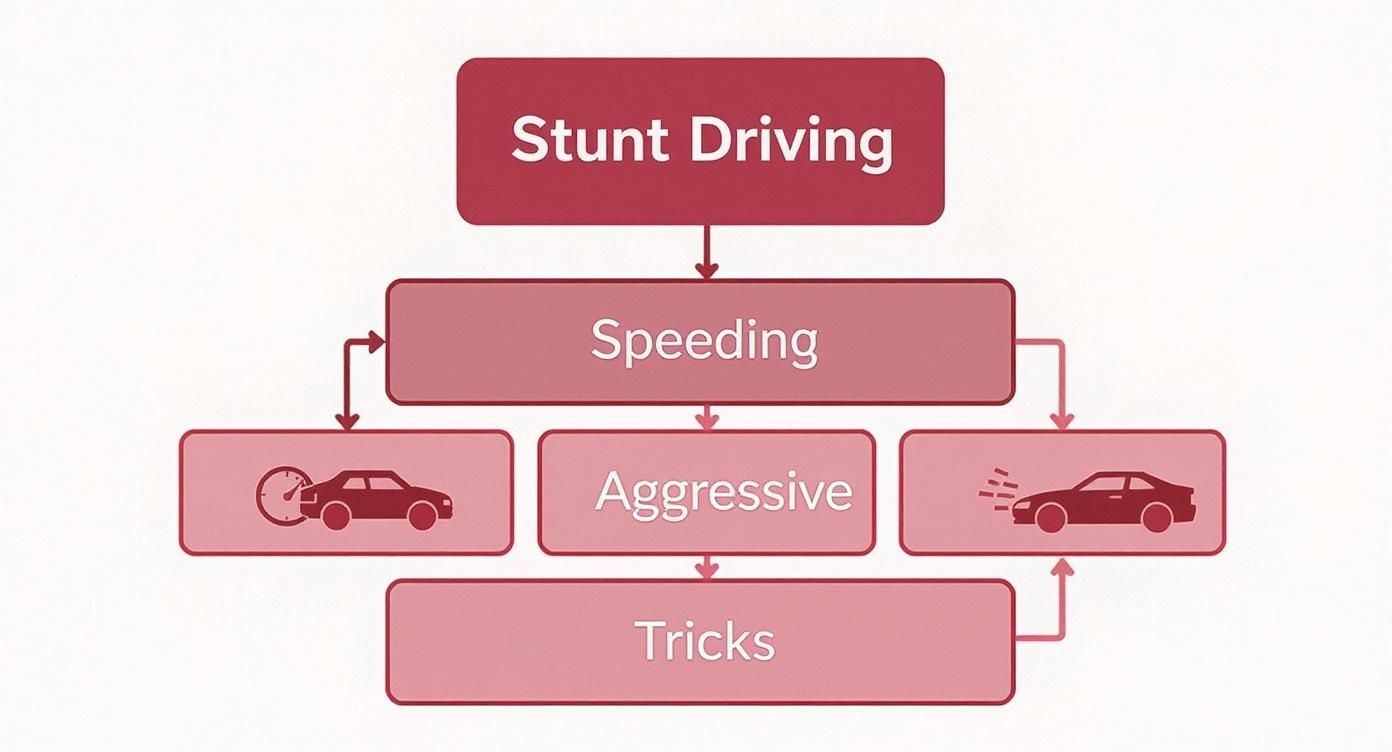
The infographic below shows just how broad the definition of stunt driving is, covering a lot more than just excessive speed.

Infographic showing the three main categories of stunt driving: Speeding, Aggressive driving, and Tricks.

As you can see, a charge isn’t limited to one kind of bad driving; it’s a catch-all for a wide spectrum of dangerous behaviour on the road.

The Mandatory Licence Suspension

For most people, this is the most impactful penalty: the mandatory driver’s licence suspension. A first conviction requires the court to suspend your licence for a minimum of one year, with a possible extension up to three years. This is a brand new, much longer suspension that begins after your conviction.

Before you can even think about getting your licence back, you’ll also be forced to complete a mandatory driver improvement course, at your own expense. If you don’t complete it, you won’t be driving legally again.

A year-long suspension means no driving to work, no picking up the kids from school, and no running errands. It’s a massive disruption to your personal, professional, and family life. Under Ontario’s Family Law Act, this can even impact child access and custody arrangements if transportation is a factor.

How Penalties Escalate for Repeat Offences

The law comes down much harder on repeat offenders. If you thought the penalties for a first offence were severe, a second or third conviction could end your driving privileges for good.

The escalation is dramatic and unforgiving:

  • First Conviction: A licence suspension from a minimum of 1 year up to a maximum of 3 years.
  • Second Conviction (within 10 years): A licence suspension from a minimum of 3 years up to a maximum of 10 years.
  • Third Conviction (within 10 years): A potential lifetime driving ban.

The message is clear: don’t do it again. Each conviction brings those steep fines, six demerit points, and the potential for jail time. But as the CAA notes, the escalating, mandatory licence suspensions create long-term consequences, making it nearly impossible to ignore the gravity of a repeat offence.

The Hidden Costs of a Stunt Driving Conviction

An image showing a stack of Canadian money next to car keys, representing the financial cost of driving offences.

The penalties for stunt driving in Ontario don’t end when you pay the court fine. The real financial pain often begins right after, creating a long-term burden that impacts your wallet and career for years. Many drivers in Brampton are shocked to discover these hidden costs, which can make the initial fine seem minor.

These consequences stem from one major shift: a stunt driving conviction rebrands you. In the eyes of insurance companies and employers, you are now a high-risk driver, a label with devastating and lasting effects.

The Insurance Nightmare Begins

Once convicted, your insurance provider will find out. A stunt driving conviction is one of the biggest red flags imaginable. The immediate fallout is severe.

Your current insurer might cancel your policy outright. Even if they don’t, they will almost certainly refuse to renew it. This forces you to shop for new insurance with a major conviction on your record—an incredibly difficult and expensive task.

A stunt driving conviction tells insurers you’re a significant gamble. As a result, your premiums can easily double, triple, or even jump by more than 100%. This isn’t a temporary spike; you can expect to pay these sky-high rates for three to five years, or as long as the conviction stays on your driving record.

If your car insurance payment goes from $250 a month to $750 overnight, that’s an extra $18,000 out of your pocket over three years. For many people in Brampton, that kind of financial hit makes driving completely unaffordable.

Entering the World of High-Risk Insurance

If your standard insurance company drops you, your only option is to enter the world of “high-risk” or “facility” insurance. This is a specialized market for drivers that mainstream companies won’t cover. The premiums are astronomical, and the coverage is often the bare minimum.

Getting this type of insurance is your only legal path back to driving, but it comes at a steep price. It’s a direct financial consequence of the stunt driving Ontario penalties.

Your Career and Professional Life Are on the Line

The damage doesn’t stop with your insurance premiums. A stunt driving conviction can create serious roadblocks in your professional life, especially for anyone in the Brampton area whose job involves driving.

Many jobs require a clean driving record. Here’s how a conviction can slam the brakes on your career:

  • Disqualification from Jobs: You could become ineligible for roles like a delivery driver, sales representative, tradesperson, or any other position that requires operating a company vehicle.
  • Loss of Current Employment: If you drive for work, your employer’s insurance company may refuse to cover you, forcing your employer to let you go.
  • Future Career Limitations: A conviction on your record can limit future opportunities, closing doors to careers you hadn’t even considered yet.

A conviction stays on your driving abstract for three years, acting as a constant red flag for potential employers. The career limitations can fundamentally alter your professional path long after the fines are paid and your suspension is over.

How to Build a Defence Against Your Charge

Facing a stunt driving charge in Brampton can feel hopeless. But it’s not. Actionable defence strategies start the moment you decide to fight back, beginning with a deep dive into the evidence. The very first thing a skilled traffic lawyer does is demand and review the full disclosure from the Crown.

This is where the case often cracks open. It’s in the details—the officer’s notes, the radar readings, the calibration logs—that we find the weaknesses to build a strong defence.

Disclosure is everything. It includes the officer’s notes, any radar or laser device readings, the maintenance logs for that device, and any dashcam footage. This collection of evidence is rarely perfect, and a skilled lawyer knows exactly what to look for.

Missing records or flawed paperwork aren’t just minor details; they can be the foundation of a solid defence. We meticulously cross-reference the logs and procedures against the strict requirements of the Highway Traffic Act to spot any discrepancies.

Challenging the Speed Measurement

One of the most effective defence strategies is to question the machine itself. Police speed guns and laser units require regular, documented maintenance to be considered reliable in court. If those calibration dates are missing or the logs show problems, their readings become questionable.

We scrutinize the evidence for issues like:

  • Sensor misalignment, which can distort speed readings on a moving patrol car.
  • Outdated or skipped calibration tests, which violate operational standards.
  • Missing software updates or failure reports that should have been in the file.

Any one of these issues can create the reasonable doubt needed to challenge the accuracy of your recorded speed.

Questioning the Officer’s Observations

An officer’s visual estimate of your speed is just that—an estimate. On Brampton’s sprawling road network, factors like poor lighting, highway curves, or bad weather can skew their judgment of distance and speed.

We can use tools like diagrammatic reconstructions to show a judge just how easily sightlines can mislead an officer’s estimate.

For example, if an officer claims they saw you speeding on Highway 410 with the setting sun in their eyes, that observation, especially without video to back it up, is highly vulnerable to a challenge in court.

“Even trained observers can err by 20% when estimating speed under low light,” notes a traffic safety expert.

Identifying Procedural Errors

Police must follow the rules. Any procedural misstep during your stop can lead to critical evidence being thrown out. Some of the most common errors include:

  • Failing to properly warn you of their intention to conduct a speed test.
  • Skipping mandatory roadside procedures required under the Highway Traffic Act.
  • A missing signature or incorrect date on your Notice of Suspension.
  • An improper roadside testing environment, such as failing to record poor weather conditions.

Spotting these mistakes allows your lawyer to file motions to have evidence excluded or even seek a full acquittal on a technicality.

Negotiation Tactics and Charge Reduction

Sometimes, the best outcome is a reduction to a lesser charge. Getting a stunt driving charge knocked down to a simple speeding ticket is a huge win—it saves you from a mandatory licence suspension and devastating insurance hikes.

The negotiation process looks like this:

  1. We schedule a preliminary meeting with the Crown prosecutor to review the evidence.
  2. We present mitigating factors, like a clean driving record, a genuine emergency, or weaknesses in their case.
  3. We propose a plea to a lesser offence, like a speeding ticket under s. 128 of the HTA.
  4. To humanize your case, we might submit character reference letters or other relevant context.

A successful reduction spares you from the mandatory one-year suspension and the sky-high insurance premiums that follow a stunt driving conviction.

When to Contact a Defence Lawyer

The sooner you get a lawyer involved, the better your chances. Engaging Badesha Law right away can completely change the direction of your case. As a local Brampton firm, we will:

  • Immediately obtain and analyze the full disclosure package.
  • Prepare bail or release plans if you’ve been held in custody.
  • Attend every court appearance on your behalf so you don’t have to miss work.
  • Negotiate effectively with prosecutors who know our reputation.
  • Advise you on the insurance impact and help you plan for the long term.

“Hiring a lawyer early changed my case outcome completely,” says a former client of Badesha Law.

Don’t wait. Act quickly after being charged to protect your licence and your future. Reach out to Badesha Law for a free consultation and start building your defence today.

Answering Your Stunt Driving Questions

When you’re hit with a charge as serious as stunt driving, a flood of questions is normal. For drivers in Brampton, getting direct, clear answers is the first step toward making smart decisions.

This section tackles the most common questions we hear every day, providing straightforward information to cut through the noise.

Can I Get My Car Out of the Impound Lot Early?

This is one of the first questions people ask, but the answer is a firm no. The 14-day vehicle impoundment is a mandatory, administrative penalty under Ontario’s Highway Traffic Act. It is applied at the roadside and is non-negotiable.

There is no appeal process to get the vehicle released early. You, or the vehicle’s registered owner, will be responsible for all towing and daily storage fees for the full two-week period.

Will I Get a Criminal Record for Stunt Driving?

Many drivers worry that a stunt driving charge will leave them with a criminal record. This is a common misunderstanding. Stunt driving is a provincial offence under the Ontario Highway Traffic Act, not a federal crime.

This means a conviction for stunt driving will not result in a criminal record. However, it is an extremely serious traffic conviction that goes on your driving record for years and will have severe consequences for your insurance, licence, and potentially your employment.

It is important to know that in some cases, the same driving behaviour could lead police to lay a separate charge of Dangerous Driving under the Criminal Code of Canada. A conviction for that offence absolutely would result in a criminal record.

What Happens If I Just Plead Guilty to Stunt Driving?

You cannot just “pay the ticket” and move on from a stunt driving charge. This charge comes with a court summons, meaning you or your legal representative must appear in court.

Pleading guilty is accepting the worst-case scenario. You are agreeing to all the severe, mandatory penalties, which include:

  • A minimum fine of $2,000 (and up to $10,000)
  • A mandatory licence suspension of at least one year
  • Six demerit points on your driving record
  • A massive, multi-year hike in your insurance premiums

Given how severe and lasting these penalties are, it is critical to get legal advice before considering a guilty plea.

How Can a Lawyer Help with a Brampton Stunt Driving Charge?

Hiring an experienced traffic lawyer who regularly handles cases in Brampton is your most powerful tool. A lawyer’s role goes far beyond just showing up to court. They become your strategic advocate, managing every aspect of your defence.

An expert in this area will:

  1. Handle All Court Appearances: They attend all court dates on your behalf, so you don’t have to take time off work.
  2. Analyze the Prosecutor’s Evidence: Your lawyer will get the full disclosure package and meticulously review it, searching for weaknesses or procedural errors.
  3. Build a Defence Strategy: Based on the evidence, they will identify the strongest defence angles, such as challenging the speed-measuring device or questioning the officer’s observations.
  4. Negotiate with the Prosecutor: Often, the best outcome is a negotiated one. A skilled lawyer can negotiate to have the stunt driving charge reduced to a less serious offence, like a simple speeding ticket. This can help you avoid the mandatory licence suspension and crushing insurance consequences.

In Brampton, having a lawyer who understands the local courts and prosecutors can make all the difference. They can protect your rights, your licence, and your financial future.


If you are facing stunt driving penalties in Brampton, Mississauga, or the GTA, the time to act is now. Protecting your licence and your future requires immediate, strategic legal action. Contact Badesha Law for a confidential consultation to understand your rights and start building a strong defence. Learn more and get the help you need by reviewing our Brampton criminal lawyer services.