Criminal defence lawyer in brampton: Find a trusted advocate

Getting charged with a criminal offence in Brampton can throw your entire world off balance. The first few hours are absolutely critical, and your first step should be to call an experienced criminal defence lawyer in Brampton. This single action is your most powerful move; it immediately protects your rights under the Canadian Charter of Rights and Freedoms, stops police questioning, and begins the crucial process of building your defence.

Your Immediate Advocate in the Brampton Legal System

When you're arrested, it feels like you're alone against a massive system. Suddenly, you’re facing the full power of the state, represented by the Crown Attorney's office. Trying to navigate this on your own is like being lost in a dense forest without a map or compass. A criminal defence lawyer is your expert guide—they know the terrain, every hidden path, and every potential trap.

From the moment you’re detained, your rights are on the line. Police are trained to gather evidence, and it’s their job to build a case against you. Anything you say can, and absolutely will, be used against you. The most important advice anyone can give you is this: exercise your right to remain silent and your right to a lawyer.

The Advantage of Local Brampton Expertise

Hiring a lawyer who is deeply familiar with the Brampton legal community is a game-changer. Winning a criminal case isn't just about knowing the Criminal Code of Canada; it’s about understanding the local players, procedures, and unwritten rules. A lawyer who regularly works at the A. Grenville and William Davis Courthouse at 7755 Hurontario Street knows the Crown Attorneys and judges who will be deciding your fate.

This local knowledge gives you a real strategic edge:

  • Negotiation: Knowing how specific Crown prosecutors approach cases can lead to much more effective negotiations for getting charges withdrawn or resolved with outcomes like a peace bond.

  • Bail Hearings: A local lawyer understands what Brampton Justices of the Peace look for in a release plan, making it easier to craft a compelling argument to get you out of custody.

  • Courtroom Strategy: Experience in front of certain judges allows your lawyer to tailor arguments and presentations in a way that resonates, which is crucial during pre-trial motions and at trial.

Your lawyer is your shield and your strategist. Their first job is to stop you from providing information to the police, protect your fundamental rights, and start mapping out a defence strategy to secure the best possible future for you.

Ultimately, choosing a criminal defence lawyer in Brampton is the single most important decision you'll make in your case. Getting expert local counsel on your side immediately ensures your defence starts on the strongest possible footing from the very first hour.

The First 24 Hours After an Arrest

The first few hours after an arrest are a blur of confusion and anxiety. Your world shrinks, and your only thought is how to get out. This is the moment a skilled criminal defence lawyer in Brampton steps in, cutting through the chaos to build a clear, strategic plan to secure your release.

The first critical step is something called a judicial interim release hearing—what most people just call a bail hearing. Your lawyer’s goal here is to present a solid release plan to the court. Think of it as telling a convincing story to the Justice of the Peace, one that shows you can be safely released back into the community while your case is ongoing. It’s not a simple request; it’s a carefully constructed argument in your favour.

Crafting a Winning Release Plan

A strong release plan is your best chance at getting home. It almost always involves finding a surety—a responsible person, usually a family member or close friend, who will promise the court they’ll supervise you and make sure you follow any rules the court sets.

Your lawyer will quickly gather information to show you in the best possible light, directly addressing the three big questions the court needs answered:

  • Will you show up for court? We highlight your connections to the community, like a job, family, or home in Brampton.

  • Are you a risk to the public? Your lawyer will propose specific conditions to address any concerns about public safety.

  • Is there a risk you might commit another offence? This is where a strong surety and a clear supervision plan are absolutely vital.

Getting a lawyer on board immediately is crucial. They are your shield, protecting your rights and starting your defence from the very first minute.

This process makes one thing clear: your lawyer stands between you and the full power of the state, fighting for your freedom.

Negotiating Your Bail Conditions

If the court agrees to release you, it will come with conditions. A huge part of your lawyer’s job is to negotiate for the most reasonable and least restrictive terms possible. Common conditions might include a curfew, checking in with the police, or staying away from certain people. An experienced lawyer can successfully argue against conditions that are too harsh or unnecessary, preserving as much of your day-to-day freedom as they can.

In Brampton, cases involving young people are handled differently under the Youth Criminal Justice Act (YCJA), which prioritizes rehabilitation over punishment. Brampton criminal defence lawyers are skilled at navigating youth bail hearings to secure release and fair conditions, aiming to keep young people out of detention and protect their futures. You can learn more about how Brampton defence lawyers handle these specific proceedings and advocate for their clients.

The first 24 hours truly set the stage for your entire case. Having an expert manage police interactions, build a persuasive release plan, and fight for your freedom isn’t just a good idea—it’s a necessity. It’s the difference between waiting for your next court date in a jail cell and fighting your case from home.

Common Criminal Charges in Brampton Courts

The first step in building a strong defence is understanding exactly what you’re up against. The legal language in the Criminal Code of Canada is dense and confusing, but you can't fight what you don't understand. A good criminal defence lawyer in Brampton will cut through the jargon and explain things in plain English, so you know precisely what the Crown needs to prove and what consequences you might be facing.

You might hear the term "hybrid" offence. Many charges in Canada fall into this category, meaning the Crown prosecutor can choose to treat it as either a less serious "summary conviction" or a more serious "indictable offence." That one decision can dramatically change everything, from the potential penalties to the entire court process. Getting a lawyer involved early can sometimes influence this critical choice in your favour.

Impaired Driving DUI and Over 80

Impaired driving charges—often called DUI, Over 80, or Refusal to Provide a Sample—are some of the most common and technically challenging cases heard in Brampton. A conviction isn't just a slap on the wrist; it comes with mandatory minimum penalties, including hefty fines, a driving prohibition, and a permanent criminal record. Since Bill C-46 was passed in 2018, the laws have become even tougher.

A solid defence almost always starts with a microscope-level review of police procedure. Your lawyer will dig into every detail:

  • Did the officer have a lawful reason to pull you over in the first place?

  • Were you informed of your right to a lawyer immediately and given a real chance to speak with one?

  • Was the breathalyzer device calibrated properly? Was it operated correctly?

Even a minor slip-up in procedure can be enough to get the evidence thrown out and the charges dismissed.

Assault and Domestic Assault

Under the Criminal Code, an "assault" can be anything from an unwanted touch to a physical fight causing serious harm. When an incident involves a partner, spouse, or other family member as defined under Ontario's Family Law Act, it’s treated as domestic assault. It's important to know that Peel Regional Police and the Brampton Crown's office have specific, strict policies for these situations. They will often push forward with charges even if the person who made the complaint wants to take it all back.

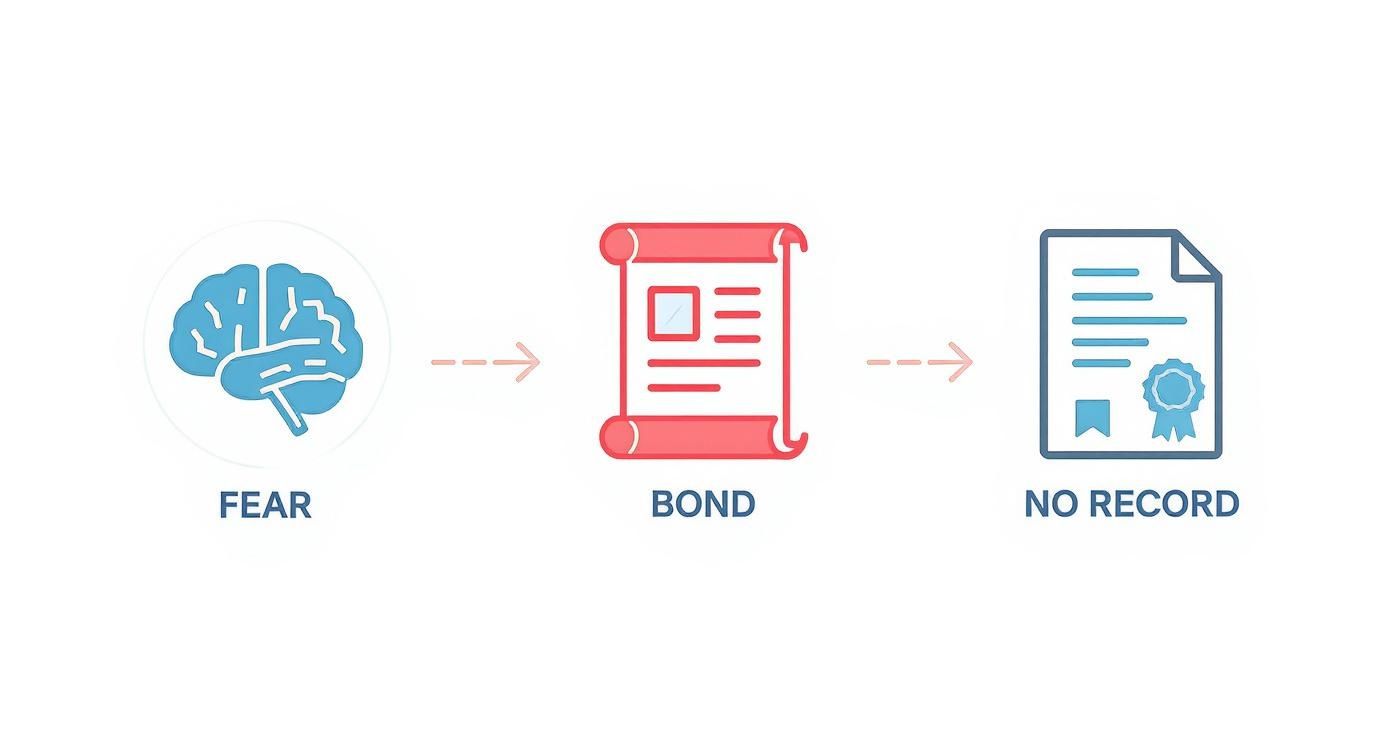
A defence lawyer will get to the bottom of what happened, exploring issues like self-defence and questioning the credibility of the evidence presented. For less serious, first-time offences, it’s sometimes possible to negotiate a peace bond. This is an agreement to follow certain rules (like no contact), but it is not a criminal conviction and keeps your record clean.

Theft and Fraud Charges

Theft and fraud charges cover a huge range of actions, from shoplifting something worth less than $5,000 to running a complex financial scheme. The value of the money or property involved is a massive factor in how serious the charge is and what kind of sentence a conviction could bring.

Your lawyer's main job is to create reasonable doubt. This means going through the Crown’s evidence—like security camera footage or financial statements—with a fine-tooth comb, looking for holes and inconsistencies. Proving you intended to commit the crime (the "guilty mind") is often the Crown's biggest challenge, and that’s where a strong defence can be built.

Beating these charges demands a detail-oriented strategy. A skilled criminal defence lawyer in Brampton will scrutinize every piece of evidence to build a case that protects your record and your future. Finding the right representation is critical, especially from Brampton criminal lawyers who know the local courthouse and its procedures inside and out.

The consequences of a criminal conviction can be life-altering. Below is a table summarizing some common charges and their potential penalties to give you a clearer picture of what's at stake.

Common Charges and Potential Penalties in Ontario

Charge Type Governing Law Example Penalties
Simple Assault Criminal Code, s. 266 Up to 2 years in jail (summary) or up to 5 years (indictable).
Impaired Driving (DUI) Criminal Code, s. 320.14 Mandatory minimums: $1,000 fine and 1-year driving ban for a first offence. Penalties increase significantly for subsequent offences.
Theft Under $5,000 Criminal Code, s. 334(b) Up to 2 years in jail (summary) or up to 2 years (indictable). Often resolved without jail for first-time offenders.
Fraud Over $5,000 Criminal Code, s. 380(1)(a) Up to 14 years in prison. Involves mandatory minimum sentences if the value exceeds $1 million.
Sexual Assault Criminal Code, s. 271 Ranges from 18 months (summary) to 10 years (indictable). Aggravated sexual assault carries a maximum of life imprisonment.

This table provides a general overview, but every case is unique. The actual outcome depends on the specific facts of your case, your personal background, and the quality of your legal defence.

How to Choose the Right Defence Lawyer in Brampton

This is the most critical decision you'll make. Period. Who you choose to represent you will directly shape your defence strategy, your stress levels, and, ultimately, the final outcome of your case. You’re not just looking for a lawyer; you need a genuine partner in your defence—someone who knows the law inside and out and understands the unique landscape of the Brampton court system.

Your search should begin and end with lawyers whose entire practice is exclusively focused on criminal law. A generalist who dabbles in real estate, wills, and the occasional criminal case simply won't have the specialized, up-to-the-minute knowledge required to effectively challenge the Crown. An expert criminal defence lawyer lives and breathes the Criminal Code. They know exactly how to poke holes in a police investigation because it's what they do all day, every day.

Key Questions to Ask During Your Consultation

Think of a consultation as an interview where you are the one hiring. Don’t be timid—your future is on the line. Arrive prepared with direct questions to get a real sense of their experience and how they'd approach your case. This is your chance to see if they’re the right fit.

Here’s a quick checklist to get you started:

  • How much of your practice is dedicated specifically to criminal defence?

  • What's your experience with cases like mine, right here at the Brampton courthouse?

  • Based on what you know so far, what’s a potential strategy we could explore?

  • Who will be my main point of contact, and how will you keep me updated?

  • Can you give me a clear breakdown of your fees and any other costs I should expect?

Pay close attention to their answers. You’re looking for confident, straightforward responses rooted in real experience, not vague assurances or empty promises.

A great lawyer won't just tell you what you want to hear. They will give you an honest, realistic assessment of your situation, explain the challenges ahead, and outline a clear plan to achieve the best possible outcome.

Understanding Fees and Legal Aid

Let’s be honest: navigating legal costs is a major source of stress. As Brampton's population has exploded to over 600,000 people, the demand for legal help has soared, and fees can vary dramatically. You can expect hourly rates for a criminal defence lawyer in Brampton to be anywhere from $250 to $800, depending on their reputation and the complexity of your charges.

Many lawyers offer flat-fee arrangements for certain cases, which can give you some much-needed cost certainty. More importantly, if you can't afford a lawyer, you might qualify for help through Legal Aid Ontario. Some private law firms do accept Legal Aid certificates, ensuring that everyone can access a quality defence. You absolutely must discuss fees, payment plans, and Legal Aid eligibility during your first meeting. You can learn more about how Brampton's growth has impacted legal services and costs.

Navigating the Brampton Court System

Once you’ve hired a criminal defence lawyer in Brampton, that initial wave of panic might start to subside. But what comes next can feel just as confusing. Getting a handle on the legal journey ahead is the best way to feel like you’re back in the driver’s seat. It helps to think of the court process not as one big event, but as a series of steps, each with its own purpose, all moving toward a final resolution.

Your case officially kicks off with a First Appearance at the Brampton courthouse. This is mostly a procedural step where your lawyer appears on your behalf, informing the court that you now have legal representation. In most cases, you won't even need to be there. Shortly after, your lawyer will get the “disclosure package” from the Crown Attorney. This is their entire file of evidence against you—everything from police reports and witness statements to any video or audio recordings.

The Strategic Path Forward

After your lawyer has gone through the disclosure with a fine-tooth comb, you’ll sit down together to talk about the strengths and weaknesses of the Crown’s case. This is where the real strategy begins. The next major milestones are pre-trial meetings, which are critical negotiation sessions held outside of the formal courtroom.

There are two main types of pre-trials:

  1. Crown Pre-Trial (CPT): This is a direct conversation between your defence lawyer and the Crown prosecutor assigned to your file. They’ll discuss the case, point out legal issues, and see if there’s a way to resolve things without going to trial.

  2. Judicial Pre-Trial (JPT): If a deal can’t be struck with the Crown, a JPT is the next step. This meeting brings a judge into the mix, who listens to both sides and offers input to help guide them toward a fair and efficient outcome.

These pre-trial stages are where a huge number of cases get successfully resolved. An experienced criminal defence lawyer in Brampton uses these meetings to advocate for you, pushing for the best possible result long before a trial ever becomes necessary.

Exploring Your Options for Resolution

Your case doesn’t have to end in a dramatic courtroom battle. Depending on the evidence and how negotiations go, there are several different paths your case could take, each with very different consequences for your future. A good lawyer works to find a resolution that protects your criminal record and lets you get on with your life.

The goal is always to secure the most favourable outcome. While that can mean fighting for a full acquittal at trial, often a skilled negotiation can achieve an excellent result while avoiding the risk, stress, and expense of a trial.

Here are the most common resolutions your lawyer might negotiate for you:

  • Withdrawal of Charges: This is the best-case scenario. Your lawyer convinces the Crown that there’s no reasonable chance of a conviction, and the charges are dropped completely.

  • Peace Bond: You agree to follow specific court-ordered conditions for a certain period (usually 12 months). In return, the criminal charge is withdrawn, and you are left with no criminal record.

  • Plea to a Lesser Offence: If the evidence against you is strong, your lawyer might negotiate for you to plead guilty to a less serious charge, which leads to a much lighter sentence.

  • Trial: If no fair resolution is on the table, your lawyer will prepare to fight the charges in court. They will hold the Crown to its high standard of proving your guilt beyond a reasonable doubt.

Each of these paths needs to be weighed carefully. A top Brampton criminal lawyer will walk you through the pros and cons of every option, giving you the clear, straightforward advice you need to make the right call for your future.

Your Questions About Criminal Defence in Brampton Answered

When you’re staring down a criminal charge, the unknown is often the scariest part. Your mind starts racing with questions, and finding clear, straightforward answers can feel impossible. This section tackles some of the most urgent concerns people have when they get caught up in the Brampton justice system.

Should I Talk to the Police Before I Speak to a Lawyer?

No. Absolutely not.

Under the Canadian Charter of Rights and Freedoms, you have the right to remain silent and the right to speak with a lawyer. It is almost always in your best interest to politely say nothing until you've spoken with a criminal defence lawyer in Brampton.

Remember, police officers are trained investigators, and their job is to build a case against you. Anything you say—even something you think is completely harmless—can be twisted around and used against you in court. Protecting your rights starts the moment you decide to use them.

What Happens if I Cannot Afford a Lawyer in Brampton?

Everyone deserves a defence. If you can’t afford a lawyer, you might qualify for financial help from Legal Aid Ontario. You can apply for a Legal Aid certificate, which acts like a voucher to cover legal fees for an approved lawyer.

Many private criminal defence lawyers in Brampton do accept Legal Aid certificates. It’s important to ask about this during your first meeting so you can explore every option to get strong representation.

Will I Get a Criminal Record if I Am Charged?

Getting charged is not the same as getting convicted. A charge doesn't automatically mean you’ll end up with a criminal record—that’s a common myth that causes a ton of stress.

A good criminal defence lawyer in Brampton will fight to find a way to keep your record clean. Some of the common strategies include:

  • Negotiating for a withdrawal of the charges: This is the best-case scenario, where the Crown prosecutor agrees to drop the case completely.

  • Securing a peace bond: This is an agreement with the court where you promise to follow certain rules for a period of time. If you do, the charge is withdrawn, and you walk away with no conviction.

  • Obtaining a discharge: In some cases, even if you are found guilty, a judge might grant an absolute or conditional discharge, which is not considered a criminal conviction.

The main goal is always to protect your future, and for most people, that means protecting their clean record.

A criminal charge is just an accusation, not a final verdict. Your lawyer's job is to poke holes in the Crown’s case and find a resolution that keeps your future open—which usually means finding a path that avoids a criminal record.

How Long Will My Criminal Case Take in the Brampton Courts?

The timeline for a criminal case can be all over the map. It really depends on things like how complicated the charges are, how much evidence the police have (we call this "disclosure"), and how backed up the court dockets are in the busy Brampton system.

Simpler summary matters might wrap up in just a few months. But more serious cases that are headed for trial can easily take a year or even longer to see a final outcome. Once your lawyer has a chance to look at the details of your case and the Crown's evidence, they can give you a much more realistic timeline.


Facing criminal charges is a serious matter that demands immediate and skilled legal advice. The team at Badesha Law has the experience and local Brampton knowledge to defend your rights and protect your future. If you need a trusted advocate, contact us today for a consultation at Badesha Law.

Charged with Assault. Hire a Criminal Lawyer in Brampton

When you're facing an assault charge in Brampton, what you do in the first few hours is absolutely critical. Things move fast—especially your bail hearing—so the most important step you can take is to get a dedicated assault lawyer Brampton residents trust to protect their rights from the get-go. At Badesha Law, our team is ready to jump in with immediate, strategic advice the moment you're arrested.

What steps should I take immediately after being charged with assault?

Being arrested and charged with assault in Brampton is a disorienting, high-stress experience. The moments and hours right after are a crucial window where your actions—or inaction—can seriously impact how your case unfolds. The two most important things to remember are your right to legal counsel and your right to remain silent.

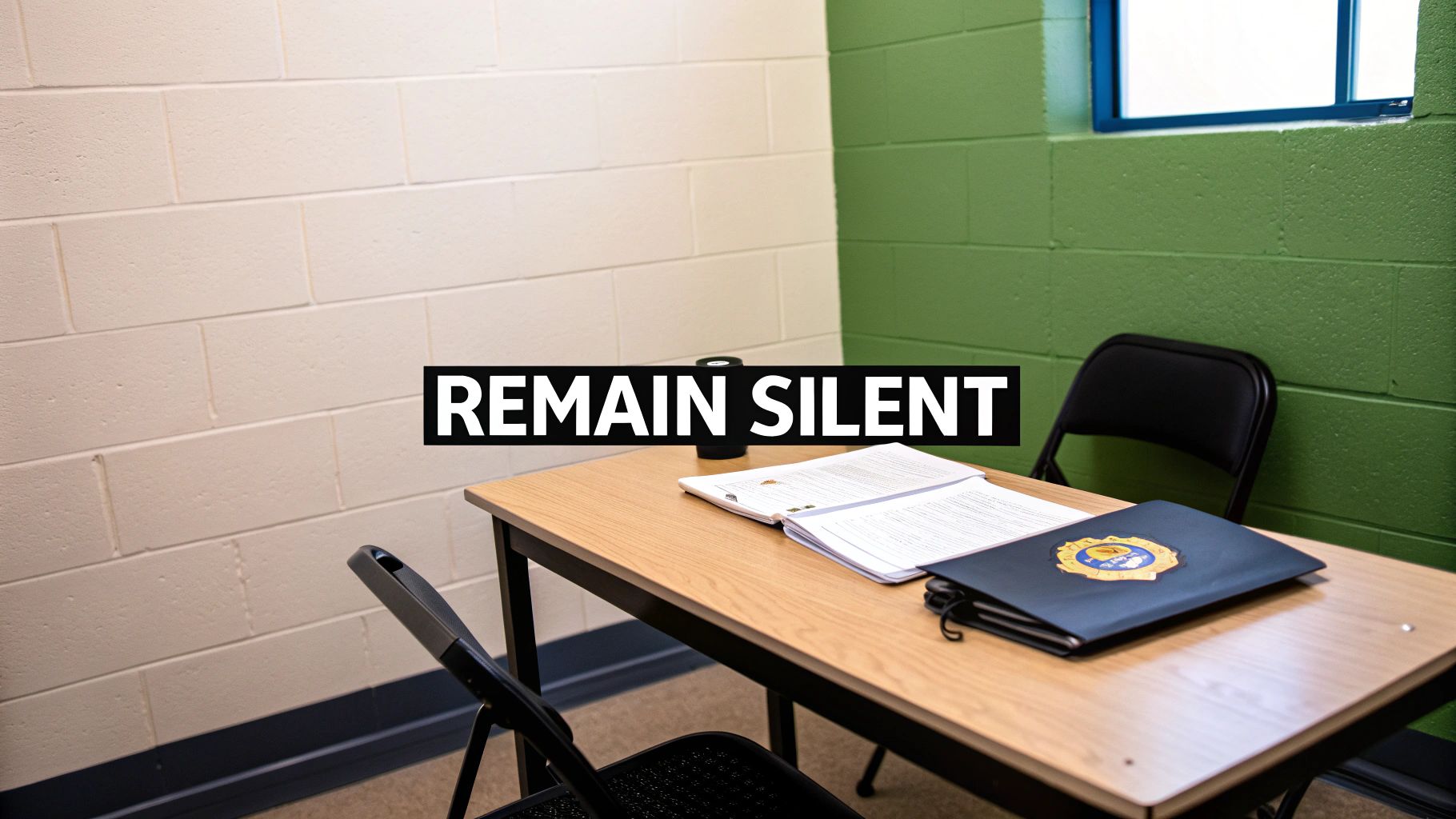
A sparse interrogation room with a table, two chairs, and legal documents, featuring 'REMAIN SILENT' text.

After an arrest, the main goal of the Peel Regional Police is to gather evidence, and that often means questioning you about what happened. While you have to provide basic identifying information, you are under no legal obligation to answer questions about the alleged incident. Anything you say can and will be handed over to the Crown Attorney to build a case against you.

Your Legal Right: Under the Canadian Charter of Rights and Freedoms, you have the right to remain silent and the right to retain and instruct counsel without delay. Using these rights is not an admission of guilt; it’s a fundamental protection you must use.

The Booking Process in Peel Region

After an arrest in Brampton, you’ll be taken to a Peel Regional Police station for booking. This is where officers will take your fingerprints, photograph you, and formally record the charge. It’s also during this time that you’ll get your opportunity to call a lawyer. This is your moment to connect with a criminal lawyer in Brampton who can start defending you right away.

It's vital to use this call to contact a firm like Badesha Law. An experienced lawyer can give you on-the-spot advice about handling police questions and explain what's coming next, including the all-important bail hearing.

The Urgency of the Bail Hearing

Once arrested, you'll have a bail hearing, usually within 24 hours. A Justice of the Peace will decide whether to release you and under what conditions. The decision is based on ensuring public safety, not on determining guilt or innocence. In domestic assault cases, for example, bail conditions are often incredibly strict to prevent any contact with the alleged victim.

Having a skilled Brampton criminal lawyer is essential to argue for the least restrictive bail conditions possible. You can learn more about the specifics of bail in domestic assault cases in Brampton on badeshalaw.ca.

Key Steps to Protect Yourself

If you find yourself in this situation, the following steps are your first line of defence. The table below breaks down exactly what to do and why it’s so important for your case.

**Immediate Actions Following an Assault Charge in Brampton** 1. **Remain Silent**: It is crucial to remain calm and politely inform the authorities that you wish to remain silent until you have spoken with your lawyer. This approach helps prevent you from unintentionally providing any information that could be used against you by the police or Crown. 2. **Contact Your Lawyer Immediately**: As soon as you are allowed to make a phone call, reach out to **Badesha Law**. Provide your name, the location of the police station where you are being held, and the charge against you. This enables your lawyer to begin safeguarding your rights and preparing for your bail hearing without delay. 3. **Avoid Discussing the Case**: Refrain from talking about the incident with anyone, including police officers, cellmates, or even family members over the phone. These conversations may be monitored and potentially used as evidence against you. The details of your case should only be discussed with your lawyer. 4. **Cooperate but Remain Firm**: While it is important to comply with basic procedures such as fingerprinting, maintain your decision not to answer questions regarding the allegations. This demonstrates your willingness to cooperate while also asserting your awareness of your rights. By adhering to these steps, you safeguard yourself, allowing an experienced legal professional to take charge of the situation and begin constructing a robust defense from the outset. The initial hours are critical, and having a trusted advocate by your side can significantly impact the outcome.

What is an assault with a weapon charge in Ontario?

When police add the words “with a weapon” to an assault allegation, everything changes. The charge instantly becomes more serious, and under Canada's Criminal Code, the definition of a 'weapon' is much broader than most people realize. This one detail can dramatically alter the course of your case in the Brampton courts.

Many people hear 'weapon' and immediately think of a gun or a knife. But legally, a weapon can be almost anything if it's used to hurt or threaten someone. This means common, everyday items—a beer bottle, a hockey stick, or even a car driven aggressively towards another person—can elevate a simple assault into a much more severe charge.

The moment a weapon is involved, the Crown Attorney in Bramton will handle the case with far greater intensity. It bumps the charge up from a simple assault to an offence that is almost always prosecuted by indictment, which opens the door to much heavier penalties.

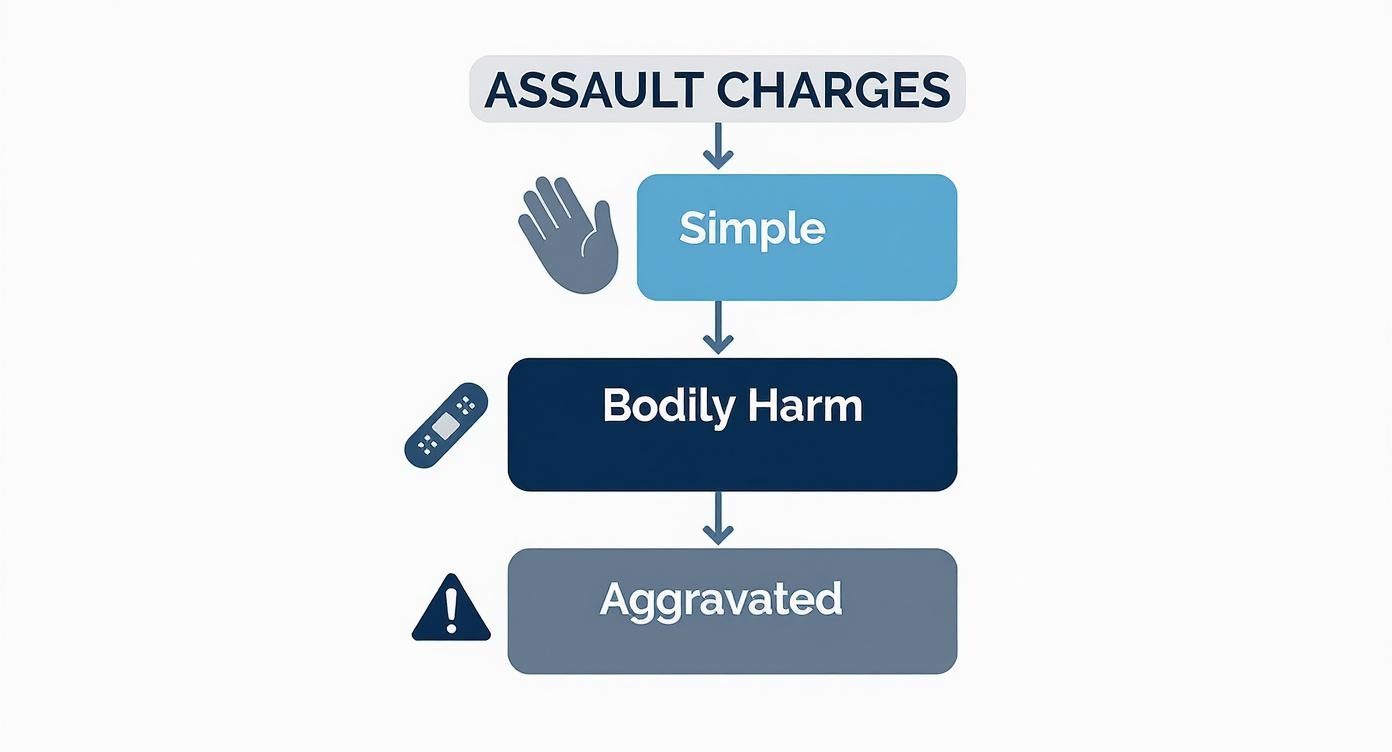
The Different Levels of Assault

The seriousness of an assault charge climbs depending on how much harm was caused or the way it was inflicted. The first thing a Brampton criminal lawyer will do is dig into the details of your case to see exactly what the Crown has to prove.

  • Simple Assault (Section 266): This is the foundational charge. It covers everything from a shove in a heated moment to a deliberate, unwanted touch.

  • Assault with a Weapon or Causing Bodily Harm (Section 267): This is a step up in severity. "Bodily harm" means any injury that affects a person's health or comfort and is more than just minor or fleeting. The involvement of a weapon also places the charge in this category.

  • Aggravated Assault (Section 268): This is the most serious form of assault. It happens when an attack wounds, maims, disfigures, or puts the complainant's life in danger.

The specific charge you face is decided based on the evidence Peel Regional Police gather and the Crown Attorney's review. That classification sets the stage for everything that follows, from your bail conditions to the potential sentence you might face.

The Impact of Domestic Relationships

When an assault allegation involves intimate partners or family members, the legal system in Brampton handles the case very differently. These are labelled as domestic assault cases under both Ontario's Family Law Act and specific Crown policies in Peel Region.

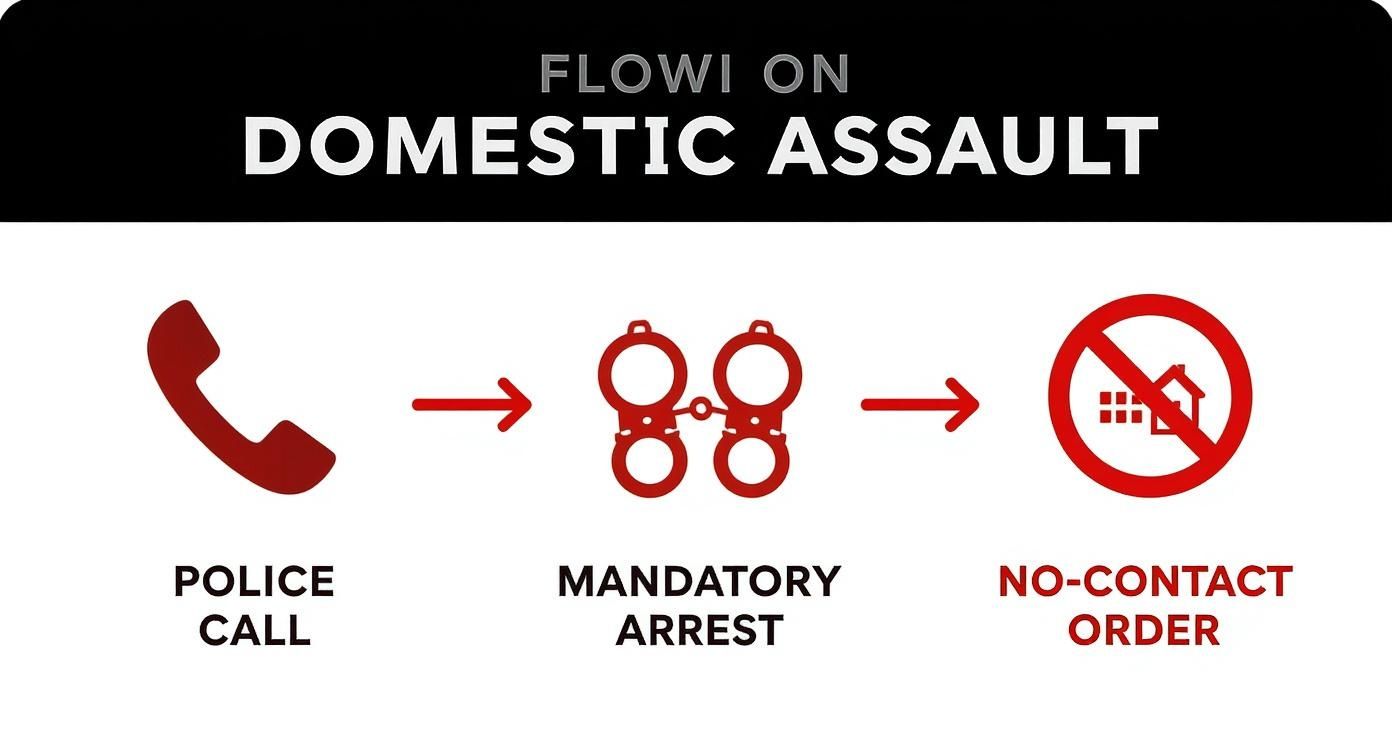
Even if the charge is simple assault, the "domestic" label changes the entire game. The Crown's office in Brampton has a zero-tolerance policy for these situations, which means they are highly unlikely to withdraw the charges, even if the person who made the complaint wants to reconcile.

Bail conditions are almost always stricter, often including a non-negotiable no-contact order with the alleged victim and a ban on returning to the family home. If convicted, the penalties can be harsher because the domestic context is seen as an aggravating factor at sentencing. If you're facing this kind of allegation, you absolutely need a lawyer with specific experience in this area. You can learn more on our page about domestic assault charges in Brampton.

Understanding these differences is crucial. It helps you see just how serious your situation is and why a cookie-cutter defence won't work. At Badesha Law, our first move is always to meticulously review the allegations and evidence to give you a clear, honest picture of what you're up against and how we can best defend your rights.

What happens after an assault in Brampton?

Being released after an assault arrest isn’t the end of the story—it’s just the beginning of your legal journey. Trying to understand the path your case will take through the Brampton court system can feel completely overwhelming, but it follows a structured process. Knowing what to expect is the first step toward getting some control back.

Your case is going to be handled at the A. Grenville and William Davis Courthouse in Brampton. This is where everything happens, from your first appearance right up to a potential trial. The first major hurdle you'll face is the bail hearing, where the judge or Justice of the Peace decides the conditions of your release.

This is where a skilled assault lawyer Brampton residents trust becomes absolutely essential. At the bail hearing, the Crown Attorney will push for conditions they see as necessary to protect the public. Your lawyer’s job is to fight for the least restrictive conditions possible, allowing you to live your life with as much normalcy as you can while the case moves forward.

The Critical Bail Phase and Its Conditions

Bail conditions aren’t just suggestions; they are legally binding court orders. If you violate even one of them, no matter how minor it seems, you can be hit with a new criminal charge for breach of recognizance. This only makes your original assault case more complicated and hurts your chances of getting a good result.

Common bail conditions in Brampton assault cases often include:

  • No-Contact Orders: You will almost certainly be ordered not to communicate with the complainant, directly or indirectly. That means no phone calls, texts, emails, or even passing a message through a friend.

  • Residency Restrictions: You might have to live at a specific address and let the court know if you move. In domestic assault cases, this usually means you can't go back to the family home.

  • Weapons Prohibitions: A ban on possessing any firearms or other weapons is a standard condition.

  • Reporting Requirements: You may have to check in with a bail supervisor or a police officer on a regular basis.

Following these conditions to the letter is non-negotiable. One slip-up could land you right back in custody, and getting bail a second time is much, much harder.

From Disclosure to Resolution

Once the bail hearing is over, the process shifts to gathering evidence and negotiating. The first thing that happens is you receive disclosure—the complete file of evidence the Crown Attorney has against you. This package usually contains everything from the police officer’s notes and witness statements to photos or any other evidence they’ve collected.

Your Brampton criminal lawyer will go through this disclosure with a fine-tooth comb, right alongside you. This review is what your entire defence strategy is built on. It’s how we spot the weaknesses in the Crown’s case, find potential violations of your Charter rights, and identify the best path toward a successful defence.

A flowchart illustrating the three types of assault charges: Simple, Bodily Harm, and Aggravated.

This hierarchy shows how the alleged harm directly impacts everything that follows, from the strictness of your bail conditions to the potential penalties you could face.

After reviewing the disclosure, your lawyer starts talking with the Crown Attorney. These meetings, known as Crown Pre-Trials, are where we negotiate a potential resolution. Your lawyer might push for the charges to be withdrawn completely, maybe in exchange for you signing a peace bond or completing a diversion program.

If we can't reach an agreement there, the next step is usually a Judicial Pre-Trial. This is a more formal sit-down with the Crown and a judge to hash out the case's issues, figure out how long a trial would take, and make one last push to resolve things without going to court.

Ultimately, your case will end in one of a few ways:

  1. Withdrawal: The Crown agrees to drop the charges entirely.

  2. Peace Bond: You agree to follow certain conditions for a set time (usually 12 months), and in return, the criminal charge is withdrawn.

  3. Diversion: You complete a program, like counselling, and then the Crown withdraws the charge.

  4. Trial: If no other resolution is possible, your case goes to trial, where a judge will decide if you are guilty or not guilty.

Every single step, from that first bail hearing to the final outcome, demands careful strategic planning. Having a top criminal lawyer in Brampton like the team at Badesha Law in your corner ensures your rights are protected and every possible option for a positive result is explored. We’ll stand with you through this entire process, giving you clear guidance and powerful advocacy at the Brampton courthouse.

What are the typical penalties for an assault charge in Canada?

If you're convicted of assault in Brampton, the consequences don't just stay inside the courtroom. The penalties aren't a simple slap on the wrist; they're decided by the court based on the unique details of the incident, your personal history, and the case presented by your assault lawyer Brampton. It’s crucial to understand what’s at stake and why a strong, proactive defence is so important.

In Canada, assault penalties depend on whether the Crown prosecutor treats the charge as a less serious "summary" offence or a more severe "indictable" offence. The specific section of the Criminal Code also matters. Outcomes can be anything from a fine for a minor incident to years in prison for a serious act of violence.

How Brampton Courts Decide on a Sentence

When a judge in Brampton is deciding on a sentence, they don’t just look at the charge and call it a day. They consider a whole mix of factors to land on a penalty that fits the crime. A good Brampton criminal lawyer will focus on presenting the mitigating factors—the things that paint a fuller picture of you and the situation—to argue for the lightest possible sentence.

Here are the key things a judge will be looking at:

  • The Seriousness of the Assault: Was someone hurt? How badly? The amount of harm caused is always a top consideration.

  • Your Criminal Record: A first-time offender will be viewed much more leniently than someone with a history of similar or violent offences.

  • The Circumstances of the Incident: Was it a domestic situation? Was a weapon involved? Was the other person particularly vulnerable? These are considered aggravating factors and can lead to tougher penalties.

  • Your Level of Remorse: Taking responsibility and showing you're committed to rehabilitation—like attending anger management counselling—can make a real difference in a judge's eyes.

A Breakdown of Potential Penalties

The potential consequences for assault are tiered, meaning they get more serious as the charge does. The table below gives you a clear idea of what you could be up against, which is exactly why our first goal is always to avoid a conviction altogether.

Here is a comparative look at the penalties associated with different levels of assault charges under the Criminal Code of Canada.

Type of Assault Potential Penalties (Summary Conviction) Potential Penalties (Indictable Offence)
Simple Assault Up to 2 years less a day in jail and/or a $5,000 fine. Up to 5 years in prison.
Assault with a Weapon or Causing Bodily Harm Up to 18 months in jail. Up to 10 years in prison.
Aggravated Assault Not applicable; always treated as an indictable offence. Up to 14 years in prison.

It's important to remember that these penalties are just the starting point.

Beyond jail time and fines, a conviction usually brings other orders that follow you for years. This can mean long probation periods with strict rules, court-ordered counselling, a lifetime ban on owning weapons, and having to give a DNA sample to a national database. The laws are also getting tougher. Recent reforms, like those detailed in the Bail and Sentencing Reform Act, show a clear trend toward stricter bail and sentencing, especially in violent offence cases.

The Enduring Impact of a Criminal Record: A conviction for assault saddles you with a permanent criminal record. This can slam the door on job opportunities, prevent you from volunteering, and make it extremely difficult to travel, especially to the United States.

These heavy consequences are precisely why you need to build a powerful defence from the moment you are charged. The job of an experienced criminal lawyer in Brampton isn’t just to minimize the penalties—it’s to fight for an outcome that avoids them completely. At Badesha Law, our entire strategy is built around getting the charges withdrawn, negotiating a peace bond, or winning a full acquittal at trial to protect both your record and your future.

How can I find a criminal defence lawyer near me for an assault charge?

After being charged with assault, picking the right legal representation is the single most important decision you'll make. The outcome of your case often hinges on your lawyer’s skill, local knowledge, and strategic thinking. This guide will walk you through how to choose a top assault lawyer Brampton residents trust for a powerful defence.

A man and a woman in business attire discussing documents at a table, with 'Find a Lawyer' text.

Your choice needs to go deeper than a quick internet search. You need someone who truly understands how things work at the Brampton courthouse, including the specific tendencies of local Crown Attorneys and judges. That kind of insider knowledge is a massive advantage.

What to Look for in a Brampton Criminal Lawyer

When your future is hanging in the balance, you need a lawyer with a proven track record in assault cases. Don't settle for a general practitioner; you want a dedicated Brampton criminal lawyer whose entire practice is focused on criminal defence.

Here’s what you should be looking for:

  • Specific Assault Case Experience: Ask them directly about their experience with cases just like yours, from simple assault to aggravated assault.

  • Local Courtroom Knowledge: A lawyer who is a regular face at the A. Grenville and William Davis Courthouse knows the system inside and out.

  • Clear Communication: They should be able to break down complex legal jargon into plain language you can actually understand.

  • A Defined Strategy: A good lawyer will review the details of your case and outline a potential defence plan, not just offer vague promises.

Choosing a lawyer is like choosing a surgeon; you want a specialist with a steady hand and extensive experience in the exact procedure you need. A local firm like Badesha Law provides this specialized focus on the Peel Region's justice system.

Key Questions to Ask During Your Consultation

The initial consultation is your chance to interview potential lawyers. Make sure you come prepared with a list of questions to feel confident in your decision. This is your opportunity to gauge their expertise, professionalism, and whether they're the right fit for you.

Here are some essential questions to have ready:

  1. What’s your experience handling assault charges specifically at the Brampton courthouse?

  2. Based on what you know so far, what’s your proposed strategy for my case?

  3. What are all the possible outcomes I should be prepared for?

  4. How will you keep me in the loop about my case's progress?

  5. What are your fees, and how does the payment structure work?

Asking direct questions helps you see a lawyer's competence and transparency. A confident and experienced criminal lawyer in Brampton will give you clear, straight answers, giving you the peace of mind that you're in capable hands. For more details on the cases we handle, you can explore our Brampton criminal law practice page. Making the right choice now is the first—and most critical—step toward protecting your future.


An assault charge can derail your entire future. The legal team at Badesha Law has the experience and strategic insight to protect your rights and fight for the best possible outcome.

Don’t wait. Contact us today for a confidential consultation.

Get Your Free Consultation with a Brampton Criminal Lawyer Now

Brampton Guide to a Sexual Assault Charge

When you’re hit with a sexual assault charge in Brampton, your entire world can feel like it’s grinding to a halt. Under the Criminal Code of Canada, this charge means any intentional, unwanted touching of a sexual nature. It’s a serious allegation that centres on the absence of consent, not whether an injury occurred. If you're facing these allegations in Brampton, the first and most critical step is to speak with an experienced Brampton criminal lawyer immediately.

Understanding a Sexual Assault Charge in Brampton

In the eyes of Canadian law, a sexual assault charge covers a wide range of deliberate, non-consensual contact that is sexual in nature. To secure a conviction, the Crown prosecutor at the Brampton courthouse must prove beyond a reasonable doubt that you intentionally touched another person, and that person did not voluntarily agree to it.

Consent is the absolute cornerstone of these cases. It’s not something that can be assumed or implied; it must be a voluntary, ongoing, and enthusiastic agreement throughout every single part of an interaction.

A legal desk setup with open documents, books, reading glasses, and a pen. Text overlay reads 'KNOW THE CHARGE'.

What Does the Crown Have to Prove?

To understand what you’re up against, it’s helpful to know the legal building blocks the Crown must use to build their case. The law breaks it down into a few key elements, each one essential for a conviction.

This table gives you a straightforward summary of the core legal elements you'll encounter when facing a sexual assault charge in the Brampton court system.

Key Legal Concepts for a Sexual Assault Charge
Legal Element
Actus Reus (The Physical Act)
Mens Rea (The Mental Intent)
Absence of Consent
Levels of Charges

Think of these elements like links in a chain—if the Crown can't prove even one of them beyond a reasonable doubt, their entire case falls apart.

Defining Consent: It’s Not Complicated, But It’s Strict

Section 273.1 of the Criminal Code is crystal clear: consent must be voluntary, continuous, and informed. Any hint of coercion, threats, or manipulation immediately invalidates any agreement.

A few non-negotiable points the courts stand by:

  • Silence does not mean consent.
  • A previous relationship or sexual history does not imply consent for a new act.
  • Someone who is heavily intoxicated cannot legally give reliable consent.

Important: Consent must be active and ongoing. It's not a one-time permission slip. Someone can say "yes" and change their mind to "no" at any point, and that "no" must be respected immediately.

Key Terms to Know

When you're in the legal system, you'll hear two terms constantly. The complainant is the person who has made the allegation of assault, while the accused is the individual who is facing the charges. Understanding these roles is the first step to making sense of the courtroom dynamics.

Why Local Expertise in Brampton Matters

You might think any lawyer can handle a case, but the reality is that every courthouse has its own rhythm. The Brampton courts and the local Crown attorneys' office have specific procedures, patterns, and unwritten rules that someone from the outside just wouldn't know.

A local Brampton criminal lawyer brings invaluable insight:

  • Deep familiarity with Brampton courthouse processes and personnel.
  • Established relationships with duty counsel and Crown attorneys, which can open doors for negotiation.

Hiring a lawyer who knows the lay of the land in Brampton can make a significant difference in how your case unfolds, from bail hearings to potential resolutions.

Criminal Code Sections at Play

The charges you face will be tied to specific sections of the Criminal Code. You’ll likely see these cited in court documents:

  • Section 271 covers what's often called "simple" sexual assault.
  • Section 272 deals with sexual assault involving a weapon, threats, or causing bodily harm.
  • Section 273 is for aggravated sexual assault, the most serious level of the offence.

These distinctions are incredibly important, as they drastically change the potential penalties and the defence strategies your lawyer will need to build. To demystify the charge against you and figure out your next steps, it's crucial to consult a dedicated Brampton criminal lawyer at Badesha Law as soon as possible.

The First 48 Hours After Being Charged

That moment when you're charged with sexual assault in Brampton can turn your world upside down. It’s overwhelming, confusing, and scary. But what you do in the first 48 hours is absolutely critical and can set the entire tone for your defence.

Your first and most important move is to exercise your right to remain silent. You need to politely but firmly tell the police that you won't answer any questions until you have spoken with a lawyer.

Don't ever think about waiving your right to legal counsel. It's not just a formality; it's a fundamental protection under the Canadian Charter of Rights and Freedoms, and it ensures anything you say from that point forward is properly guided.

  • Right to Silence: Simply state, “I am exercising my right to remain silent.”
  • Request a Lawyer: Immediately ask for a Brampton criminal lawyer.
  • Contact Badesha Law: Make sure you call our team before you provide any statement.

The decisions you make right at the start have a massive impact down the road. A clear, calm refusal to answer questions until your lawyer is present is one of the strongest moves you can make to protect yourself.

Immediate Actions to Protect Your Rights

From your first interaction with police, keep your communication to an absolute minimum. You only need to provide basic identifying information like your name and address.

Anything more than that can—and likely will—be used against you in court. This isn't the time to explain what happened or offer context, no matter how simple it seems.

Resist the urge to tell your side of the story until you've received legal advice. A seasoned Brampton criminal lawyer understands police tactics and knows precisely how to protect your interests during these initial, high-pressure moments.

Do’s and Don’ts in Early Detention

How you handle yourself in custody can influence more than just the immediate situation; it can affect your bail hearing.

Do’s

  1. Remain Calm – Your demeanour matters. A judge at the Brampton courthouse will take note of your conduct when considering bail.
  2. Be Polite – Respectful behaviour can de-escalate tension and shows you're cooperative with the process, not the investigation.
  3. Record Details – As soon as you can, mentally note or write down the officer’s name or badge number, the time of arrest, and the location.

Don’ts

  1. Avoid Social Media – Do not post anything about the accusation, your arrest, or any potential bail conditions.
  2. No Contact – Under no circumstances should you try to reach out to the complainant. This is a critical mistake.
  3. No Voluntary Statements – Decline to give any written or recorded interviews without your lawyer present.

Following these simple rules can make a real difference at your bail hearing. Judges at the Brampton courthouse look at your initial behaviour when deciding on bail terms.

Understanding Your Bail Hearing

Your bail hearing will typically happen within 24 hours of your arrest. This is your first appearance at the Brampton courthouse, where a judge or justice of the peace will decide whether to release you or keep you in custody while your case proceeds.

The court considers several key factors, including any past criminal record, your ties to the Brampton community, and whether you pose a risk to public safety. For example, having a steady job in Brampton and a clean record works strongly in your favour. Your lawyer can often negotiate release conditions, like no-contact orders or a curfew, as an alternative to detention.

  • Community Ties: Strong connections like local employment, family, and housing in Brampton.
  • Public Safety: Showing that you are not a risk to reoffend.
  • Flight Risk: Agreeing to surrender your passport or follow reporting instructions.
  • Compliance: Proactively agreeing to reasonable bail conditions.

A strong bail plan is essential. This often includes letters of support from family or your employer and proof of a stable address. A Brampton criminal lawyer can pull these materials together quickly, turning a stressful hearing into a manageable first step.

A detailed bail plan demonstrates to the court that you respect its authority and have a solid support system in the community.

The legal strategy you build in this initial window can shape your entire case.

Partner With Local Expertise

Navigating this high-stakes period isn't something you should do alone. You need someone with local knowledge—a lawyer who practices in Brampton every day and understands the specific tendencies of the local courthouse and Crown attorneys.

Contact Badesha Law’s Brampton Criminal Lawyer for immediate help. Getting an expert in your corner from the very beginning is the best way to preserve your rights and start building a strong defence.

Schedule a free consultation today to get your case review started without delay.

Navigating the Brampton Court Process

Facing a sexual assault charge means you'll be stepping into the formal court system in Brampton. It can feel intimidating, but understanding how the process unfolds will help demystify what’s ahead and prevent you from being caught off guard.

Your first court date is called an arraignment. This is where the charge is read out loud and you formally enter your plea. It's also the first time you’ll receive the disclosure—the complete file of evidence the Crown plans to use against you.

This package can contain hundreds of pages, and a Brampton criminal lawyer is essential for dissecting it. A thorough, painstaking review of every single document is the bedrock of a strong defence, as it uncovers the strengths and, more importantly, the weaknesses in the Crown’s case.

Reviewing Your Disclosure Package

Think of the disclosure package as being handed your opponent's playbook before the game even starts. It’s a goldmine of information. Inside, you'll typically find:

  • Police statements from the complainant and any witnesses detailing the allegations.
  • Any photographs or surveillance footage related to the events.
  • Transcripts from police interviews, showing exactly what was asked and answered.
  • Expert reports, which could include forensic or medical evidence.

Going through this material early is crucial. It’s where we find the missing links, the contradictory statements, and the inconsistencies that can become powerful tools for negotiation or for raising doubt at trial.

“A single missing page in disclosure can derail the Crown’s timeline.” — Local insight from a Brampton criminal lawyer.

A skilled lawyer knows exactly what to look for—from procedural errors made by police to subtle contradictions in witness accounts. Transparency about what we find in the disclosure builds your confidence and helps you make informed decisions at every stage.

Making the Most of Pre-Trials

Pre-trials, both with the Crown and with a judge, are essentially strategic negotiation meetings. They aren't about determining guilt or innocence; they're about managing the case efficiently. Here, we can discuss:

  1. A possible resolution, like a peace bond or a diversion program, that avoids a criminal conviction.
  2. Clarifying or narrowing down the specific charges before heading to a full trial.
  3. Exchanging more evidence to help speed things up.

It’s a bit like a high-stakes business negotiation. We go in knowing what the other side wants and propose realistic compromises that protect your interests.

Comparing Pre-Trial Stages

Each type of hearing has a different focus, and knowing the difference helps you prepare.

Stage Focus Goal
Crown Pre-Trial Discuss evidence and possible resolutions directly with the prosecutor. Narrow the issues, maybe even resolve the case.
Judicial Pre-Trial Formal meeting in court with a judge present. Set the trial schedule and get a judge’s input.
Case Conference An early opportunity to discuss settlement. Explore diversion or other non-trial options.

Understanding who you’re meeting with and what their goals are allows us to plan everything from witness preparation to legal motions much more effectively. For a deeper dive, check out our guide on the complete Criminal Defence Process.

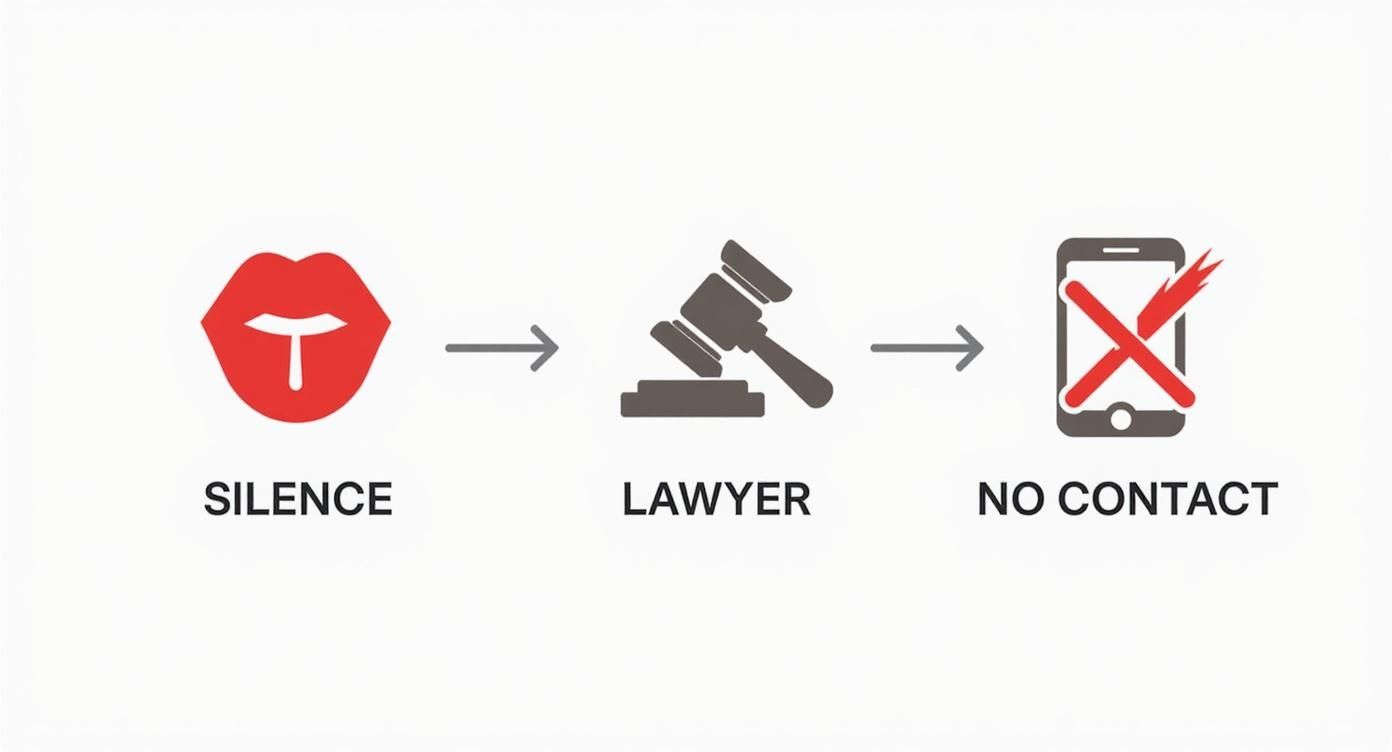
The infographic below shows the critical steps you must take within the first 48 hours after being charged.

Diagram showing the sequence: silence (lips icon), then a lawyer (gavel), then no contact (crossed-out phone).

This visual makes it clear: your immediate priorities are to exercise your right to silence, call a lawyer, and have absolutely no contact with the complainant.

Navigating Court Appearances

Court dates in Brampton follow a structured path. The key milestones you'll encounter include:

  • Bail hearing: This is where the conditions of your release are determined.
  • Case conference: An early chance to explore resolutions with the Crown.
  • Pre-trial: Where trial logistics are sorted out and evidence is discussed more formally.
  • Trial: The final stage for presenting arguments and cross-examining witnesses.

Effective preparation reduces stress and builds credibility with the judge.

Simply following each step shows you respect the process, which reflects positively on you and your defence.

Preparing for Trial

Trial prep is where all the pieces of your defence strategy come together. This is an intensive phase that involves:

  • Crafting a compelling opening statement to frame the narrative in your favour.
  • Organizing the witness list and confirming their availability.
  • Developing detailed cross-examination plans to challenge the credibility of Crown witnesses.
  • Lining up any expert testimony needed to support your case.

Think of your defence as a complex puzzle—every single piece must fit perfectly. Missing evidence or an unprepared witness can create a gap that a sharp Crown prosecutor will immediately exploit. Staying organized and proactive is absolutely essential.

Your Brampton criminal lawyer will quarterback all these tasks, ensuring every deadline is hit and every detail is accounted for.

Building a Strategic Defence That Works in Court

When you’re facing a sexual assault charge, a successful defence isn’t just about legal theories—it’s about grounding your case in evidence, sharp legal analysis, and practical courtroom experience. This is where a generic defence falls short and a strategy built for a Brampton courtroom truly makes a difference.

The goal is to move beyond what should work and focus on what does work, based on real outcomes in local cases.

The Honest But Mistaken Belief in Consent Defence

One of the most complex defences to mount is arguing you had an honest but mistaken belief in consent. This isn't just about what you thought; it's about what you did. The court demands proof that you took reasonable steps to confirm the other person was consenting.

To make this defence stick, you need to show:

  • Your belief was based on the complainant's clear words or actions, not silence or ambiguity.
  • You had no reason to suspect they weren't consenting.
  • You actively took steps to confirm consent, like asking directly or pausing to check in.
  • Your belief was genuine and not clouded by your own intoxication or wishful thinking.

“An honest but mistaken belief defence requires more than a gut feeling; it demands verifiable actions.” — Local insight from a Brampton criminal lawyer

Challenging Credibility to Create Reasonable Doubt

In many sexual assault cases, it comes down to one person's word against another's. A key part of the defence is often challenging the credibility of the complainant's story to introduce reasonable doubt. This isn't about attacking someone's character; it's about methodically testing the reliability of their testimony.

An experienced Brampton criminal lawyer will meticulously comb through the evidence, looking for inconsistencies that can undermine the Crown’s case. This often involves:

  • Scrutinizing police interview transcripts and video statements for conflicting details.
  • Comparing what a witness said to physical evidence, like surveillance footage or text messages.
  • Pinpointing gaps or contradictions in the timeline of events.
  • Using expert testimony to explain how factors like trauma or stress can impact memory and recall.

For instance, if a complainant gives two different accounts of where an alleged incident took place, that's a red flag. These are the kinds of details that can weaken a prosecutor’s narrative and form the foundation of a strong defence.

Finding the Weaknesses in the Crown’s Evidence

Every piece of evidence the Crown presents has a potential weakness. A strong defence strategy involves finding and exploiting those weak links to dismantle their case piece by piece.

Evidence Type Potential Defence Tactic
Text Messages Point out missing context, edited messages, or ambiguous phrasing.
Forensic Reports Challenge the chain of custody to question if evidence was handled properly.
Physical Evidence Highlight the risk of contamination or alternative explanations for its presence.

A detailed review by a criminal lawyer ensures that no stone is left unturned. Each weakness you expose adds another layer of doubt, making it harder for the Crown to prove its case against you.

Evidence gathered improperly can often be excluded from trial under s.24(2) of the Charter, which is a powerful tool for the defence.

Crafting a Defence Plan Tailored to Your Case

There is no one-size-fits-all defence for a sexual assault charge. Your strategy must be built around the specific facts of your situation. The moment you hire a Brampton criminal lawyer, the process of building that custom plan begins.

  1. Gathering Disclosure: The first step is to get every piece of evidence the police and Crown have against you.
  2. Interviewing Witnesses: We identify and speak with anyone who can confirm your side of the story or challenge the complainant’s claims.
  3. Engaging Experts: If needed, we bring in forensic specialists or psychologists to provide expert analysis on evidence or consent.
  4. Preparing for Cross-Examination: We develop sharp, targeted questions designed to expose the weaknesses in the testimony of Crown witnesses.

A proactive, evidence-first approach is the best way to protect yourself in court. To get started, you can consult our Brampton criminal lawyer at Badesha Law for a thorough review of your case.

Why Local Courtroom Experience is Crucial

Knowing the law is one thing, but knowing the local legal landscape is another. A lawyer who frequently works in Brampton’s courts understands the unwritten rules. They know the tendencies of specific Crown Attorneys, which judges are more receptive to certain legal arguments, and how to effectively negotiate resolutions like peace bonds or withdrawals.

This inside track from Badesha Law helps shape everything from your bail plan to defence motions, giving you a strategic edge before you even step into the courtroom.

This local insight isn't just a small advantage; it can be the factor that turns a case in your favour.

What You Need to Do Right Now to Strengthen Your Defence

Time is not on your side after being charged. The sooner you act, the better your chances of preserving crucial evidence and building a robust defence.

  1. Contact Badesha Law Immediately. The first hours are critical for evidence preservation and legal advice.
  2. Gather Digital Proof. Compile all relevant phone records, text messages, social media chats, and photos.
  3. Write Everything Down. Document your detailed recollection of events while your memory is still fresh.
  4. Stay Silent. Do not speak to the police or the Crown about your case without your lawyer present. Anything you say can be used against you.

Every action you take from this moment on matters. Defending against a sexual assault charge in Brampton requires immediate, strategic action. Reach out to our dedicated Brampton criminal lawyer team for a confidential consultation today.

The Lifelong Impact of a Conviction

A professional desk setting with a briefcase, passport, documents, and a sign stating 'LONG-TERM IMPACT'.

A conviction for sexual assault isn't just about the sentence handed down by a judge. It's a permanent mark that can follow you for the rest of your life, impacting your reputation, career, and even your family relationships.

The stigma alone is a heavy burden, but the concrete penalties and consequences can reshape your entire future. Understanding the full scope of what's at stake under the Criminal Code of Canada is the first step toward protecting yourself.

A conviction for simple sexual assault (s.271) can lead to 10 years in prison. If it involves bodily harm or a weapon (s.272), the sentence starts at a mandatory minimum of 4 years and can go up to 14 years.

For aggravated sexual assault (s.273), the law demands a 5-year minimum sentence, with the possibility of life in prison for the most severe cases.

Potential Criminal Code Penalties

The specific sentence depends on the offence and the unique circumstances of the case.

Here’s a quick breakdown of the potential sentences under the Criminal Code:

  • Simple sexual assault (s.271): Penalties can range from probation to 10 years imprisonment, depending on aggravating factors.
  • Sexual assault with a weapon or bodily harm (s.272): A 4-year mandatory minimum sentence, with a maximum of 14 years.
  • Aggravated sexual assault (s.273): Starts at a 5-year mandatory minimum and can extend to a life sentence.
  • Conditional sentences: In very rare situations, a judge might allow a sentence to be served in the community under extremely strict conditions.

But the penalties handed down in court are just the beginning. The "collateral consequences" are what truly last a lifetime.

Collateral Consequences

A conviction automatically triggers registration on the National Sex Offender Registry (SOIRA), often for life. This requirement severely restricts your privacy and ability to move freely.

For non-citizens, a conviction can mean deportation or the loss of immigration status, turning a criminal charge into a permanent barrier to living in Canada.

Many careers become instantly inaccessible because employers require vulnerable sector checks, which will reveal the conviction.

  • Family Impact: In custody disputes under Ontario's Family Law Act, any history of violence is a major red flag for judges deciding on child access.
  • Professional Restrictions: Forget about jobs in teaching, healthcare, or even volunteering. A record creates an immediate roadblock.
  • Travel Limitations: Travelling internationally becomes nearly impossible, as many countries deny visas to individuals on a sex offender registry.
  • Insurance Issues: Some insurers may refuse to provide coverage or will charge significantly higher rates.

It's a harsh reality: 85% of individuals with a sex offence record report facing major career barriers within just one year of their release.

These lifelong consequences are precisely why retaining a Brampton criminal lawyer is not a choice—it's a necessity.

How to Protect Your Future

Taking immediate and decisive action is the only way to mitigate the potential for lifelong harm. A well-planned, strategic defence can sometimes lead to a complete withdrawal of charges or significantly reduced penalties.

Here are the first steps you absolutely must take to protect your rights:

  1. Call a lawyer immediately. Contact a Brampton criminal lawyer at Badesha Law without any delay. We can help create a release plan and navigate your bail conditions.
  2. Preserve all evidence. Gather any digital or physical evidence you have—text messages, call logs, photos, and contact information for potential witnesses.
  3. Write everything down. Document your detailed recollection of what happened while the events are still fresh in your mind.
  4. Stay silent. Do not discuss your case with anyone other than your lawyer. This includes friends, family, and especially social media.
  5. Explore your options. Your lawyer can explore resolutions like having the charges withdrawn, signing a peace bond, or entering a diversion program to avoid a conviction.

Every day that passes is a day that evidence can be lost or memories can fade.

Acting quickly demonstrates to the court and the Crown that you are taking the matter seriously, which can help your credibility. Sometimes, a proactive and well-prepared defence is enough to get charges withdrawn or resolved with a peace bond, leaving you without a criminal record.

For a personalized strategy, schedule a confidential consultation with the Badesha Law team right away. Immediate legal advice can uncover defences you might not even know exist, like a mistaken belief in consent or critical flaws in the Crown's evidence.

Don't wait. Reach out to our experienced Brampton criminal lawyer to discuss your case in strict confidence and start protecting your future today.

Why a Brampton Lawyer Is Your Best Defence

When you're facing a sexual assault charge, the choice of your lawyer is one of the most critical decisions you'll ever make. While any criminal lawyer knows the law, a seasoned Brampton criminal lawyer brings a distinct, tactical advantage that simply can't be overstated. Your future is not the time for a learning curve; it’s the time for local, proven expertise.

A lawyer who works in the Brampton courthouse every day has an invaluable understanding of the local legal landscape. They know the procedural quirks, the specific expectations of local judges, and the negotiating styles of the Crown Attorneys prosecuting your case. This insider knowledge is absolutely crucial for building an effective strategy.

The Advantage of Local Courtroom Insight

An experienced local lawyer can anticipate how a certain Crown might handle a plea bargain or how a specific judge tends to rule on evidence motions. This familiarity lets them tailor your defence in ways a non-local lawyer just can't.

  • Strategic Negotiations: Understanding the Crown’s tendencies can lead to better outcomes, like a withdrawal of charges or securing a peace bond.
  • Courtroom Credibility: A familiar face who has built a reputation for professionalism and diligence is often received more favourably by judges and prosecutors.
  • Efficient Process: Knowing the local procedures saves time and helps avoid costly administrative mistakes that could weaken your defence.

Your defence is far too important to leave to chance. Securing a lawyer who is a regular fixture in the Brampton justice system provides a strategic edge that can profoundly influence the outcome of your case.

Protecting Your Rights from Day One

A dedicated Brampton criminal lawyer does more than just represent you in court—they become your shield through the entire process. From the moment you're charged, they work to protect your rights under the Canadian Charter of Rights and Freedoms, making sure police conducted their investigation properly and that your right to counsel was respected.

Your lawyer will meticulously dissect the evidence, from forensic reports and medical records to digital communications like text messages and social media history. They pinpoint inconsistencies and weaknesses in the Crown’s case, preparing you for every step—from bail hearings to pre-trials and, if it comes to it, a full trial. This thorough preparation ensures you are never caught off guard.

Don’t wait to protect your future. Contact a Brampton criminal lawyer at Badesha Law today for a confidential consultation to discuss your case and learn how our local expertise can become your strongest defence.


Answers to Your Most Urgent Questions

When you're suddenly facing a sexual assault charge, your mind races with questions. The uncertainty can be overwhelming. Here are some straightforward, no-nonsense answers to the most common concerns we hear from clients in the Brampton area.

What’s the Difference Between Sexual Assault and Sexual Harassment?

This is a critical distinction that trips many people up. The two are handled in completely different legal worlds.

Sexual assault is a criminal offence. It’s defined in the Criminal Code of Canada and involves any kind of unwanted sexual touching. Because it's a crime, the case is prosecuted by the Crown in a criminal court, where a conviction can lead to serious penalties, including jail time.

On the other hand, sexual harassment is almost always a civil issue. It’s typically dealt with at Ontario's Human Rights Tribunal and usually involves inappropriate behaviour in a workplace or housing situation. The legal standards, the process, and the outcomes for these two are night and day.

Can the Person Who Complained Just Drop the Charges?

No. This is one of the biggest myths out there. Once the police have laid a sexual assault charge, the ball is entirely in the Crown Attorney’s court. The decision to continue with the prosecution or withdraw the charge belongs to them and them alone.

Sure, the complainant’s wishes are a factor the Crown will consider, but they are far from the final word. The Crown’s job is to assess the strength of the evidence and determine if proceeding is in the public's best interest. They make the final call.

A complainant can tell the Crown they don’t want to proceed, but they don’t have the power to "drop the charges." That authority rests solely with the Crown Attorney.

How Will This Charge Affect My Family Court Case?

A sexual assault charge can have a devastating impact on any ongoing family law matters, like a divorce or custody dispute under Ontario’s Family Law Act.

In family court, a judge's number one priority is always the best interests of the child. Any allegation or finding related to violence will be taken extremely seriously when the court makes decisions about child custody and access. It’s absolutely essential that your criminal defence strategy is built with these parallel family law consequences in mind. Your Brampton criminal lawyer needs to be thinking about both courts at the same time.


At Badesha Law, we know just how much pressure you're under and what’s at stake when you're accused of sexual assault. Our experienced Brampton criminal lawyers are here to provide the strategic, confidential, and immediate legal help you need. Protect your rights and your future—schedule a consultation today at https://badeshalaw.ca/brampton-criminal-lawyer.

Ontario Careless Driving Penalties – What You Need to Know From a Brampton Criminal Lawyer

Getting a careless driving ticket in Brampton carries significant implications that many may not fully appreciate. Unlike a minor infraction, this charge comes with severe repercussions. The financial penalties alone are substantial, with fines starting at $400 and potentially reaching up to $2,000. Additionally, the charge results in six demerit points added to your driving record, which can lead to increased insurance premiums. More critically, there is the possibility of facing jail time, and your driver's licence could be suspended for as long as two years. Such outcomes can be particularly disruptive for Brampton residents who depend on their vehicles for daily commuting or work-related travel, leading to prolonged inconvenience and lifestyle disruptions.

Given these serious consequences, it is crucial for individuals facing such charges to seek professional legal advice. Consulting a criminal lawyer in Brampton can provide guidance and representation to navigate the complexities of the legal system effectively. An experienced attorney can assess your case, explore possible defenses, and work towards mitigating the impact of the charges on your life. With the potential for lasting effects on your freedom and ability to drive, obtaining knowledgeable legal counsel is an essential step in managing the situation and striving for the best possible outcome.

The Real Cost of a Careless Driving Conviction

A driver's license, a 'Careless Driving' envelope, and 'Insurance Revial' papers on a stool inside a car.

When a Peel Regional Police officer hands you that ticket, the first thing on your mind is probably the fine. And while that initial hit to your wallet is a big deal, it's really just the tip of the iceberg. A conviction under Section 130 of the Highway Traffic Act sets off a chain reaction of penalties that can seriously impact your money, your freedom, and your future.

For anyone in Brampton who needs their car for work, school, or just getting around, these consequences aren't just an inconvenience—they can completely derail your life. The conviction instantly slaps six demerit points on your licence. If you're a novice driver, that's often enough to get your licence suspended right away.

Immediate Financial and Legal Penalties

The penalties for careless driving are intentionally severe because the offence itself is taken very seriously. The court has a lot of leeway in deciding what consequences to impose, and it all depends on the details of your situation.

Here’s a quick look at what you could be up against:

  • Fines: The minimum fine is $400, but it can climb all the way to $2,000. If you get the ticket in a designated Community Safety Zone, those fines are automatically doubled.

  • Jail Time: Yes, you can go to jail. In more serious cases, a conviction could mean a sentence of up to six months.

  • Licence Suspension: A judge has the power to take away your driving privileges for up to two years.

To give you a quick summary of what's at stake, here’s a table breaking down the penalties under the Highway Traffic Act.

At-a-Glance Penalties for Careless Driving in Ontario

Penalty Type Details (Section 130)
Fines $400 to $2,000 (doubled in Community Safety Zones)
Jail Time Up to six months
Licence Suspension Up to two years
Demerit Points 6 demerit points
Insurance Impact Major conviction, significant premium increases
Record Duration Stays on your driving record for three years

This table shows just how much is on the line. It's not a minor ticket you can just pay and forget about.

A careless driving conviction is not a minor traffic violation; it's a serious provincial offence that law enforcement, courts, and insurance companies treat with significant gravity. Understanding the full scope of these penalties is the first step toward building a strong defence.

The Hidden Cost: Insurance Shock

Honestly, the most painful and long-lasting hit from a careless driving conviction is what it does to your car insurance. Insurers see this offence as a massive red flag, and they'll immediately label you a "high-risk" driver.

Here in Ontario, insurance data shows that drivers with a careless driving conviction can expect their premiums to jump by 150% or more. Why? Because insurance companies put it in the same category as a criminal offence like impaired driving.

That conviction stays on your driving record for at least three years, which means you’ll be stuck paying those sky-high rates for a long time. I’ve seen some Ontario cases where drivers’ rates went up by over 300%, costing them more than $13,000 in extra insurance payments over those three years. You can learn more about how a conviction affects insurance rates, but the bottom line is, it’s financially devastating.

What Legally Counts as Careless Driving in Ontario?

Most drivers have heard the term "careless driving," but few know what it actually means in the eyes of the law. It’s not as clear-cut as a speeding ticket, which is tied to a specific number on a radar gun. A careless driving charge is far more subjective and often comes down to a police officer's judgment of your actions.

This gray area can be frustrating, but the legal definition itself gives us a solid starting point. Under Section 130 of Ontario's Highway Traffic Act, careless driving is defined as operating a vehicle "without due care and attention or without reasonable consideration for other persons using the highway."

In simple terms, the law asks: were you driving the way a reasonably prudent person would have in the same situation? If an officer decides the answer is no, you could be facing a serious charge.

From the Highway Traffic Act to the Streets of Brampton

Let's bring this legal jargon into the real world. Forget the dense legal text for a moment and think about the roads we all drive on every day in Brampton. Careless driving isn’t just for extreme road rage incidents; it often covers common mistakes that put others at risk.

Here are a few real-world Brampton scenarios that could easily lead to a careless driving charge:

  • Weaving through traffic on Queen Street: Aggressively changing lanes during rush hour without signalling, cutting other drivers off.

  • Tailgating on Highway 410: Following the car ahead so closely that you have zero chance of stopping if they suddenly brake.

  • Getting distracted near Bramalea City Centre: Looking down at your phone, fiddling with the GPS, or trying to eat a messy lunch while navigating busy intersections with heavy foot traffic.

  • A "rolling stop" in a quiet neighbourhood: Failing to come to a complete stop at a stop sign, endangering pedestrians or cyclists you didn't see.

Any of these actions could be seen by an officer as a failure to show "due care and attention." The deciding factor is whether your driving created a potential—or actual—risk to anyone else on the road.

What Is the "Prudent Driver" Standard?

The law doesn’t demand perfection from drivers, but it absolutely holds you to a standard. This standard is based on the idea of a "prudent driver"—a legal concept for a hypothetical, reasonably cautious person. When a court looks at a careless driving charge, it measures your actions against what this ideal driver would have done.

This is a critical point: your intent doesn't matter. You can be found guilty even if you never meant to cause harm or an accident. The court focuses entirely on the act of driving itself. For example, if you spill a hot coffee in your lap, lose control for a split second, and swerve into the next lane, that could be deemed careless. It doesn't matter that you didn't intend to drive dangerously.

The core of a careless driving charge is negligence. The prosecution doesn’t have to prove you intended to be reckless, only that your driving fell below the standard of care expected of every motorist in Ontario.

A Critical Distinction: When an Accident Causes Harm

The consequences for a careless driving charge get dramatically worse when someone is injured or killed. While the standard charge under Section 130 is already serious, if your driving leads to bodily harm or death, the stakes become terrifyingly high.

This introduces a separate, more severe offence: Careless Driving Causing Bodily Harm or Death. It's still a Highway Traffic Act offence, not a criminal charge, but the penalties are designed to reflect the tragic outcome.

  • Standard Careless Driving: Fines up to $2,000, jail time up to six months, and a licence suspension for up to two years.

  • Careless Driving Causing Bodily Harm or Death: Fines skyrocket to $50,000, potential jail time increases to two years, and your licence could be suspended for up to five years.

Understanding this difference is absolutely vital. A moment of inattention that causes a minor fender-bender is one thing. That same lapse in judgment that results in a serious injury will be prosecuted far more aggressively, leading to a much more devastating Ontario careless driving penalty. This is precisely why any charge involving an accident requires you to seek serious legal advice immediately.

Demerit Points and Licence Suspensions: The Hidden Penalties

A conviction for careless driving impacts more than just your finances; it initiates a series of consequences that directly threaten your driving privileges. The immediate repercussion is the addition of six demerit points to your driving record, which can lead to significant complications for many drivers.

These demerit points are more than mere figures on a report. They serve as a method for the Ministry of Transportation (MTO) to identify drivers who pose a higher risk on the roads. Accumulating a substantial number of points signals to the MTO that you may be a potential hazard while driving. In response, the MTO has implemented a structured system of penalties intended to either catch your attention or potentially remove you from the road completely.

If you find yourself facing such a situation, consulting a Brampton criminal lawyer can be a crucial step. A knowledgeable lawyer can help navigate the legal complexities, potentially minimizing penalties and providing guidance on how to protect your driving privileges effectively.

How Demerit Points Actually Work in Ontario

The entire demerit point system is designed to correct bad driving habits or, if that fails, to remove unsafe drivers from our roads. How these points affect you depends entirely on what kind of licence you hold, which is a critical distinction for new drivers in Brampton.

  • Fully Licensed Drivers (Class G): If you have a full G licence, you have a bit more breathing room. The MTO typically won't take action until you hit nine points.

  • Novice Drivers (Class G1 or G2): For new drivers, the rules are incredibly strict. Consequences kick in after you accumulate just four points.

Think about that for a second. A single careless driving conviction and its six demerit points is more than enough to trigger an immediate licence suspension for any G1 or G2 driver. This is a wake-up call for young drivers or anyone new to Ontario's graduated licensing system.

Demerit points stick to your record for two years from the day you committed the offence. But the conviction itself? That stays on your driving record for a full three years, meaning it can haunt your insurance rates long after the points are gone.

From Warning Letters to Ministry Interviews

For a fully licensed driver, the penalties ramp up progressively. The process usually starts with a warning letter in the mail once you reach six points.

If you climb to nine points, expect a summons to attend an interview with the MTO. You'll have to sit down and explain your driving record and justify why you should be allowed to keep your licence. Hit fifteen or more points, and it's an automatic 30-day suspension. No questions asked. For novice drivers, these penalties happen much faster and are far more severe.

The path from a single poor decision to serious consequences is shorter than most people think.

Flowchart illustrating driving outcomes: 'No Due Care' leads to penalties, while 'Yes' or 'No' leads to approved cars.

This flowchart breaks it down simply: if the court finds you drove without the "due care" required by law, the outcome is penalties. Drive responsibly, and you avoid the entire mess.

Here's a closer look at how the demerit point system impacts different drivers.

Demerit Point Consequences for Ontario Drivers

Driver Class 2-8 Points 9-14 Points 15+ Points
Fully Licensed (G) Warning Letter (at 6 points) Required MTO Interview 30-Day Licence Suspension
Novice (G1/G2) Warning Letter (at 2-3 points) 30-Day Licence Suspension (at 4 points) 60-Day Licence Suspension & MTO Interview (at 9 points)

As the table shows, the consequences escalate quickly, especially for new drivers who have very little margin for error.

Court-Ordered Licence Suspensions

On top of the MTO's demerit point system, the judge who convicts you has the independent power to suspend your licence. This is a completely separate penalty that can be handed down no matter how many points you currently have.

A judge can suspend your licence for up to two years for a standard careless driving conviction. If you're convicted of the more serious offence of "Careless Driving Causing Bodily Harm or Death," that suspension can be as long as five years.

Losing your licence for that long is life-altering, especially in a commuter city like Brampton. It impacts your ability to:

  • Get to work and earn a living

  • Manage family duties like school runs and appointments

  • Maintain your independence and social connections

The ripple effect is enormous. Arranging alternative transportation for months or years is a logistical nightmare and a huge financial burden. This is a massive part of the overall Ontario careless driving penalty.

The Long-Term Stain on Your Driving Record

A frequently neglected consequence of a careless driving conviction is its lasting impact. Such a conviction stays on your public driving record for three years from the date of the guilty verdict. During this period, whether you are applying for insurance, seeking employment that involves driving, or interacting with law enforcement during a traffic stop, the conviction remains prominent. This label designates you as a high-risk driver, resulting in elevated insurance premiums and diminished opportunities, even after the financial penalty has been settled. If you find yourself facing such a situation in Brampton, consulting with a criminal lawyer, such as those at Badesha Law, can provide valuable guidance and assistance in managing the repercussions.

How Distracted Driving Can Escalate to Careless Driving

A quick glance at your phone or a moment spent adjusting the GPS seems minor, right? But in the eyes of the law, that small act can snowball into a far more serious careless driving charge. It's a critical distinction that many drivers in Brampton overlook, often with devastating legal and financial fallout.

The line between a simple distracted driving ticket and a life-altering careless driving charge is thinner than most people realize.

This escalation usually happens when a momentary distraction leads to a dangerous situation on the road. A police officer isn't just looking at the act of you holding a phone; they're evaluating the consequence of that action. If you swerve into another lane on Steeles Avenue, fail to brake in time for slowing traffic on Highway 410, or nearly hit a pedestrian near Shoppers World Brampton, your distraction is no longer a simple offence. It has become a clear and present danger to others.

The Officer's Perspective

When a Peel Regional Police officer decides to lay a careless driving charge instead of a distracted driving ticket, they are making a judgment call based on the risk your behaviour created. They’re trained to assess whether your driving fell below the standard of what a reasonably prudent person would do.

Here are a few common distractions that can quickly get upgraded to a careless charge in Brampton:

  • Using a Handheld Device: If texting or talking on your phone causes you to drift, run a red light, or make an erratic move, expect the charge to be upgraded. The officer will note the dangerous outcome, not just the phone use.

  • Interacting with In-Car Technology: Getting lost in your infotainment system or fiddling with the GPS for too long can easily lead to a near-miss or a collision. That’s careless driving.

  • Eating, Drinking, or Grooming: Any activity that takes one or both hands off the wheel—and your focus off the road—can be deemed careless if it compromises your control of the vehicle.

The officer’s notes will focus on how your distraction endangered other people, which is exactly what the prosecution needs to prove a careless driving charge in court.

A Growing Danger on Ontario Roads

There's a reason law enforcement takes this so seriously, and it's backed by some alarming statistics. Distracted driving has become a massive road safety issue, even surpassing impaired driving as a leading cause of traffic fatalities in Ontario.

In fact, 1 in 5 road fatalities are now attributed to driving while distracted, and deaths from these collisions have doubled since 2000. Tens of thousands of accidents are caused by this behaviour in Ontario every single year—a trend that authorities are fighting with much stricter enforcement. You can discover more insights about the dangers of distracted driving in Ontario and its impact on road safety.

The moment your distraction forces another driver to slam on their brakes or swerve to avoid you, you have crossed the line. From a legal standpoint, you are no longer just distracted; you are driving without the "due care and attention" required by law.

Avoiding the Split-Second Mistake

Ultimately, the responsibility of preventing this escalation lies in understanding that no message, phone call, or snack justifies the associated risks. A ticket for distracted driving is already a costly affair, but being charged with careless driving carries much more severe consequences under the Ontario Highway Traffic Act. This includes a penalty of six demerit points, significant increases in insurance premiums, and the possibility of facing jail time.

The most practical approach to avoid such consequences is straightforward. Prepare everything before you begin your journey. This means setting up your GPS navigation system, choosing your playlist, and finishing your coffee before you engage the vehicle's drive mode. In a city like Brampton, where traffic conditions can be unpredictable and change rapidly, maintaining undivided attention is not just a prudent practice—it serves as your most effective safeguard against a charge that could impact your record for years to come.

What to Do After Being Charged in Brampton

A person is writing notes in a notebook next to a driving summons document, coffee, and a phone with law Firm contact.

The moments after a police officer hands you a summons for careless driving are almost always filled with stress and uncertainty. Your mind is probably racing, but it’s critical to understand that the actions you take right now can dramatically shape the outcome of your case.

How you respond in these first few hours and days really sets the foundation for your entire defence.

The most common mistake drivers in Brampton make is treating a careless driving charge like a simple parking ticket. They look at the fine and think about just paying it to make the whole thing go away. This is a massive error. Paying that ticket is an admission of guilt, and it unleashes the full force of the Ontario careless driving penalty—we're talking six demerit points, a conviction on your driving record, and a painful hike in your insurance premiums.

Your Immediate Action Plan

First, take a deep breath. It's essential to move from reacting emotionally to taking proactive steps. Avoid hasty decisions. Instead, concentrate on collecting comprehensive information and recording every detail of the incident. This approach will help you regain control and avoid common errors.

The most crucial document in your possession is the summons or ticket itself. Thoroughly review each detail on this document.

  • Verify for accuracy: Examine the date, time, and location of the alleged offense carefully. Ensure your personal details, such as your name and address, are correctly spelled.

  • Identify the charge: Ensure the charge is listed under Section 130 of the Highway Traffic Act.

  • Locate your court date: Determine the response deadline and the date for your initial court appearance. Missing this could lead to an automatic conviction.

This document outlines the official allegations against you. Even minor discrepancies or errors could play a significant role in your defense. Consider consulting a criminal lawyer in Brampton for guidance through this process and to strengthen your defense strategy.

Preserve Your Memory of the Incident

As soon as you get home, sit down and write out everything you can remember about what happened. Memories fade incredibly fast, and a detail that seems minor now could become vital down the road. Make your notes as thorough as possible.

To jog your memory, ask yourself these questions:

  • What were the road and weather conditions? Was it raining, sunny, icy?

  • What was traffic like? Was it heavy rush hour or a quiet side street?

  • Where exactly were you, and what were you doing in the moments before being pulled over?

  • What did the police officer say to you? What did you say back?

  • Were there any witnesses? Think about passengers in your car or even other drivers nearby.

Jot it all down, even if it doesn't seem to help your case. The more detailed your account is, the better equipped your legal representative will be to find potential weaknesses in the prosecutor's argument.

The most powerful tool you have immediately after being charged is your own detailed memory. Documenting the scene, the interaction, and the context while it's fresh provides the raw material for building a robust defence.

Why You Must Seek Legal Advice Immediately

Once you’ve reviewed the summons and written down your account, the next step is non-negotiable: contact a legal professional who specializes in traffic law and is familiar with the A. Grenville and William Davis Courthouse in Brampton. Trying to handle a careless driving charge on your own is like walking into an exam you haven't studied for—you’re at a huge disadvantage.

An experienced lawyer or paralegal can immediately get to work.

  1. File on Your Behalf: They'll handle all the initial court filings, making sure you don’t miss any critical deadlines.

  2. Request Disclosure: Your legal counsel will formally request all the evidence the prosecutor has against you. This includes the police officer’s notes and any witness statements. You are legally entitled to see this evidence, and it’s often where the key to a strong defence is found.

  3. Analyze the Case: They are trained to spot inconsistencies in an officer's notes or identify legal arguments you would never see on your own. For example, was the officer's view of the incident clear? Do their written notes match what they told you?

Navigating the Brampton legal system requires local knowledge. A professional who regularly appears in the Brampton courthouse understands how local prosecutors operate and the specific procedures of that court. This local insight, which a firm like Badesha Law can provide, is invaluable when negotiating to get a charge reduced to a lesser offence or, in some cases, withdrawn entirely. Taking this step promptly is the single best investment you can make in protecting your licence, your record, and your financial future.

Got Questions About Your Careless Driving Charge?

If you’ve just been handed a careless driving ticket in Brampton, your head is probably spinning. The uncertainty can be paralyzing, so getting clear, straight-up answers is the first step toward getting a handle on the situation. Let’s tackle the most urgent questions we hear from drivers in Brampton facing this serious charge.

Can I Actually Go to Jail for Careless Driving?

Yes, and this is the wake-up call for many people. Jail time is a very real possibility for a careless driving conviction in Ontario. It's not just a beefed-up speeding ticket. The Highway Traffic Act gives judges the power to sentence a driver to up to six months in jail for a standard careless driving conviction under Section 130.

Now, this isn't the outcome for every case. A judge usually reserves a jail sentence for the most extreme situations—think incidents involving incredibly reckless behaviour, crazy high speeds, or accidents that show a complete disregard for everyone else on the road. Still, the fact that it's on the table shows just how seriously the Brampton courts take this charge.

And if the incident was even more severe, leading to a charge of "Careless Driving Causing Bodily Harm or Death," the stakes get much higher. The maximum jail time jumps to two years. Whether a judge considers jail depends entirely on the facts of your case, your driving record, and the arguments made in court. This is exactly why getting an experienced lawyer involved isn't just a good idea—it's essential to protect yourself from the worst-case scenario.

Will a Careless Driving Conviction Get Me Fired?

It absolutely can. The fallout from a careless driving conviction can spill over from the courthouse directly into your workplace, and for anyone who drives for a living in Brampton, the consequences can be swift and severe.

  • Commercial Drivers: If you drive a truck, bus, delivery van, or any kind of company vehicle, a careless driving conviction is often a career-ender. The insurance companies that cover commercial fleets simply won't accept that kind of risk, making you unemployable in that role.

  • Daily Commuters: Even if your job is in an office, how do you get there? A long licence suspension could make it impossible to commute. In a city like Brampton, where public transit doesn't work for everyone, losing your licence can mean losing your job.

  • Future Job Hunts: More and more employers are asking for a clean driving abstract as part of their hiring process, even for roles that don't involve driving. A careless driving conviction is a massive red flag that could get your application tossed in the bin.

While a careless driving conviction isn’t a criminal record, don’t let that fool you. Employers and their insurance companies see it as a serious liability. Never underestimate the threat it poses to your livelihood.

Is It Really Worth Hiring a Lawyer for a Careless Driving Ticket?

For a charge this serious, bringing in a lawyer or a licensed paralegal who lives and breathes traffic law is almost always a smart move. When you start adding up the long-term costs of a conviction and compare it to the cost of legal help, the value becomes obvious.

Think about the financial hit you're facing if convicted:

  • Fines that can go up to $2,000 (or even higher if someone was hurt).

  • Insurance premium hikes that can easily cost you thousands of extra dollars over the next three to five years.

  • The potential loss of your job and income.

A sharp legal professional who knows the ins and outs of the Brampton courts understands the local procedures and has built relationships with the prosecutors. They can dissect the evidence against you, spot weaknesses, and negotiate to get the charge knocked down to something less serious, like an "unsafe lane change." A lesser charge means fewer demerit points and a much smaller hit to your insurance. In some cases, they might even find a way to get the charge thrown out completely. Walking into that courtroom to face a trained prosecutor by yourself is a huge, and unnecessary, risk.

What's the Difference Between Dangerous Driving and Careless Driving?

This is probably one of the most important distinctions in traffic law, because the consequences are worlds apart.

Careless Driving is a provincial offence under Ontario's Highway Traffic Act. If you're convicted, you're looking at penalties like fines, demerit points, and maybe a licence suspension. Crucially, it does not give you a criminal record. The prosecution just has to prove you drove "without due care and attention."

Dangerous Driving, on the other hand, is a criminal offence under the Criminal Code of Canada. A conviction for Dangerous Driving means a permanent criminal record. That record can stop you from travelling to the United States and other countries, and it can slam the door on job opportunities for the rest of your life. The legal test is also much higher—the Crown has to prove your driving was a "marked departure" from the norm, showing a blatant disregard for public safety.

While both are serious, a Dangerous Driving charge carries life-altering consequences that go far beyond any Ontario careless driving penalty.


Facing a careless driving charge in Brampton demands a smart, strategic response. The penalties can hit your wallet, your freedom, and your future. At Badesha Law, our experienced legal team knows the complexities of traffic law in Brampton. We're here to protect your rights and fight for the best possible outcome for you. If you've been charged, don't go it alone. Contact us today for a consultation.

A Guide to Facing a Domestic Assault Charge in Brampton

Being charged with domestic assault in Brampton is a grave issue that can disrupt your life considerably. Under Canada’s Criminal Code, this charge extends beyond physical violence to include threats or gestures that instill fear for one’s safety in a domestic relationship. In Ontario, this relationship may involve a current or former spouse, a common-law partner, or a parent. Your initial step should be to familiarize yourself with the law, the process, and the measures you can take to safeguard your future. Consulting a Brampton criminal lawyer, such as Badesha Law, can provide valuable guidance in these situations.

Understanding a Domestic Assault Charge in Ontario

Facing a domestic assault charge in Brampton can be overwhelming and confusing. The legal system is swift, and its terminology can be daunting. This guide offers practical insights tailored to your situation, focusing specifically on Ontario’s laws and the procedures at the Brampton courthouse.

Essentially, a domestic assault involves any assault occurring between individuals in an intimate, family, or dependent relationship. The distinction between a standard assault and a domestic one lies in the relationship between the involved parties.

The “domestic” label acts as a specific flag for Peel Regional Police, prosecutors, and judges, indicating that the case adheres to a stricter protocol. Ontario’s zero-tolerance policy on domestic violence aims to protect vulnerable individuals, guiding law enforcement actions from the initial call.

The Immediate Impact of Ontario’s Zero-Tolerance Policy

When Peel Regional Police respond to a domestic dispute in Brampton, their first task is to de-escalate the situation and separate those involved. Due to the province’s stringent directives, if officers find reasonable grounds to suspect an assault, an arrest is almost always made.

This results in several immediate and life-changing consequences for the accused:

  • Mandatory Arrest: Regardless of whether the situation has calmed or if the complainant does not wish to press charges, police are likely to lay a charge and take the accused into custody.
  • Strict Release Conditions: To be released from custody, you will probably face strict conditions, often detailed in documents like a Form 10 or Form 11 Undertaking.
  • No-Contact Orders: A typical condition is a stringent “no-contact order,” prohibiting any form of communication with the complainant, directly or indirectly. This often means you cannot return to your shared home.

It is crucial to understand that once a charge is laid, the choice to drop it rests with the Crown Attorney, not the complainant. Even if the complainant changes their story or wishes to withdraw the accusation, the Crown can—and frequently does—proceed with the prosecution. Seeking advice from a Brampton criminal lawyer, such as Badesha Law Criminal Lawyer in Brampton Ontario, can be crucial in navigating these complexities.

Defining Assault Under the Criminal Code of Canada

To get a handle on a domestic assault charge, you have to know what “assault” actually means under the Criminal Code of Canada. An assault can happen in three different ways, and none of them require causing an actual physical injury.

According to Section 265 of the Criminal Code, you commit an assault when you:

  1. Apply Force Intentionally: This is what most people think of as assault. It’s intentionally applying force—direct or indirect—to someone without their consent. A push, a slap, or even spitting on someone all count.
  2. Attempt or Threaten to Apply Force: You can be charged for trying to apply force or for threatening to do so with an act or gesture. This applies if you make the other person believe you can actually carry out the threat. For example, just raising a fist in a threatening way could be enough.
  3. Accosting or Impeding While Carrying a Weapon: Simply approaching someone while openly carrying a weapon (or something that looks like one) is also considered an assault.

When any of these things happen in a domestic relationship, the charge becomes a domestic assault. That’s what triggers the specialized and very serious response from the Brampton justice system.

Navigating the Brampton Court Process Step by Step

Being charged with domestic assault in Brampton throws you headfirst into a complex and often frightening legal maze. The first step toward finding your way out is understanding the path ahead. From the moment of arrest to a final court decision, the process follows a very specific sequence, and each stage has its own set of rules and goals.

It all starts with the arrest, which, as we’ve covered, is almost always mandatory in domestic situations because of Ontario’s zero-tolerance policy. Immediately after the arrest, the next critical step is the bail hearing, which usually happens within 24 hours.

This hearing is your first formal appearance, held before a Justice of the Peace. The main objective isn’t to decide if you’re guilty, but simply to determine if you can be released from custody while your case moves forward. In Brampton, domestic assault cases nearly always come with very strict release conditions, typically spelled out in a document called a Form 10 or 11 Undertaking.

The First Stages: Arrest, Bail, and Your First Appearance

The bail hearing focuses on assessing risk. The court evaluates whether you pose a threat to the public and if you are likely to attend future court dates. The Crown Attorney, often from a specialized Peel Region unit handling domestic cases, might argue for your continued custody.

If released, your freedom will be heavily restricted. Conditions will typically include:

  • No Contact: A strict order prohibiting any communication with the complainant, whether directly or indirectly. This includes no calls, texts, emails, or messages through others.
  • Residency Restrictions: You will likely be prohibited from returning to the family home or approaching the complainant’s workplace or school.
  • Weapons Prohibition: A mandatory ban on possessing any weapons.

Violating any of these conditions constitutes a separate criminal offense known as “Failure to Comply,” leading to re-arrest and complicating the resolution of the original domestic assault charge.

Upon release, you will be scheduled for your First Appearance at the Brampton courthouse. This is not a trial but a procedural session where you or your lawyer will appear before a judge to receive the initial evidence collected by the police, known as “disclosure.”

For legal assistance, consider consulting a criminal lawyer in Brampton. The infographic below illustrates how quickly things can escalate from a single police call.

A flowchart illustrating the legal process after a domestic assault: police call, mandatory arrest, and no-contact order.

As you can see, a police call triggers a mandatory arrest and a strict no-contact order, setting the entire court process in motion almost instantly.

Negotiations and Pre-Trial Meetings

Once you’ve had your First Appearance, your case moves into a critical negotiation phase. This is where having an experienced Brampton lawyer really counts. The goal is to open a dialogue with the specialized Crown Attorney handling your file to discuss the case’s strengths and weaknesses.

These discussions happen at a Crown Pre-Trial (CPT), which is a meeting between your defence lawyer and the prosecutor. During the CPT, your lawyer will:

  • Go over the disclosure evidence with the Crown.
  • Highlight inconsistencies, legal issues, or weaknesses in the police investigation or witness statements.
  • Explain your personal circumstances and present any mitigating factors.
  • Negotiate for a potential resolution, like getting the domestic assault charge withdrawn.

A key objective during these negotiations is to convince the Crown that it is not in the public interest to proceed with a trial. This might involve proposing alternatives, like a peace bond or agreeing to complete counselling.

If your lawyer and the Crown can’t agree on a resolution at the CPT, the next step is a Judicial Pre-Trial (JPT). This is a more formal meeting held in a judge’s chambers, involving your lawyer, the Crown Attorney, and a judge.

The JPT is designed to narrow down the issues and get a judge’s perspective on the case, which often helps both sides see a clearer path forward. The judge might comment on likely outcomes if the case went to trial, frequently encouraging a resolution to avoid tying up the court system. For anyone facing a domestic assault charge in Brampton, these pre-trial stages are the most important opportunities to achieve a positive outcome without the stress and risk of a full trial.

Your First Steps After Being Charged

The moments and days right after a domestic assault charge in Brampton are confusing and absolutely critical. What you do in the first 48 hours can shape the entire path of your case. This isn’t a time to wait around and see what happens—it’s a time for smart, decisive action.

A person's hands hold a smartphone and an open envelope with documents and coffee on a counter.

Your first and most important priority is to hire an experienced criminal defence lawyer who specializes in domestic assault cases in Brampton. The legal system moves fast, and without immediate professional help, you’re at a serious disadvantage. Think of a lawyer as your advocate, strategist, and guide through what is otherwise an overwhelming process.

Why Immediate Legal Counsel Is Non-Negotiable

Contacting a lawyer isn’t just about planning for a trial down the road; it’s about managing the crisis you’re in right now. A Brampton defence lawyer will jump into action to protect your rights from the very start.

Here’s what they will prioritize immediately:

  • Navigating Bail Conditions: Your release from custody will come with a long list of rules. A lawyer makes sure you understand every single condition to prevent an accidental breach. Messing this up means new criminal charges and makes your original case much harder.
  • Explaining the No-Contact Order: This is often the toughest condition. It almost always means you can’t go back to your home or talk to your partner. Your lawyer will explain exactly what this order means and discuss if there are any ways to get it changed later on, though it’s never easy.
  • Preserving Critical Evidence: Evidence that tells your side of the story can disappear quickly. Your lawyer will immediately tell you how to save things like text messages, emails, or names of witnesses that could be crucial for your defence.

The Crown Attorney and the police already have a head start building their case against you. Hiring a lawyer immediately is the single most important thing you can do to level the playing field and start building your own defence strategy.

Your Immediate Dos and Don’ts Checklist

While your lawyer gets to work on the legal strategy, how you act personally is just as important. From the moment you’re charged, your actions are under a microscope. Following these rules is essential to protect your legal position.

What You MUST Do:

  1. Follow Every Release Condition Perfectly: Treat your bail conditions like they are absolute law. This means curfews, where you’re allowed to live, and any other restrictions. There is zero room for error.
  2. Document Everything You Can Remember: While it’s still fresh, write down a detailed, step-by-step account of what happened from your point of view. Note the time, location, what was said, and who was there. Give this document only to your lawyer.
  3. Secure Alternative Living Arrangements: If a no-contact order means you can’t go home, find a stable place to stay right away. This shows the court you are responsible.

What You MUST NOT Do:

  • Do NOT Contact the Complainant: This is non-negotiable. Do not call, text, email, use social media, or even ask a friend or family member to pass along a message. Any attempt to make contact, no matter how good your intentions are, is a criminal offence that will land you right back in custody.
  • Do NOT Discuss the Case on Social Media: The Crown can and will use anything you post against you. It’s best to deactivate your accounts or, at the very least, stop posting anything about the incident, your personal life, or the complainant.
  • Do NOT Speak to the Police Without Your Lawyer: You have the right to remain silent. Police might ask you for “your side of the story,” but any statement you make can be used to strengthen their case. Always talk to your lawyer first.

This initial period is all about damage control and setting yourself up for the best possible outcome. By following this guide and getting legal help right away, you give yourself the best chance to manage this crisis and work toward a favourable resolution.

Penalties and Hidden Long-Term Consequences

A domestic assault conviction in Brampton is much more than just a bad day in court. Think of it like a stone thrown into a pond—the immediate splash is the penalty from the judge, but the ripples spread out, touching every part of your life for years to come. Grasping just how deep and lasting these consequences are is key to understanding what’s really at stake.

The direct penalties are what most people worry about first. These are the punishments handed down by a judge under the Criminal Code of Canada, and they can vary widely depending on the details of your case.

Even for a first offence, you aren’t just looking at a slap on the wrist. A conviction almost always leads to a period of probation, which can last up to three years and comes with strict conditions. You’ll also likely be ordered to complete a mandatory Partner Assault Response (PARS) program—a specialized counselling course you must attend and finish.

The Immediate Legal Penalties

If the assault is deemed more serious or if you have a prior record, the penalties get much tougher, fast. The Crown prosecutor can choose to proceed by indictment, which opens the door to far more severe sentences.

A conviction could land you with:

  • Significant Fines: The court can impose heavy financial penalties that create a real financial strain.
  • Probation: This means reporting to a probation officer and following strict rules like curfews, attending counselling, or staying away from alcohol.
  • Jail Time: For more serious cases, a jail sentence is a very real threat. A conviction could mean up to two years in prison for a summary offence, and even longer if it’s an indictable offence.
  • Weapons Prohibition: You’ll face a mandatory court order banning you from owning or possessing firearms, often for 10 years or more.

These penalties are serious, but in many ways, they’re only the beginning. The hidden consequences—the collateral damage from having a criminal record for domestic assault—can be even more devastating.

The Lifelong Shadow of a Criminal Record

Once you’re convicted, you have a criminal record. This isn’t just some file tucked away in a courthouse; it’s a permanent red flag that follows you everywhere, creating roadblocks that can change the entire direction of your life.

Think of it as a permanent mark on every background check you’ll ever face. The impact is felt in almost every important part of modern life.

The toughest part of a domestic assault conviction often isn’t the sentence itself, but the lifelong civil disabilities that come with it. These are the hidden penalties the court doesn’t sentence you to, but which you will face all the same.

The collateral consequences include:

  • Employment Struggles: Many employers in Brampton and the GTA demand a clean criminal record check. A domestic assault conviction can make you ineligible for jobs in fields like education, healthcare, finance, or government, and it’s a major hurdle for any career advancement.
  • Travel Restrictions: Your ability to travel, especially to the United States, will be severely limited. The U.S. considers domestic violence a “crime of moral turpitude,” meaning you will almost certainly be denied entry at the border. This impacts everything from family vacations to cross-border work.
  • Immigration Status at Risk: For non-citizens, a conviction can be catastrophic. It can lead to the denial of permanent residency applications, the revocation of your current status, and even deportation.
  • Family Court Disadvantage: A domestic assault conviction will absolutely be used against you in any family law case. It can cripple your chances of getting custody of your children or securing fair access, since the court’s primary focus is always the children’s best interests under Ontario’s Family Law Act.

The table below draws a sharp contrast between the court-ordered penalties and these life-altering impacts, showing how a single charge creates two very different sets of problems.

Direct Penalties vs Collateral Consequences of a Conviction

Type of Consequence Specific Examples
Direct Legal Penalties Jail time, fines, probation with strict conditions, mandatory PARS counselling program, weapons prohibition orders.
Collateral Consequences Inability to find meaningful employment, being barred from entering the United States, jeopardy to immigration status (including deportation), and severe disadvantages in child custody battles.

Facing a domestic assault charge isn’t just about staying out of jail; it’s about protecting your entire future. With consequences this severe, building a strategic and aggressive legal defence isn’t just an option—it’s an absolute necessity.

Building a Defence and Seeking a Better Outcome

An accusation is not a conviction. When you’re facing a domestic assault charge in Brampton, it’s easy to feel hopeless, but this is the moment where strategy becomes everything. A strong, well-prepared defence can challenge the Crown’s case and open up pathways to a resolution that protects your future.

A man in a suit points to a document on a desk during a meeting with another person.

The entire case against you rests on the Crown’s ability to prove every element of the offence beyond a reasonable doubt. That’s a very high standard, and it creates opportunities for an experienced defence lawyer to find weaknesses in the evidence and build a compelling counter-narrative.

Common Legal Defences in Domestic Assault Cases

In the Canadian legal system, several defences can be raised to fight a domestic assault charge. The right strategy depends entirely on the specific facts of your case, from what’s in the police report to witness statements and your own account of what happened.

Your lawyer will meticulously review all the evidence from the Crown to figure out which defence holds the most promise. Some of the most common and effective approaches include:

  • Challenging the Complainant’s Credibility: Often, the Crown’s entire case hinges on the testimony of the complainant. If there are inconsistencies in their story, a history of making things up, or clear motives to lie, these facts can be used to create that crucial reasonable doubt.
  • Arguing Self-Defence: Under Section 34 of the Criminal Code, you are allowed to use reasonable force to protect yourself or others from an attack. To win with this defence, we have to show that you genuinely believed force was being used against you and that your response was reasonable in the circumstances.
  • Lack of Intent (Mens Rea): Assault is a crime that requires intent. If the physical contact was truly accidental—maybe you stumbled and inadvertently pushed someone—you may not have the required “guilty mind” (mens rea) for a conviction.

An experienced lawyer’s job is to dissect the evidence. Are there conflicting witness accounts? Does the physical evidence actually match the complainant’s story? Every single detail matters in building a defence that can lead to an acquittal at trial.

Proactive Mitigation and Alternative Resolutions

Sometimes, taking a case all the way to trial isn’t the best strategic move. The evidence might be strong, or the personal and financial toll of a trial is just too high. In these situations, the goal shifts from fighting the charge in court to negotiating a better outcome with the Crown Attorney.

This is where proactive mitigation becomes your most powerful tool. By taking real, concrete steps to address the court’s underlying concerns about domestic conflict, you can show the Crown that you are not a risk to the public and that a harsh penalty isn’t necessary.

Taking these steps can dramatically improve your position:

  1. Enrolling in Counselling: Voluntarily attending sessions for anger management, substance use, or general therapy shows personal responsibility and a real commitment to self-improvement.
  2. Gathering Character References: Strong letters from employers, community leaders, or family friends who can speak to your good character can be very persuasive to a prosecutor.
  3. Making Amends: In certain situations, and only with careful legal guidance, offering to pay for any damages (like a broken phone) can be a positive step.

These proactive measures send a clear message to the Crown: you are taking this situation seriously. This often opens the door to negotiations for a resolution that avoids a criminal record, with the most common and valuable option being a peace bond.

Understanding the Section 810 Peace Bond

For many people facing a first-time domestic assault charge in Brampton, a Section 810 Peace Bond is the best possible outcome short of having the charge withdrawn completely. It’s important to understand that a peace bond is not a conviction and does not result in a criminal record.

Think of it as a court-ordered promise to keep the peace and be on good behaviour. In exchange for you agreeing to the peace bond, the Crown agrees to withdraw the criminal domestic assault charge against you.

Here’s how the process usually works:

  • Your lawyer negotiates with the Crown, presenting all the mitigation steps you’ve taken.
  • If the Crown agrees, you appear in court and agree to “enter into the peace bond.”
  • You will be placed on specific conditions for a set time, usually 12 months. These conditions are often similar to bail, including no contact with the complainant and a ban on possessing weapons.

Once you successfully complete the term of the peace bond without any issues, the matter is finished. The original charge is withdrawn, and you can honestly say you were never convicted. This strategic resolution allows you to move forward without the lifelong burden of a criminal record, making it a primary goal in many domestic assault cases.

Why a Brampton Criminal Defence Lawyer Is Essential

Trying to navigate the Peel Region’s justice system alone after a domestic assault charge is an enormous risk. The process is a minefield of complexities, the Crown Attorneys you’ll face are specialized prosecutors, and the stakes for your future are incredibly high. Retaining an experienced Brampton defence lawyer isn’t just a good idea—it’s the single most critical step you can take to protect your rights and your future.

From the moment you hire them, your lawyer becomes your advocate. They step in right away, arguing for less restrictive bail conditions to give you as much freedom as possible while your case is before the courts. They also act as your shield, handling all communication with the police and the Crown. This is a crucial buffer that prevents you from accidentally saying or doing something that could harm your case.

Your Top Questions About Domestic Charges Answered

When you’re facing a domestic assault charge in Brampton, your mind is racing with urgent and stressful questions. Let’s cut through the confusion and get you some clear, direct answers to the most common concerns.

Can the Complainant Drop the Charges?

This is easily one of the biggest myths out there. The short answer is no.

Once the police have laid a domestic assault charge, the complainant (often the alleged victim) loses control over the case. From that moment on, the decision to continue or withdraw the charges belongs entirely to the Crown Attorney’s office in Brampton. Even if the complainant changes their mind and wants to “take back” their statement, they can’t. The Crown will move forward if they believe there’s enough evidence and it’s in the public interest to do so.

What Happens If I Violate My No-Contact Order?

Breaking a no-contact order is like pouring gasoline on a fire. It’s a separate criminal offence under the Criminal Code called “Failure to Comply,” and it’s taken very seriously.

If you text, call, or even have a friend pass along a message, you can be re-arrested on the spot. This new charge complicates everything. It signals to the court that you can’t follow rules, making it much harder for your lawyer to negotiate a favourable outcome for the original domestic assault case.

Following every single bail condition, especially the no-contact rule, is absolutely critical. There is no room for error, as the consequences for a breach are severe and immediate.

Will a Domestic Charge Affect My Family Court Case?

Yes, and the impact is significant. A criminal charge for domestic assault will cast a long shadow over any family law matters, especially when it comes to child custody and access.

Under Ontario’s Family Law Act, a judge’s number one priority is the best interests of the child. An allegation or conviction for domestic violence can seriously damage your standing in family court and drastically affect custody arrangements. It’s crucial to get legal advice for both your criminal and family law files to make sure your rights are protected on all fronts.


If you’re facing a domestic assault charge, you need immediate legal advice to protect your rights and your future. The team at Badesha Law has the expertise to defend you at the Brampton courthouse and fight for the best possible outcome. Contact us today for a confidential consultation at https://badeshalaw.ca/brampton-criminal-lawyer.

What is a peace bond ontario? A Brampton Criminal Lawyer Guide 2025

When you hear the term “peace bond” in a Brampton courthouse, it’s easy to get confused. Let’s cut through the legal-speak. From a client’s perspective, a peace bond is a preventative measure, not a punishment. It’s a formal, legally binding promise you make to a judge to “keep the peace” and stick to specific rules, usually for up to one year. It’s often a strategic way to resolve a criminal matter without getting a criminal record.

What a Peace Bond Actually Means for You in Ontario

A peace bond is a proactive tool found in the Criminal Code of Canada. Its entire purpose is to stop a potential future problem before it starts, rather than penalizing someone for something that has already happened.

Think of it less like a conviction and more like a court-supervised agreement. You are not admitting you’re guilty of a crime. Instead, you’re agreeing to follow certain conditions to guarantee another person’s safety and well-being. This is the key difference that sets it apart from a criminal charge and makes it a valuable tool for resolving disputes in Brampton.

The Core Purpose of a Peace Bond

At its heart, a peace bond comes into play when one person (the “informant”) has a genuine fear that another person (the “defendant”) will cause them harm. This isn’t just a hunch; the fear must be based on tangible concerns that can be explained to a judge.

The potential harm usually falls into one of these categories:

  • Personal Injury: A real fear that the defendant might physically hurt the informant or their family members. This is common in domestic disputes.
  • Property Damage: A concern that the defendant will damage property, like a house or car.
  • Criminal Offence: A reasonable belief that the defendant is about to commit a specific crime against them, such as criminal harassment or uttering threats.

Because they focus on prevention, peace bonds are a common and practical way to resolve disputes in Brampton and across Ontario without needing to go through a full, expensive, and risky criminal trial.

Who is Involved in the Process

The process involves two key people. The informant is the person who makes the complaint to the court because they are afraid something might happen. The defendant is the person the complaint is about—the one who is asked to agree to the peace bond’s conditions.

A peace bond acts as a legal safeguard. It’s a judge’s way of saying, “Let’s put formal rules in place to ensure everyone remains safe and a more serious situation is avoided.” It addresses the fear of a future crime, not the commission of a past one.

While peace bonds have been around for a long time, their use shot up after some legislative changes in the mid-1990s. In fact, data shows the rate of issuance jumped by nearly 23% in just one year after these changes took effect. Over a five-year period, their use climbed by 55%, cementing their role as a key tool in the Canadian justice system. You can dig deeper into these trends in a report from Public Safety Canada.

Understanding Section 810 vs. Common Law Peace Bonds

When you hear the term “peace bond” in Ontario, it’s easy to assume it’s a one-size-fits-all solution. But that’s not the case. The reality is there are two distinct types, each rooted in a different legal foundation. For anyone facing a potential peace bond in Brampton, understanding the difference is a crucial first step in building a smart legal strategy.

The two main players are the Section 810 Peace Bond and the Common Law Peace Bond. While both are designed to keep the peace and prevent future trouble, they don’t work the same way. Knowing which one you’re dealing with is key to a successful outcome.

The Section 810 Peace Bond: The Statutory Standard

The Section 810 Peace Bond is, by far, the most common type you’ll encounter in Brampton’s court system. It gets its name directly from Section 810 of the Criminal Code of Canada, which means it’s a formal legal tool created by federal law.

This is the bond used when someone (the “informant”) has a reasonable fear that another person is going to commit a specific criminal offence. This fear has to be based on real, tangible reasons that can be explained to a judge. The feared offences could be anything from causing personal injury and damaging property to committing a sexual offence, which often arise in domestic or neighbour dispute contexts.

A key feature of a Section 810 peace bond is its specificity. The fear must be linked to a potential future crime, which gives the court clear grounds to impose conditions designed to prevent that exact outcome.

For example, in a domestic dispute in Brampton, if one partner has text messages or voicemails containing threats, they could seek a Section 810 bond to prevent a potential assault. The conditions would be tailored to stop that from happening, such as a no-contact order or a rule to stay away from the family home on a specific street.

The Common Law Peace Bond: A Broader Prevention Tool

The other type is the Common Law Peace Bond. Unlike its statutory cousin, this one doesn’t come from a specific paragraph in the Criminal Code. It draws its power from centuries of case law and a judge’s inherent authority to maintain public order.

A common law peace bond is brought in to prevent a more general “breach of the peace.” The legal bar is often a bit lower because it doesn’t require a fear of a specific criminal offence. It’s more about stopping disruptive behaviour that looks like it could escalate into a public disturbance.

A classic Brampton scenario for this might be a bitter, escalating fight between neighbours over a property line. If things have devolved into constant shouting matches and aggressive behaviour in the front yard, a common law bond could be used to cool things down, even if no direct criminal threat has been made.

In Ontario, while both options exist, the statutory Section 810 peace bond is the one you’ll see most often. These are typically issued for up to 12 months and come with very precise conditions that must be followed. Critically, a copy of any peace bond is sent to the RCMP and entered into the national police database, so it can be enforced anywhere in Canada. You can get more insights into how these bonds are processed and enforced by reviewing expert legal resources on peace bonds in Ontario.

Why a Peace Bond Is Not a Criminal Conviction

One of the most important things a client needs to understand about a peace bond in Ontario is what it isn’t. Agreeing to a peace bond is not an admission of guilt, it’s not a guilty plea, and most importantly, it does not result in a criminal conviction. This single distinction is why a peace bond is often a strategic and positive outcome in the Brampton justice system.

When you’re facing the stress of a court proceeding, it’s easy to get confused. But a peace bond operates on a completely different legal foundation than a criminal charge. Think of it as a preventative measure, not a punitive one.

The Legal Standard Is Entirely Different

For the Crown to convict you of a criminal offence like assault, they must prove their case beyond a reasonable doubt. This is the highest standard of proof in Canadian law.

A peace bond, on the other hand, only requires the person seeking it (the informant) to show they have reasonable grounds for their fear. This is a much lower legal bar to clear. The court isn’t deciding if you committed a crime in the past; it’s looking at whether someone’s fear about the future is logical and based on something tangible, like threatening text messages or past arguments.

This lower standard is exactly why a peace bond can be such a powerful negotiating tool for a Brampton criminal lawyer. It creates a middle ground. When the Crown’s case might be too weak to meet the “beyond a reasonable doubt” standard, but the complainant’s fear is still seen as valid, a peace bond offers a way out for everyone, avoiding a risky and expensive trial.

Long-Term Consequences Compared

The real difference becomes crystal clear when you look at the long-term impact on your life. A criminal conviction creates a permanent record that can harm your future. A peace bond, while serious, simply doesn’t carry that same lifelong baggage.

Actionable Insight: Agreeing to a peace bond is not an admission that you did anything wrong. Your lawyer can make it clear to the court that while you deny the allegations, you are consenting to the bond simply to resolve the matter and move forward without a trial.

Let’s break down what this means for you in practical terms.

Peace Bond vs Criminal Charge: A Clear Comparison

This table cuts through the legal jargon and directly compares the real-world consequences of being placed on a peace bond versus being convicted of a criminal charge in Ontario.

Aspect Peace Bond (Section 810) Criminal Conviction
Finding of Guilt No finding of guilt. You are not pleading guilty to any crime. A formal finding of guilt. You are either found guilty at trial or plead guilty.
Criminal Record No criminal record. The bond is a court order, not a conviction. Results in a permanent criminal record, unless a discharge is granted.
Standard of Proof Reasonable grounds for fear. A lower legal threshold focused on prevention. Proof beyond a reasonable doubt. The highest legal standard, focused on a past act.
Impact on Travel Generally does not impact travel to most countries, like the U.S. Can make you criminally inadmissible to the U.S. and many other countries.
Employment May appear on a vulnerable sector check, but not on a standard criminal record check. Appears on all criminal record checks, often barring employment in many fields.
Legal Status A preventative court order under the Criminal Code. A legal finding of criminal liability with potential for jail, fines, and probation.

Understanding these differences is crucial. When your lawyer negotiates for criminal charges to be withdrawn in exchange for a peace bond, they are actively protecting you from the severe, lasting consequences of a conviction. It’s a strategic outcome designed to safeguard your future.

Hire the Best Criminal Lawyer Team to Help Navigate the Peace Bond Process in Brampton

Finding yourself involved in the court system can be overwhelming. For anyone in Brampton facing this, understanding the step-by-step journey of a peace bond at the A. Grenville and William Davis Courthouse is the first, most crucial move toward regaining control. The process follows a logical path that begins long before you ever see the inside of a courtroom.

It all starts with an incident that makes one person genuinely fear for their safety or their property. This fear is the trigger. The person who is afraid—known as the informant—takes the next step by calling Peel Regional Police or going directly to a Justice of the Peace to put their concerns on the record.

The First Steps: Laying the Foundation

The formal process kicks off with a step called “laying an information.” This is a sworn statement where the informant outlines exactly why they believe the other person (the defendant) is a future risk. They need to provide real, concrete reasons for their fear, which a Justice of the Peace will carefully review.

If the Justice of the Peace determines that there are reasonable grounds for that fear, a summons is issued. This legal document orders the defendant to show up in court on a set date to answer to the allegations. This is the moment the issue officially becomes a court matter.

The Show-Cause Hearing: The Core of the Process

The main event in the peace bond journey is the show-cause hearing. It’s important for a client to know this isn’t a criminal trial to decide guilt or innocence. Instead, it’s a hearing where the informant must “show cause”—present evidence to a judge to prove their fear is reasonable and a peace bond is needed to keep them safe.

Evidence the informant might bring forward includes:

  • Threatening text messages, emails, or social media posts.
  • Aggressive or menacing voicemails.
  • Testimony describing past confrontations or alarming behaviour.
  • Statements from witnesses who saw or heard what the defendant did.

The defendant, alongside their lawyer, has every right to challenge this evidence. This might involve cross-examining the informant or presenting their own evidence to demonstrate that the fear isn’t reasonable under the circumstances.

The Judge’s Decision and Negotiating Conditions

After listening to both sides, the judge will make a call. They aren’t deciding if a crime happened, but rather if the informant’s fear of a future crime is legitimate. If the judge is convinced the fear is reasonable, they will order the defendant to enter into a peace bond.

This infographic gives a simple visual of how a situation moves from fear to a peaceful resolution with a peace bond.

Diagram showing progression from fear represented by brain to bond document to no criminal record certificate

As you can see, the whole point is prevention. It addresses a valid fear and creates a safe outcome, all without giving the defendant a criminal record.

Actionable Insight: Many peace bonds are resolved through negotiation before a hearing is necessary. A skilled Brampton lawyer can often work with the Crown prosecutor to agree to a peace bond, often in exchange for dropping more serious criminal charges like assault or mischief. This is a huge win for the client, avoiding the risks of a trial and securing a positive result. The specific rules of the bond are then negotiated to ensure they are fair and practical.

The Rules of a Peace Bond and the Risks of Breaking Them

A peace bond is far more than just a piece of paper. Think of it as a formal, legally binding contract you make with the court. You’re promising to stick to a specific set of rules for a set period, which is usually up to one year. Understanding these conditions isn’t just a good idea—it’s absolutely critical to staying on the right side of the law.

The exact rules of your peace bond will always be tailored to the unique circumstances that led to the court appearance. A good lawyer in Brampton can negotiate these terms to make sure they’re fair and not overly restrictive, but there are a few common conditions that show up in almost every agreement.

Common Conditions of an Ontario Peace Bond

While every bond is different, most are built on a standard foundation of rules designed to stop future conflict. You can almost certainly expect to see some of these in any peace bond issued by a court in Brampton.

  • Keep the Peace and Be of Good Behaviour: This is the core condition. It’s a broad but very serious order to not break any federal, provincial, or municipal laws.
  • No Contact Orders: This is one of the most frequent and critical conditions, especially in domestic situations. It means you are forbidden from communicating with the informant, both directly (no calls, texts, or emails) and indirectly (no passing messages through friends or family).
  • Area Restrictions: The court can order you to stay away from specific locations. For instance, you could be barred from going near the informant’s home, their workplace, or even entire neighbourhoods in Brampton to prevent any possibility of a confrontation.
  • Firearms Prohibition: It’s standard practice for a peace bond to include a condition that you cannot own or possess any firearms or other specific weapons for the duration of the order.

Your lawyer’s role here is crucial. They can negotiate these terms to be as reasonable as possible. For example, if a strict no-contact order makes it impossible to arrange child access under the Family Law Act, your lawyer can argue for a specific exception that allows communication only for that purpose.

The Serious Consequences of a Breach

This is the most important part for a client to understand. While getting a peace bond is not a criminal conviction, breaching its conditions is a completely separate criminal offence. Violating the rules is not a minor slip-up; it will land you in very serious legal trouble.

Section 811 of the Criminal Code of Canada is clear: failing to follow the rules of a peace bond is a crime. If you’re caught breaking your conditions, you can be arrested, charged with a new criminal offence, and could face jail time of up to four years.

This completely changes the game. An issue that was resolved without a criminal record can now create one, bringing all the devastating consequences that come with it. Even something that seems minor, like sending one text message when you’re not supposed to, is enough to trigger a new arrest.

While peace bonds are generally effective, breaches do happen. Research tracking individuals in domestic violence cases found that 7.1% committed a new offence while under the bond’s conditions. This statistic shows just how real the risk is and why following the rules to the letter is so important. You can find more data on this in a report from the Department of Justice Canada.

The message couldn’t be clearer. A peace bond offers a way to resolve a legal problem without a criminal record. But that benefit is entirely dependent on your total commitment to following every single rule.

Why a Brampton Criminal Lawyer Is Essential

Trying to navigate a peace bond on your own is a huge risk. The stakes are too high. Getting professional legal guidance isn’t just a good idea; it’s absolutely critical for protecting your rights and getting the best possible result in the Brampton court system.

An experienced criminal lawyer dives into the evidence, challenges weak claims, and gives you a clear, strategic breakdown of your situation. This professional insight is what you need to decide whether to agree to the peace bond or if it’s worth fighting at a full hearing.

The Power of Negotiation

One of the most important jobs a Brampton lawyer has is as a negotiator. Without one, you might be handed standard conditions that are overly restrictive and impractical for your life. A lawyer’s job is to push back and make sure the terms are fair and reasonable.

This often involves negotiating for things like:

  • Less Restrictive Conditions: Arguing against vague area restrictions or overly strict no-contact orders.
  • Specific Exceptions: Carving out necessary exceptions for things like child access, which is critical in family law matters governed by the Family Law Act.
  • Favourable Resolutions: In many cases, a lawyer can get serious criminal charges like assault or uttering threats dropped entirely in exchange for you agreeing to the peace bond.

This proactive negotiation can save you from signing onto terms that could interfere with your job, your family relationships, and your personal freedom.

Crossover with Brampton Family Law

It’s very common for peace bond issues to overlap with family law cases, especially where children are involved. Under Ontario’s Family Law Act, a judge’s primary focus is always the best interests of the child. The existence of a peace bond, particularly one arising from domestic allegations, can be a powerful piece of evidence in a custody or access dispute.

A peace bond can be used in family court to argue that one parent might pose a risk, which directly influences decisions about parenting time and responsibilities. A lawyer ensures this connection is handled strategically to protect your parental rights.

In the end, it doesn’t matter if you’re the informant or the defendant. A Brampton criminal lawyer acts as your advocate and your shield. They ensure the process is fair, that your side of the story gets heard, and that the final resolution is one that protects your future and your family. Their expertise is your best defence.

Of course. Here is the rewritten section, crafted to sound human-written with a natural, expert tone, following all the provided guidelines.


Your Peace Bond Questions, Answered

When you’re dealing with a peace bond in Ontario, you’re bound to have questions. Getting straightforward answers is the best way to clear up the confusion. Here are some of the most common things Brampton residents ask about and the actionable insights you need.

Will a Peace Bond Show Up on a Background Check?

This is probably the most frequent—and most critical—question clients have. The answer isn’t a simple yes or no.

A peace bond is not a criminal conviction. This means it won’t appear on a standard criminal record check that most employers use for hiring.

However, it can show up on a more detailed vulnerable sector check. This is the type of in-depth background screening required for anyone wanting to work or volunteer with children, the elderly, or other vulnerable groups. If you’re in a field that requires this check, the existence of a peace bond could impact your eligibility.

What Is the Maximum Length of a Peace Bond?

For a Section 810 peace bond—the kind most commonly issued under the Criminal Code—the absolute maximum term is 12 months. A court cannot order one that lasts longer than a year.

Once that time is up, the bond expires automatically. The conditions are lifted, and you don’t have to go back to court or do anything else to have it removed.

What Happens If I Refuse to Sign a Peace Bond?

Refusing to sign a peace bond when a judge orders it has serious and immediate consequences. Once a judge has heard the evidence and decides a bond is necessary to keep the peace, agreeing to its terms is no longer optional.

If you refuse to enter into the recognizance (the formal promise), the Criminal Code gives the judge the power to send you to prison for up to 12 months. In short, refusing the bond can land you in jail—a far worse outcome than simply agreeing to the conditions.

Can a Peace Bond Be Used in Brampton Family Court?

Yes, absolutely. A peace bond can be a powerful piece of evidence in family law cases, especially when child custody and access are being decided. In Ontario, under the Family Law Act, a judge’s number one priority is the best interests of the child.

If one parent has a peace bond against them, particularly if it’s related to domestic conflict, the other parent can use that to argue for safety measures. It could lead a judge to order supervised access or other specific conditions to protect the child. The peace bond serves as a formal, court-recognized record of fear, and that can heavily influence how a judge structures a parenting order in Brampton’s family court.


Navigating the ins and outs of a peace bond, from negotiating fair conditions to understanding how it might play out in family court, is something you shouldn’t do alone. At Badesha Law, we offer clear, strategic legal advice to protect your rights and help you find a fair resolution here in Brampton and across the GTA. Contact us for a consultation today.

Brampton Impaired Driving Lawyers: 7 Things You Must Know

Being charged with impaired driving in Brampton is a serious event with immediate consequences for your licence, freedom, and future. The moments after an arrest are filled with confusion and stress, but the decisions you make can significantly impact the outcome of your case. This guide provides actionable insights tailored for Brampton residents, breaking down the essential steps to take and explaining how experienced impaired driving lawyers can protect your rights.

Navigating the complexities of an impaired driving charge in Brampton requires specialized legal knowledge. You may be facing charges under Canada’s Criminal Code for offences like “Over 80” or refusing a breath sample. At the same time, your driver’s licence is immediately suspended under Ontario’s Highway Traffic Act. Understanding how these federal and provincial laws intersect is the first step toward building a robust defence.

This comprehensive guide serves as your roadmap. We will explore what a strong defence looks like, from challenging the evidence gathered by Peel Regional Police to negotiating favourable outcomes with the Crown Attorney at the Brampton courthouse. You will learn the specific steps to take immediately following an arrest, what an impaired driving lawyer does to manage your case, and how to evaluate and choose the best legal representation for your situation. We will analyze various resources and law firms, including Badesha Law, to provide a clear path forward. Our goal is to equip you with the knowledge needed to confidently handle this difficult process and secure the best possible result.

1. Badesha Law: Client-Focused Defence for Brampton and the GTA

When facing an impaired driving charge in Brampton, your first step is to secure legal advice. Badesha Law’s website (www.badeshalaw.ca) is a critical resource, offering clarity and a direct line to experienced impaired driving lawyers who practice in the Brampton courts. The platform is designed as a first-response tool for individuals needing immediate, actionable information relevant to their situation in Peel Region.

The site’s primary strength is its comprehensive content tailored specifically to Ontario’s legal landscape. It provides detailed explanations of offences like DUI, Over 80, and Refusal to Provide a Sample, all of which fall under Canada’s Criminal Code. This focus on education empowers potential clients, helping them understand the gravity of their situation and the specific legal challenges they face in the Brampton justice system. A charge can also trigger family law issues, such as impacting child custody arrangements under Ontario’s Family Law Act, and a firm that understands this intersection is crucial.

Strategic Breakdown & Key Takeaways

Badesha Law’s platform directly addresses your most urgent needs with a clear, user-friendly interface.

  • Immediate Actionability: The website prominently features a 24/7 hotline. This is a crucial feature if you have been arrested in Brampton, as securing legal counsel for a bail hearing or getting initial advice is extremely time-sensitive.
  • Targeted Brampton Content: The site offers specific insights into how impaired driving cases are handled in Peel Region. This localized approach demonstrates a deep understanding of local Crown prosecutors and procedures at the Brampton courthouse, a significant advantage for your case.
  • Transparent Process: The site outlines what a lawyer does, from handling bail to trial strategy. This demystifies the legal process for clients who are often navigating the criminal justice system for the first time.

Key Insight: Badesha Law’s website serves as a strategic educational hub. By providing free, high-quality information about the Criminal Code and Brampton-specific consequences, it builds trust and establishes authority before you even pick up the phone.

Practical Application for Users

For someone in Brampton charged with an impaired driving offence, the Badesha Law website is an essential first stop.

  1. Educate Yourself: Use the “Criminal Defence” section to understand the specific charge you are facing, whether it’s impaired operation or failure to comply with a demand under the Criminal Code.
  2. Understand the Stakes: Review the detailed pages on consequences, which cover everything from licence suspensions under the Highway Traffic Act to a potential criminal record and its impact on your life.
  3. Initiate Contact: Use the 24/7 contact number for immediate advice, especially if you or a loved one is in custody at a Peel Regional Police station and needs a lawyer for a bail hearing. This swift action is vital for securing release and beginning your defence.

2. Canadian Bar Association (CBA) – Find-a-Lawyer

When charged with impaired driving in Brampton, finding a qualified legal professional can feel overwhelming. The Canadian Bar Association’s (CBA) Find-a-Lawyer service (www.cba.org/public/legal-resources/) acts as a trusted, nationwide directory. It offers a reliable starting point for individuals seeking impaired driving lawyers, helping you filter the market down to a manageable list of accredited professionals.

Canadian Bar Association (CBA) – Find‑a‑Lawyer

The platform’s core value is its credibility. Unlike a general internet search, every lawyer listed is a member of the CBA, providing a baseline of professional standing. For someone in Brampton facing a charge under the Criminal Code, the ability to search specifically for “Criminal Law” and filter by “Brampton” provides an immediate, curated list of potential representatives who specialize in the exact legal help you need.

Strategic Breakdown & Key Takeaways

The CBA’s directory provides a structured and trustworthy pathway to finding legal representation in Brampton.

  • Verified Professionalism: CBA membership acts as an initial quality filter. It assures you that you are connecting with lawyers who are part of a national professional association.
  • Targeted Search Functionality: The ability to filter results by city (Brampton), area of practice (Criminal Law), and language is highly effective. This ensures you find local lawyers who can navigate the specific procedures of the Brampton courthouse.
  • Educational Gateway: The platform links to public legal information, empowering you to learn about the basics of your Criminal Code charge before you make contact with a lawyer.

Key Insight: The CBA Find-a-Lawyer service functions as a “trusted aggregator.” It leverages the authority of a national professional body to give you confidence in your search, transforming a stressful process into a methodical search for qualified counsel.

Practical Application for Users

For an individual in Brampton charged with an impaired driving offence, the CBA directory is an excellent resource for building a list of potential lawyers to consult.

  1. Filter Your Search: Navigate to the directory, input “Brampton” as the city, and select “Criminal Law” as the area of practice to generate a relevant list.
  2. Create a Shortlist: Review the profiles of the lawyers who appear. Note their contact information and any details they provide about their practice focus on impaired driving cases.
  3. Cross-Reference and Consult: Use this list as a starting point. Visit the individual websites of the lawyers you’ve identified to learn more about their specific experience with Criminal Code offences in Brampton and schedule initial consultations.

3. Law Society of Ontario (LSO) – Law Society Referral Service

If you’ve been charged with impaired driving in Brampton, you need a lawyer, but knowing where to start can be difficult. The Law Society of Ontario (LSO) provides a crucial public service with its Law Society Referral Service (https://lso.ca/public-resources/finding-a-lawyer-or-paralegal/law-society-referral-service). This is not a law firm but a tool from the regulatory body designed to connect you with a verified Ontario lawyer for a free consultation.

Law Society of Ontario (LSO) – Law Society Referral Service

The service’s value lies in its credibility and accessibility. For someone in Brampton facing serious charges under the Criminal Code, the LSO offers a trustworthy, no-cost first step. It simplifies the search by guaranteeing a free, up-to-30-minute consultation with a lawyer who practises criminal defence. This initial meeting is invaluable for getting a preliminary assessment of your case and understanding your immediate rights and obligations.

Strategic Breakdown & Key Takeaways

The LSO’s platform serves as a regulated and impartial starting point, prioritizing your access to justice.

  • Vetted and Verified Professionals: Every lawyer in the referral service is licensed and in good standing with the LSO. The accompanying Lawyer and Paralegal Directory allows you to check a professional’s status and disciplinary history, providing an essential layer of due diligence.
  • Guaranteed Initial Access: Unlike cold-calling firms, the service guarantees you a consultation. This removes the uncertainty and potential cost of making initial contact, which is critical when time is a factor after an arrest in Brampton.
  • Impartial Matching: The service connects you to a lawyer based on your legal needs (impaired driving defence) and location (Brampton). This impartial process ensures you are matched with a relevant professional.

Key Insight: The Law Society Referral Service functions as a critical safety net. It ensures anyone in Ontario can access a licensed impaired driving lawyer to understand their rights under both the Criminal Code and Ontario’s Highway Traffic Act without an upfront cost.

Practical Application for Users

For an individual in Brampton recently charged with an impaired driving offence, the LSO’s service is a risk-free starting point.

  1. Request a Referral: Use the 24/7 online request form. Clearly state that your issue is “criminal law” and specify the charge (DUI, Over 80, Refusal) to be matched with an appropriate lawyer in your area.
  2. Prepare for Your Free Consultation: This 30-minute consultation is a valuable opportunity. Have your documents ready (e.g., your notice of suspension, promise to appear) and prepare a list of key questions about your case and the Brampton court process.
  3. Conduct Your Due Diligence: Use the LSO’s public directory to verify the licence and regulatory history of the lawyer you were referred to, as well as any other impaired driving lawyers you are considering in Brampton. This step is crucial for making an informed hiring decision.

4. Law Society of British Columbia – Lawyer Directory: The Verification Tool

While not a direct source for finding impaired driving lawyers in Brampton, the Law Society of British Columbia’s Lawyer Directory (https://www.lawsociety.bc.ca/lsbc/apps/lkup/directory/mbr-search.cfm) serves an equally critical, though different, function. Its value lies in due diligence and verification. After you’ve compiled a list of potential lawyers, this platform acts as an official, unbiased tool to confirm their credentials, check their practising status, and review any public disciplinary history. For someone in a vulnerable position, this step provides an essential layer of security.

Law Society of British Columbia – Lawyer Directory

The website’s core strength is its status as the official regulator. Unlike marketing-driven directories, the information here is factual, up-to-date, and impartial. It allows you to search a lawyer’s name and instantly see if they are a practising member in good standing, their contact information, and links to any disciplinary actions. This is a powerful tool for vetting the claims made on a lawyer’s personal website and avoiding unauthorized practitioners or scams, ensuring you entrust your case to a qualified professional.

Strategic Breakdown & Key Takeaways

The Law Society’s directory empowers users by offering transparency and a reliable method for due diligence, a crucial step before retaining legal counsel.

  • Credential Verification: The primary function is to confirm a lawyer’s status. Before you pay a retainer, you can verify they are legally permitted to practise law, which is a non-negotiable first step.
  • Discipline History Check: The platform provides access to a lawyer’s public disciplinary record. This helps you identify any past professional misconduct, which could be a major red flag when choosing who will defend your Criminal Code charges.
  • User Empowerment: It provides a sense of control and security in a stressful time. By checking a lawyer’s background yourself, you are making a more informed and confident hiring decision, rather than relying solely on marketing materials.

Key Insight: The Law Society directory isn’t for finding a lawyer, but for validating one. Using this official resource as a final check is a strategic move to protect yourself and ensure the advocate you choose has a clean and current professional record.

Practical Application for Users

For someone in the GTA looking for an impaired driving lawyer, think of this directory as the final background check before you commit.

  1. Create a Shortlist: First, identify 2-3 potential impaired driving lawyers in the Brampton or Mississauga area through referrals, online searches, or other directories.
  2. Verify Each Candidate: Use the directory to search each lawyer by name. Confirm their practising status is “Active” and check for any disciplinary history or tribunal records.
  3. Make an Informed Decision: Combine this objective information with your own consultations. If a lawyer has a concerning disciplinary record, you can confidently remove them from consideration, protecting yourself from potential issues down the road.

5. Access Pro Bono – Legal Referral Service

While not a direct law firm, Access Pro Bono’s Legal Referral Service (www.accessprobono.ca/our-programs/legal-referral-service) offers a crucial first step for individuals seeking legal counsel, particularly those who are unsure where to begin their search. This British Columbia-based service acts as a streamlined connector, matching users with qualified lawyers for an initial, free consultation. Although it is a BC service, its model provides a valuable template for understanding how to initiate contact with legal professionals, a process that can be daunting for someone just charged.

Access Pro Bono – Legal Referral Service

The platform’s strength is its simplicity and transparency. It demystifies the process of finding and speaking to a lawyer for the first time by offering a structured, low-commitment entry point. For a nominal fee (which can be waived), it provides a scheduled 15 to 30-minute consultation, giving a user direct access to legal advice without the immediate pressure of retaining a lawyer. This model is particularly useful for getting preliminary answers about the Criminal Code and what to expect next.

Strategic Breakdown & Key Takeaways

Access Pro Bono’s platform excels by removing the initial friction and uncertainty involved in contacting a lawyer, making it a powerful resource for rapid legal orientation.

  • Low-Barrier Entry: The service offers a free 15 to 30-minute consultation. This allows individuals to get a professional opinion on their impaired driving charge without a significant financial commitment, making legal advice more accessible from the outset.
  • Structured Process: Users can book online or by phone, and the system matches them with a suitable lawyer. This eliminates the guesswork of cold-calling multiple firms, which is a key advantage for someone in distress after being charged.
  • Transparent Model: The platform is clear that this is a referral service for fee-charging lawyers, not an ongoing free service. It manages expectations effectively by positioning the free consult as an introductory step to paid representation.

Key Insight: The true value of a service like Access Pro Bono is in its ability to quickly bridge the gap between an individual in crisis and a qualified professional. It normalizes the initial contact phase, empowering users to take swift, informed action by speaking directly with impaired driving lawyers who can assess their case.

Practical Application for Users

Although this service is based in BC, a person in Brampton can learn from its model to take a similar, proactive approach to finding legal help.

  1. Seek Initial Consultations: Many Ontario firms, like Badesha Law, offer free initial consultations. Use this opportunity to discuss the specifics of your charge, whether it’s an Over 80 or a Refusal charge under the Criminal Code.
  2. Prepare Your Questions: Before your consultation, write down key questions. Ask about the lawyer’s experience with cases in Peel Region, their familiarity with local court procedures, and their initial thoughts on your defence.
  3. Assess the Fit: Use the initial meeting not just for legal advice but to determine if the lawyer is the right fit for you. This first interaction is crucial for building the trust needed for an effective defence strategy.

6. Law Society of Alberta – Find a Lawyer

While our focus is on Brampton, understanding how to verify a lawyer’s credentials is a universally critical step. The Law Society of Alberta’s website (www.lawsociety.ab.ca) serves as a benchmark for official regulatory directories. It is the official source for vetting legal professionals in that province, offering a layer of security and transparency that private directories cannot match. It models the exact process you should follow with the Law Society of Ontario.

This platform is a public utility designed for your protection. Its core function is to allow anyone to search for and verify the status of a lawyer, including confirming they are licensed to practise and checking for any public disciplinary history. This is an indispensable tool for ensuring the impaired driving lawyer you consider hiring in Brampton is in good standing with their governing body.

Law Society of Alberta – Find a Lawyer

Strategic Breakdown & Key Takeaways

The Law Society of Alberta’s directory excels by prioritizing consumer protection and transparency, providing you with the tools to make an informed choice.

  • Official Verification: The directory’s most crucial feature is the ability to confirm a lawyer’s practising status and view any public disciplinary records. This helps you avoid suspended or disbarred practitioners, a vital check before retaining counsel.
  • Targeted Search Filters: Users can filter their search by practice area (like “criminal law”) and location. This helps narrow down a large pool of lawyers to find local specialists.
  • Educational Support: The site provides guides that explain what different status terms mean (e.g., “active,” “inactive”). This empowers you to properly interpret the search results.

Key Insight: Although specific to Alberta, this platform models the essential first step for anyone hiring a lawyer in Ontario. Before engaging impaired driving lawyers found through marketing, it is crucial to verify their status with the Law Society of Ontario to ensure they are licensed and in good standing.

Practical Application for Users

For someone in Brampton, this site serves as an excellent model for how to conduct due diligence using your local regulator, the Law Society of Ontario (LSO).

  1. Model the Process: Use the Alberta site as an example of what to look for—note its search functions and status checks.
  2. Conduct Your Own Check: Go to the Law Society of Ontario’s Lawyer and Paralegal Directory. Search for any lawyer you are considering hiring in Brampton.
  3. Verify Credentials: Confirm that the lawyer’s status is listed as “practising law” and check for any public regulatory notices or disciplinary history. This simple step validates their qualifications and protects you from hiring an unqualified representative.

7. LawyerLocate.ca: A Broad Network for Finding Legal Counsel

When charged with an impaired driving offence in Brampton, the initial process of finding the right legal representation can be overwhelming. LawyerLocate.ca (https://lawyerlocate.ca/criminal-law/impaired-driving-over-80-ml-dui/) functions as a nationwide directory, allowing individuals in Brampton to quickly find multiple impaired driving lawyers who practise in their area.

This platform is particularly useful for comparing several options efficiently. Instead of searching for individual law firms one by one, you can either browse the dedicated “Impaired Driving / Over 80 / DUI” category or submit a single, free referral request. This request is then forwarded to relevant lawyers in the Brampton area, who may then reach out to you directly, saving valuable time in a critical situation.

LawyerLocate.ca – DUI/Impaired Driving category

Strategic Breakdown & Key Takeaways

LawyerLocate.ca’s value lies in its efficiency and breadth, providing a rapid way to generate a list of potential legal representatives.

  • Accelerated Outreach: The free referral form is the platform’s core strength. For someone in Brampton needing urgent counsel for a bail hearing, submitting one form can result in contact from several qualified local lawyers.
  • Targeted Search: The directory has a specific sub-category for impaired driving. This ensures you can focus your search on lawyers experienced with the Criminal Code offences you are facing.
  • Comparative Advantage: By design, the platform encourages comparison. Receiving responses from multiple lawyers allows you to quickly gauge different communication styles, fee structures, and initial thoughts on your case, facilitating a more informed hiring decision.

Key Insight: LawyerLocate.ca is a lead generation tool for both clients and lawyers. Its primary function is to make the initial connection, empowering you to vet multiple candidates before committing, which is a significant advantage in your high-stakes impaired driving defence.

Practical Application for Users

For an individual in Brampton facing a DUI charge, LawyerLocate.ca can be a powerful starting point for assembling a list of potential legal allies.

  1. Submit a Referral Request: Use the confidential online form. Include key details such as the specific charge (e.g., Over 80, Refusal) and the jurisdiction (Brampton).
  2. Filter and Research: As lawyers respond, research each one individually. Crucially, verify their status with the Law Society of Ontario and review their firm’s website for specific experience with impaired driving cases in Brampton.
  3. Conduct Consultations: The initial contact from a lawyer via the platform is not a full consultation. Use it as an opportunity to schedule a proper, more detailed discussion to assess if they are the right fit for your defence.

Top 7 Impaired-Driving Lawyer Comparison

Option 🔄 Implementation complexity ⚡ Resource / speed 📊 Expected outcomes 💡 Ideal use cases ⭐ Key advantages
Badesha Law 🔄🔄 Medium — full-service firm handling urgent bail and trials ⚡⚡ Fast crisis response; paid retainers; local offices in Brampton/Mississauga Rapid bail/release planning; criminal defence and family-law resolution; trial advocacy Clients in GTA needing urgent bail help or combined criminal/family representation Experienced local firm; rapid crisis response; plain-language client care
Canadian Bar Association – Find‑a‑Lawyer 🔄 Low — searchable directory platform ⚡⚡ Fast nationwide search; free to use (fees arranged with lawyers) Multiple member listings; links to legal resources to inform decisions Canada‑wide initial search for criminal/DUIs; filter by language/specialty Broad national coverage; CBA membership as a trust signal
Law Society of Ontario – Referral Service 🔄 Low–Medium — intake/triage referral process ⚡⚡ Free up to 30‑min consult; online 24/7 request; Ontario residents only Guaranteed initial consult with a matched lawyer; verified licensing info Ontario residents seeking a no‑cost vetted initial consult Free matched consult; regulatory verification and directory access
Law Society of British Columbia – Directory 🔄 Low — regulator search and records lookup ⚡⚡ Immediate verification of status; no direct referrals Practising status, discipline history and contact details for due diligence Vetting BC lawyers before retaining impaired driving counsel Official regulator data; up‑to-date licensing and discipline records
Access Pro Bono – Legal Referral Service 🔄 Medium — provincial matching plus booking system ⚡⚡ Fast match with 15–30 min free consult; $25 booking fee (waived by phone for low income) Quick initial consult leading to paid services; clear next steps BC residents needing a quick, low‑cost initial consult for DUI matters Transparent fees and waivers; province‑wide access; streamlined booking
Law Society of Alberta – Find a Lawyer 🔄 Low — searchable regulator directory with guides ⚡⚡ Immediate searchable results; no direct referrals Verify practising status, discipline/hearing records; filter by practice area Alberta residents vetting impaired driving or criminal counsel Official, current lawyer info; explanatory guides for status terms
LawyerLocate.ca – DUI/Impaired Driving 🔄 Low — marketing directory + referral form ⚡⚡ Rapid lead generation; free referral requests (lawyers may contact you) Multiple lawyer contacts/responses; platform does not verify licensing Quickly generate multiple Canada‑wide leads for DUI/Over‑80 cases Dedicated DUI category; free nationwide referral; quick multiple contacts

Take Control of Your Defence Today

Navigating the aftermath of an impaired driving charge in Brampton is a complex and high-stakes journey. The landscape is intricate, governed by Canada’s Criminal Code and Ontario’s driving laws. From understanding the nuances of an “Over 80” charge versus a refusal, knowledge is your first and most powerful tool.

This guide has equipped you with a strategic framework to move from the uncertainty of an arrest to a position of informed action. You now have a clear roadmap of the immediate steps to take, the critical role an impaired driving lawyer plays, and the criteria for selecting the right legal advocate for your specific situation in Brampton.

Key Insights and Actionable Takeaways

Remember, the success of your defence hinges on proactive, strategic decisions made from the very beginning. Here are the most critical takeaways for your Brampton case:

  • The Power of Silence is Strategic: Your right to remain silent under the Criminal Code is your primary defence mechanism post-arrest. Politely decline to answer questions from Peel Regional Police until you have spoken with a lawyer.
  • Evidence is Time-Sensitive: The details of your traffic stop, the officer’s observations, and your memory of events are crucial. Document everything you can remember as soon as possible, as these details can form the foundation of a strong defence.
  • Legal Tools are Your Allies: We’ve reviewed several tools, from the Law Society of Ontario’s Referral Service to legal directories. These resources help you find qualified impaired driving lawyers, but your own due diligence—including consultations—is essential.

Strategic Insight: The most effective “tool” is a well-chosen legal representative who understands the specific procedures and personnel at the Brampton courthouse. Local experience is an invaluable asset.

Implementing Your Defence Strategy

Choosing the right legal professional is the single most important decision you will make. It’s not just about finding a lawyer; it’s about securing a strategic partner who can navigate the complexities of your Brampton case.

When evaluating potential impaired driving lawyers, focus on these factors:

  1. Specialised Experience: Do they focus specifically on impaired driving defence? A general criminal lawyer may not have the niche expertise required to challenge breathalyzer results or police procedures effectively.
  2. Local Courtroom Knowledge: Ask about their experience in Brampton. A lawyer familiar with the local Crown Attorneys and judges at the A. Grenville and William Davis Courthouse can provide a significant strategic advantage.
  3. Clear Communication: Your lawyer should explain complex legal concepts in a way you understand, outline a clear defence strategy, and be transparent about potential costs and outcomes.

The journey ahead may seem daunting, but you are not powerless. By applying the knowledge and strategies outlined in this guide, you can take decisive action to protect your rights, your licence, and your future. The choice to hire an experienced Brampton impaired driving lawyer is an investment in a robust defence, providing you with the best possible chance to mitigate the consequences and move forward. Take that first crucial step today.


Facing an impaired driving charge requires immediate, expert legal counsel. The team at Badesha Law specialises in crafting strategic defences for clients in Brampton and the GTA, leveraging deep knowledge of local court systems to protect your rights. Schedule a consultation to understand your options and start building your defence with experienced Badesha Law professionals on your side.