High Conflict Co Parenting Ontario Guide That Works

The message arrives after bedtime: “You’re keeping the child from me. I’ll come to your home tomorrow.” The parenting schedule says otherwise, but the other parent keeps changing pickup times, demanding immediate answers, and turning ordinary decisions into accusations. You are exhausted, your child is anxious, and every attempted conversation creates another dispute.

That pattern is not solved by telling both parents to communicate better. In Brampton and across Ontario, high conflict co parenting is primarily a risk triage and enforceability problem. The practical question is not whether the parents can become friends. It is whether a parenting arrangement can protect the child, reduce opportunities for confrontation, and give each parent clear instructions that can be followed and enforced.

Documenting Evidence and Knowing When to Call a Family Lawyer

Drafting an Enforceable Parenting Plan and Court Order in Ontario

What High Conflict Co Parenting Really Means in Ontario

If you are searching for help with parenting time in Brampton or need a child custody lawyer in Brampton, the key issue is usually not the label attached to the other parent. It is whether the schedule, communication rules, and decision-making terms are specific enough to work in real life and clear enough for the court to enforce.

Table of Contents


What High Conflict Co Parenting Really Means in Brampton and Ontario

Normal parenting disagreement happens. Parents may differ about screen time, meals, activities, school choices, or holiday plans. A disagreement becomes legally significant when it forms part of a persistent pattern involving repeated litigation, refusal to follow agreements, hostile communications, unilateral decisions, threats, or attempts to place the child between the adults.

A parent who occasionally responds late is not automatically high conflict. A parent who repeatedly withholds information, cancels scheduled parenting time, changes arrangements without agreement, sends abusive messages, and then asks the court to interpret vague wording creates a different problem. The court assesses conduct and its effect on the child, not just the label one parent assigns to the other.

For families in Brampton, these disputes often show up in practical ways: late school pickups, arguments during exchanges, missed weekends, disputes about extracurricular activities, and pressure to answer immediately about routine child-related decisions. In many cases, a Brampton child custody lawyer is asked to fix a problem that began with vague wording in an older agreement or with parenting time rules that were never detailed enough to prevent conflict.

An infographic titled High Conflict Co-Parenting in Ontario showing its markers, legal status, and child impact.


The legal language matters

Ontario’s Children’s Law Reform Act describes decision-making responsibility as authority over significant decisions affecting a child’s well-being. It also describes parenting time as the time a child spends in a parent’s care, including circumstances where the child is physically elsewhere during that period. Those definitions matter because a parenting order must separate major decisions from day-to-day care instead of relying on general expectations.

The Act states that parents are equally entitled to decision-making responsibility unless the statute provides otherwise. That does not mean every parent should receive equal authority in every high conflict case. It means the order needs to explain what responsibility exists, who exercises it, and how the arrangement serves the child.

Ontario court data shows why these files need careful handling. A Justice Canada snapshot of the 2018–2019 Survey of Family Courts recorded 1,795 orders involving custody and access issues. Of those, 80% were court orders, while only 4% were contested cases decided by judges. Joint legal custody was the most common arrangement at 61%, sole maternal legal custody appeared in 27%, and shared physical custody was awarded in 31% of cases. These figures show that many parenting matters resolve through agreement or procedure, but a smaller contested group can generate substantial conflict and delay. Justice Canada’s family court snapshot provides the underlying context.

Practical rule: Do not draft for the cooperative parent you hope the other person will become. Draft for the conduct that has already occurred.


Structure beats goodwill

A workable plan usually addresses the schedule, exchanges, communication, information sharing, decision-making, travel, holidays, missed parenting time, and dispute resolution. Parents may eventually communicate more effectively, but the order should not depend on that improvement.

For Brampton families, structure matters most when everyday logistics create repeated contact. School drop offs, handoffs at a neutral location, medical appointments, and weekend transitions should all be spelled out clearly. For a plain-language explanation of parenting arrangements and the distinction between parenting time and decision-making responsibility, see Badesha Law’s guide to understanding child custody in Ontario. The focus in a high conflict file is not winning every disagreement. It is reducing the number of disagreements that can arise.


Safety First, How to Triage Risk Before You Co Parent

A parallel parenting plan is not automatically appropriate just because parents argue frequently. Before recommending limited communication or separate decision-making, screen for family violence, coercive control, cyber-abuse, threats, substance misuse, mental-health concerns, and child-safety risks.

Ontario family-law research found that during the pandemic lockdown, 40% of family-law decisions used language such as “high conflict,” “warfare,” or “battle”, and 30% used that language during the reopening period. Access difficulties appeared in 35% of parenting cases during the relevant periods. The same research identified intimate partner violence allegations in about 24% of lockdown cases and 21% of reopening cases, with child abuse or neglect allegations appearing in roughly 13% to 17% of cases. The Ontario family justice research illustrates why “communication problems” should not be treated as a complete risk assessment.

In Brampton cases, parents often use the phrase child custody dispute to describe what is really a combination of parenting time conflict, communication failure, and safety concern. Separating those issues early helps a child custody lawyer in Brampton identify whether the matter calls for a tighter parenting plan, supervised exchanges, urgent court relief, or a different process entirely.

An infographic titled Safety First outlining five key steps to triage risks when co-parenting.


Use a safety checklist

Start with violence history. Look for physical violence, threats, intimidation, stalking, forced isolation, financial control, threats involving the children, or conduct that continued after separation. Coercive control may be serious even where there are no criminal charges or visible injuries.

Assess present danger. A threat to attend your home, take a child without agreement, damage property, or publish private material deserves careful documentation and legal advice. Do not respond with threats of your own. Preserve the message and communicate only about immediate safety and the child’s arrangements.

Identify child-specific concerns. Record concerns about supervision, substance use, unsafe driving, untreated mental-health symptoms, exposure to violence, or a child’s disclosure. Avoid coaching the child or conducting repeated questioning. Write down the child’s words as accurately as possible, along with the date, setting, and what happened next.

Gather existing records. Keep protection orders, police occurrence information, medical records, school communications, child-welfare correspondence, and relevant messages in an organised folder. A court needs evidence tied to specific events, not a general description that the other parent is dangerous.

Choose an exchange method that reduces exposure. A neutral public location, third-party handoff, school exchange, or supervised exchange may be safer than a home pickup. The correct choice depends on the risk, the order, and available services.


Know when cooperation is unsafe

Federal family-law guidance places the child’s safety, security, and well-being ahead of an abstract preference for maximum contact. A parenting schedule can be useful in a high conflict matter, but it must not force a vulnerable parent into direct collaboration with someone using intimidation or violence.

Parenting coordination also has limits. It may help parents who have a final order and recurring implementation disputes, but severe coercive control, active violence, or persistent noncompliance can make forced collaboration counterproductive. If you need protection from threats or escalating conduct, review the legal role of a restraining order in family law with counsel promptly.


Communication Protocols That Actually Reduce Conflict

Communication should be limited, written, factual, and tied to the child. High conflict parents often treat every message as an invitation to argue. A protocol closes that invitation.

Use one designated channel, such as a parenting application or a dedicated email address, unless there is an emergency. Do not carry parenting disputes through text messages, social media, relatives, or the child. Written communication creates a record, but only if the record remains focused and organised.

For Brampton parenting time disputes, this matters because many cases rise or fall on the quality of the written record. A well-structured email about a missed exchange is far more useful than twenty angry texts. If you later need a Brampton child custody lawyer to bring a motion or respond to allegations, organised communication can make the facts easier to prove.

Co-parents sitting at a wooden table using laptops and phones, following a communication checklist on the wall.


A workable protocol

Set a response window for non-urgent matters. The exact period should reflect the child’s needs and the parent’s schedule. Emergencies should be defined narrowly, such as a serious illness, accident, immediate safety issue, or urgent medical direction.

Keep each message to one subject where possible. A useful format is:

  • State the fact: “The school has scheduled a meeting.”

  • State the required action: “Please confirm whether you’ll attend.”

  • Give a clear deadline: “Please reply by the date in the order.”

  • Avoid commentary: Do not answer insults, accusations, or historical arguments.

A message about a missed exchange might say: “The scheduled exchange was at the location and time set out in the order. The child and I remained there until the stated end time. Please confirm whether you are requesting replacement parenting time through the process in the order.” It does not accuse, speculate, or invite a debate.


Remove ambiguity from exchanges

“Reasonable access” often fails in a high conflict file because each parent defines “reasonable” differently. Replace it with the day, time, location, transportation responsibility, late-arrival procedure, and notice required for a requested change.

Medical and school decisions also need boundaries. Identify who contacts the provider, how records are shared, who may attend appointments, and what happens if a decision is urgent. Do not use open-ended clauses requiring the parents to “consult as needed” without a defined method for resolving disagreement.

A calm message is not a concession. It is a boundary that creates a usable record.

Parallel parenting does not mean parents ignore serious concerns. It means each parent exercises authority within clearly defined limits, while safety, disclosure, and order-compliance issues follow the appropriate legal process.


Drafting an Enforceable Parenting Plan and Court Order in Brampton, Ontario

A parenting plan should be drafted as an operating document, not a statement of good intentions. The Children’s Law Reform Act provides the legal framework for decision-making responsibility and parenting time, but the order must translate those concepts into instructions that a parent, school, caregiver, police officer, mediator, coordinator, and judge can understand.

For Brampton families, this often means building terms around the exact friction points in the case. If parenting time breaks down during Friday exchanges, the order should say where the child is picked up, who drives, how long a parent must wait, and what notice is required for a change. If one parent regularly withholds school information, the order should say how that information is shared and by when.

The plan should answer practical questions:

  • Who has decision-making responsibility for education, health, religion, activities, and travel?

  • Is responsibility joint, divided by subject, or allocated to one parent?

  • What is the regular weekly parenting time schedule?

  • How are holidays, school breaks, birthdays, and vacations handled?

  • Where do exchanges occur, and who transports the child?

  • What information must each parent share?

  • How are missed exchanges and requested changes addressed?

  • What dispute-resolution step comes before a motion?

When a proceeding includes a claim about decision-making responsibility, parenting time, or contact, Ontario’s Family Law Rules require a specific Form 35.1 affidavit with an application, answer, or motion to change a final order. Review the procedural requirement in the Ontario Family Law Rules, and have the evidence prepared carefully rather than treating the affidavit as a formality.


Draft for the predictable dispute

A strong clause identifies the action, timing, responsibility, and fallback. For example, a travel clause might require advance written notice, itinerary details, contact information, and consent or court authorisation where required. An exchange clause might identify a neutral location and explain what happens if a parent is late.

The following audit helps expose weak wording:

Issue Area Vague Wording to Avoid Enforceable Alternative
Parenting time “The parents will arrange reasonable access.” List specific weekdays, weekends, start times, end times, and holiday rotations.
Communication “The parents will communicate as needed.” Use one written channel, child-related topics only, and a defined response process.
Exchanges “The parents will meet at a convenient location.” Name the location, transportation responsibility, and late-arrival procedure.
Decisions “The parents will discuss major decisions.” Assign responsibility by subject and state how an unresolved issue proceeds.
Schedule changes “Changes may be made by agreement.” Require written confirmation and identify notice expectations for requests.
Disputes “The parties will try to resolve issues amicably.” Set a sequence, such as written proposal, mediation or coordination where suitable, then court for issues outside that process.


Keep the order internally consistent

A schedule can fail when one paragraph gives joint authority but another gives one parent practical control. Check that decision-making provisions match communication duties, travel clauses match holiday schedules, and support-related terms do not conflict with parenting provisions.

Child support is calculated separately from parenting conflict. The 2025 Federal Child Support Tables use the paying parent’s income, province or territory of residence, and number of children supported. The Ontario table extends to six-or-more children, and the simplified federal tables show a ceiling at $148,000 for the six-or-more children category. Confirm the applicable table and income information through Justice Canada’s 2025 child support tables.

For enforcement concerns involving missed parenting time, withheld information, or breach of a parenting term, see this practical guide to family court order enforcement. A precise order is easier to enforce because it gives the court a clear obligation to assess.


Mediation, Parenting Coordination or Court, Choosing the Right Path

The correct process turns on risk, cooperation, authority, and the type of dispute. A parent who can exchange information and make informed voluntary decisions may use mediation. A parent facing repeated implementation problems may need parenting coordination. Safety concerns, serious breaches, or issues outside delegated authority usually require court involvement.

In Brampton, many parents want to know whether a dispute over parenting time should go straight to court or be addressed through a narrower process first. The answer depends on the seriousness of the issue. A scheduling dispute may call for a structured proposal. Repeated denial of parenting time, threats, or child-safety concerns often require a stronger legal response.

A comparison chart outlining the costs, durations, and best use cases for mediation, parenting coordination, and court.


Compare the available routes

Mediation works when both parents can provide financial and parenting information, consider options, and accept that the outcome depends on voluntary agreement. It may lead to a consent arrangement, but the mediator cannot make a binding judicial decision. Mediation also has limits where coercive control, a significant power imbalance, or a safety concern prevents meaningful participation. In some files, mediation with lawyers can help each parent understand legal rights before agreeing.

Parenting coordination addresses narrower, recurring operational disputes. It can combine mediation, parent education, and arbitration within a defined mandate. The parties should first obtain a final parenting order or agreement, identify the coordinator’s authority and permitted issues, and confirm screening for family violence and power imbalance. A coordinator cannot decide matters that the agreement or order reserves for a judge.

Court is the appropriate route for urgent protection, repeated noncompliance, serious breaches, relocation disputes, or issues beyond a coordinator’s authority. A motion may be necessary even after other processes have been attempted, particularly where one parent refuses to participate or treats informal flexibility as permission to ignore the order.

Ontario’s family-law caseload makes process selection a practical concern. Statistics Canada reported that Ontario’s ongoing family cases increased by 59% in 2024/2025, associated with the resumption of administrative dismissals after pandemic-era pauses. Family-law reporting based on Ontario court data recorded 38,842 new family proceedings in 2025, including 23,053 unified proceedings and 15,789 non-unified proceedings. The Statistics Canada family-law release provides that provincial context. The figures support disciplined use of motions, not delay where protection or enforcement is required.


Match the process to the file

A disagreement about a soccer pickup time may justify a written proposal or parenting coordination rather than a new motion. Repeated refusal of ordered parenting time, threats toward the other household, or exposure to danger calls for court intervention.

Ontario court decisions characterised as high conflict rose from 35 cases in 2009 to 144 cases in 2019, a more than fourfold increase. The Vanier Institute’s discussion of high-conflict family cases describes why structured case management and detailed orders matter.

A coordinator is not a substitute for safety screening. If violence, coercive control, or persistent noncompliance makes collaboration unsafe, change the process instead of requiring more direct contact. The objective is an arrangement that manages risk and produces terms a court can enforce.


Documenting Evidence and Knowing When to Call a Brampton Child Custody Lawyer

Courts assess patterns, not a single frustrating exchange. Keep a dated log of missed transfers, late arrivals, withheld information, threats, school or medical concerns, and the child’s direct statements. Save original messages and attachments. Screenshots should retain dates and enough surrounding context to show what was said.

Build the file around material a judge, parenting coordinator, or lawyer can verify:

  • Court documents: Orders, endorsements, agreements, and filed affidavits.

  • Communication records: Complete message threads, rather than selected statements.

  • Child-related records: School notices, medical correspondence, activity schedules, and attendance information.

  • Incident notes: Date, time, location, people present, what happened, and your response.

  • Safety materials: Police records, protection orders, medical records, and child-welfare communications where relevant.

Write for a neutral reader who does not know your history. A short, factual entry is more useful than pages of commentary. Do not turn the log into a stream of daily accusations to the other parent. That can create more conflict and make the evidence harder to assess.

Ontario research found that 13,580 maltreatment-related investigations in 2023 involved an ongoing custody dispute, representing 11% of all such investigations. Statistics Canada’s Ontario family-law data places parenting disputes in the wider child-safety context. If a child discloses abuse, do not conduct your own investigation or coach the child. Obtain urgent legal and professional guidance.

Claims that one parent is undermining the child’s relationship with the other require careful proof. The guidance on proving parental alienation explains why the label alone is insufficient. Courts need reliable evidence of conduct, context, and impact.

If you are dealing with denied parenting time, repeated breaches, failed exchanges, or allegations affecting your child’s relationship with either parent, a child custody lawyer in Brampton can help assess the available legal options. Bring your chronology, current order, key communications, safety records, and specific questions to a Brampton family lawyer. Badesha Law advises and represents clients regarding parenting time, decision-making responsibility, support, separation agreements, and contested family proceedings, with clear fee discussions and filing guidance.

The practical objective is a parenting structure that protects the child and sets boundaries the court can enforce. Contact Badesha Law to discuss whether negotiation, parenting coordination, parallel parenting, or an Ontario court application fits the current risk and evidence.

Voidable Marriage in Ontario: An Annulment Guide

You may have married in good faith and then learned something was wrong from the start. Maybe you were pressured into the ceremony. Maybe a core fact was hidden from you. Maybe your spouse’s capacity to consent was missing that day. In Ontario, those facts don’t automatically erase the marriage. They may create grounds to ask the court for an annulment of a voidable marriage.

That distinction matters because a voidable marriage isn’t handled like a routine breakup. It calls for proof, court process, and a careful look at consequences that differ from divorce, especially around property and support. For broader planning before or during marriage, it also helps to understand how prenuptial agreements work in Canada.

A sad woman in a white robe looking down at a gold wedding ring in her hand.

Annulment remains unusual in practice. While national statistics on voidable marriages specifically aren’t available, Canada recorded 98,355 marriages in 2020, the lowest number since 1938, and 42,933 divorces, a 25% drop from 2019, which helps show how much more common divorce is than annulment in family court practice, according to the Department of Justice Canada overview of marriage and divorce trends.

Table of Contents


What Is a Voidable Marriage in Ontario

A voidable marriage is a marriage that the law treats as valid unless and until a court declares it invalid. That makes it very different from a divorce. Divorce ends a valid marriage. Annulment says the marriage should be treated as legally defective from the beginning because of a problem that already existed when the ceremony took place.

In Ontario, that legal defect has to be specific. General unhappiness, regret, incompatibility, or discovering your spouse is difficult to live with won’t justify annulment. The issue has to go to the foundation of the marriage itself.

The practical meaning of valid until annulled

The easiest way to think about a voidable marriage is this. The marriage stands unless someone asks the court to set it aside and proves why. Until then, it carries legal weight.

That’s why people are often surprised when they learn they can’t declare the marriage “not real” because they feel deceived. In family law, labels don’t decide the outcome. Evidence does.

Practical rule: If the problem began after the wedding, annulment usually isn’t the remedy. The court looks for a defect that existed at the time of the ceremony.

Where people get confused

Many people use “annulment” to mean any short marriage they want to erase. Ontario law doesn’t work that way. A short marriage can still require a divorce. A religious annulment also isn’t the same as a civil annulment. If you need your marital status changed in law, the court process matters.

A voidable marriage also sits beside another category, a void marriage. That comparison matters because the strategy, proof, and legal consequences are not the same. One needs a court ruling to undo it. The other was never legally effective in the first place.

Voidable vs Void Marriages Explained

A person can stand in court saying, “We had a wedding, but was this marriage ever legally effective?” The answer depends on which category the case falls into. In Ontario, that distinction shapes the evidence, the court process, and often the financial discussion that follows.

An infographic comparing the legal differences between voidable marriages and void marriages using clear icons.

A voidable marriage is legally valid unless and until a judge grants a declaration of nullity. A void marriage was invalid from the start because a basic legal requirement for marriage was missing. That difference sounds abstract, but in practice it affects what must be proved, how urgent the evidence is, and whether divorce may be the cleaner route. If the facts do not support annulment, the court may still expect the parties to end the marriage through the regular divorce process, and it helps to know how to apply for divorce in Ontario.

The core legal difference

A voidable marriage works like an agreement that appears valid until someone proves a hidden legal defect. A void marriage is closer to a ceremony blocked by law from the beginning.

For a voidable marriage, the court asks: was there a defect at the time of the wedding serious enough to justify setting the marriage aside? For a void marriage, the question is more basic: was there ever a legally valid marriage at all?

Factor Voidable Marriage Void Marriage (Void ab initio)
Legal status at the start Valid unless a court annuls it Invalid from the start
Need for court process Usually yes, to obtain a declaration of nullity A declaration may still be useful, but the marriage is not made valid by the absence of an order
Typical issue A defect affecting consent, capacity, or a basic marital requirement at the ceremony A legal bar that prevents a valid marriage from existing
Can parties continue living as spouses after discovery Sometimes. Continued voluntary cohabitation can weaken the claim The defect is not cured just because the parties carry on as a couple
Litigation focus Evidence from the wedding period, including what each party knew and did Proof that the marriage fell into a prohibited category from the outset


Why the distinction changes strategy

This distinction affects more than legal labels. It affects case strategy.

In a voidable marriage case, the applicant usually carries a heavier factual burden. The court will want clear evidence about what existed on the wedding day, what was known, what was concealed, and what happened after the defect was discovered. Delay can create problems. So can messages, travel records, medical records, or continued cohabitation that suggest the spouse accepted the marriage after learning the issue.

A void marriage claim is often more direct. If there was a legal bar from the start, the case may turn less on credibility and more on documents that prove that bar existed.

The financial consequences also deserve careful attention. People often assume an annulment wipes the slate clean in every respect. Ontario family law is rarely that simple. Depending on the facts, disputes about property, equalization, support, or children may still need to be addressed even if a marriage is declared void or voidable. By contrast, a standard divorce starts from the accepted premise that there was a valid marriage, so the route to resolving support and property issues is often more familiar and, in some cases, more predictable.

That is why short marriages do not automatically make strong annulment cases. If the evidence for nullity is thin but the financial and parenting issues are real, a divorce application may be faster, less expensive, and easier to prove.

Common Grounds for Annulment in Ontario

Ontario courts don’t grant annulments because a marriage became disappointing. The court looks for a defect that existed when the parties exchanged vows. That’s a narrow inquiry, and the evidence has to fit the legal ground.

A flowchart outlining the common legal grounds for voidable marriage annulments in the province of Ontario.


Lack of consent through duress or fraud

Consent must be real. If someone agreed to marry because of pressure so severe that their choice wasn’t free, the marriage may be voidable on the basis of duress. Family pressure alone isn’t always enough. The court looks closely at whether the person still had meaningful freedom to refuse.

Fraud also has limits. Not every lie counts. The misrepresentation usually has to concern a fundamental aspect of the marriage itself. A disappointing truth about money, habits, or personality often won’t be enough on its own.

For example, if a spouse concealed a fact that goes to the core of married life and that fact induced the marriage, the court may treat the consent as legally defective. But if the complaint is that someone exaggerated their career prospects or social standing, that’s much harder to fit into annulment law.


Underage marriage without required consent

Canada’s federal law sets the minimum age for marriage at 16, and a person aged 16 or 17 requires parental consent. Marriages involving someone in that age group may be voidable if that consent wasn’t properly obtained, under the Civil Marriage Act.

This ground is often misunderstood. Turning 18 later doesn’t automatically answer what happened at the time of the ceremony. The court still focuses on whether the legal requirements were met on the wedding day.


Mental incapacity at the ceremony

Mental capacity is about understanding the nature of marriage when the ceremony happened. The issue can arise from illness, cognitive impairment, or intoxication so serious that the person didn’t understand the marriage contract.

The court won’t annul a marriage because someone was nervous, emotional, or had consumed alcohol casually. The question is much sharper. Did the person have enough capacity to understand what they were doing?

Useful evidence in these cases may include:

  • Medical records: Records close in time to the ceremony can help show capacity or its absence.
  • Witness accounts: People present that day may describe confusion, disorientation, or inability to communicate.
  • Timeline evidence: Messages, photos, and event details can support or weaken the account being advanced.

The closer your proof is to the date of the ceremony, the more persuasive it usually becomes.


Physical incapacity to consummate

Ontario law has long recognised physical incapacity to consummate as a possible ground for annulment. This is narrower than many people expect. Mere refusal to have sexual relations is not the same as incapacity. The issue must be an actual inability, not a later choice.

This ground also tends to require careful evidence. Courts won’t make findings lightly about private matters. If this is the alleged defect, medical or expert evidence may become important.

Common mistakes include:

  1. Relying on assumption instead of diagnosis
  2. Confusing non-consummation with unwillingness
  3. Waiting too long while continuing the relationship as normal


How to Annul a Voidable Marriage Step by Step

You may know the marriage is not sustainable. That is not enough for an annulment. In court, the specific question is narrower and harder: can you prove a legal defect existed at the time of the ceremony?

Annulment cases are usually decided on preparation. The applicant has to present a clear legal ground, support it with evidence tied to the wedding date, and follow the Superior Court process carefully.

A step-by-step infographic illustrating the legal process for annulling a voidable marriage in five distinct stages.


1. Match the facts to a recognised ground

Start by asking a disciplined question: what exactly made this marriage voidable in law?

That sounds obvious, but it is where many cases go off track. Hurt feelings, regret, family conflict, or a very short marriage may justify separation or divorce. They do not automatically justify nullity. The court looks for a specific defect such as lack of capacity, duress, fraud going to the nature of the marriage, or another accepted ground, and the defect must exist when the parties married.

A useful test is this. If the problem arose after the wedding, the case usually points toward divorce, not annulment.


2. Prepare the court documents properly

Annulment applications are brought in the Ontario Superior Court of Justice. The paperwork has to do more than tell your story. It has to set out the legal basis for nullity and the facts that support it.

For people gathering documents themselves, this guide to Ontario family law forms and filing requirements helps explain what the court expects.

At this stage, include the facts that matter and leave out the facts that do not. Judges do not need every argument from the relationship. They need the pieces that prove the defect, when it existed, who saw it, and what records support it.


3. Issue the application and serve it correctly

Once the materials are ready, the application must be issued in the proper court and served on the other spouse using the rules the court requires. Informal notice will not do. A text message, a phone call, or handing over papers without proper service can create delay and added cost.

This step often feels procedural, but it has practical consequences. If service is defective, the case can stall before the court even reaches the merits.


4. Build evidence like you are proving a fact, not telling a story

This is usually the turning point.

A voidable marriage case works a bit like reconstructing an accident. The judge is trying to determine what was true at a specific moment in time. Evidence created close to the ceremony usually carries more weight than explanations developed months later after the relationship collapsed.

Useful evidence may include:

  • Messages and emails from around the wedding: These can show pressure, concealment, confusion, or admissions.
  • Medical and treatment records: These matter in capacity and physical incapacity cases.
  • Witness statements: Family members, friends, officiants, or others present may confirm what they observed.
  • A clean chronology: Dates matter. When did you learn the problem? What happened before the ceremony? What happened immediately after?

In practice, weak annulment cases often fail for a simple reason. The applicant may hold a firm belief that the marriage should never have happened, but belief is not proof.


5. Expect a response and possible factual dispute

If the other spouse agrees, the process can be more contained. If the other spouse disputes the alleged defect, the case becomes more evidence-heavy very quickly.

That changes how the file should be prepared. Contradictions in text messages, gaps in medical records, and post-wedding conduct can all be used to argue that the marriage was valid after all. For example, if someone alleges they never consented freely but continued presenting the marriage as normal for a long period, the court will examine that closely.


6. Understand what the judge is actually deciding

The court is not deciding whether the marriage was a mistake. It is deciding whether the marriage was legally defective from the start.

If the evidence is strong enough, the court can declare the marriage a nullity. If the evidence falls short, the marriage remains legally valid unless it is later ended by divorce. That is an important trade-off. An annulment may fit the facts better in some cases, but it can be harder to prove than a standard divorce because the evidentiary burden is tied to a specific legal defect, not solely the breakdown of the relationship.

For that reason, I often tell clients to assess process and outcome together. The right question is not just, “Can I ask for an annulment?” It is also, “Can I prove it, and does the result help me financially compared with divorce?”


Effects of an Annulment on Your Life

People often focus on the label “annulment” and miss the practical consequences. In Ontario, those consequences can be more important than the declaration itself.


Property isn’t handled like a standard divorce

With divorce, spouses usually think in terms of equalization under the Family Law Act. With annulment, that framework may not apply the same way. In a voidable marriage, property issues can turn on ownership rather than the standard equalization model that applies to valid marriages terminated by divorce.

That creates real trade-offs. If one spouse owns most of the assets and the other expected a standard equalization claim, annulment may produce a less favourable financial result. In short marriages, some people assume annulment is financially simpler. Sometimes it is not.

Careful fact review is critical. Title, contributions, bank records, and the source of funds become highly relevant. In some cases, claims outside standard equalization analysis may still matter. If one spouse contributed significantly to property held by the other, principles such as unjust enrichment in Ontario family law may become part of the discussion.


Support can still survive nullity

Annulment does not always wipe away support rights. Under Ontario’s Family Law Act, a spouse who entered a void or voidable marriage in good faith may still claim spousal support, while a spouse who knew of the defect from the outset does not have the same protection under the Family Law Act.

That good-faith principle is one of the most important practical points in this area. It means annulment isn’t always a clean escape from financial obligations. The court can still look at fairness where one person entered the relationship in good faith and relied on the marriage.

Key takeaway: If you believed the marriage was valid and acted in good faith, nullity may not strip you of every family law remedy.


Children and legal status

Children born during a voidable marriage keep their legal status. Their rights don’t disappear because the parents later obtain an annulment. Child-related issues are treated seriously and separately from the question of whether the marriage itself was legally defective.

Remarriage and immigration consequences can also require extra care. If you need to prove marital status to another jurisdiction, to a government body, or for a future marriage, the wording and effect of the court order matter. Those are not details to leave until the end.


Real-World Examples of Voidable Marriages

A few examples make the law easier to place in real life.

A woman agrees to marry after intense threats from family members who tell her she’ll be cut off entirely if she refuses. She goes through with the ceremony, but the evidence shows her consent was not freely given. That may support an annulment claim based on duress.

Another spouse marries after being told a core fact about the marriage is true, only to discover almost immediately that it was a deliberate misrepresentation tied to the very foundation of the relationship. If the deception goes beyond ordinary dating dishonesty and reaches a legally fundamental matter, that may fit fraud.

A third example involves capacity. A person arrives at the ceremony in a state of such severe intoxication or mental impairment that they cannot understand the nature of the marriage contract. If witnesses and records support that account, the marriage may be voidable because consent was not legally meaningful.

These examples also show what usually doesn’t work. Regretting the marriage later isn’t enough. Discovering ordinary incompatibility isn’t enough. Feeling emotionally manipulated in a broad sense may not be enough unless the evidence supports a recognised legal ground.

The line is narrow. That’s why the facts have to be organised with care before anyone assumes annulment is available.


How Badesha Law Can Guide You Through an Annulment

Annulment cases are technical, personal, and evidence-driven. The hardest part for applicants isn’t describing what happened. It’s translating those facts into a legal ground the Ontario court will recognise and then proving that ground with records, witness evidence, and a coherent timeline.

That’s where experienced family law counsel matters. A careful lawyer will test whether annulment is the right remedy, explain how the Family Law Act may affect support and property issues, and help you avoid a strategy that sounds right emotionally but doesn’t hold up in court. Cost and procedure also need attention from the start, including whether full representation or more limited help makes sense. For some clients, unbundled legal services can be a practical option for document review, drafting, or hearing preparation.

Badesha Law assists clients across Brampton, Mississauga, and the GTA with clear advice, careful preparation, and strong advocacy in family court. If you’re dealing with a potentially voidable marriage, getting specific advice early can protect both your legal position and your peace of mind.


If you need clarity on whether your marriage may be voidable, or whether divorce is the safer route, contact Badesha Law for a confidential consultation. You’ll get practical guidance on your grounds, your evidence, and the financial consequences before you take the next step.

Brampton Family Lawyer: A 2026 Guide to Your Options

A separation usually doesn't begin with legal paperwork. It starts with a silence at the kitchen table, a decision to sleep in separate rooms, or a text that makes it clear the relationship has changed. If you're in Brampton and trying to work out what happens next, you're probably carrying two problems at once. The first is emotional. The second is practical: the house, the children, support, bank accounts, and the question of whether you need a lawyer now or later.

Those entering family law don't come in calm and organised. They come in tired, worried, and unsure which issue matters first. That's normal. Family law has a sequence to it, and once you understand that sequence, the situation becomes easier to manage.

You're also far from alone. In 2024/2025, just over 278,500 family law cases were active at some point in the reporting jurisdictions, with active cases up 14% from the previous fiscal year, and 45% of those active caseloads in Ontario involved divorce applications, according to Statistics Canada's report on family law cases. Those numbers don't make your situation less personal, but they do confirm something important: family breakdown is common, the system sees it every day, and there are established paths through it.

A Brampton family lawyer's job isn't to turn conflict into a war. Good counsel helps you sort urgent issues from background noise, avoid expensive mistakes, and make decisions that fit Ontario's legal framework, including the Family Law Act and, where applicable, the Divorce Act. Sometimes that means negotiating a clean separation agreement. Sometimes it means filing for an uncontested divorce. Sometimes it means stepping into court quickly because a child, a support issue, or a property risk can't wait.

Common Questions for a Hamilton Family Lawyer

How to Choose the Right Hamilton Family Lawyer

What a Hamilton Family Lawyer Actually Does for You

Introduction Navigating Your Family Law Journey in Hamilton

Table of Contents

Introduction Navigating Your Family Law Journey in Brampton

Those seeking a Brampton family lawyer are rarely looking for theory. They want to know what to do today. Should they move out? Should they sign the draft agreement their spouse emailed? Should they answer the late-night messages about the children? Should they file for divorce first?

The right first step depends on the legal problem in front of you, not the loudest emotion in the room. Ontario family law works best when you slow the matter down long enough to identify the category of issue. Is it a parenting dispute? A support calculation problem? A property equalisation issue under the Family Law Act? Or is it much simpler, such as a joint uncontested divorce after everything else has already been settled?

Practical rule: Don't sign a separation agreement, minutes of settlement, or property document just because the other side says it's “standard.” In family law, small wording changes can affect support, parenting schedules, and future claims.

Brampton clients often assume hiring a lawyer means committing to a fight. That's not how effective family practice works. A careful lawyer aims to solve the right problem at the right level. If a negotiated resolution will protect your parenting relationship and your finances, that's usually the better route. If the other side is hiding income, ignoring the children's schedule, or pressuring you into an unfair deal, stronger action may be necessary.

There's also a gap many people don't realise exists until they're already stuck in it. A lot of public-facing family law content focuses on major litigation. But many separating spouses need help with affordable uncontested divorce, document drafting, pre-separation strategy, or narrow legal tasks that don't require a full trial posture. Those lower-conflict files still need legal precision, especially when they touch support, parenting, or the matrimonial home.

The system becomes much less intimidating once you know what a lawyer does, which legal issues fall under Ontario family law, and what the process looks like from the first call onward.

What a Brampton Family Lawyer Actually Does for You

A female lawyer explains a digital legal journey map to a client in a modern office setting.

A family lawyer isn't just a courtroom advocate. In most files, the more valuable role is closer to a specialised guide. The law gives you the map, but someone still has to read the terrain, warn you where the risks are, and stop you from taking expensive shortcuts.

Strategy before reaction

Early in a separation, people often make decisions in the wrong order. They argue over furniture before addressing support. They threaten court before gathering disclosure. They leave the home without getting legal advice on the consequences. A Brampton family lawyer helps re-order the problem.

That usually means identifying:

  • What needs attention now such as parenting schedules, support, or safety concerns
  • What can wait such as non-urgent property disputes
  • What should be documented immediately including income records, debts, and communication history
  • What should not be said or signed yet until the legal impact is clear

For a broader explanation of the lawyer's role, this guide on what a family lawyer does in Ontario is a useful starting point.

Documents, negotiation, and legal protection

A strong lawyer drafts documents that can survive scrutiny later. That includes separation agreements, court materials, financial statements, parenting proposals, and domestic contracts. Good drafting isn't cosmetic. It's how you reduce ambiguity and prevent future disputes over terms that seemed obvious at the time.

Negotiation is another major part of the job. Many files settle because counsel creates a structure for resolution. That can include setting deadlines, narrowing disputed issues, testing unrealistic positions, and keeping emotion from driving every exchange.

The lawyer often acts as a buffer. That alone can lower conflict and help parents make better decisions for their children.

Niche issues clients often miss

Some legal problems don't look urgent until they suddenly block a remarriage or an immigration step. One example is a foreign divorce opinion letter. Existing local family law content often overlooks this service, even though it matters for many newcomers. Data referenced in relation to family law services notes that 34% of new permanent residents in the GTA in 2024 entered through spousal sponsorship, which means foreign divorce validity can become a real issue for remarriage or status-related steps in Ontario, as discussed in this overview referencing foreign divorce validation needs.

If you were divorced outside Canada, Ontario may require more than your foreign decree alone. A lawyer may need to review the circumstances of that divorce and prepare an opinion letter addressing whether it will be recognised here. That's not a side issue. If it's missed, the client can run into serious problems later.

Core Family Law Issues Handled in Ontario

Ontario family law isn't one single dispute. It's a cluster of related legal issues governed mainly by the Family Law Act, along with the Divorce Act for married spouses seeking divorce and parenting orders under federal law. Understanding the categories matters because each one has its own test, paperwork, and settlement strategy.

This visual summary captures the main areas a Brampton family lawyer typically handles.

An infographic showing core family law services in Ontario including divorce, child custody, and property division.

Divorce and the difference between contested and uncontested

A divorce legally ends the marriage. It does not automatically resolve parenting, support, or property. Those issues often need to be addressed before or alongside the divorce process.

The distinction between contested and uncontested divorce is one of the most important practical choices in the file.

An uncontested divorce usually works where the spouses agree on the necessary terms, or where those terms have already been settled in a separation agreement. It tends to be more manageable, less adversarial, and better suited to people who want a clear process without turning every disagreement into litigation.

A contested divorce involves unresolved issues and active dispute. That can include arguments over parenting, support, property, disclosure, or even whether one spouse will cooperate with the process.

A key reality in Brampton is that not every family dispute belongs in a high-conflict litigation model. Legal Aid Ontario data cited in family law commentary indicates that over 60% of family court users seek help with child or spousal support or custody and access issues, matters that are often capable of resolution through negotiation rather than litigation, as discussed in this Hamilton family law service page.

If support is one of your main concerns, this overview of Ontario child support laws and practical issues can help frame the discussion.

Parenting time and decision-making responsibility

Ontario clients still often use older language like “custody” and “access,” but modern family law for married spouses under the Divorce Act uses decision-making responsibility and parenting time. The underlying concern remains the same: how important decisions for the child will be made, and how time with each parent will be structured.

A lawyer's role here is partly legal and partly practical. The court wants child-focused evidence, not a running list of complaints about the other parent. The useful questions are narrower:

  • Who makes major decisions about health, education, culture, and religion?
  • What parenting schedule works for school, exchanges, holidays, and transportation?
  • How will communication happen between parents?
  • What process applies when conflict flares up over extracurriculars, travel, or medical issues?

When parenting issues are framed around fairness between adults, cases stall. When they're framed around the child's routine, schooling, and stability, solutions become easier to build.

Child support and spousal support

Support is one area where clients often expect a moral debate, but the legal analysis is usually more structured than that. Child support typically follows guidelines and income disclosure. Spousal support is more fact-specific and can depend on the history of the relationship, financial disadvantage, caregiving roles, and each spouse's present circumstances.

What works here is complete disclosure. What doesn't work is estimating income casually, hiding side earnings, or assuming support can be negotiated in the dark. In practice, support disputes become expensive when one side avoids clear paperwork.

Property division and the matrimonial home

For married spouses in Ontario, property division is usually handled through equalisation of net family property under the Family Law Act, not by splitting every asset item by item. The matrimonial home also receives special treatment, which is why people should get advice before moving out, transferring money, or agreeing to a buyout formula.

Common mistakes include:

  • Treating joint title as the whole answer when equalisation may tell a different story
  • Ignoring debts and valuation dates which can change the analysis substantially
  • Using informal appraisals during negotiation
  • Assuming separation ends financial obligations immediately

Domestic contracts and pre-separation planning

Not every file starts after a breakdown. Some of the best family law work happens earlier. Cohabitation agreements, marriage contracts, and carefully drafted separation agreements can reduce conflict and set expectations before legal positions harden.

Pre-separation planning also matters when someone believes a relationship is ending but hasn't yet taken formal steps. That's the stage where preserving records, understanding rights in the home, and preparing for disclosure can make the later process smoother and less costly.

The Process From First Call to Final Resolution

A lot of anxiety comes from not knowing what happens next. Family law feels harder when every step seems hidden. In practice, most files move through a recognisable sequence, even though the pace and intensity vary.

This is the usual path.

A six-step infographic illustrating the professional legal journey from initial consultation to final resolution and post-resolution support.

What to prepare before the first meeting

Your first conversation with a lawyer is more productive when you bring order to the facts. You don't need a perfectly assembled brief, but you do need the basics.

Bring or prepare:

  1. A timeline of the relationship and separation. Include marriage date, separation date, children's ages, and any major changes.
  2. Income information. Recent pay records, tax returns, or business records if you're self-employed.
  3. A property snapshot. Home ownership details, mortgages, bank accounts, debts, pensions, and major assets.
  4. Existing documents. Marriage contract, cohabitation agreement, prior court orders, or draft separation agreements.
  5. A list of urgent concerns. Access to money, parenting schedule, safety, housing, or pressure from the other side.

If you're getting ready for that first appointment, this practical guide on how to prepare for divorce in Ontario can help you organise the right information.

How a case usually moves forward

Most files begin with legal advice and information gathering. That's where the lawyer identifies the applicable law, the pressure points in the case, and whether the matter is suitable for negotiation, mediation, court, or a mixed approach.

After that, the file often moves through these stages:

  • Disclosure and review
    The parties exchange financial information and relevant records. This stage matters more than clients expect. If disclosure is weak, settlement discussions usually become performative instead of productive.

  • Negotiation or settlement efforts
    Counsel may exchange proposals, revise parenting terms, or work through support calculations. Many cases improve once both sides see the legal framework in writing.

  • Court steps, if necessary
    If the dispute can't be resolved privately, one party may start or continue a court case. Court can deal with urgent motions, conferences, procedural orders, and eventually trial if the case doesn't settle.

Good process management saves money. The more clearly a client identifies the actual issues, the less time gets burned on emotional but legally irrelevant conflict.

  • Final documents
    Resolution usually ends with a signed agreement, consent terms, or a court order. An uncontested divorce then proceeds as an application with the necessary supporting materials.

  • Post-resolution follow-up
    Even after settlement, people may need help with implementation, compliance, or later changes if circumstances shift.

What doesn't work is trying to skip directly to a final outcome without disclosure, proper drafting, or a litigation plan in reserve. Family law rewards preparation, not improvisation.

How to Choose the Right Brampton Family Lawyer

Choosing a lawyer is partly about legal skill and partly about fit. A polished website won't tell you whether the lawyer can handle a difficult disclosure issue, draft a careful separation agreement, or keep a moderate-conflict matter from turning into needless litigation.

Match the lawyer to the type of problem

Some lawyers are built for trials. Some are strongest in negotiation and settlement-driven files. Some are especially useful for document-focused work such as uncontested divorce applications, separation agreements, or foreign divorce opinion letters.

The wrong match creates friction quickly. If your matter is narrow and cooperative, you may not need a full-scale litigation posture. If your spouse is moving assets, refusing disclosure, or creating parenting instability, you need someone comfortable taking firm procedural steps.

A good first consultation should leave you with a clearer understanding of strategy, not just a warning that “family law is complicated.”

Ask direct questions about cost and scope

Clients often avoid talking about fees because they're already stressed. That's a mistake. Cost discussions early on are protective, not awkward.

In Ontario, associate-level family lawyers typically charge about $200 per hour, while experienced trial lawyers in high-conflict matters may charge about $500 per hour. In significant conflict cases, total legal expenses can rise from $50,000 to $150,000 or more, based on fee discussion summarised in this Hamilton community thread about family lawyer costs.

Those numbers matter because they show the trade-off clearly. The more conflict, procedure, motions, and courtroom attendance involved, the more the file costs. That doesn't mean you should avoid legal help. It means you should ask whether the lawyer offers staged services, negotiation-first approaches, or limited retainers where appropriate.

For some clients, unbundled family law services in Ontario are worth exploring, especially where they need help with drafting, strategy, or one part of a case rather than full representation throughout.

Checklist for Choosing Your Family Lawyer

Criteria What to Look For Why It Matters
Experience area A practice focused on family law, not a general mix with family matters on the side Family files turn on procedure, drafting, and judgment calls that general practice may not cover well
Case type fit Experience with uncontested divorce, parenting disputes, support issues, or high-conflict litigation, depending on your matter You need someone whose normal work resembles your actual problem
Knowledge of Ontario law Clear familiarity with the Family Law Act, Divorce Act, support rules, and domestic contracts Advice should be legally precise and tailored to Ontario
Communication style Direct answers, realistic timelines, and clear explanations of next steps Family law clients need practical guidance, not vague reassurance
Cost transparency Written retainer terms, billing explanations, and discussion of likely pressure points Fee surprises damage trust and make planning harder
Settlement judgment A willingness to negotiate where sensible, without folding on important rights Most clients need balance, not automatic aggression
Court readiness Ability to move quickly if the other side won't cooperate Negotiation works better when the lawyer can litigate if needed

Don't overlook legal aid and limited-scope help

Not everyone who needs a Brampton family lawyer can afford a traditional retainer. That doesn't mean the person has no options.

Legal Aid Ontario offers meaningful entry points for some family law clients. In Ontario, eligible clients may obtain a certificate for advice and representation from private family lawyers on issues including child custody, parenting time, child and spousal support, and Children's Aid Society matters. Legal Aid Ontario's intake line is 1-800-668-8258, and services are available in 120 languages, as described by Hamilton Justice resources on family law services. Legal Aid Ontario also provides up to 20 minutes of free general legal advice from an advice lawyer, with additional family service information available through Legal Aid Ontario's family legal issues page.

If full representation isn't realistic, limited-scope help can still protect you. Sometimes a single review of a separation agreement, motion materials, or financial statement prevents a much larger problem later.

Common Questions for a Brampton Family Lawyer

Do I need a lawyer if my divorce is uncontested

Not always, but legal review is often worth it. An uncontested divorce can still go wrong if the paperwork is incomplete, service is mishandled, or related issues like support and property were never properly settled. The legal process may be simpler, but it still has to be done correctly.

Can I avoid court altogether

Sometimes, yes. Many family matters resolve through negotiation, document exchange, settlement discussions, or mediation. Avoiding court usually works best when both people provide honest disclosure and neither side is using delay to their advantage.

If the other side won't disclose income, won't follow a parenting arrangement, or keeps changing positions, court may become the tool that moves the file forward.

What should I do first after separation

Get organised before you get reactive. Gather financial records, secure access to important documents, preserve written communications, and get legal advice before signing anything. If there are children, focus first on stability and a workable interim routine.

How long will my case take

There's no single answer. A clean uncontested file can move much faster than a contested matter involving parenting disputes, missing disclosure, or property fights. Delay usually comes from disagreement, incomplete records, or procedural complexity.

What if I can't afford full representation

Ask about legal aid eligibility, limited-scope services, and whether the lawyer can help with a defined task instead of the entire case. Paying for targeted legal work is often more effective than trying to manage everything alone and correcting mistakes later.

Do foreign divorces count automatically in Ontario

Not always. If you were divorced outside Canada, you may need legal analysis before Ontario institutions will accept that divorce for remarriage or related purposes. That's where a foreign divorce opinion letter can become essential.

Your Next Step Taking Control with Badesha Law

Family law gets easier to manage once the problem is named correctly. A support issue needs disclosure. A parenting issue needs structure. A property issue needs careful valuation and legal analysis under Ontario law. An uncontested divorce needs accurate filing, not unnecessary conflict. A foreign divorce issue needs precise recognition advice before it creates a larger barrier.

Badesha Law focuses on the practical needs many clients have, including affordable uncontested divorce pathways, strong guidance in contested matters, careful domestic agreements, and foreign divorce opinion letters for Ontario remarriage or immigration-related needs. If you want a clearer sense of your legal position before the situation gets more expensive, start with a free divorce lawyer consultation.

Screenshot from https://badeshalaw.ca


If you're dealing with separation, divorce, parenting time, support, a separation agreement, or a foreign divorce issue, Badesha Law offers clear, compassionate guidance built around practical next steps. Reach out for a confidential consultation and get advice that fits your situation, your budget, and Ontario family law.

Court Order Enforcement Ontario: Your 2026 Guide

You have a court order. It says your former partner must pay support, follow a parenting schedule, or do something specific. Yet nothing changes. Payments don't arrive. Exchanges are missed. Messages go unanswered. The order feels less like a legal remedy and more like a document in a file.

That frustration is common in family law. A court order only helps when there's a practical way to enforce it. In Ontario, court order enforcement usually follows one of two paths. Support orders often move through the Family Responsibility Office, which has administrative tools to collect and enforce payment. Parenting, decision-making, property, and other non-support disputes usually require a return to court.

The hard part isn't only knowing that enforcement exists. It's choosing the right mechanism early, building the right evidence, and avoiding steps that waste time or make a judge less sympathetic later.

Table of Contents

When Your Court Order Is Just a Piece of Paper

A familiar situation looks like this. One parent has a signed order for weekend parenting time, but the other parent keeps cancelling at the last minute. Or a support order exists, but months pass with partial payments, excuses, and shifting stories about employment. The order is real. The breach is real. What feels missing is a switch you can flip to make compliance happen.

That's what court order enforcement is. It is the process of turning a judge's written terms into actual consequences.

In Ontario family law, the first strategic question is simple. What kind of order is being ignored? If the issue is child support or spousal support, the Family Responsibility Office may be the most effective route. If the issue is parenting time, decision-making, property transfer, document signing, or repeated interference with an existing family court order, you usually need direct court intervention.

Practical rule: Don't start with the most aggressive remedy. Start with the remedy that matches the breach.

That distinction matters because families often lose time by choosing the wrong process. A parent may try to force a parenting problem through support enforcement channels. A support recipient may rush into a contempt motion when an administrative support collection process would have been more efficient. Neither approach helps.

You are not powerless. Ontario law does provide mechanisms to compel compliance. The challenge is that enforcement isn't one tool. It's a set of tools, and each one works best in a different situation.

Understanding Your Ontario Court Order

Before you can enforce anything, you need to confirm that the term you're relying on is enforceable. Many people use the word "order" to describe several different documents. In practice, they don't all carry the same enforcement power.

An official Ontario court order document laying on a desk with a fountain pen nearby.

A court order is the legal blueprint. It tells each person exactly what must happen, when it must happen, and who is responsible. If the blueprint is vague, contradictory, or incomplete, enforcement becomes harder because a judge can't easily punish someone for failing to do something that wasn't clearly stated.

Orders, agreements, and filed terms

An interim order is enforceable even though it isn't final. If a judge made it, it matters now. Waiting for trial isn't a defence to ignoring it.

A final order is also enforceable, but "final" doesn't mean immune from later change. It means the terms govern until a court changes them.

A separation agreement is different. Some agreements can be enforced, but not every private agreement can be treated the same way as a court order the moment it's signed. In some situations, the agreement needs to be filed or turned into an enforceable court document before certain enforcement steps make sense.

What to look for in the document

Read the exact clauses, not just the cover page or endorsement. Focus on terms that answer these questions:

  • Who must act: Which parent or spouse has the obligation?
  • What must happen: Payment, exchange, disclosure, transfer, signing, or cooperation?
  • When must it happen: Fixed date, monthly deadline, pickup time, or ongoing duty?
  • How clear is the wording: Specific enough to enforce, or too vague to prove a breach?

A judge enforces precise terms more readily than broad expectations like "be cooperative" or "act reasonably."

If the wording is weak, the best next step may not be enforcement. It may be a motion to clarify, vary, or strengthen the order first.

Check whether the breach is legal non-compliance

Not every disagreement is enforcement-worthy. Sometimes the other party is breaching the order. Sometimes both people are interpreting a loosely worded clause differently. Sometimes circumstances changed and the order no longer fits the reality on the ground.

That is why the first review matters. Before filing anything, identify the exact paragraph that was breached, the date of the breach, and what proof you have that the person knew about the order and still didn't comply.

The Family Responsibility Office FRO Path

If the issue is unpaid child support or spousal support, the Family Responsibility Office, usually called the FRO, is the first place to look. It exists to enforce support obligations. It doesn't resolve parenting disputes, and it doesn't function like a judge hearing both sides in a courtroom. It acts more like an enforcement system that collects support and responds when payments aren't made.

An infographic detailing the six-step process for family support enforcement by the Ontario FRO office.

What the FRO can actually do

Many support recipients assume they must return to court every time a payment is missed. Often, they don't. The FRO has significant enforcement powers. The Ontario Court of Justice guide to support enforcement confirms that the FRO can enforce support orders by issuing a Notice of Garnishment, including against bank accounts, suspending driver's or federal licences, placing property liens, and registering charges against real property.

Those tools matter because they shift part of the enforcement burden away from the recipient. Instead of chasing missed payments personally, the support recipient can use a provincial enforcement process designed for recurring support obligations.

When the FRO is usually the right choice

The FRO path often makes sense where:

  • Support is the main issue: The order deals with child support, spousal support, or both.
  • There is a pattern of arrears: The payor misses payments, pays late, or pays only part of what the order requires.
  • The payor has income or assets that can be reached: Employment income, bank funds, or property may present opportunities for enforcement.
  • You need a process that keeps running: Support is ongoing, so an ongoing collection mechanism is often more useful than a one-time court appearance.

For many families, that makes the FRO the most efficient starting point.

What the FRO won't do well

The FRO isn't a cure for every support problem. It can struggle where income is irregular, hidden, or routed through a corporation. It also won't solve parenting disputes, disclosure fights, or a badly drafted order.

If the payor is self-employed, working for cash, moving funds through others, or disputing the underlying terms, court involvement may still become necessary. In those cases, enforcement may need to be paired with a motion for disclosure, a motion to change, or another court remedy.

Starting the process

The practical first step is to ensure the support order is properly registered. Once the file is active, the office can begin collection and, where needed, enforcement action.

If you're trying to understand the basics of contacting the office and what information you'll need, this guide on how to reach the Family Responsibility Office is a useful starting point.

The best support enforcement route is often the one that doesn't require you to fight the same battle every month.

When Court Intervention Is Necessary

Some family court breaches can't be solved through administrative enforcement. If the other parent is denying parenting time, refusing to return a child, ignoring decision-making terms, refusing to sign documents, withholding disclosure, or breaching a property-related obligation, direct court action is usually required.

Court is also sometimes necessary in support matters. That usually happens when enforcement isn't just about collecting money. It may be about proving income, exposing hidden resources, changing an outdated order, or dealing with a payor who has structured affairs to avoid ordinary collection.

A practical decision point

Use court when you need a judge to do more than enforce payment. Judges can interpret terms, compel disclosure, vary orders, award costs, make make-up parenting arrangements, and impose consequences for non-compliance.

This broader court power matters beyond family law. For example, the Human Rights Legal Support Centre guidance on enforcing tribunal orders or settlements confirms that enforcement of tribunal orders and settlements must occur through the courts, not the tribunal itself, under Rule 60 of the Ontario Rules of Civil Procedure. That same guidance states that, as of October 1, 2025, the Small Claims Court monetary limit for enforcing orders is $50,000, and amounts above that must be enforced in the Ontario Superior Court of Justice. The lesson carries into enforcement strategy generally. The order may exist, but a court process is often what gives it teeth.

FRO vs Court Motion Which Enforcement Path to Choose

Aspect Family Responsibility Office (FRO) Court Motion
Main use Child support and spousal support collection Parenting, decision-making, disclosure, property, and complex enforcement disputes
How it works Administrative enforcement process Judge decides a motion based on evidence and legal argument
Best when There is a valid support order and the issue is non-payment You need interpretation, variation, coercive court orders, or remedies beyond collection
Your involvement Often less day-to-day once the file is active Usually more hands-on, with documents, service, and court appearances
Speed Can be efficient for routine support collection, but depends on the file and debtor circumstances Can be slower and more formal, especially if facts are disputed
Cost Often more cost-effective for support enforcement Usually higher because preparation and hearings are more involved
Range of remedies Focused on support enforcement tools Much wider. Orders for disclosure, make-up time, costs, compliance deadlines, and more

A court motion is not always the "stronger" option. It is the more appropriate option when the problem needs a judge's authority rather than an enforcement office's collection tools.

If the issue is urgent, such as a child not being returned or a serious breach of an existing order, this overview of an emergency motion in family court can help you understand the threshold and process.

Advanced Enforcement Contempt and Special Cases

The hardest enforcement files usually involve two scenarios. First, repeated and deliberate non-compliance that may justify contempt. Second, orders made outside Ontario, or outside Canada, that people assume are automatically enforceable here.

Both require careful strategy. Neither should be approached casually.

Why contempt is serious and hard to win

A contempt motion asks the court to find that someone intentionally disobeyed a court order. This is one of the most serious tools in family law. It carries real risk for the person accused and demands strong proof from the person bringing the motion.

That is why contempt is often described as the last resort, not the first.

Ontario courts usually want to see a clear order, clear knowledge of that order, and clear proof that the breach was deliberate. Judges also often prefer remedies that push compliance before using punishment. In practice, sanctions such as costs, procedural consequences, or narrowly targeted compliance orders may be more realistic than expecting jail.

That caution appears in Ontario family law materials dealing with sanctions for breaches. The discussion of sanctions under the Family Law Rules notes that Rule 1(8) gives courts broad discretion and that practical alternatives to imprisonment can include costs orders or trial postponements. The same source states that, in 2025, only 12% of non-compliance applications in Peel Region resulted in a contempt order, while 47% of respondents cited fear of losing parenting time as the primary reason for non-compliance. That is a useful reminder. Contempt exists, but courts don't grant it lightly.

Contempt is strongest when the order is precise, the breach is repeated, and your documentation is organised.

If you are considering this step, preparation matters more than outrage. Dates, messages, missed exchanges, and proof that the other party understood the obligation all become critical.

Foreign orders need Ontario recognition first

Families in the GTA often deal with U.S. or overseas court orders involving divorce, support, or parenting. One of the most common mistakes is assuming the Ontario court will enforce that foreign order immediately.

Usually, it won't.

A foreign order often needs to be recognised by an Ontario court before local enforcement can begin. The process depends on the type of order and the jurisdiction it came from. For many families, especially newcomers, this becomes a delay point because the original order may be valid where it was made but still not be directly executable in Ontario.

The Ontario-focused discussion on enforcing U.S.A. judgments in Ontario identifies this gap clearly. It notes that foreign judgments are not automatically valid in Ontario family law contexts, that clients often misunderstand this, and that Ontario recognition may be needed before enforcement. It also states that, in Peel Region, 18% of family law cases involve a foreign-born parent, and that misunderstanding foreign-order validity can delay enforcement by 6 to 12 months. The same source points to a two-year limitation period for foreign judgment recognition and the need to obtain a local Ontario Superior Court order before enforcement.

That has direct strategic consequences. If your order came from outside Canada, the first question may not be "How do I enforce it?" It may be "How do I convert it into something Ontario will enforce?"

For families dealing with hearing preparation after a breach, this guide to a motion hearing in family court can help you understand what the court will expect once the matter is before a judge.

Evidence Timelines and Common Pitfalls

Good enforcement cases are built, not improvised. Individuals often wait too long to organise proof. They come to court with a strong story but a weak record. Judges decide motions on evidence, not frustration.

A checklist infographic titled Your Enforcement Motion Evidence Checklist listing six essential documents for court case evidence.
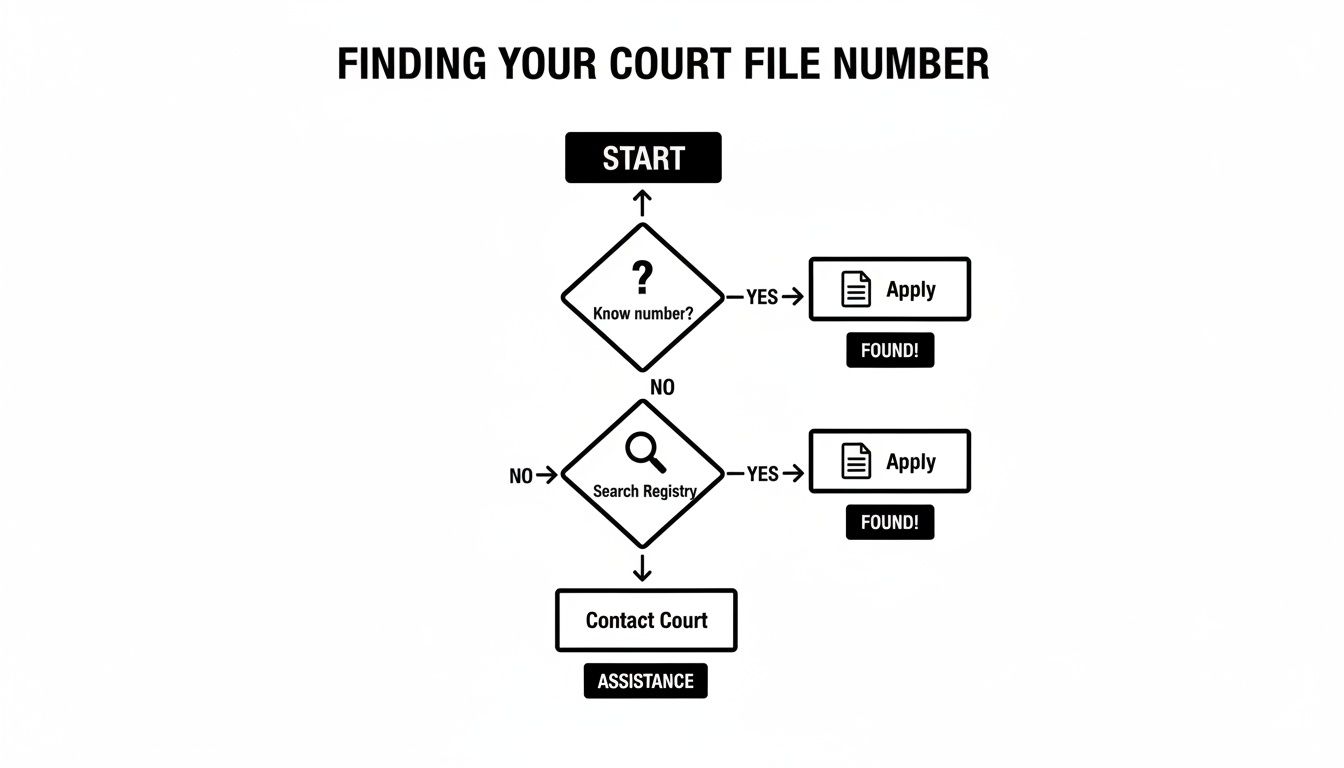
What to gather before you file

Start with the order itself. Then build a file that shows exactly how and when the breach happened.

Useful evidence often includes:

  • Certified copy of the order: The exact order, not your memory of it.
  • Chronology of defaults: A dated list of missed payments, denied visits, late pickups, withheld documents, or other breaches.
  • Communication records: Texts, emails, parenting app messages, and letters that show notice, refusal, excuses, or admissions.
  • Payment records: Bank statements, transfer histories, receipts, or proof of non-payment.
  • Service proof: Material showing the other party received the order or was present when it was made.
  • Supporting records: School notes, travel records, screenshots, calendars, and witness evidence where relevant.

Keep a contemporaneous log. A note made on the day of the breach usually carries more weight than a reconstructed summary created months later.

For forms and court paperwork, this guide to Ontario family law forms helps many people understand what documents may be required before filing.

Mistakes that weaken enforcement cases

The most common problem is vagueness. "They never follow the order" is not evidence. "They denied parenting time on these dates, after confirming the exchange by text, and here are the screenshots" is evidence.

Other recurring mistakes include:

  • Waiting too long: Delay can make a judge ask why the issue was not serious enough to address sooner.
  • Using self-help remedies: Withholding the child because support wasn't paid, or stopping support because parenting time was denied, often backfires.
  • Overclaiming: If every inconvenience is framed as contempt, the serious breaches lose force.
  • Bringing messy records: Judges need a clean timeline, not hundreds of unsorted screenshots.
  • Ignoring proportionality: Some breaches justify a firm motion. Others are better handled with a lawyer's letter, a case conference position, or a targeted request for clarification.

Timelines also matter. Court enforcement is rarely immediate. Motions, service, response materials, scheduling, and judicial availability all take time. If the matter is urgent, the urgency has to be shown with facts, not just asserted in the paperwork.

Your Next Steps with Badesha Law

The right enforcement path depends on the problem in front of you. If the issue is unpaid support, the Family Responsibility Office is often the first and best tool. If the issue involves parenting time, decision-making, property, disclosure, a hidden-income problem, or a foreign order, court may be the only practical route.

That choice affects cost, speed, stress, and the chance of getting a useful result. It also affects how you prepare. Some files need registration and follow-up with the FRO. Others need a clean evidentiary record, a focused motion, and a realistic remedy request. The worst approach is usually the reactive one. Filing the wrong thing, too late, with weak evidence often creates more delay than progress.

Legal advice becomes especially important when the other party is ignoring orders repeatedly, hiding assets, using a corporation or cash income, threatening to relocate with a child, or relying on an order from another country. Those files turn on details, and small procedural mistakes can cost months.

If you're also trying to get organised for the broader family law process, this guide on how to prepare for divorce in Ontario is a practical companion.


If you need help with court order enforcement, Badesha Law provides practical family law guidance for clients across Brampton, Peel Region, and the GTA. Whether you're dealing with unpaid support, denied parenting time, a breach of a separation agreement, or a cross-border order that needs Ontario recognition, the firm can help you choose the right enforcement strategy and move the matter forward with clarity.

Legal Separation Mediation in Ontario: A Clear Guide

You may already be living in separate rooms, or one of you may have moved out weeks ago. The urgent questions usually arrive before the paperwork does. Who pays the mortgage? What happens with the children's schedule? Can either of you use the joint line of credit? Do you need to “file for legal separation” before doing anything else?

That last question causes a lot of confusion in Ontario. People use the phrase legal separation mediation because they want a structured way to sort out parenting, support, property, and day-to-day rules while they live apart. What they usually need, though, isn't a court status called legal separation. It's a solid, enforceable Separation Agreement reached through a careful mediation process.

When mediation works well, it lowers the temperature. Instead of trading accusations through lawyers or waiting for a judge to decide intimate family issues on a crowded court list, both spouses work through the practical terms of their separation with a neutral mediator guiding the discussion. That doesn't make it soft or vague. Good mediation is organised, legally informed, and focused on getting real decisions made.

It also gives people something they often feel they've lost during separation. Control.

Table of Contents

Starting Your Separation Journey in Ontario

A separation rarely begins with a neat legal checklist. It starts with ordinary life becoming unworkable. One parent sleeps in the basement. Someone starts tracking grocery costs because the old routine no longer makes sense. The children ask where they'll be this weekend, and both parents realise they haven't agreed on anything.

That's where mediation can be useful. It gives separating spouses a place to sort out practical issues in a controlled setting before conflict hardens into positions. For many families, that means discussing parenting schedules, support, use of the home, debt payments, and the timing of next steps, all without turning every disagreement into a court fight.

A contemplative woman standing by a large window overlooking a scenic countryside landscape at sunset.

What works in this stage is structure. What doesn't work is assuming goodwill alone will carry difficult conversations. Even couples who want an amicable separation often need a framework, an agenda, and a process for making decisions one issue at a time.

Practical rule: Don't wait until every emotional issue is resolved before dealing with the legal and financial ones. Most families need a working plan early.

Ontario law matters here. Under the Family Law Act and the broader family law framework in Canada, spouses can live separate and apart and make enforceable arrangements without rushing into an immediate court battle. That's why legal separation mediation, in the Ontario sense, is usually about creating order during separation rather than obtaining a separate court label.

A good starting point is simple:

  • Stabilise the basics: where each person will live, how bills will be handled, and what the parenting schedule looks like this week and next week.
  • Protect disclosure: gather income information, debts, account balances, and property records early.
  • Use a process that fits the family: mediation can work very well when both people are willing to exchange information and negotiate in good faith.

People often feel they must choose between doing nothing and going straight to court. In practice, there's a middle path. For many Ontario families, mediation is that path.

What Legal Separation Really Means in Ontario

A spouse will often sit across from me and say, “I want to get legally separated first.” In Ontario, that usually means they are trying to solve a real problem with the wrong legal label.

You are separated when you live apart with the intent to separate

Ontario does not have a separate court status called legal separation. You remain married until you divorce. You become separated when at least one spouse decides the relationship is over and you begin living separate and apart, even if some practical overlap continues for a time.

That distinction matters because it changes what mediation is meant to produce. The goal is usually not a court document declaring you “legally separated.” The goal is a written agreement that deals with the consequences of separation in a clear, enforceable way.

If you want a fuller explanation of the terminology, this guide on the difference between legal separation and divorce in Ontario sets out the legal distinction.

In practice, mediation during separation and mediation before divorce often cover the same issues. The difference is timing, not a special Ontario process called legal separation.

What mediation is actually building

In most cases, mediation is working toward a Separation Agreement. That document sets out the terms you and your spouse agree on while living apart. If it is drafted properly, with full financial disclosure and independent legal advice, it can become the foundation for stability now and a later uncontested divorce if you choose to apply for one.

A useful Separation Agreement usually addresses:

  • Parenting arrangements: decision-making responsibility, parenting time, holidays, travel, and communication
  • Child support: table support, section 7 expenses, sharing percentages, and review terms
  • Spousal support: whether support is paid, the amount, duration, and review or variation triggers
  • Property issues: equalization, bank accounts, pensions, vehicles, and the matrimonial home
  • Debt allocation: responsibility for credit cards, lines of credit, tax debt, and joint liabilities

The quality of the agreement matters as much as the deal itself. A vague term about the house can create a fight six months later. A support clause without income review dates can cause the same problem. Good mediation does not just settle today's dispute. It addresses the predictable pressure points that tend to come next.

Ontario family law allows spouses to make domestic contracts, but those contracts need care. Full and honest disclosure is not optional if support or property is in issue. Clear drafting matters. So does fairness in the process. Mediation can help spouses reach common ground, but the final agreement still needs to stand up if one person later refuses to comply.

Some families do need court orders before they are ready to divorce, especially where support is urgent, parenting is disputed, or disclosure is being withheld. That happens. Still, for many separating spouses in Ontario, “legal separation mediation” really means using mediation to negotiate a detailed Separation Agreement that brings order to an unsettled situation.

The Ontario Mediation Process Step by Step

Mediation feels less intimidating when you know what happens. Most files follow a fairly predictable sequence, even though each family's issues are different.

A six-step infographic illustrating the legal separation mediation process in Ontario, from initial consultation to final agreement.

The first meeting and suitability screening

The first step is usually an intake meeting. Sometimes each spouse speaks with the mediator separately first. Sometimes there is a joint introductory meeting. The point isn't to settle everything immediately. It's to determine whether mediation is appropriate and to identify the issues that need to be addressed.

A competent mediator will screen for problems that can make mediation unsafe or unworkable, such as family violence, coercive control, serious non-disclosure, or an inability to negotiate on anything at all. Mediation is not a good fit in every file.

Early in the process, each person should also understand the financial disclosure expected in family law. If support or property is in issue, incomplete numbers lead to bad agreements. Ontario spouses often need documents similar to those used in court financial statements, and it helps to review what belongs in a Form 13.1 financial statement in Ontario family law before mediation gets too far along.

Disclosure negotiation and drafting

Once the process is underway, the parties usually exchange documents and attend one or more mediation sessions. These meetings can cover:

  1. Immediate arrangements such as parenting transitions, interim bill payments, and use of the home.
  2. Support questions based on income and the children's needs.
  3. Property issues including equalization, debts, pensions, and sale or buyout options.
  4. Future mechanics such as review dates, tax filing obligations, refinancing deadlines, or dispute resolution clauses.

The mediator's role is neutral. The mediator does not act for either spouse and does not replace independent legal advice. Good mediators keep the conversation focused, reality-test proposals, and stop the discussion from drifting into old marital grievances that don't help solve current legal issues.

What works well here is issue-by-issue negotiation. Settle one area, write it down, then move to the next. What tends not to work is trying to resolve parenting, support, property, and personal resentment in one sweeping conversation.

What I see most often: mediation succeeds when both spouses come prepared to trade proposals, not speeches.

When progress is made, the mediator will usually prepare a summary document, often called minutes of settlement or a memorandum of understanding. That summary is not always the final binding agreement, but it becomes the blueprint for one.

Independent legal advice before signing

Before anyone signs a final Separation Agreement, each spouse should obtain independent legal advice. This is one of the most important safeguards in the process.

Independent legal advice does several jobs at once:

  • It helps a spouse understand rights and risks under Ontario law.
  • It identifies missing language, tax issues, and enforcement gaps.
  • It reduces the chance that one party later argues they didn't understand what they signed.

After legal advice, revisions may be made. Then the final Separation Agreement is signed and witnessed. Once signed properly, it can become the working legal framework for the family's separation and, in many cases, later support an uncontested divorce process.

Mediation vs Litigation Choosing Your Path

You and your spouse may agree that the relationship is over, but still disagree on how to sort out the children's schedule, support, or the house. That is usually the primary fork in the road. The choice is not between “being separated” or “going to court.” In Ontario, separation itself is not a court status. The practical question is how you will reach a signed Separation Agreement, or whether a judge will have to decide some of the terms for you.

Cost matters. So does speed. But in my experience, the better test is this: which process gives your family the best chance of reaching terms that are fair, workable, and likely to hold.

Where mediation usually works better

There is no Ontario government statistic that gives a clean side by side comparison between mediation and litigation for separated spouses. Some articles cite data from California to show that mediated files often settle more often, cost less, and finish sooner, but those figures are not Ontario data and should not be treated as a local benchmark.

The Ontario pattern is still familiar. Where both spouses are prepared to exchange full financial disclosure, stay focused on solving present-day issues, and get legal advice before signing, mediation is often the more practical route. It gives the parties more say over the result, keeps private family matters out of the public court process, and allows for terms that fit real life rather than the narrower wording found in many court orders.

That flexibility matters in separation cases. A mediated Separation Agreement can deal with parenting schedules, child support adjustments, spousal support review terms, sale timelines for the home, debt allocation, and dispute-resolution steps if problems come up later. Court can decide those issues too, but the process is more rigid and usually more expensive.

Here is the comparison clients usually want at this stage:

Factor Mediation toward a Separation Agreement Court Litigation
Cost Usually lower if both spouses provide disclosure and negotiate in good faith Usually higher because of motion materials, case conferences, preparation time, and court attendances
Timeline Often shorter if the issues are defined and both parties participate Often longer because hearing dates depend on the court's schedule
Privacy Discussions and draft terms stay private Court filings and attendances are part of a formal public process
Control Spouses shape the terms of their agreement A judge decides any issue the parties cannot resolve
Stress level Usually lower because the process is settlement-focused Often higher because the process is adversarial and affidavit-driven
Flexibility Terms can be tailored to the family's day-to-day needs Orders are usually limited to the issues argued before the court

When court may still be necessary

Mediation is not appropriate in every case.

Court may be the better starting point where one spouse is hiding income or assets, where there is a safety concern, where parenting decisions cannot wait, or where someone is using delay as a strategy. The same is true if there is such a strong power imbalance that one spouse cannot negotiate freely, even with support people, separate sessions, or counsel in the background.

Many families end up using both processes. They may go to court for urgent parenting terms or financial disclosure, then return to settlement discussions once the immediate pressure is under control. That is often a sensible middle path, not a failure.

If your goal is to resolve the separation first and keep the divorce step as straightforward as possible, it also helps to understand the difference between a contested and uncontested divorce in Ontario. In many cases, once the Separation Agreement is signed, the later divorce application becomes much simpler.

How to Prepare for a Successful Mediation

Preparation changes the quality of mediation more than people expect. Spouses who arrive organised usually spend less time arguing about basic facts and more time solving actual problems.

A checklist infographic titled Your Mediation Preparation Checklist featuring seven steps for preparing for divorce mediation.

Get your financial picture into one place

Start with documents. Not guesses, not memory, and not screenshots from six months ago. Family law negotiations are only as reliable as the disclosure behind them.

Gather the core records first:

  • Income records: recent pay stubs, tax returns, notices of assessment, and business income documents if applicable
  • Banking and investments: account statements, RRSPs, TFSAs, pensions, RESPs, and non-registered investments
  • Debts: mortgage statements, credit cards, lines of credit, car loans, and personal loans
  • Property documents: deeds, mortgage balances, appraisals if available, and purchase or sale records
  • Insurance and benefits: life insurance, health benefits, and disability coverage

People often underestimate the importance of tracing dates. Separation date, date of marriage, account balances on those dates, and ownership records can all affect support and property discussions.

Know your priorities before the session starts

Mediation goes better when you know the difference between your goals and your positions. A position is “I must keep the house.” A goal may be “I need housing stability for the children until the school year ends.”

That distinction opens options.

Ask yourself these questions before the first serious session:

  • Parenting: what schedule is realistic for the children, not just preferable for me?
  • Support: what monthly arrangement is workable and legally supportable?
  • Home: do I want to keep it, sell it, or use it temporarily before a sale?
  • Debt: which obligations must be dealt with immediately to protect credit and cash flow?
  • Timing: what needs to happen now, and what can be reviewed later?

If your spouse has been hard to deal with, it may also help to read practical guidance on what happens when a spouse won't sign a separation agreement in Ontario. That issue changes negotiation strategy.

Bring the right mindset

Preparation isn't only financial. It's behavioural.

Enter mediation ready to listen for interests, not just statements. The proposal you reject at first may contain the clue to a workable settlement.

A few habits make a significant difference:

  • Stay future-focused: mediation is for decision-making, not winning arguments about the past.
  • Use precise language: “alternate weekends from Friday after school” is better than “fair access.”
  • Expect give and take: no durable agreement leaves both people feeling they won every point.
  • Pause before reacting: difficult offers can often be improved. They don't always need to be treated as final insults.

What usually doesn't work is turning mediation into a performance. Long speeches, moral scoring, and threats to “see you in court” tend to waste time and narrow options.

Key Issues Resolved in a Separation Agreement

A Separation Agreement turns broad anxiety into concrete terms. It answers the questions that keep separated spouses up at night and puts those answers into language that can be followed, reviewed, and enforced.

A diagram outlining the six core elements of a legal separation agreement including custody and finances.

Parenting and support terms

If children are involved, the agreement should be detailed. Vague parenting clauses often create repeat conflict. In Ontario family law, current language focuses on decision-making responsibility and parenting time, not the older custody and access terms people still use informally.

A well-drafted parenting section often covers:

  • the regular weekly schedule
  • exchanges and transportation
  • holidays, birthdays, and school breaks
  • communication with the children
  • medical, school, and extracurricular decision-making
  • travel and passport consent
  • a process for future schedule changes

Child support should also be specific. The agreement should identify the payor, the amount or calculation method, treatment of special expenses, exchange of income information, and review dates where needed. Spousal support deserves the same care. If there is support, the agreement should set out amount, duration, review triggers, and termination events.

Property debt and the matrimonial home

Property issues are where many mediated agreements either become very useful or very fragile. Ontario's property regime is not about “who paid for what.” Married spouses usually need to consider equalization of net family property, along with practical concerns about possession, sale, and debt responsibility.

The matrimonial home needs special attention. A spouse may want to remain there temporarily for the children's stability while the other relocates, sometimes even to another country. In those situations, mediation can create temporary occupancy terms dealing with who remains in the home, who pays carrying costs, how long the arrangement lasts, and what event triggers a sale or buyout.

That kind of clause needs precision. It should address maintenance, insurance, listing decisions, appraisals, access for sale preparation, and what happens if refinancing is not completed on time.

For a fuller look at how these terms are commonly assembled, review a practical guide to a Separation Agreement in Ontario.

What makes the agreement enforceable

A handshake is not enough. A text message understanding is not enough either. To be effective, a Separation Agreement should be in writing, clearly drafted, properly signed, and witnessed. It should also be grounded in honest financial disclosure.

The strongest agreements don't just state outcomes. They also state deadlines, documents required, and what happens if one party doesn't cooperate.

When properly prepared, a Separation Agreement can later be used in court processes, including support enforcement or as part of an uncontested divorce. But the quality of that later use depends on the quality of the drafting now. Clear language is not cosmetic. It is what makes settlement durable.

Common Questions and Your Next Steps

Late in mediation, the hardest questions are often the ones that determine whether your agreement will work six months from now.

A common example is the person who says, "We agree on the big issues, so why does the wording matter so much?" In family law, wording matters because a signed Separation Agreement is usually the legal goal in Ontario. "Legal separation" is not a separate court status here. What protects you is a clear written agreement that can be relied on later if support is missed, parenting disputes return, or a divorce application is filed.

Can mediation help if I need to remarry after a foreign divorce

Sometimes, yes. But mediation is only part of the answer.

If you were divorced outside Canada and now plan to remarry here, or need to address immigration concerns, the key question is often whether Ontario will recognize that foreign divorce. A mediated Separation Agreement can still be useful. It can set out your present parenting arrangements, support terms, and property issues in Ontario. It does not, by itself, prove that a foreign divorce is valid for every legal purpose.

That distinction matters. In practice, these cases need careful drafting with the later use of the document in mind. Dates of marriage and separation, the place of the prior divorce, the parties involved, and the issues being resolved in Ontario should all be stated accurately and consistently. If there is any concern about remarriage or immigration, get legal advice early so the mediation record and final agreement do not create avoidable problems.

What if my spouse agrees in principle but refuses to sign

This happens often.

Sometimes the hold-up is legitimate. One spouse may have received legal advice that exposed a drafting problem, missing financial disclosure, or an unclear support term. Sometimes the delay is strategic. A party may prefer an informal arrangement because it gives them room to change position later.

The response depends on the cause. If the issue is wording, revisions and independent legal advice may get the deal across the finish line. If the issue is incomplete disclosure, pause and get the missing documents before anyone signs. If the issue is repeated delay, control, or bad faith, mediation may have done all it can do and a court process may be the next practical step.

Do not confuse verbal progress with a final settlement. Until the agreement is properly signed, the risk remains.

If you are deciding what to do next, keep the objective simple and realistic. In Ontario, the usual aim is not to get a court order declaring you "legally separated." It is to leave the process with a signed Separation Agreement that deals clearly with parenting, support, property, debt, deadlines, and future steps.

If you need clear advice about separation, divorce, parenting, support, the matrimonial home, or a foreign divorce opinion letter, Badesha Law offers practical family law guidance across Brampton, Peel Region, and the GTA. A free consultation can help you understand your options, avoid common mistakes, and decide whether mediation, negotiation, or court is the right next step for your situation.

How to Get a Divorce Certificate in Ontario

You’re often asked for a divorce certificate at a moment when life is already moving fast. A new marriage licence application is underway. Immigration paperwork is due. An employer, pension administrator, or government office wants official proof that your divorce is final. Then the confusion starts. You may already have court papers, so why isn’t that enough?

In Ontario, the answer usually comes down to the difference between the document that granted the divorce and the document that confirms it is final. That distinction matters under the federal Divorce Act, including the waiting period before a divorce becomes effective. The good news is that getting the certificate is usually manageable if you apply the right way, through the right court, with the right information.

For people in Brampton, Mississauga, Toronto, and across the GTA, the process is more practical than dramatic. Most problems come from filing at the wrong courthouse, using inconsistent details, or choosing a method that doesn’t match your timeline. If you’re still at the earlier stage of ending the marriage itself, this guide on how to get a divorce in Canada may help before you request the certificate.

Your Guide to Getting a Divorce Certificate in Ontario

A divorce certificate is the court-issued proof that your divorce has taken legal effect. It’s the document many institutions want when they need simple confirmation that you are no longer legally married.

A lot of people mix it up with the divorce order. That’s understandable. The divorce order is the court’s decision in the divorce case. The certificate is closer to the final proof that the process has reached the finish line.

Think of it this way. The order is the court record that says the divorce was granted. The certificate is the document you usually show to third parties who don’t need the whole court file and just want official confirmation that the marriage ended.

For many clients, the stress isn’t legal complexity. It’s timing. They need the document quickly, they aren’t sure which courthouse handled the file, or they only have partial paperwork from years ago. Those are common problems, and they can usually be solved with a careful application and the right records.

Practical rule: Before you submit anything, match every name, date, and file detail to the court documents you already have. Small mismatches cause the biggest delays.

Understanding Your Divorce Certificate Versus a Divorce Order

A common GTA problem looks like this. Someone books a new wedding date, goes to ServiceOntario or a marriage licence office, and learns the divorce order they brought is not the document being asked for. That mistake costs time, and in Brampton and Toronto the practical difference matters because court counter access, file retrieval, and processing flow are not always the same from one courthouse to another.

A divorce order is the court document that says the judge granted the divorce. It sits within the court file and may be accompanied by other documents dealing with support, parenting, or property, depending on how the case was resolved.

A divorce certificate is the short court-issued proof that the divorce has already taken legal effect. It is usually the document third parties want because it confirms the marriage has legally ended, without requiring them to review the full file.

A divorce certificate and a divorce order document resting on a polished wooden office desk.

Why the waiting period matters

The divorce does not usually become effective on the day the order is signed. There is usually a waiting period before it takes effect, unless the court orders otherwise. Until that effective date passes, the certificate is generally not available.

People often get tripped up at this stage. They have a signed order and assume the process is finished. Legally, the finish line is the date the divorce takes effect.

That timing issue also affects how you should apply. If the order is recent, an in-person trip to the courthouse may not help if the divorce is not yet effective. If the divorce became final long ago, an online, mail, or in-person request may all work, but the speed and convenience can differ depending on whether the file is in Brampton, downtown Toronto, or an older court location with archived records.

Why the distinction matters in practice

Use the right document for the right job.

A divorce order is often enough if you or your lawyer need to confirm what the court decided in the case. A divorce certificate is usually the better document when a marriage licence office, pension administrator, or government office wants simple proof that the divorce is final.

In practice, I tell clients to check the exact wording of the request before they spend time attending a courthouse. Some offices will accept only the certificate. Others may accept the order if it clearly shows the effective date. Asking first can save you a wasted trip, especially if you are deciding between attending the Brampton courthouse in person or sending a request for a Toronto file by mail.

What details actually matter

The court must be able to identify the correct divorce file. If you still have the divorce order, start there. It usually contains the courthouse name, court file number, and date the order was granted.

If your paperwork is incomplete, focus on the details that help staff locate the file accurately:

  • Court location: Brampton, Toronto, or the specific courthouse that granted the divorce
  • Court file number: Often the fastest way to pull the record
  • Year of divorce: Helps narrow the search
  • Full legal names used in the case: Use the names exactly as they appeared in court

For divorces started under Ontario court process after the late 1960s, file details matter far more than people expect. A request that says only “Toronto divorce around 20 years ago” is much harder to process than one that identifies the exact courthouse and file number.

If you are not yet at the certificate stage and still need to start the court process itself, review this guide on how to apply for divorce in Ontario.

Practical advice: if you are unsure whether you need the order or the certificate, ask the institution requesting it before you apply. That one phone call often saves more time than choosing between online, mail, or in-person service.

Eligibility and Information Needed Before You Apply

A lot of delay happens before the request is even sent. Someone finds an old divorce order, remembers the year roughly, submits the application, and then learns the court cannot match the file with confidence. In the GTA, I see this often with former spouses who moved after the divorce and are no longer sure whether the case was finalized in Brampton, Toronto, Newmarket, or another courthouse.
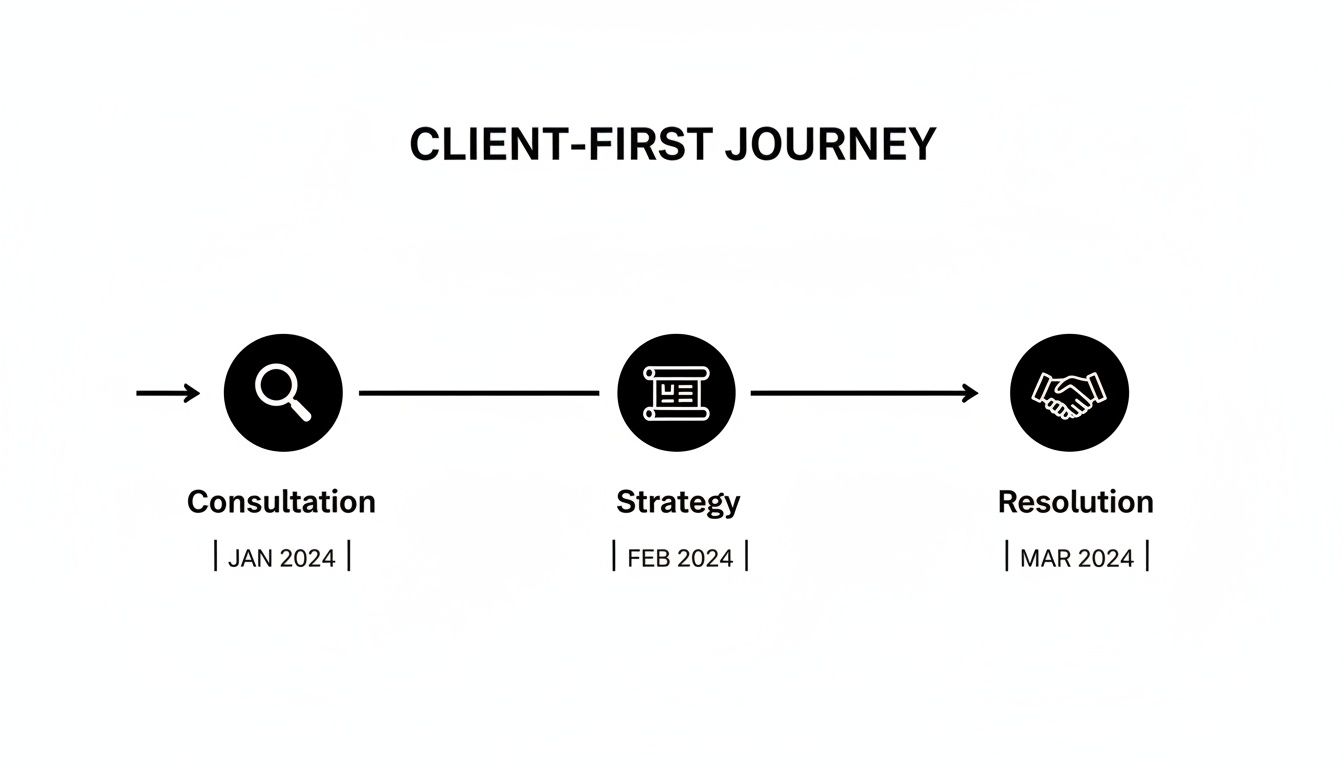
Eligibility is usually straightforward. One of the former spouses named in the divorce file can request the certificate, and in some cases a lawyer or other authorized representative can do it for them. The harder part is giving the court enough accurate information to pull the right file on the first try.

Start with your documents, not your memory.

The details you should collect first

Gather the information that identifies the court file clearly:

  • Full legal names of both spouses: Use the names exactly as they appeared in the divorce case.
  • Court file number: If you have it, include it. This is often the quickest way for staff to locate the record.
  • Date or year the divorce was granted: Even an exact year helps narrow the search.
  • Courthouse location: You need the court that granted the divorce.
  • Copy of the divorce order, if you still have it: It helps confirm the file number, date, and court location.

Accuracy matters more than people expect. A small mismatch in a surname, a guessed year, or the wrong courthouse can slow the request or force you to start again.

That point becomes more important if the original divorce was a joint divorce application in Ontario, because clients sometimes assume either spouse’s later address or current city changes where the record is kept. It does not. The record stays tied to the court file and the courthouse that issued the divorce.

Older files require more care

Older divorce records can involve a different search process. Some historical files are held through archival channels rather than handled the same way as newer court records. For more recent divorces, the practical starting point is usually the courthouse that granted the divorce. As noted earlier, federal record-tracking information may also help if the divorce was granted after the late 1960s and key file details have been lost.

If your divorce is older, expect retrieval to take more effort. That is especially true if you only know the city and approximate decade. A request for "a Toronto divorce from the early 1980s" gives court staff very little to work with. A request with the exact court file number, full names, and date is far easier to process.

A quick check before you submit

Before you apply, compare what you plan to submit against any court document already in your possession.

Confirm these points:

  1. Do both names match the court record exactly?
  2. Do you know the courthouse that granted the divorce?
  3. Do you have the correct file number, or a reliable way to find it?
  4. Have you verified the date instead of estimating it?

Treat this as a court record request, not an informal search. That mindset saves time whether you later choose to apply online, send the request by mail, or attend the correct GTA courthouse in person.

Choosing Your Application Method Online Mail or In-Person

A Brampton client often calls with the same problem. They need the certificate quickly, assume any nearby courthouse can issue it, then find out the divorce was granted in Toronto and the request has to be tied to that original court file. At that point, the best method is not just a paperwork choice. It is a time and stress choice.

In Ontario, you can apply online, by mail, or in person. Each route can work. The right one depends on where the divorce was granted, how complete your file details are, and how quickly you need the document.

In the GTA, courthouse location changes the practical answer. A Toronto divorce certificate request cannot be issued over the counter in Brampton because Brampton is closer. The request must be handled through the court that granted the divorce, as noted earlier and in this Ontario divorce certificate guide. That is why GTA applicants often save time by choosing online filing or attending the correct courthouse directly.

An infographic showing three ways to apply for a divorce certificate in Ontario: online, mail, and in-person.

Online application

Online filing is usually the most practical choice for people who already have the file number, divorce date, and correct court location. Ontario uses Justice Services Online through a My Ontario Account, and the documents must be uploaded in PDF or Word format.

This method works well for GTA applicants who want to avoid traffic, parking, security screening, and courthouse counter hours. If your divorce was granted in downtown Toronto, online filing often saves more time than driving in, finding parking, waiting to be served, and then learning a clerk still needs time to process the request.

It also gives you a clear submission record. That matters if you are working against a travel deadline, a remarriage timeline, or a request from another government office.

Mail application

Mail is still available, but it is usually the slowest and least forgiving option.

The issue is not just postal delivery. If anything is missing, such as the wrong court location, an incomplete payment, or a mismatch in names, you lose more time because the correction cycle happens through outgoing mail, intake review, and another round of mailing. For straightforward files, mail can be fine. For uncertain files, it is often the method that creates the longest delay.

Mail usually makes sense in three situations:

  • Travel is difficult: You cannot reasonably get to the issuing courthouse.
  • You prefer paper: You want a physical copy of everything you send.
  • Your file details are complete: You already know the exact names, date, and court information.

If any of those details are uncertain, online or in-person filing is usually easier to manage.

In-person application

In-person filing is often the best option when timing is tight and the correct courthouse is within reach.

For Brampton and Peel clients, this can be a very practical route if the divorce was granted locally and you can attend during service hours. Staff may be able to flag a basic problem right away, which is helpful if you are under pressure and want to avoid the back-and-forth that happens with mail. In some cases, in-person service can move faster than the other methods, but that depends on the courthouse, the day, and whether the file is readily available.

Toronto courts and Brampton courts do not always move at the same pace. Toronto locations often deal with heavier volume. Brampton can be more convenient for Peel files, but convenience only helps if Brampton is the court that issued the divorce. That distinction matters a lot in the GTA, and many generic guides skip over it.

Choose in person when urgency is the priority and you can get to the issuing courthouse. Choose online when you want a documented process without the trip.

What tends to work best in the GTA

Clients often ask whether Brampton is faster than Toronto. Sometimes yes. Sometimes no. Court volume, staff availability, and the age of the file all affect what happens in real life.

The better question is which method gives you the best chance of getting the request right the first time.

A practical way to decide is this:

  • Choose online if you have the correct file details, want a written submission trail, and do not want to attend court.
  • Choose in person if the need is urgent and the issuing courthouse is realistically accessible.
  • Choose mail if speed is less important and you are confident the package is complete.

If you are still sorting out the divorce process itself, especially whether both spouses can file together, this guide on a joint divorce application in Ontario may help.

Comparing Divorce Certificate Application Methods in Ontario

Method Best For Typical Processing Time Key Requirement
Online People with complete file details who want convenience and fewer avoidable errors Acceptance is reviewed within a defined administrative window, with full timing depending on the court My Ontario Account and properly completed digital documents
Mail People who prefer paper filing and don’t need the fastest route Usually slower because of delivery and handling Complete package sent to the courthouse that granted the divorce
In-person People with urgent needs and access to the correct courthouse Can be faster, depending on courthouse operations Attendance at the specific court that issued the divorce

One firm option some clients use for help with the process is Badesha Law, which handles divorce-related family law matters in Brampton and the GTA, including guidance on document requests tied to divorce files.

Navigating Fees and Processing Times in 2026

A common GTA scenario goes like this. Someone in Brampton needs a divorce certificate quickly because a wedding date, pension paperwork, or travel booking is coming up. They assume the fee is the main issue. In practice, the bigger issue is usually processing time, and that changes depending on whether the request goes online, by mail, or directly to the courthouse that granted the divorce.

Ontario’s fee for a divorce certificate application is $25, and that fee applies whether you apply online, in person, or by mail, according to the Ontario government page on getting copies of family law court documents. Payment options include Mastercard, Visa, debit card, or cheque or money order payable to the Minister of Finance through the approved process on that page. Eligible applicants may also use a court fee waiver certificate.

A modern white digital clock on a table displaying the year 2026 and a 25 dollar fee.

What timing looks like in real life

Official timelines are useful, but they are not guarantees.

Ontario’s public guidance says online applications typically receive confirmation of acceptance within five business days, and full processing is completed in one to three weeks. Some in-person applications can be processed the same day, depending on the courthouse. Mail-in applications usually take longer because delivery, intake, and payment handling add extra steps.

The part generic guides often miss is the local court reality. A person dealing with the Brampton courthouse may have a different experience from someone whose divorce was issued in downtown Toronto. Court volume, counter service, staffing, and the age of the file all affect timing. There is no dependable public chart that tells you, week by week, which GTA courthouse is moving faster. Treat the published timeline as a baseline, not a promise.

The trade-off between online, mail, and in-person filing

Online filing is often the best balance of speed and convenience if your file details are accurate and complete. You get immediate proof of submission, and you avoid mailing delays.

In-person filing can be the fastest option for some clients, especially where urgency is real and the correct courthouse is reasonably accessible. I often tell clients in the GTA to think about geography before they think about speed. If your divorce was granted in Brampton and you live nearby, attending there may make sense. If the file is in Toronto and getting downtown will cost you most of a workday, online filing may be the better choice even if same-day service is theoretically possible at the counter.

Mail is usually the slowest route. It can still be appropriate if urgency is low and the package is complete, but it gives you the fewest chances to correct a problem quickly.

The mistakes that stretch the timeline

Delay often starts with a small mismatch between the form and the court record.

The online system has a five-business-day acceptance window for review of Form 36B. If the form is incomplete or incorrect, the application is rejected, the $25 fee is refunded, and you have to submit again. That restart matters more than the refund if you are working against a deadline.

The errors that cause the most trouble are familiar:

  • Legal names that do not match the court record
  • Wrong divorce finalization date
  • Incorrect court file number
  • Sending the request to the wrong courthouse
  • Relying on memory instead of checking the actual divorce order first

Save the online confirmation screen or take a screenshot as soon as you submit. If you later need to follow up on timing, that record helps.

If you are budgeting for more than the certificate itself, this guide to Ontario divorce costs and court fees helps separate the certificate fee from the broader expense of getting divorced in the first place.

Common Application Errors and How to Avoid Delays

A common GTA problem looks like this. Someone divorced in Brampton years ago now lives in downtown Toronto, submits a request to the wrong court, then loses time correcting a mistake that had nothing to do with the divorce itself.

That is how delays usually happen.

Most certificate requests stall because the form does not match the court record exactly, or because the request goes to the courthouse that is easiest to reach rather than the courthouse that granted the divorce. I see this often with former Peel Region residents who now work or live closer to Toronto. The convenience of filing from where you are now does not change where the court file is held.

A document titled Application on a wooden desk with a clock icon representing time-sensitive forms.

The errors that cause the most delay

Some mistakes look minor but stop the application cold.

  • Name differences: The legal names on the request must match the court record. A middle name, spelling variation, or post-divorce name change can create a problem if the file says something else.
  • Wrong court location: If the divorce was granted in Brampton, the request belongs with that court file, not at a Toronto counter just because it is closer to home.
  • Wrong date: People often use the date they separated or the date they attended court, instead of the date shown on the divorce paperwork.
  • File number errors: One wrong digit or letter can be enough to prevent staff from finding the record quickly.
  • Using memory instead of documents: Old emails, invoices, and handwritten notes are less reliable than the order itself.

Online, mail, and in-person requests all have this in common. Court staff work from the existing record. They do not rewrite the application to fix a near match.

A practical way to catch problems before you file

Put the application beside your divorce order and compare them line by line. Slow is faster here.

Check these points before you submit:

  1. Match every name exactly as it appears on the court record
  2. Use the court file number character by character
  3. Confirm the divorce date from the actual order, not from memory
  4. Send the request to the courthouse that granted the divorce
  5. Keep a copy of the form, receipt, and any submission confirmation

If you are applying online, save the confirmation screen as soon as you submit. If you are applying by mail, keep proof of delivery. If you are going in person to a GTA courthouse, bring a copy of the order with you so you can correct small issues before leaving the counter.

That last point matters more in practice than many guides admit. At some courthouses, an in-person visit gives you a better chance to spot an obvious filing problem right away. Mail gives you no such opportunity, and online filing can still mean waiting for the application to be reviewed before a mismatch is flagged.

When the problem is not just the certificate request

Sometimes the certificate application reveals a larger issue with the file itself. The order may contain an error. The divorce may not be clearly final on the record. There may also be unfinished family law issues tied to the old case.

That happens more often than people expect, especially where support, disclosure, or corollary relief was never fully cleaned up. If your file still touches financial issues, it can help to review related documents such as the Form 13.1 financial statement used in Ontario family law cases.

If the court record is wrong, or if you are under pressure to remarry by a certain date, do not assume a simple re-submission will fix everything. A short legal review at that stage can save weeks of back-and-forth.

When You Need More Than Just the Certificate

A divorce certificate solves one problem. It proves the divorce is final in Ontario. It does not solve every issue that can surface after separation or after a prior divorce.

One common example is a foreign divorce. If your divorce was granted outside Ontario or outside Canada, an Ontario court does not issue an Ontario divorce certificate for that foreign proceeding. In many remarriage and immigration situations, the main issue is not getting an Ontario certificate. It is proving that the foreign divorce is valid for Canadian legal purposes.

Another example is a file where the court record itself contains an error. If the names or dates in the underlying order are wrong, the certificate process may stop until the record is corrected. That can require more than an administrative request.

Situations where legal advice is worth getting

Some files deserve legal review early, before you spend time chasing the wrong document.

Consider getting advice if:

  • Your divorce happened outside Canada: You may need an opinion letter rather than an Ontario certificate.
  • You can’t confirm whether the divorce is final: A certificate request won’t fix uncertainty in the underlying status.
  • The order appears inaccurate: Clerical or substantive errors may need correction first.
  • You’re remarrying soon: Tight deadlines leave little room for rejected applications.
  • Your divorce file intersects with unresolved support, parenting, or property issues: The certificate may be only one part of what needs attention.

A practical final word

Most Ontario divorce certificate requests are straightforward when the file information is accurate and the application method matches the urgency. The difficulty usually isn’t the law. It’s choosing the correct courthouse, using exact details, and avoiding an error that forces you to start over.

That’s especially true in the GTA, where travel time, courthouse access, and local practice realities can change what the most efficient option looks like. If the request is routine, a careful application may be all you need. If the request is tied to a foreign divorce, a record problem, or a time-sensitive remarriage or immigration matter, it’s sensible to get legal help before you lose more time.


If you need help with a divorce certificate request, a foreign divorce opinion letter, or a broader family law issue in Brampton or the GTA, contact Badesha Law for clear guidance on the next step.

Family Responsibility Office Contact: Ontario FRO Guide 2026

TL;DR: The essential family responsibility office contact points are the main toll-free line 1-800-267-4330, the Toronto line 416-326-1817, and the online portal at ontario.ca/FROonline. Those are the primary ways to deal with support enforcement questions, payment issues, case updates, and routine account management.

If you're searching for family responsibility office contact information, you're probably not doing it casually. Usually, there's a missed payment, confusion about arrears, a letter you don't fully understand, or a support order that exists on paper but doesn't seem to be producing results in real life.

That frustration is normal. The Family Responsibility Office, or FRO, plays a critical role in Ontario family law. It enforces child support and spousal support orders and certain domestic contracts that have been properly filed. But it is also a large bureaucracy, and families often feel lost when they try to get a clear answer quickly.

Navigating Your Family Responsibility Office Contact

A lot of clients first reach out after they have already spent time calling, waiting, and repeating the same explanation. One parent wants to know why support hasn't been collected. Another is trying to avoid falling behind but can't tell whether FRO has updated their file. Both are dealing with the same reality. The system is formal, document-driven, and not especially forgiving of small mistakes.

That helps explain why the FRO generated the most complaints to Ontario's Ombudsman in the fiscal year leading up to 2017, with 1,025 complaints, many involving enforcement inconsistencies, as reported by Global News on the Ombudsman's findings about the Family Responsibility Office. If you're finding the process difficult, you're not the only one.

The practical way to approach the FRO is to treat every contact as part of a strategy. You need the right channel, the right documents, and the right expectation about what the office can do. If you're still getting oriented to the broader legal framework, it also helps to understand your rights and responsibilities under Canadian family law.

Practical rule: Don't contact the FRO casually. Contact them with a purpose, a file reference, and a record of what you asked for.

Quick Reference FRO Contact Details

When people search for family responsibility office contact, they often need one thing fast. A number, an address, or confirmation that they're sending material to the right place. These circumstances often result in many avoidable delays.

A contact information graphic for the Family Responsibility Office listing phone, mailing, website, and portal support details.

Phone contacts

  • General toll-free line: 1-800-267-4330
  • Toronto local line: 416-326-1817
  • Automated information line: available 24 hours a day, 7 days a week
  • TTY line: 1-866-545-0083

Main locations and mailing uses

The FRO uses different addresses for different purposes. According to Ontario's InfoGO listing for the Family Responsibility Office, the office operates with a multi-location structure. Its primary administrative address is Building B, 125 Sir William Hearst Avenue, Toronto, ON M3M 0B5, but general correspondence goes to P.O. Box 200, Station A, Oshawa, ON L1H 0C5, and support payments must be sent to P.O. Box 2204, Station P, Toronto, ON M5S 3E9.

Why this matters

Use the wrong address and your issue may not move when you expect it to. The most common errors I see are simple:

  • Payments sent to the correspondence address: That risks delay because the Oshawa address isn't the payment processing location.
  • Court material sent like ordinary mail: Legal service has its own process and should be handled carefully.
  • People assuming one office does everything: It doesn't. The FRO splits functions across different channels and units.

A good rule is simple. Before you send anything, ask yourself whether it is a payment, general correspondence, or a legal document. Those are not treated the same way.

Using FRO Online Your 24/7 Digital Portal

For routine account management, the phone isn't always your best first move. In many files, the most effective family responsibility office contact isn't a live call at all. It's the online portal.

A professional man in a suit interacting with financial data on a tablet in an office.

The FRO Online usage guide published by Ontario confirms that FRO Online lets payors and recipients access case details, submit forms such as the Director's Statement of Arrears, upload documents, update personal information, and message caseworkers 24/7. That matters because many FRO problems are really documentation problems, not legal problems.

What works well online

The portal is especially useful for tasks that need a clear record:

  • Updating contact information: If your address, phone number, or other details change, the portal gives you a direct method to update them.
  • Uploading documents: This is often better than relying on a verbal summary over the phone.
  • Reviewing case details: You can confirm what is on file instead of guessing.
  • Messaging caseworkers: Written communication creates a record you can refer back to later.

What the portal does better than a call

A phone call can help when you need clarification. It is less useful when your issue depends on exact wording, proof of delivery, or a timeline of prior communications. In support disputes, records matter. That is one reason I generally tell clients to use the portal for anything that may later connect to a support argument, arrears dispute, or enforcement complaint. If child support is the underlying issue, it also helps to review how child support works in Ontario.

Keep screenshots, confirmation messages, and upload timestamps. If the file becomes contested later, your own record can become very important.

How to Prepare For Your Call to the FRO

A productive call usually starts before you dial. If you call without your file information, your questions, or your documents, you often end up with a partial answer and another task to complete later.

A professional woman writing a to-do list in a notebook at a clean table with her smartphone.

Before you call

Have these ready:

  • Your case number and PIN: Without them, routine file access can become harder.
  • Your support order or filed agreement: You need the exact wording, not your memory of it.
  • A short list of questions: Write them down in order of importance.
  • Any recent letters or notices from FRO: Read them before the call, not during it.

If the dispute involves support calculations, disclosure, or missing financial information, review your paperwork carefully. Many family court support problems begin with incomplete financial records, which is why understanding a Form 13.1 financial statement in Ontario family law can be so useful.

During and after the call

Use a notebook or digital note app and record:

  1. Date and time of the call
  2. Name of the representative, if provided
  3. What you asked
  4. What you were told to do next

Ask direct questions. "Has my order been registered?" is better than "What's happening with my case?"

If the answer sounds unclear, repeat it back in your own words and confirm it before the call ends.

Common Issues the FRO Handles and How They Enforce Support

The FRO is an enforcement office. It isn't there to rewrite your separation terms, explain your litigation strategy, or decide whether a support amount feels fair. It works from the order or filed domestic contract that is already in place.

Under Ontario family law, including the enforcement framework that works alongside support obligations under the Family Law Act, the office commonly deals with missed payments, partial payments, arrears disputes, and ongoing collection problems after an order has been filed. In practical terms, that means the FRO tries to collect what the existing order says is due.

What that means for recipients

If support isn't being paid, the FRO can use enforcement tools available under Ontario's support enforcement regime. Those may include measures such as wage deductions, licence suspensions, and asset seizure, where legally available through the enforcement process described in Ontario's official FRO contact materials.

What that means for payors

If your income has changed, the FRO cannot lower your payment just because you called and explained the situation. It will continue enforcing the order on file until the order is changed or a new enforceable agreement is properly dealt with through the legal process. That's the point where many people need advice about child support enforcement and variation issues.

A useful distinction is this:

Issue Can FRO fix it on its own
Missed support payment Yes, through enforcement steps
Need to change support amount No
Confusion about wording in the order Not usually
Collection of existing arrears Yes, if the order is enforceable

Navigating Interjurisdictional and Special Cases

Some support files become more complicated because one party lives outside Ontario. That doesn't mean the file is impossible to enforce. It means you need the right unit from the start.

The FRO has a dedicated Interjurisdictional Support Orders Unit for cases involving different provinces or countries. According to Ontario's FRO contact page for the Director and ISO Unit, that unit can be reached at 416-240-2410 or 1-800-463-3533, and its mailing address is PO Box 600, Steeles West Post Office, Toronto, ON M3J 0K8.

When to use the ISO Unit

Use that contact path when:

  • The payor lives outside Ontario
  • The recipient lives outside Ontario
  • Your support order involves another province
  • There is a reciprocal enforcement issue involving another country

What people get wrong

The most common mistake is treating an interjurisdictional file like a normal local enforcement file. That often leads to repeat calls to the general line, with little progress. Cross-border support enforcement usually requires more formal coordination and a more exact paper trail.

If your case has any out-of-province or out-of-country element, start with the specialised unit. It is far easier to begin in the right place than to redirect the file later.

What to Do When Standard FRO Contact Methods Fail

Many people assume persistence alone will solve the problem. They keep calling the same number, explaining the same facts, and hoping a different representative will access the file. That usually isn't a strategy. It's just repetition.

The harder truth is that guidance on escalation is often thin. As noted by Information London's Family Responsibility Office listing, official materials identify general contact channels but don't clearly explain timelines or protocols for escalating unresolved issues beyond initial contact. That's a serious gap when enforcement delays are affecting a child or former spouse.

A better escalation path

When ordinary contact isn't moving the matter, use a structured approach:

  • First, document the problem clearly: Identify the missed action, date, and what outcome you need.
  • Second, gather your record: Keep portal messages, letters, notices, and call notes together.
  • Third, ask for review at a higher level: Be polite, but specific about why the issue hasn't been resolved.
  • Fourth, submit your concern in writing when needed: Written escalation is often stronger than another verbal complaint.

When urgency changes the analysis

If non-payment is tied to an immediate court problem, a parenting dispute, or a situation where delay is causing real legal prejudice, don't assume FRO escalation alone is enough. Some files cross from administration into urgent litigation. In those cases, people often need to understand whether a court remedy, including an emergency motion in family court, is the more appropriate next step.

Repeated calls are not the same thing as escalation. A documented written complaint is a different step.

When to Stop Calling the FRO and Contact a Family Lawyer

The FRO enforces. A family lawyer advises, negotiates, drafts, and goes to court. Once you understand that distinction, it becomes easier to know when calling the FRO is no longer the right tool.

A hand rests on a legal document beside a smartphone displaying the Family Responsibility Office logo.

You should usually shift to legal advice if any of these are true:

  • You need to change support: The FRO can't vary the order for you.
  • The wording of the order is unclear: Enforcement is difficult when the order itself is vague.
  • There is a serious arrears dispute: Especially where one side says the accounting is wrong.
  • Income is difficult to verify: This often happens with self-employment, cash income, or incomplete disclosure.
  • There is a linked court issue: Parenting, property, or disclosure disputes often affect support strategy.

A lawyer can help turn a frustrating administrative problem into a legal plan. That may mean bringing a motion, clarifying the order, negotiating updated terms, or preparing the evidence needed to support a change. If your problem is with the order itself, the FRO is not where that gets fixed.

Your Next Steps with Badesha Law

If your support issue has moved beyond basic family responsibility office contact questions, legal help can save time, stress, and repeat mistakes. Badesha Law assists clients across Brampton, Mississauga, and the Greater Toronto Area with child support, spousal support, separation agreements, contested enforcement issues, and divorce-related court proceedings.

The firm can review your current order or agreement, identify whether the problem is administrative or legal, and help you decide on the next move. In some files, that means improving how the matter is presented to the FRO. In others, it means taking the issue back to court for a clearer and more enforceable result.

Support cases often become expensive when people wait too long to fix a defective order, poor disclosure, or an unresolved arrears dispute. Early legal advice can narrow the issue and help you avoid spending months chasing the wrong solution.

Frequently Asked Questions About the FRO

How long does it take for the FRO to start enforcement after an order is registered

The answer depends on whether the order or agreement has been properly filed and whether the file information is complete. In practice, enforcement can be delayed if the paperwork is missing details, if the order is unclear, or if the wrong documents were sent to the wrong place.

Can the FRO change the amount of support

No. The FRO enforces the amount set out in the court order or filed domestic contract. If the amount needs to change, that usually requires a new agreement properly handled through the legal process or a new court order.

What if the payor is self-employed or paid in cash

Those files are often harder to enforce because income may be less visible than employment income. The FRO may still have enforcement options, but if the underlying problem is proving true income or obtaining proper disclosure, that usually points back to court and legal advice rather than repeated administrative contact.

Should I call or use FRO Online

For routine updates, document uploads, and written communication, the portal is often the better first step. For clarification on a live issue or where you need immediate direction on an existing file, a call may still be useful.


If you're dealing with missed support, arrears, enforcement delays, or an order that no longer reflects reality, Badesha Law can help you understand your options and take the next step with confidence.

How to Get a Divorce Certificate in Ontario: A Step-by-Step Guide

Obtaining your divorce certificate is the final administrative step that officially closes a major chapter in your life. This guide will walk you through exactly what this document is, why you need it, and the specific steps on how to get a divorce certificate in Ontario. We’ll cut through the legal jargon to give you a clear, actionable path forward.

Right from the start, we know that dealing with court procedures can be overwhelming. This article provides the practical steps you need to get this essential document efficiently, covering everything from finding your court file number to submitting your application online, by mail, or in person.

What Is a Divorce Certificate and Why Do You Need It?

Simply put, an Ontario divorce certificate is an official government document that proves you are divorced. Issued by the court, it confirms your marriage has been legally dissolved and contains key details like the names of both parties and the date the divorce became final.

It’s crucial to understand this is not the same as a Divorce Order. A judge signs the Divorce Order to legally end your marriage. You can only apply for your divorce certificate after the 31-day appeal period for that order has passed. The full divorce process in Ontario has several stages, and getting this certificate is the final one.

Why You’ll Need This Proof of Divorce

You might be surprised how often you need to produce your certificate of divorce for legal and administrative tasks. It’s the official proof required for many common life events.

The most frequent reasons you’ll need it include:

  • Getting Remarried: This is the most common reason. You cannot legally remarry in Canada without providing your divorce certificate to prove your previous marriage has officially ended.
  • Updating Your ID: It’s often required to change your last name back on government identification, like your passport, driver’s licence, or health card.
  • Financial Matters: Banks, insurance companies, and government agencies like the Canada Revenue Agency (CRA) may request it to update your marital status, change beneficiaries, or process benefits.

Whether you’re in Brampton, Mississauga, or anywhere else in the GTA, this guide is your roadmap to getting this essential document in your hands.

Step 1: Confirming Eligibility and Gathering Your Documents

Before starting your application for an Ontario divorce certificate, a little prep work can save you headaches. First, ensure you’re applying in the right place. This process is specifically for divorces granted by an Ontario court. If your divorce was finalized in another province or country, you must follow a different set of rules.

Once confirmed, the next step is getting your information in order. Having these details ready will make the process—whether online, by mail, or in person—much smoother.

Your Document Checklist

Think of this as your pre-flight checklist. You need these key details at your fingertips:

  • Full Legal Names: The complete names of you and your ex-spouse, spelled exactly as they were on the original divorce application.
  • Court Location: The city or town where the courthouse that granted your divorce is located (e.g., Brampton, Toronto, Ottawa).
  • Year of Divorce: The year your divorce was officially finalized.
  • Court File Number: This is the most critical piece of information you’ll need. It’s the unique identifier for your case in the court system.

This stage is different from the initial divorce filing; if you need a refresher on that, you can explore our guide on how to file for divorce in Ontario.

Finding Your Court File Number

Misplacing your court file number is common, but it’s usually easy to solve. If you have any original divorce papers, like the final Divorce Order, the file number will be printed at the top of the document.

If you can’t find any paperwork, you still have options. To successfully request a divorce certificate, you must provide the court location, file number, and the year the divorce was granted. For those who don’t know which courthouse handled their divorce, the federal Central Registry of Divorce Proceedings can help. This central database can provide you with the courthouse address and a reference number to assist your search.

You can learn more about getting copies of family law documents directly from the Ontario government’s official page.

A flowchart detailing steps to find a court file number, including checking if known, searching the registry, or contacting the court.

Step 2: Navigating The Application Process in Ontario

Once you have your court file number, you can apply for your divorce certificate. Ontario offers three ways to do this, allowing you to pick the route that best suits your needs. Each path—online, mail, or in-person—has its own procedure.

The Modern Route: Applying Online

For most people, the fastest and easiest way is applying online through the official Government of Ontario portal.

Here’s what the online process looks like:

  • Head over to the Ontario Court Services website.
  • Log into or create your My Ontario account.
  • Find the service for requesting family court documents.
  • Fill out the digital version of Form 36B: Certificate of Divorce.
  • Pay the $25 fee with a credit card (Visa/Mastercard) or a debit card.

While some legal processes use leading electronic signature software platforms, the government’s portal has its own secure system.

The Traditional Method: Applying by Mail

If you prefer paper, applying by mail is a reliable option. This involves downloading, printing, and filling out Form 36B by hand. Ensure every section is completed accurately to avoid delays. Mail the form to the specific courthouse where your divorce was granted.

A critical tip for mail-in applications is payment. You must include a certified cheque or a money order for the fee, made payable to the “Minister of Finance.” Personal cheques are not accepted.

The In-Person Option: Visiting the Courthouse

Your third choice is to apply in person at the same courthouse that finalized your divorce. This is a great option if you live nearby or have questions for the court staff. You’ll fill out Form 36B on-site and pay the fee. Depending on the courthouse’s workload, you might walk out with your certificate the same day, but it may take a few business days.

Comparing Application Methods for Your Ontario Divorce Certificate

This table provides a quick comparison to help you decide which path is right for you.

Method Best For Processing Time (Estimate) Payment Options
Online Speed, convenience, and tracking. Ideal for those comfortable with digital forms. 5-15 business days (often fastest) Credit Card (Visa/Mastercard), Debit Card
Mail Those who prefer a paper trail or are not comfortable with online applications. 15-20 business days (plus mailing time) Certified Cheque, Money Order
In-Person Immediate assistance, asking questions, or potentially same-day service (courthouse dependent). Same day to a few business days Credit Card, Debit Card, Certified Cheque, Money Order

Step 3: Understanding the Costs and Timelines

When you’re at the final stage, the last thing you want are surprises with costs and waiting periods. The main government fee for the certificate itself is straightforward.

  • Certificate Fee: The cost to request your official divorce certificate is $25.

This is an additional cost on top of initial court filing fees. In total, government fees for the court process and final certificate are approximately $694, before any legal representation costs. For a more detailed look, see our complete guide to Ontario divorce costs.

Standard Processing Times

How quickly you receive your certificate depends on how you apply.

  • Online Requests: Usually processed within 5 to 15 business days.
  • Mail-in Requests: Expect to wait 15 to 20 business days, plus postage time.
  • In-Person Requests: Can range from same-day service to a few business days, depending on the courthouse.

These are estimates; court workloads and public holidays can cause delays.

Needing Your Certificate Urgently

If you have a remarriage ceremony booked or an urgent immigration deadline, you may be able to expedite your request.

To request urgent processing, you need a valid reason and proof, such as a letter from a religious official confirming a wedding date or a copy of your travel itinerary.

Make this request directly to the court clerk when you submit your application. If applying by mail, include a clear cover letter explaining the urgency. The court has the final say on whether to approve an expedited request.

Handling Special Cases Like Foreign Divorces

Not every divorce neatly fits the standard Ontario process. One of the most common hurdles involves divorces granted outside of Canada. A divorce from another country is not automatically recognized in Ontario for the purpose of getting remarried here.

The Role of a Foreign Divorce Opinion Letter

To get an overseas divorce legally validated for remarriage in Ontario, you need a Foreign Divorce Opinion Letter. This is a formal legal opinion from an Ontario lawyer confirming that your foreign divorce was legitimate and would be recognized under Canadian law.

Getting this letter involves a clear legal process:

  1. Provide the original or a court-certified copy of your foreign divorce order.
  2. An experienced lawyer will assess the legal grounds and jurisdiction of the foreign court.
  3. The lawyer drafts a formal letter that you submit with your marriage licence application.

This step is mandatory if you plan to remarry in Ontario after being divorced abroad. Review our detailed guide on the Foreign Divorce Opinion Letter process.

Dealing with Other Complexities

  • Document Translation: If your original documents are not in English or French, you must use certified and notarized translation services.
  • Correcting Errors: A misspelled name or incorrect date on your divorce order requires a formal motion to the court to have the order corrected before a new certificate can be issued.
  • Accessing Old Records: If your divorce was decades ago, your file might be in long-term storage with the Archives of Ontario, which adds extra steps and time.

Seeking legal advice early ensures these “special cases” don’t become major roadblocks.

Serving Brampton and the Greater Toronto Area

Knowing the general rules is one thing; understanding how they play out in a specific courthouse is another. At Badesha Law, we work in the Peel Region and Greater Toronto Area every day. Our team knows the ins and outs of the Brampton and Mississauga courthouses, which helps prevent frustrating delays.

Two businessmen exchange a business card, smiling, with a map of GTA showing locations on the wall.

Related Reading


Disclaimer: The information provided in this article is for general informational purposes only and does not constitute legal advice. Family law is complex and specific to your situation. You should consult with a qualified legal professional for advice regarding your individual circumstances.

Written by the legal team at Badesha Law, experts in Ontario family law.

Frequently Asked Questions About Ontario Divorce Certificates

What is the difference between a Divorce Order and a Divorce Certificate?

A Divorce Order is the legal document a judge signs to end your marriage. The Divorce Certificate is the official proof that the divorce is final. You must wait 31 days after the Divorce Order is granted before you can apply for the certificate, which is the document needed to remarry.

How long does it take to get a divorce certificate in Ontario?

Processing times vary by application method. Applying online is fastest, typically taking 5 to 15 business days. Mail-in applications are the slowest, often taking 15-20 business days plus postage time. Applying in person can sometimes result in same-day service, but it depends entirely on the courthouse’s workload.

Can I get an Ontario divorce certificate if my divorce was outside Canada?

No, an Ontario court can only issue a certificate for a divorce granted in Ontario. If you were divorced in another country and wish to remarry here, you will need a Foreign Divorce Opinion Letter from an Ontario lawyer to validate your foreign divorce for legal purposes in the province.

What do I do if I don’t know my court file number?

If you can’t find your court file number on your old documents, contact the Central Registry of Divorce Proceedings in Ottawa. They maintain a national database and can provide you with your file number and the specific courthouse location where your divorce was processed. This information is mandatory for your application.

What is the cost of a divorce certificate in Ontario?

The government fee to obtain a Certificate of Divorce in Ontario is $25. This fee is payable at the time of your application, whether you apply online, by mail, or in person. This is an additional cost to the initial court filing fees for the divorce itself.


At Badesha Law, we know that even the final administrative steps of a divorce can feel overwhelming. If you’re stuck, have more questions, or need help with a complex issue like a foreign divorce opinion letter, our team is here to provide clear, practical answers.

Book a free, no-obligation consultation today and let us help you close this chapter with confidence.
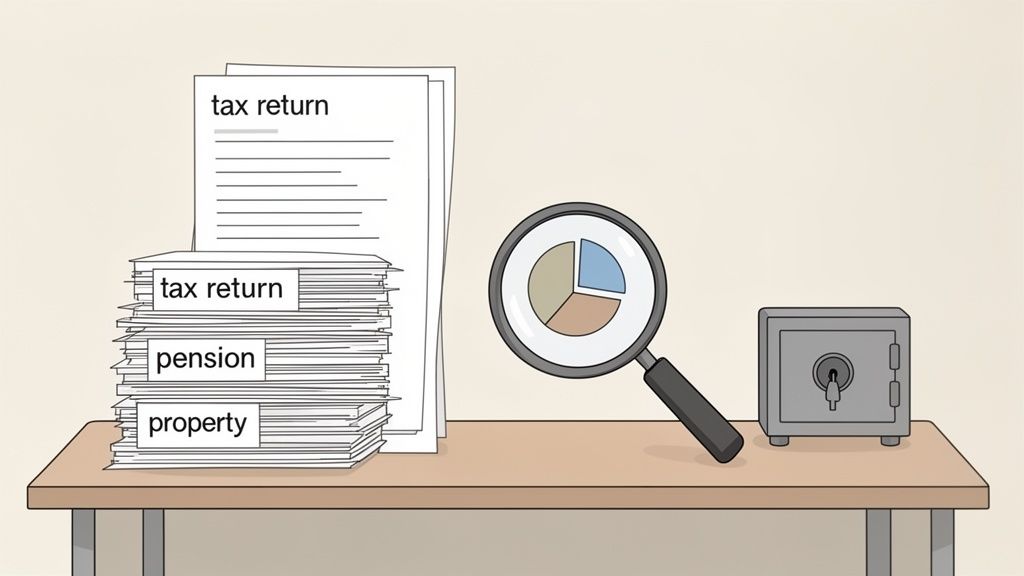

Why Badesha Law Is Trusted by Families in Brampton

Navigating a family law issue is one of life’s most challenging experiences. It’s a period filled with emotional stress and difficult questions about the future. For families in Brampton, choosing the right family  lawyer is the most critical first step toward achieving clarity and finding a resolution. At Badesha Law, we provide actionable legal guidance grounded in Ontario’s Family Law Act and the Criminal Code of Canada, earning the trust of the community by focusing on what matters most: your family’s well-being.
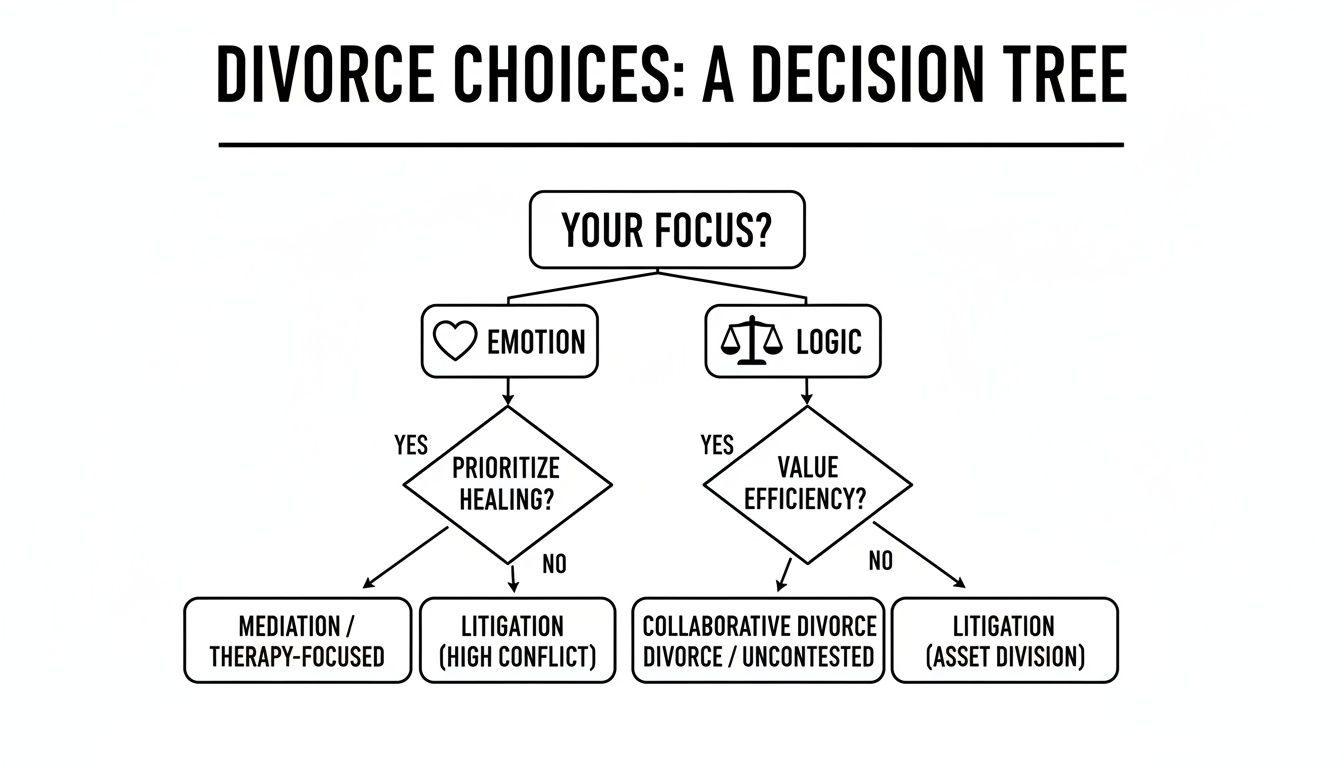
Why Badesha Law Is Trusted by Families in Brampton

When your family’s future is at stake, trust is paramount. It’s not just about legal arguments in a courtroom; it’s about having a legal team that understands your unique situation and is committed to protecting your interests. For countless families in Brampton, Badesha Law has become the trusted choice by combining deep local insight, expert legal knowledge, and a client-first approach that delivers results.

We recognize that every family is different. Our philosophy goes beyond simply offering legal advice; we provide practical, actionable strategies designed to secure the best possible outcome while minimizing conflict and preserving your dignity.

A Commitment to the Brampton Community

Our roots in Brampton give us a unique advantage. We understand the specific social and economic dynamics that affect families in our vibrant and diverse city. This local expertise means our advice is not only legally sound under Ontario’s Family Law Act but also practical and directly relevant to your life here.

We are not just lawyers who work in Brampton; we are active members of the community we serve. This connection allows us to navigate the local court system with confidence and develop strategies that reflect the realities of life in the Peel Region.

Prioritizing Clear Guidance and Actionable Plans

Legal jargon and confusing processes only add to the stress of an already difficult situation. Our approach is built on empowering clients with clear, straightforward communication. From your first consultation, our goal is to demystify the legal journey ahead.

At Badesha Law, we replace uncertainty with a clear roadmap. We explain your rights, outline your options, and work with you to develop a plan that aligns with your goals, ensuring you feel in control every step of the way.

We ensure you leave our office understanding:

  • Your Rights and Obligations: What the law requires regarding financial disclosure, parenting responsibilities, and property division.
  • Potential Outcomes: A realistic assessment of what to expect, based on the facts of your case and current Ontario family law.
  • Next Steps: Concrete, actionable steps you can take immediately to protect your interests and move toward resolution.

Choosing a family lawyer in Brampton is a significant decision. With Badesha Law, you choose a firm that combines strong legal advocacy with genuine compassion. We are here to help you navigate this challenging chapter and emerge with a stable, secure future.

The Badesha Law Difference: A Client-First Philosophy

When you search for a family lawyer in Brampton, you are looking for more than a legal technician. You need an ally—someone who will stand by you during one of life’s most trying times. At Badesha Law, our client-first philosophy is the foundation of our practice. We build every legal strategy around your unique family situation, ensuring the advice you receive is personal, practical, and aimed directly at achieving your goals.

We don’t offer one-size-fits-all solutions. Our process begins with listening. We take the time to understand your priorities, concerns, and the future you envision for yourself and your family. This deep understanding allows us to craft a legal path that is effective under Ontario’s Family Law Act and aligns with what matters most to you.

Personalized Strategies for Your Unique Situation

No two families are the same, and neither are their legal challenges. A high-conflict divorce involving complex business assets requires a vastly different approach than an amicable separation where co-parenting is the primary focus. Our commitment is to analyze the specific details of your case and create a tailored strategy that fits your needs perfectly.

For a family with young children in Brampton, the priority is often a stable co-parenting plan that minimizes disruption to school and community life. In contrast, a couple without children may be focused on a swift and fair division of property. At Badesha Law, we recognize these differences and adapt our approach to serve your primary objectives.

Clear Communication and Empowered Decision-Making

The legal system can be intimidating, filled with complex jargon that can make you feel powerless. We are committed to breaking down these barriers. Our practice is built on clear, direct communication, ensuring you are always informed and understand what is happening with your case.

We will walk you through every option, explain the potential outcomes of each decision, and clarify the legal reasoning behind our recommendations. This transparency empowers you to make confident, informed choices about your future. You will never be left wondering about the status of your case or the purpose of our actions.

Our philosophy is simple: an informed client is an empowered client. We see ourselves as your partners in this process, providing the clarity and guidance needed for you to maintain control over your own legal journey.

De-escalating Conflict and Protecting Your Resources

Family law matters are inherently emotional, but they don’t have to become destructive battles. We are firm believers in de-escalating conflict whenever possible. Protracted court fights are not only a drain on your finances but can also cause lasting emotional harm, especially to children. That’s why a core part of our client-first model is leveraging expert negotiation and mediation skills.

Our primary goal is to secure fair, lasting settlements outside of the courtroom. This approach offers significant advantages:

  • Cost-Effectiveness: Avoiding lengthy litigation saves substantially on legal fees.
  • Timeliness: Negotiated agreements are resolved much faster than court cases.
  • Control: You and your former partner determine the outcome, rather than leaving it to a judge.
  • Preserving Relationships: A less adversarial process helps maintain a functional co-parenting relationship.

This focus on resolution helps protect both your financial and emotional resources, providing a practical approach tailored to the needs of Brampton families.

Transparent Fees to Eliminate Financial Guesswork

The fear of unpredictable legal bills is a major source of stress and can deter people from seeking necessary help. This is particularly true in Brampton’s diverse communities, where budget concerns can make families vulnerable. It contributes to the fact that in 72% of family cases, at least one party is self-represented, creating a serious power imbalance. This is a risk we help our clients avoid. Learn more about Canadian divorce statistics and their impact.

At Badesha Law, we address this with a transparent fee structure. From our initial consultation, we provide a clear, honest breakdown of potential costs. We believe you have the right to know what you are paying for, allowing you to budget effectively and move forward without the anxiety of hidden charges. This financial clarity is a cornerstone of the trust we build with every client.

Expertly Navigating Brampton’s Family Court System

When dealing with a family law issue, local knowledge is a critical advantage. To achieve a fair outcome, you need a family lawyer in Brampton who not only has a deep understanding of Ontario’s laws but also knows the intricacies of the local court system. At Badesha Law, we bring that specific insight to every case, helping our clients proceed with confidence.

The Brampton courthouse has a unique operational rhythm. It handles a massive volume of family law matters, which impacts everything from scheduling and timelines to judicial expectations. Knowing how to navigate this system is key to building an effective strategy.

The Brampton Court and Its Impact on Your Case

Brampton’s Ontario Court of Justice is known for its high-volume family law caseload, a direct reflection of Peel Region’s rapid population growth. A significant portion of its resources is dedicated to family law, placing immense pressure on the system.

This reality reflects the needs of Peel Region’s booming population—now over 1.5 million—which fuels a high number of family disputes. Understanding these dynamics is a core part of how we approach every case. Learn more about how recent family law changes affect Brampton parents.

This high volume can lead to longer waits for procedural steps, making an efficient, proactive lawyer essential. We prepare every document meticulously and anticipate procedural hurdles to keep your case moving and minimize costly delays.

We don’t just react to the court’s schedule; we proactively manage your file within it. Our experience in Brampton allows us to set realistic timelines and prepare you for each stage, turning a potentially chaotic process into a structured, manageable journey.

This infographic shows our client-first approach, designed for clarity and efficiency from your first call to the final resolution.

A client-first journey timeline showing consultation, strategy, and resolution steps with corresponding months.

This visual journey highlights our commitment to a structured and supportive process, ensuring you feel guided and informed at every turn.

Understanding Key Changes in Ontario Family Law

The legal landscape is constantly evolving, and recent updates to Ontario’s Family Law Act have significant implications for separating parents. A key change is the shift away from terms like “custody” and “access,” which often promoted conflict. The system now encourages a less adversarial approach.

Here are the new terms you need to know:

  • Decision-Making Responsibility: This refers to who has the authority to make major decisions for a child regarding health care, education, and religious upbringing. It can be held solely by one parent or shared jointly.
  • Parenting Time: This term replaces “access” and refers to the time a child physically spends in each parent’s care, focusing on the child’s schedule and well-being.

This is more than a change in terminology; it signals a deliberate move by the courts to prioritize collaboration. At Badesha Law, we help you create comprehensive parenting plans that clearly define both decision-making responsibilities and parenting time schedules, which are now often required by the court.

Proactive Strategies for a Stronger Case

A strong family law case is built on thorough preparation. Two of the most critical areas are financial disclosure and detailed parenting plans. Failure to meet your obligations can result in serious consequences, including cost orders or a judge drawing negative inferences against you.

Our approach is to address these requirements proactively from day one.

Financial Disclosure
You are legally required to provide a complete and honest picture of your financial situation, including income, assets, debts, and pensions. We guide you through this process meticulously to ensure your documents are accurate and submitted on time, preventing delays and building credibility.

Detailed Parenting Plans
If children are involved, a well-drafted parenting plan is your roadmap for co-parenting. We work with you to create a plan that covers:

  • The day-to-day parenting schedule, including holidays and vacations.
  • How major decisions about the children will be made.
  • A process for resolving future disagreements without returning to court.

By tackling these crucial elements proactively, we not only strengthen your legal position but also help create a stable and predictable future for your family. This forward-thinking approach is central to how we serve our clients as a leading family lawyer in Brampton.

Our Services for Every Brampton Family Matter

Family law is a complex field covering everything from the start of a relationship to its end. At Badesha Law, we have built our practice to support Brampton families through every stage. Our mission is to offer clear, strategic guidance that fits your real-life situation, protecting your rights and securing your future.

When you need a family law lawyer in Brampton, you need a team that can handle any challenge. Whether you’re facing a divorce, creating a parenting plan, or protecting your assets with a domestic contract, our team has the experience to guide you. We bring the same level of dedication to every case, always aiming for solutions that are legally sound and practical for your life.

Divorce and Separation Guidance

Ending a marriage is a major life event, and how it is handled can shape your future. We manage both uncontested and contested divorces, always seeking the most efficient and least adversarial path forward.

  • Uncontested Divorce: If you and your spouse agree on the major issues, we can help streamline the process, ensuring all legal requirements under Ontario’s Divorce Act are met correctly.
  • Contested Divorce: When you disagree on key points like property or support, we provide strong representation. We are tough negotiators prepared for court if necessary to achieve a fair outcome.

Our primary approach is to de-escalate conflict and find common ground. A well-drafted separation agreement is a powerful tool for this. This legally binding document outlines asset division, support payments, and parenting arrangements, allowing you to resolve matters out of court and save time, money, and emotional energy.

Protecting Your Children’s Best Interests

When children are involved, their well-being is the top priority. The entire family law system in Ontario is designed to protect them, and our approach is grounded in this principle. We help parents create stable new routines for their children after a separation.

The legal language has changed to reflect this child-first focus. Terms like ‘custody’ have been replaced by ‘decision-making responsibility.’ This is not just semantics; courts now determine who is responsible for major decisions about a child’s health, education, and religion.

At Badesha Law, we help you build detailed parenting plans that clearly define both decision-making responsibility and parenting time schedules. Taking this step early prevents countless future arguments and gives your children the stability they deserve.

We can help with:

  • Decision-Making Responsibility: Determining whether decisions will be made jointly or solely.
  • Parenting Time: Creating practical schedules for daily routines, holidays, and vacations.
  • Mobility Issues: Navigating the legal complexities when one parent wishes to relocate with a child.

Child and Spousal Support Calculations

Financial stability is crucial for moving forward. In Ontario, child and spousal support are calculated using specific legal guidelines, but the final amounts can be influenced by various factors. We ensure these calculations are accurate and fair.

Child Support is the right of the child and is calculated using the federal Child Support Guidelines. We ensure all income is properly disclosed and that special expenses are factored in correctly.

Spousal Support is more complex and not an automatic right. A court considers the length of the marriage, each person’s role, and any economic disadvantage resulting from the separation. Our job is to build a strong case to secure the support you are entitled to or to ensure the amount you pay is fair.

Navigating these issues can be overwhelming. Many people make decisions without fully understanding the long-term consequences, leading to prolonged disputes. That’s why a strategic approach is critical from the start.

Badesha Law’s Strategic Approach to Family Law Issues

Family Law Matter Common Challenges Without Expert Guidance The Badesha Law Solution
Contested Divorce Escalating legal fees, prolonged emotional stress, and public court battles. Prioritize negotiation and mediation to find common ground. We prepare for litigation but use it as a last resort to protect your interests and resources.
Parenting Plans Vague or informal arrangements lead to constant conflict over schedules and decisions. Draft clear, comprehensive parenting plans that cover everything from holidays to healthcare, providing stability and minimizing future disputes.
Support Calculations Miscalculated support due to hidden income or misunderstood guidelines, resulting in unfair payments. Conduct thorough financial discovery to ensure all income is disclosed. We apply the guidelines accurately to secure fair child and spousal support orders.
Asset Division Overlooking hidden assets, undervaluing property, or agreeing to an unequal split out of pressure. Engage financial experts when needed and meticulously trace all marital assets to ensure a fair and legally sound equalization of property.
Domestic Contracts DIY or poorly drafted agreements are often thrown out by courts, leaving you unprotected. Expertly draft legally enforceable cohabitation, prenuptial, and separation agreements that stand up to scrutiny and safeguard your future.

By anticipating these roadblocks and planning proactively, we help our clients avoid the common pitfalls of family law. Our goal is always to find the most direct and effective resolution, saving you time, money, and unnecessary heartache.

Proactive Planning with Domestic Contracts

The best way to handle a conflict is to prevent it. Domestic contracts are powerful tools that allow you to set clear rules and expectations in advance, protecting your assets and creating certainty for the future.

We are experts in drafting:

  • Cohabitation Agreements: For unmarried couples to define property rights and support obligations.
  • Prenuptial Agreements (Marriage Contracts): For couples getting married who want to protect pre-owned assets or clarify finances.
  • Separation Agreements: The key document for separating couples to finalize all matters without going to court.

Working with a skilled family law lawyer in Brampton to create these agreements is a wise investment in your peace of mind and future stability.

Taking Control of Your Future with Badesha Law

Deciding to speak with a lawyer is often the hardest, yet most powerful, step you can take to resolve a family law issue. It is the moment you choose clarity over uncertainty and begin building a stable foundation for your future.

At Badesha Law, we understand the courage it takes to make that call. We honor it by making our entire process straightforward and supportive, starting from our very first conversation.

Two business professionals, a man and a woman, shaking hands across a table after an agreement.

The path forward begins with a confidential consultation. This is your opportunity to share your story, get answers to your most pressing questions, and understand your rights under Ontario’s Family Law Act.

Your First Step: A Confidential Consultation

This initial meeting is a no-obligation conversation designed to empower you with information. You will leave with a clearer understanding of your situation and a realistic view of the paths available. We will discuss the specifics of your case and help you determine the most effective next steps.

To maximize our time together, gathering a few documents beforehand can be very helpful.

Consider bringing:

  • A brief timeline of your relationship and separation.
  • Any existing court documents or agreements.
  • Recent financial statements or tax returns.
  • A list of your questions and primary concerns.

This preparation helps us provide specific, actionable advice from the very beginning.

Our Unwavering Commitment to You

Choosing Badesha Law means partnering with a family lawyer in Brampton who is genuinely invested in your well-being. We are more than legal representatives; we are your advocates and unwavering supporters throughout the entire process. Our commitment begins the moment we first speak and continues until your matter is fully resolved.

Our promise is simple: to provide unwavering support and clear, honest guidance. We handle the legal complexities so you can focus on rebuilding and moving forward with your life.

Your future is too important to leave to chance. Taking the first step today puts you back in control. We are ready to listen.

Contact Our Brampton Office Today

Do not delay in getting the answers you need. Reaching out to us is easy and completely confidential. Let the team at Badesha Law provide the expert legal guidance and personal support your family deserves.

Phone: 289 406 0110
Email: info@badeshalaw.com

Get in touch today to schedule your confidential consultation. Let’s work together to help you move forward.

Common Questions We Hear About Family Law in Brampton

Going through a family law matter is tough, and it’s natural to have a ton of questions. Getting clear, straight answers is the first step toward feeling like you’re back in control. Here are some of the most common questions we hear from families in Brampton, answered in a way that makes sense.

What’s the Real Cost of a Family Law Lawyer in Brampton?

This is usually the first question on everyone’s mind, and the honest answer is: it depends. The cost can vary a lot based on how complicated and contentious your case is.

An uncontested divorce, where you and your partner agree on everything, will cost significantly less than a messy, contested one involving fights over high-value assets or who makes decisions for the kids.

At Badesha Law, we believe in being upfront about costs. During our first meeting, we’ll give you a clear, detailed breakdown of our fees. Our goal is always to find the most efficient path forward, using smart strategies to minimize your expenses and keep you out of costly, drawn-out court battles.

What’s the Difference Between Custody and Decision-Making?

This is a big point of confusion for a lot of people, mainly because the language has changed. Ontario’s family law has moved away from old-school, adversarial terms like “custody” and “access.” The new focus is on cooperation and what’s best for the child, not on “winning.”

Here’s a simple breakdown:

  • Decision-Making Responsibility: This is about who gets to make the big calls for your child—things like their education, major healthcare decisions (not day-to-day sniffles), and religious upbringing. It can be sole (one parent decides) or joint (you decide together).
  • Parenting Time: This is the schedule. It maps out when the child is with each parent, covering everything from the daily routine to holidays, birthdays, and summer vacations.

We help Brampton parents create incredibly detailed parenting plans that spell all of this out. A clear plan is the best tool you have for preventing future arguments and giving your kids the stability they need.

Do I Really Need a Lawyer for a Separation Agreement?

Technically, you can write your own separation agreement, but it’s a huge risk. For an agreement to be legally solid and enforceable under Ontario’s Family Law Act, it has to check a lot of boxes.

One of the most important rules is that both people must fully disclose their finances and have the chance to get independent legal advice (ILA). If you skip this step, a court could easily throw out your agreement down the road, leaving you completely unprotected.

Working with an experienced family law lawyer in Brampton from our team makes sure your rights are covered, the agreement is ironclad, and it will hold up for years to come.

A professionally drafted separation agreement is more than just a piece of paper—it’s an investment in your future stability. Think of it as a private, enforceable contract that settles everything without ever having to step inside a courtroom.

How Long Will My Divorce in Brampton Take?

The timeline for a divorce really hinges on one thing: whether it’s contested or uncontested. If you and your spouse have already sorted everything out in a separation agreement (uncontested), you can often get the divorce finalized within 4 to 6 months after filing the paperwork.

On the other hand, a contested divorce that ends up in court can easily drag on for a year or even longer. The Brampton courthouse is one of the busiest in the province, and just getting a court date can involve serious delays.

Our first strategy at Badesha Law is always to use sharp negotiation and mediation to help you reach a deal outside of court. This approach is almost always faster, cheaper, and far more private than litigation, letting you finalize your divorce and get on with your life that much sooner.


At Badesha Law, we provide the clear answers and strategic guidance you need to handle any family law challenge. Take the first step toward getting this resolved by scheduling a confidential consultation with our team.

Find out how our Brampton lawyers can protect your future.

Top 5 Mistakes to Avoid When Divorcing in Brampton

Facing a divorce in Brampton can be completely overwhelming, and the fear of making a costly mistake only adds to the stress. The single most critical first step you can take to protect your future is to hire a skilled divorce lawyer. This guide provides a clear, actionable roadmap, highlighting the five most common pitfalls people encounter when divorcing in Ontario and how to avoid them.

Navigating Your Brampton Divorce with Confidence

Think of this guide as your strategic plan for navigating the Brampton legal system without losing your footing. We’ll break down the common errors we see time and again—from underestimating the importance of local court procedures to letting emotions drive major financial decisions. The goal is to protect your assets, your children’s future, and your peace of mind.

Every piece of advice is grounded in Ontario’s Family Law Act and the Criminal Code of Canada to give you actionable insights. Understanding these challenges upfront is the first step toward securing a fair outcome. The informed choices you make today will save you from expensive regrets down the road.

Why Local Knowledge Matters

Successfully navigating a divorce requires more than just knowing the law; it demands deep familiarity with the local legal landscape. A lawyer from another city simply won’t have the same on-the-ground advantage. Here’s why a Brampton focus is non-negotiable:

  • Court Procedures: The Brampton courthouse operates with its own specific administrative rules and filing preferences. An outsider can easily make a procedural mistake that delays your case.
  • Judicial Insight: An experienced local lawyer has appeared before the judges in Brampton countless times. They understand their temperaments and how they tend to rule on certain issues, which is invaluable for building your case strategy.
  • Community Network: A well-regarded local lawyer has established relationships with other legal professionals in the area. This network can make negotiations smoother and less adversarial.

Ultimately, choosing the right advocate is everything. When you decide to hire Badesha Law Brampton divorce lawyer, you’re not just getting legal advice. You’re partnering with a team that specializes in guiding local residents through this exact process, ensuring your rights are protected every step of the way.

Mistake 1: Going It Alone Without Local Legal Expertise

One of the biggest—and most common—mistakes people make in a divorce is underestimating the complexity of the local legal system. Trying to handle it yourself or hiring a lawyer who isn’t from Brampton might seem like a way to save money, but this strategy almost always leads to expensive and time-consuming problems.

The legal system isn’t one-size-fits-all. Every courthouse has its own way of doing things, and the one in Brampton is no different. It has specific procedural rules, administrative timelines, and judicial preferences. These aren’t things you can learn from a book; they come from years of hands-on experience in the local courts.

An experienced local divorce lawyer lives and breathes this unique environment.

The Advantage of a Brampton Divorce Lawyer

A seasoned divorce lawyer in Brampton brings more to the table than just knowledge of Ontario’s Family Law Act. They offer practical, on-the-ground expertise that directly impacts how smoothly and successfully your case moves forward. This local insight is critical for a few key reasons:

  • Procedural Accuracy: They know exactly how to file documents at the Brampton courthouse to avoid rejections and needless delays that could stall your case for months.
  • Strategic Insight: After appearing before local judges time and time again, they can anticipate how certain arguments might land, allowing them to shape a much more effective legal strategy for you.
  • Professional Network: A local lawyer has built relationships with other lawyers and court staff, which can help make negotiations smoother and the whole process less combative.

Navigating the system efficiently is about more than just knowing the law; it’s about saving you time, stress, and money. A professional ensures your case moves forward as smoothly as possible, preventing small procedural errors from turning into major setbacks.

Recent trends highlight the value of this local expertise. The number of divorces and how quickly they are finalized have changed, with many Peel Region family courts still working through backlogs. Statistics Canada reported a crude divorce rate of about 5.6 divorces per 1,000 married people in 2020. This national number underscores why having a local expert who can navigate scheduling bottlenecks and administrative hurdles is so important.

When you hire Badesha Law Brampton divorce lawyer, you’re not just getting legal advice. You’re securing an advocate who is deeply familiar with the specific challenges and opportunities inside the local court system.

Mistake 2: Lacking a Clear Financial Picture

Trying to negotiate a divorce settlement without a complete and accurate understanding of your family’s finances is like navigating a maze blindfolded. It’s a recipe for a bad outcome. Here in Brampton, and right across the province, Ontario’s Family Law Act is crystal clear: both spouses must provide full and honest financial disclosure. A surprisingly common mistake is not taking this step seriously, which almost always leads to disastrous financial results.

This isn’t just a matter of glancing at your last few bank statements. A proper financial review means digging into everything—tax returns, property valuations, pension statements, investment portfolios, business records, and more. Without this complete picture, it’s simply impossible to divide assets fairly.

Documents labeled tax return, pension, and property are reviewed with a magnifying glass and a safe.

Understanding Equalization in Ontario

One of the most critical concepts in Ontario divorce law is the equalization of Net Family Property. At its core, this legal principle ensures that the wealth built up during the marriage gets split down the middle. This is precisely why every single dollar must be accounted for. People often stumble here by:

  • Undervaluing assets: This happens all the time, especially with shared businesses or unique investments where a professional valuation is absolutely necessary.
  • Forgetting future assets: Pensions and stock options aren’t just future money; they’re valuable assets that must be included in today’s calculations.
  • Hiding or transferring funds: Trying to hide money is a terrible idea. It’s not just unethical; it can lead to severe legal penalties under the Criminal Code of Canada and will completely destroy your credibility in court.

An experienced family lawyer makes sure no stone is left unturned. Their job is to get you a fair deal based on facts, not guesswork, and to protect your financial future.

To get started, it’s crucial to gather the right documents. This first step helps your divorce lawyer build a clear, evidence-based picture of your marital finances.

Your Financial Disclosure Checklist

Gathering these key documents is the first step toward ensuring a fair and transparent division of assets under Ontario law.

Document Category Specific Examples Why It’s Critical
Income & Employment T4 slips, pay stubs, employment contracts, notices of assessment from the CRA for the last 3 years. Establishes income for calculating child and spousal support, and tracks financial contributions.
Assets & Property Property deeds, mortgage statements, MPAC assessments, vehicle ownerships, appraisals for art or jewelry. Determines the value of real estate and other significant assets to be included in the division.
Banking & Investments Bank statements (chequing/savings), RRSP/TFSA statements, investment portfolio reports for the last 3 years. Provides a complete picture of liquid assets and investment growth during the marriage.
Pensions & Retirement Annual pension statements from employers, statements for any private retirement plans. Pensions are valuable assets that must be properly valued and divided.
Business Interests Financial statements for any business, shareholder agreements, corporate tax returns. Ensures any family-owned or shared businesses are accurately valued for equalization.
Debts & Liabilities Credit card statements, lines of credit, car loans, personal loans, student loan statements. Debts are subtracted from assets to calculate your Net Family Property, so they must be fully disclosed.

Having these documents organized and ready will save time, reduce legal fees, and strengthen your negotiating position from day one.

When you hire Badesha Law Brampton divorce lawyer, you’re not just getting legal advice; you’re getting a partner dedicated to achieving financial clarity. Our team will help you organize your records, ensure your spouse provides complete disclosure, and won’t hesitate to bring in forensic accountants if we suspect something isn’t right. Securing your financial stability starts with a clear and honest accounting of your marital assets.

Mistake 3: Letting Emotions Drive Your Legal Decisions

Going through a divorce is one of the most gut-wrenching experiences anyone can face. It’s completely normal to feel a storm of emotions—anger, betrayal, grief, and fear. But letting those raw feelings take the driver’s seat in your legal strategy is a mistake that can haunt you for years.

When you’re hurt, the temptation to lash out is strong. You might want to reject a perfectly reasonable settlement offer just to make things difficult, or sink thousands into a legal fight over a piece of furniture that’s more sentimental than valuable. These decisions, driven by a need for revenge, almost always backfire. They burn through your savings, drag out the pain, and make it harder for everyone, including your children, to heal.

This is where a good Brampton divorce lawyer becomes your anchor. They act as an objective, clear-headed advocate, helping you see past the emotional fog and focus on what truly matters for your future.

Focusing on a Stable Future, Not a Bitter Past

An experienced divorce lawyer helps you shift from reactive, emotional choices to strategic, forward-thinking ones. It’s a tough pill to swallow, but in Ontario, the family court system isn’t interested in who was “right” or “wrong” in the marriage. Outcomes are guided by established legal principles designed to be fair and predictable.

  • Child Support: This isn’t a penalty. It’s calculated using the federal Child Support Guidelines, which are based almost entirely on the payor’s income and the parenting schedule. Marital misconduct doesn’t move the needle.
  • Spousal Support: This is determined by factors like the length of your marriage, the difference in your incomes, and the roles each of you played. It’s about need and compensation, not blame.
  • Property Division: The law aims for a straightforward 50/50 split of the wealth you built together during the marriage, as laid out in the Family Law Act.

Family law outcomes are driven by rules and guidelines, not by feelings. Working with a local Brampton divorce lawyer who knows the Peel Region courts inside and out will lead to a more predictable, stable, and financially sound resolution for you.

Understanding this from the start is critical. Child support is a math problem, and spousal support follows well-worn paths based on specific facts. When you hire Badesha Law, our experienced divorce lawyer team, who works in the Brampton courthouse regularly, gives you a huge advantage. We know the local landscape and can help you secure a grounded outcome that protects your long-term stability.

Learn more about the statistical realities of divorce outcomes in Ontario to see how the numbers play out.

Mistake 4: Overlooking Alternatives to Court

When people think of divorce, their minds often jump straight to a dramatic, high-conflict courtroom battle. This is one of the most persistent and costly misconceptions out there. The reality is, here in Brampton, you have highly effective out-of-court solutions that can save you an incredible amount of time, money, and emotional strain.

These options, often called Alternative Dispute Resolution (ADR), put you back in the driver’s seat. Instead of a judge making life-altering decisions for your family, you and your spouse work together with professional guidance. A skilled divorce lawyer in Brampton shifts from being a courtroom fighter to a strategic advisor, focused on helping you negotiate a fair and lasting agreement.

Empowering You with Options

ADR isn’t a one-size-fits-all solution; it’s a toolkit of options designed for different family situations. The two most common paths in Ontario family law are:

  • Mediation: A neutral third-party mediator sits down with you and your spouse to guide the conversation. Their job is to help you find common ground on tough issues like parenting plans and how to divide property.
  • Collaborative Family Law: This is a team approach. You and your spouse each have your own specially trained lawyer, and all four of you agree from the start to resolve everything without ever stepping into a courtroom.

This flowchart shows how your main priority—whether it’s preserving emotional well-being or reaching a logical outcome—can point you toward the best legal path for you.

A decision tree flowchart outlining divorce choices based on emotion or logic, leading to different legal paths.

The key takeaway is that ADR empowers you to create custom solutions that actually work for your family’s unique needs. By choosing to hire Badesha Law Brampton divorce lawyer, you’re not just getting a litigator; you’re gaining an advocate skilled in these powerful and cost-effective negotiation techniques.

Mistake 5: Partnering with the Wrong Legal Advocate

This last mistake is arguably the most critical one you can make: choosing the wrong legal partner for your journey. The relationship you have with your divorce lawyer in Brampton will fundamentally shape your experience and the final outcome. Picking someone who doesn’t align with your goals or communication style can quickly lead to frustration, unnecessary costs, and a resolution that just doesn’t meet your needs.

Cartoon comparing a 'Not Right' lawyer to a 'Right Fit' professional shaking hands near a courthouse.

This isn’t just about looking at credentials; it’s about finding the right fit for you. Do you need an aggressive litigator who is ready for a courtroom battle, or would you be better served by a skilled negotiator who excels at mediation? Your initial consultation is your opportunity to interview them and see if their approach actually matches what you’re trying to achieve.

Finding Your Trusted Advisor

The financial stakes of this decision are huge. Legal costs for divorce in Brampton can vary wildly depending on how complex your case is, with hourly rates typically falling between CAD 200 to CAD 500. A contested divorce can easily run into the tens of thousands of dollars, making it vital to find a lawyer who is focused on cost-effective strategies.

To find the best fit, don’t be shy about asking direct questions during your consultation:

  • What is your primary approach to resolving family law disputes?
  • How will you keep me informed about my case?
  • Based on my situation, what potential outcomes do you foresee?

Choosing the right lawyer is an investment in your future. You need a partner you can trust, one who provides clear guidance and advocates for your best interests with integrity and skill.

This is where a client-focused approach, like the one we have at Badesha Law, makes a real difference. When you hire Badesha Law Brampton divorce lawyer, you’re not just getting legal representation; you’re getting a team dedicated to understanding your unique situation. We provide support that’s shaped around you, ensuring you have a trusted advocate to guide you toward the best possible future.

Common Questions About Divorce in Brampton

Getting started with a divorce can feel overwhelming, and it’s natural to have a lot of questions. Below are straightforward answers to some of the most common queries we hear from clients in Brampton. Think of this as a starting point, but remember, nothing replaces a conversation with an experienced divorce lawyer in Brampton who can apply the law to your unique circumstances.

How Long Must We Be Separated to Get Divorced in Ontario?

In Canada, the law requires you to be separated for at least one full year before the court can grant your divorce. A common misconception is that you have to wait that entire year before you can do anything. That’s not the case.

You can—and should—start the legal process much sooner. A Brampton divorce lawyer can help you file the necessary applications and begin working on critical issues like property division, spousal support, and child arrangements right away. Resolving these matters first often makes the final divorce order a simple last step.

What Is an Uncontested Versus Contested Divorce?

The difference really comes down to one thing: agreement.

An uncontested divorce is when you and your spouse agree on all the major issues—how to divide property, who the children will live with, and the terms of financial support. Because there’s no conflict to resolve, this path is much faster, less stressful, and significantly more affordable.

A contested divorce, on the other hand, happens when you disagree on one or more of those key issues. This disagreement requires a formal process to resolve, whether it’s through negotiation, mediation, or going to court. Naturally, this extends the timeline and increases the legal costs.

Can I File for Divorce in Brampton if I Got Married Abroad?

Yes, absolutely. The location of your marriage doesn’t matter as much as where you live now. As long as either you or your spouse has lived in Ontario for at least one year before filing for divorce, the Brampton courts have the authority to handle your case.

You may need one extra document, often called a Foreign Divorce Opinion Letter, to confirm for the court that your foreign marriage was legal. This is a standard procedure that a family law firm can easily help you obtain.


The path forward might look complicated, but you don’t have to walk it alone. For clear, strategic guidance tailored to your family’s needs, connect with the experienced team at Badesha Law. We’re here to protect your rights and help you find a fair resolution. Learn more about our approach to family law and schedule your consultation today.