Badesha Law helps clients navigate the complexities of divorce while securing fair arrangements for children, finances, and assets. Rely on us for strategic legal support during one of life’s most important transitions.
So, how much does a family divorce lawyer cost in Brampton? Honestly, it’s one of the first things people ask, right after they start thinking about separating or going through a divorce. But there isn’t one neat number that fits everyone. The fees tend to shift depending on how complicated things get, how badly the spouses disagree, and if it actually turns into a court situation, or not.
And yeah, a divorce is not just about signing papers. Depending on what’s going on, you might also need help with parenting arrangements, child support, spousal support, division of property, the matrimonial home, and a bunch of related financial issues that can come up along the way.
A family divorce lawyer in Brampton should be able to explain what legal topics actually apply to your situation, what steps you can expect, and which parts might push the total cost higher or lower.
What Factors Affect the Cost of a Family Divorce Lawyer in Brampton?
There’s no “one size fits all” fee here. The price can change a lot, even between cases that sound similar at first.
Some of the big cost drivers include:
* Whether it’s contested or uncontested
* Whether you and your spouse already agree on the major issues
* Whether there are children involved, or more than one child involved
* Parenting and decision-making disputes
* How child support gets calculated
* Spousal support issues
* Division of property and assets
* Ownership of a home, or other major assets
* Business, investments or other income-producing interests
* How much paperwork is needed (and how messy it is)
* Whether mediation or negotiation is required
* Whether it proceeds to court, instead of ending by agreement
If it’s a relatively straightforward situation, and both spouses already aligned on the key terms, there’s often less legal work required than in a very contested family law fight.
Does an Uncontested Divorce Cost Less?
In a lot of cases, an uncontested divorce can cost less, because there are fewer steps and less back and forth. If both spouses already agreed on parenting arrangements, child support, spousal support, and property-related details, the process can move with less friction.
That said, an uncontested divorce still means paperwork, deadlines, and legal procedures have to be handled correctly. Having a lawyer review , or prepare the needed documents can help prevent issues that might otherwise be missed.
Why Can a Contested Divorce Cost More?
When spouses don’t agree, a contested divorce typically needs more legal work. More meetings, more documents, more filings and often more time.
Common disputes might include:
* Where the children will live
* Parenting time
* Who makes the decisions
* Child support
* Spousal support
* Property division
* The matrimonial home
* Financial disclosure
* Other family-related concerns that keep getting expanded
If negotiations stall, extra steps are sometimes unavoidable. Ontario family court procedures can involve specific documents, rules about service, filing processes, conferences, and other actions depending on the case.
And yeah, the more matters left unresolved , the more complicated the legal path may become, which usually affects cost.
Do I Need a Family Divorce Lawyer If We Agree?
Maybe you can manage some parts yourself, but getting legal advice can still be smart even when things feel cooperative.
Sometimes an agreement seems simple today, but it can cause real consequences later—especially around property division, support obligations, and parenting arrangements.
A family divorce lawyer can review what’s being proposed, outline your rights and responsibilities, and point out anything that should be addressed before you finalize anything.
This becomes even more important if you have substantial assets, children involved, income differences, or financial situations that are not exactly simple.
What Should I Ask About Legal Fees?
Before you hire anyone, it’s normal to ask how billing works and what services the fee actually covers. You can ask questions like:
* What’s your hourly rate?
* Is there an initial consultation?
* What retainer is required?
* What work does the retainer cover, exactly?
* Are there extra court or filing expenses?
* How do you bill for communications, and document preparation?
* What situations might raise the total cost?
* Can you give an estimate based on what’s happening now?
* If this ends up being resolved through negotiation instead of court, what options are available?
Getting clarity early makes it easier to plan for the process in a more realistic way.
Can a Lawyer Help Keep Divorce Costs Under Control?
Legal costs can be shaped by how the family law matter unfolds. If spouses can speak to each other, and resolve issues through negotiation or a dispute resolution process, there may be less need for heavy court involvement.
Still, every family situation is different. Some cases involve disagreements that just can’t be fixed informally.
A family divorce lawyer is not only there to do paperwork. A lawyer can review the facts, explain your options, negotiate when appropriate, prepare legal documents, and represent you if court becomes necessary.
What Does a Family Divorce Lawyer Handle Besides the Divorce Application?
Divorce is just one of the pieces in a bigger puzzle of family law matters. Like, it usually isn’t only the divorce paperwork and done.
Depending on how things look in your specific situation, a family divorce lawyer might help with a few different areas such as
Parenting Arrangements
Parents often have to set up parenting schedules, and also figure out how decisions about the kids will be handled, day to day or more major choices.
Child Support
Child support can come up during separation and divorce. The number isn’t just pulled from thin air, it’s based on factors under Canadian law, including the parents and children circumstances.
Spousal Support
Sometimes one spouse may have a possible claim for spousal support, while the other spouse may wonder what they might owe, or what their responsibilities really are.
Property Division
When spouses separate, there may be a need to sort out division of family property, debts, and other financial interests that are connected to the relationship.
Matrimonial Home
The family home can create extra legal or financial issues during separation, and it’s not always straightforward.
Since these concerns can overlap, getting legal advice from a family divorce lawyer can help you see the bigger picture and not treat the divorce application like it’s an isolated problem.
When Should I Speak With a Family Divorce Lawyer in Brampton?
You don’t always have to wait until a divorce application gets filed before you seek help.
It can really help to talk to a lawyer when you are
Considering separation
Recently separated
Getting ready for a separation agreement
Worried about child support
Dealing with parenting disagreements
Unsure about spousal support
Concerned about dividing property
Receiving divorce documents from your spouse
Trying to negotiate a settlement
Preparing for a family court matter
Ontario’s family court system can cover separation, divorce, parenting, family property, the family home, and financial support too.
Getting advice early can help you figure out what needs attention before you make decisions that are hard to undo later.
How Can Badesha Law Help With Family Divorce Matters in Brampton?
Badesha Law offers family and divorce legal services to clients who are dealing with separation and related family law concerns in Brampton and nearby areas. Their focus includes divorce and family law matters that involve parenting support, property, and negotiation issues.
If you’re concerned about the cost of a family divorce lawyer in Brampton, the best place to start is usually to discuss your situation and figure out what legal services your matter may actually require.
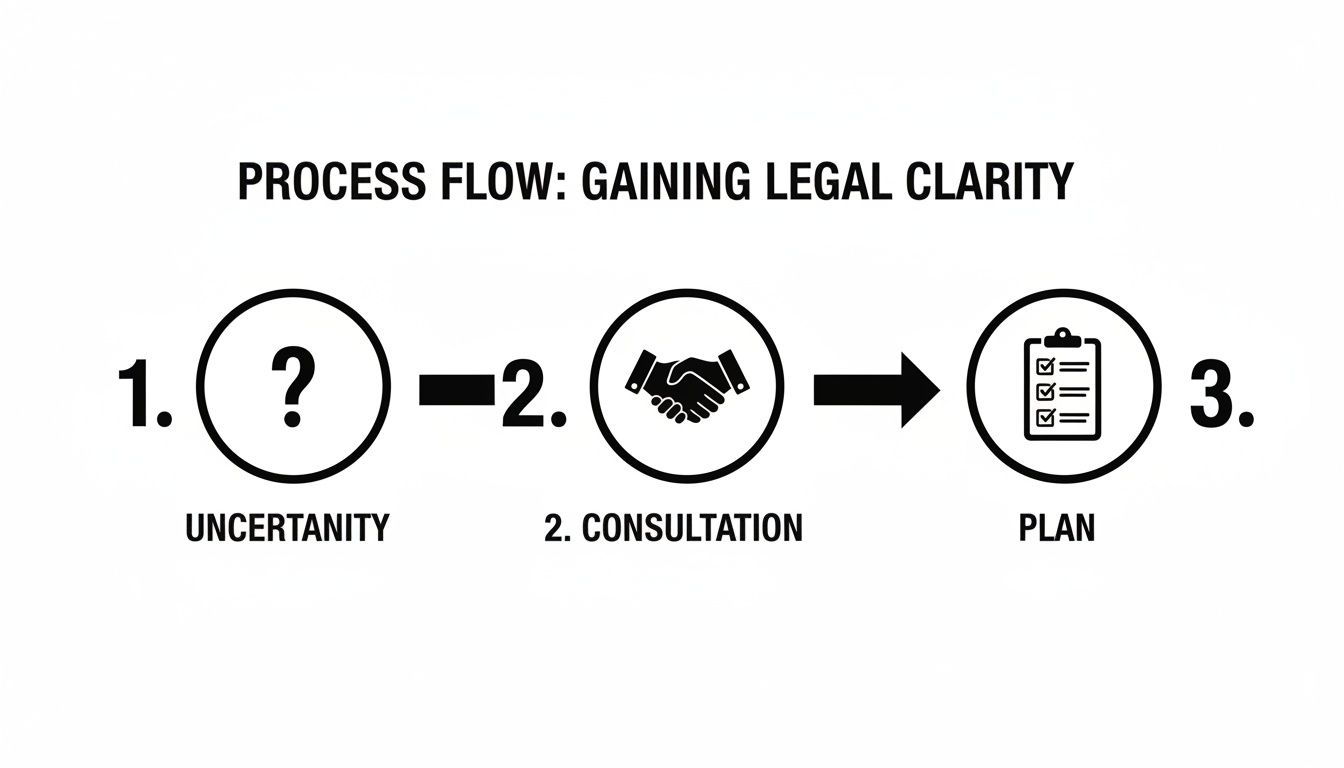
A consultation can help clarify the issues, explain what legal options may be available, and talk through what approach could be expected in your case.
Frequently Asked Questions
How much does a family divorce lawyer cost in Brampton?
There is no single universal cost. Legal fees can vary based on things like how complex the divorce is, how many issues are disputed, how much documentation is involved, the negotiation activity, and whether court proceedings are needed.
Is an uncontested divorce cheaper than a contested divorce?
It can be, because there may be fewer legal steps if the spouses have already dealt with most of the big issues. Still, the final cost depends on your circumstances and the legal work that ends up being required.
Can I ask a divorce lawyer for a fee estimate?
Yes. In an initial conversation, you can ask how the lawyer bills, if there’s a retainer required, what work is likely, and what factors could affect the overall total cost.
Do I need a lawyer if my spouse and I agree on everything?
You might not need full representation for every step, but independent legal advice can still be very important. It can help you understand the agreement and spot issues that could have been overlooked.
Can a family divorce lawyer help with child support and property issues?
Yes. Family law matters can include parenting, child support, spousal support, property division, and other issues beyond the divorce itself.
Can divorce be resolved without going to court?
Some family law issues may be resolved through negotiation, mediation, or other dispute-resolution approaches. But what makes sense depends on your circumstances, and whether both spouses are able to reach an agreement.
Speak With a Family Divorce Lawyer in Brampton
Divorce can bring major decisions about kids, money, property, and future responsibilities. If you understand possible legal costs and the issues that may arise, you can move through the process with more clarity.
If you’re considering separation or divorce, Badesha Law can help you understand your family law options and the legal steps that could apply to your situation in Brampton.
Contact Badesha Law to discuss your circumstances and learn more about getting the legal help you may need for your family and divorce matter.
If you’re looking for the best family & divorce lawyers Brampton has, you’re probably dealing with one of those tough life changes, not really easy days. At Badesha Law, our family law team helps clients move through divorce, separation, custody, and support issues with care, skill, and a serious focus on getting fair results that actually last.
Why the right Family Lawyer in Brampton actually matters
Family and divorce stuff isn’t just paperwork, it’s big decisions that can touch your children, your money, and the way your future turns out. A good lawyer, yes knows the law, but also gets your priorities, explains things in plain terms, and pushes for what’s most important to you.
What makes Badesha Law feel different
Local knowledge that’s real: We serve Brampton, Mississauga, and Toronto, so we bring solid Ontario family law experience plus know how local court steps usually go.
Client focused, not just case focused: Whether you care most about protecting your relationship with your kids, building financial stability, or reaching a quick, amicable resolution, we shape our plan around what you want, not what’s convenient.
A track record you can see: Our team has a 4.9-star Google rating and years of combined experience. Clients often mention we’re strong in negotiation, but also ready when litigation is needed.
Full coverage: From divorce and separation to custody, support and property division, we handle the full picture. And we also think beyond the final order, like will updates, estate protection, and post-divorce planning.
Our Family & Divorce Legal Services in Brampton (what we can help with)
At Badesha Law, we offer a full menu of family law support, built for the way each client situation is different:
Divorce & Separation
We walk you through everything, from filing through to the final settlement, so your rights stay protected and your next steps feel more secure.
Child Custody & Access
We aim for parenting arrangements that stay child centered, supporting your kids well-being, and keeping your ongoing relationship with them in mind.
Spousal & Child Support
We try to secure support agreements that are fair and sustainable, based on Ontario guidelines and what fits your situation.
Property Division & Equalization
If you’re dealing with major assets, a family home, or complicated financial holdings, we work to protect your interests and push for an equitable division.
Unbundled Legal Services
For people who want flexibility and a more cost effective path, we can offer unbundled services—specific advice or limited tasks, depending on what you need.
How to find the best Family & Divorce Lawyers Brampton
Not every lawyer is the same, and family matters are not the place to “hope for the best.” Here are the main things to check:
Family law focus: Pick a firm that actually concentrates on family and divorce, not general practice mixed in.
Local knowledge: Brampton specific experience helps with familiarity of local courts, judges, and procedures, so you’re not learning in the middle.
Reviews and reputation: See if the firm has strong Google ratings, and also read testimonials from people who were there before you.
Clear communication: Your lawyer should explain your options, timelines, and costs in a way you can understand, without confusing word salad.
A strategic plan: Whether it goes through negotiation, mediation, or litigation, you should hear a clear approach that fits your case.
Why Badesha Law is ranked among the best family & divorce lawyers Brampton
Clients come to us because we mix legal skill with real concern for what you’re living through. Here’s what you can expect:
A personalized strategy: We take time to learn your priorities and then build a plan that matches your goals.
Strong negotiation skills: A lot of matters end through lawyer-to-lawyer discussions, or mediation. This can help reduce time, costs, and the ongoing stress.
Ready for court, when needed: If your case requires litigation, we’re prepared to put forward a persuasive presentation in family court.
Ongoing support: From the first consultation through post-divorce planning, we stay with you through each stage, not just until the file closes.
Frequently Asked Questions
How long does a divorce take in Brampton?
It depends on complexity and whether it’s contested. Some simpler divorces can be wrapped up in a few months, while contested issues often take more time.
What should I look for in a family lawyer?
Focus on specialization, local experience, client reviews, and a lawyer who explains things clearly and stays aligned with your goals.
Can I handle my divorce without a lawyer?
You can, but self-representation can accidentally miss key legal rights or weaken financial protections. A skilled lawyer helps make sure your interests stay safeguarded.
Take the next step with Badesha Law
If you’re ready to move forward with confidence, contact Badesha Law today. Our team ofbest family & divorce lawyers Brampton trusts is here to protect your future and help you start your next chapter with clarity and real peace of mind.
📞 Call us now for a confidential consultation. 📧 Email us to schedule your appointment.
🌐 Visit our website to learn more about our services and client success stories.
Divorce often brings an immediate question: Do you and your spouse have to live in separate homes before you can file for divorce?
The answer is no, not necessarily. In Ontario, spouses can be considered separated even when they continue to live in the same house. This situation is sometimes described as being “separated under the same roof.” Financial limitations, childcare responsibilities, housing availability, or other practical circumstances may make it difficult for one spouse to move out immediately.
However, simply saying that you are separated does not automatically establish that you are living separate and apart for legal purposes. The circumstances of your relationship and how you live within the home can be important.
If you are considering divorce while continuing to live with your spouse in Brampton, understanding how separation works can help you make informed decisions about your next steps.
Can You Be Separated While Living in the Same House?
Yes. Canadian law does not require separated spouses to have different residential addresses in every situation.
The important issue is whether the spouses are actually living separate and apart despite sharing the same home.
For example, spouses may continue living at the same address because:
Maintaining two homes is too expensive
They have children and want to maintain stability
One spouse has not yet found alternative housing
The matrimonial home has not been sold or divided
They are waiting for a lease or new residence
They need time to make financial arrangements
Moving out immediately is not practical
Ontario legal resources recognize that spouses can live separately within the same home when their relationship has ended and their lives have become sufficiently separate.
What Does “Living Separate and Apart” Mean?
Living separate and apart generally involves more than simply deciding that the marriage is over.
When spouses continue living under the same roof, the circumstances of their daily lives may become particularly important when determining whether they are genuinely separated.
Factors that may be considered can include:
Whether the spouses sleep in separate rooms
Whether they maintain separate finances
Whether they prepare meals separately
Whether they continue socializing as a couple
Whether they attend social events together as spouses
Whether they continue intimate relations
Whether household responsibilities have changed
Whether they present themselves as a couple to family and friends
Whether they have communicated their separation to others
Whether they have made separate plans for their lives
Whether they have begun making separate financial arrangements
No single factor necessarily determines whether spouses are separated. The overall circumstances of the relationship matter.
Do You Have to Move Out Before Filing for Divorce?
No. Moving into separate residences is not necessarily a prerequisite to starting a divorce application.
Under Canada’s Divorce Act, marriage breakdown can be established in several ways. The most common ground is that the spouses have lived separate and apart for at least one year. The Act also provides for breakdown based on adultery or physical or mental cruelty in appropriate circumstances.
Importantly, you can begin the divorce process before the full one-year separation period has ended in circumstances where the applicable requirements are met. However, a divorce based on one year of separation cannot generally be granted until the required one-year period has been completed.
If you are living together while separated, it is particularly important to establish and document the date on which the separation began.
How Do You Prove Separation While Living Under the Same Roof?
This is one of the most important questions for spouses who continue sharing a home.
When two people live at different addresses, their separate residences can provide obvious evidence that their living arrangements have changed. When they remain in the same house, additional evidence may be relevant.
For example, you may want to keep clear records of:
The date you decided to separate
Changes to your financial arrangements
Separate bedrooms or living arrangements
Changes to household responsibilities
Separate social activities
Separate meal arrangements
Communications about the separation
Parenting arrangements
Contributions to household expenses
Any written separation agreement
The goal is not to create an artificial appearance of separation. Rather, documentation can help accurately demonstrate how your relationship and household arrangements changed after separation.
If there is uncertainty about whether your circumstances meet the legal requirements, speaking with a family lawyer can help you understand how the rules may apply to your situation.
Can You Still Share Meals or Household Responsibilities?
Living separately under the same roof does not necessarily mean that every household activity must immediately stop.
For example, spouses may continue to share certain responsibilities because they have children or because maintaining completely separate households within one home is difficult.
The important question is the overall nature of the relationship, rather than one isolated activity.
For example, continuing to coordinate childcare does not necessarily mean that spouses are still functioning as a married couple.
Similarly, sharing a household expense does not automatically mean that a separation has not occurred.
Because every situation is different, avoid assuming that one particular factor automatically proves or disproves separation.
What If You Have Children?
Having children can make separation under the same roof more complicated.
Parents may continue living together temporarily to provide stability for their children, even though their marital relationship has ended.
In this situation, it can be helpful to establish clear arrangements concerning:
Parenting time
Decision-making responsibilities
Child-related expenses
Child support
School and extracurricular activities
Household responsibilities
Communication between parents
Future living arrangements
A written parenting or separation arrangement can help reduce misunderstandings and provide greater clarity while the family transitions to a new arrangement.
Child-related issues should be addressed based on the best interests of the children and the circumstances of the family.
Should You Create a Separation Agreement?
A separation agreement can be particularly useful when spouses have decided to separate but are still living together.
A separation agreement can address issues such as:
Property and debts
The matrimonial home
Parenting arrangements
Child support
Spousal support
Household expenses
Responsibility for bills
Future sale or transfer of property
Other financial responsibilities
Badesha Law’s separation-agreement services address matters such as property division, support, parenting, and other issues arising from separation.
A properly prepared agreement can provide clarity about each person’s responsibilities and reduce uncertainty while the spouses remain under the same roof.
Can You File for Divorce Before the One-Year Separation Is Complete?
There is an important distinction between starting the divorce process and being granted the divorce.
If you are relying on the one-year separation ground, you may be able to begin the divorce application process before the full year has passed. However, the divorce cannot be granted on that ground until the required one-year period has been completed.
For this reason, accurately identifying the separation date is important.
If you continue living in the same house, documenting when the marital relationship ended and how your living arrangements changed can become particularly important.
What Happens If You Reconcile?
Sometimes separated spouses decide to try to reconcile.
The Divorce Act contains provisions addressing periods of resumed cohabitation for the purpose of reconciliation. Ontario legal information also notes that spouses can resume living together for a limited period while attempting reconciliation without necessarily restarting the entire one-year separation period.
If you are uncertain about how a period of reconciliation could affect your separation date or divorce application, obtain legal advice based on your specific circumstances.
What About Property and the Matrimonial Home?
Continuing to live in the same house does not eliminate the financial and property issues associated with separation.
Depending on your circumstances, you may need to address:
The matrimonial home
Other real estate
Bank accounts
Investments
Vehicles
Pensions
Business interests
Debts
Household expenses
Equalization issues
Property division in Ontario can involve detailed financial considerations. Do not assume that moving out—or remaining in the home—automatically determines who will ultimately receive the property or its value.
Badesha Law assists clients with property division matters involving the matrimonial home, assets, debts, and equalization.
Can One Spouse Stay in the Matrimonial Home After Separation?
Yes. Separation does not automatically require one spouse to immediately leave the matrimonial home.
In some cases, both spouses may remain in the home temporarily. In other situations, one spouse may move out while the other remains.
Decisions about the home can involve financial, parenting, property, and practical considerations.
If you are considering moving out, selling the home, transferring ownership, or making another major decision about the matrimonial home, consider obtaining legal advice beforehand.
Common Mistakes to Avoid When Separating Under One Roof
Living under the same roof after separation can create confusion. Some common mistakes include:
1. Failing to Establish a Clear Separation Date
Keep a clear record of when you and your spouse decided that the marital relationship had ended.
2. Assuming a Different Bedroom Automatically Means Separation
Sleeping separately can be relevant, but it is only one factor among many.
3. Continuing to Present Yourselves as a Couple
If your relationship has ended, consider how you communicate your changed circumstances to family, friends, institutions, and others.
4. Ignoring Financial Arrangements
Discussing responsibility for mortgage payments, utilities, debts, and other expenses can prevent future disputes.
5. Making Major Property Decisions Without Legal Advice
Selling, transferring, or refinancing property can have significant consequences.
6. Failing to Address Parenting Arrangements
If you have children, establishing clear parenting and financial arrangements can help reduce conflict.
7. Signing an Agreement Without Understanding It
A separation agreement can have significant legal consequences. Each spouse should understand the terms before signing.
Can You Get a Divorce While Living Together for Financial Reasons?
Yes, financial circumstances are one reason spouses may continue living together after deciding to separate.
With housing costs and other expenses, maintaining two residences immediately may not be realistic for every family.
However, financial reasons for remaining in the same home do not by themselves establish that you are separated. The overall circumstances of the relationship still matter.
When Should You Speak With a Brampton Divorce Lawyer?
Consider getting legal advice if:
You and your spouse have decided to separate
You are still living in the same home
You are unsure of your separation date
You have children
You disagree about parenting
You need to address child or spousal support
You own a home or significant assets
You have substantial debts
You are considering signing a separation agreement
Your spouse has already hired a lawyer
You are considering moving out
You are unsure whether you can start your divorce application
Early legal guidance can help you understand your rights and responsibilities before you make decisions that may affect your finances, property, parenting arrangements, or divorce process.
Frequently Asked Questions
Can you be legally separated and live in the same house in Ontario?
Yes. Spouses can potentially be considered separated while living under the same roof if their relationship and living arrangements demonstrate that they are living separate and apart. The specific circumstances matter.
Can I file for divorce while living with my spouse?
Yes. You do not necessarily have to move to a different address before beginning the divorce process. However, if you are relying on one year of separation, you must satisfy the applicable legal requirements before a divorce can be granted.
How do I prove that I am separated while living in the same house?
Evidence may include changes in sleeping arrangements, finances, meals, social activities, household responsibilities, and how you present your relationship to others. No single factor automatically determines whether spouses are separated.
Do I need a separation agreement if we still live together?
Not necessarily, but a written separation agreement can provide clarity about parenting, support, property, debts, household expenses, and other responsibilities.
Can I get divorced if we still share the same bedroom?
The circumstances of your relationship matter. A single factor does not automatically determine whether you are living separate and apart. If you are uncertain about your situation, seek legal advice.
Does moving out automatically mean I am legally separated?
Moving out can be relevant evidence of separation, but separation is based on the circumstances of the relationship and not simply on changing addresses.
Get Guidance from a Family Divorce Lawyer in Brampton
Living in the same house after deciding to separate can create both practical and legal questions. You may need to consider the separation date, parenting arrangements, support, property, household expenses, and eventually the divorce process.
If you are separated but still living with your spouse in Brampton, understanding your legal position before making major decisions can help you move forward with greater clarity.
Figuring out whether to end a marriage is hard enough, but if your spouse won’t even go along with divorce moving forward, it can feel extra stressful. You might be asking yourself stuff like can I still get divorced, how long it could drag on, and what the actual legal steps are you need to handle in Ontario.
Here’s the thing, though—one spouse usually does not need to agree in order for the divorce to move ahead in Ontario. But when you and your spouse clash on the separation stuff, like family law matters, the whole timeline can get more complicated, fast.
If you’re dealing with a spouse who is basically not on board, it can really help to talk to a qualified best divorce lawyer Brampton so you can sort out what you can do, what you must do, and what choices you might have.
Can You Get a Divorce If Your Spouse Does Not Agree?
Yes. In Ontario, you generally don’t need your spouse’s okay to get divorced.
Under Canadian divorce law there are different grounds for divorce and living separate and apart for at least one year is the most common one. So, if you and your spouse have been living apart for that minimum period, you might be able to apply for divorce even if your spouse is saying no, like loudly.
That refusal usually does not automatically block you from pursuing the divorce.
Still, there’s a difference between not agreeing with the divorce itself and not agreeing with the issues tied to the separation.
Your spouse might be willing to accept “the marriage is ending” but push back on things like
* Child custody and parenting arrangements
* Parenting time
* Child support
* Spousal support
* Division of property
* The matrimonial home
* Debts and financial responsibilities
* Other terms of separation
Those disagreements may end up requiring negotiation, mediation, or even a court process.
What If My Spouse Refuses to Sign the Divorce Papers?
A very common worry is can someone stop the divorce just by refusing to sign.
In a lot of cases, your spouse’s signature is not required for you to start a sole divorce application. If you’re eligible to apply, you may be able to begin without their cooperation.
Your spouse typically still needs to be properly served with the divorce documents, and they must get a chance to respond.
If your spouse doesn’t respond within the required timeframe, the divorce might continue without their direct participation, as long as the court’s rules are satisfied.
But if your spouse does respond, and they dispute certain things, the case can become contested.
What Happens When a Divorce Becomes Contested?
A divorce turns “contested” when spouses can’t agree on one or more big issues.
So, for example, you might want to proceed with the divorce while your spouse disagrees about your proposed parenting schedule, or how support should be handled.
At that point it’s not just about getting the divorce granted, it often becomes about sorting out the remaining family law matters that are still unresolved.
Depending on what’s going on, the process can include things like
1. filing the right court documents
2. serving those documents on your spouse
3. getting your spouse’s response
4. exchanging relevant financial information
5. negotiating possible solutions
6. considering mediation or another dispute resolution method
7. attending court conferences or hearings when required
8. working toward a final resolution
A divorce lawyer in Brampton can help figure out which of those steps apply to your situation, and which ones you can likely avoid.
Can My Spouse Refuse to Get Divorced?
Your spouse can obviously disagree with ending the marriage, but that doesn’t automatically mean they can block your divorce forever.
If you meet the legal requirements for divorce, you may be able to move ahead, even without their consent.
That said, a refusal to cooperate can still create delays, especially if important matters like parenting, assets, or support are still unresolved. In many cases, those items have to be dealt with separately, or they get handled inside the divorce process.
What If My Spouse Is Delaying the Divorce?
Sometimes a spouse won’t cooperate, or they do things that seem designed to stall everything.
What you should do really depends on the exact circumstances.
For instance, your spouse may
* Refuse to communicate
* Not provide financial information
* Refuse to negotiate
* Disagree with parenting arrangements
* Dispute support responsibilities
* Refuse to sign an agreement
* Fail to respond to legal documents
A lawyer can review what’s happening and explain what procedural options might be available.
Usually, it’s smarter to handle delays through the proper legal channels, not by trying to pressure or threaten your spouse into cooperating.
What Happens to Children If We Cannot Agree?
When there are children, disagreements about parenting can become one of the most important parts of the separation.
Parents might disagree about things such as
* Where the children should live
* Parenting schedules
* Who makes major decisions
* Schooling
* Healthcare
* Travel plans
* Holidays
* Child support
Canadian family law centers the best interests of the child when parenting arrangements are decided.
If parents can’t reach an agreement, a court may eventually have to step in and decide based on the circumstances, and the rules that apply.
A family lawyer can help you understand your options, and work toward a parenting arrangement that puts the children first, not the conflict.
What About Child Support, and Spousal Support?
Just because one spouse is disagreeing, it doesn’t always remove the possibility of support obligations. Like, support can still be on the table, even if you and your spouse can’t agree on much.
Child support is usually looked at pretty on its own, even if both spouses don’t want the divorce at the same time.
Spousal support can also come up depending on things like what happened during the relationship, the money picture for each person, the roles during the marriage, and the relevant legal rules.
If support is being argued about, it’s a good idea to get legal advice before saying “yes” to a number or signing a final agreement, because once you sign… it can get hard to unwind.
Do We Have to Go to Court?
Not always, nope.
Court might not be the first place you go, or the only place you can try. Depending on what’s going on, you might be able to settle some, or even all, issues through:
Negotiation
Mediation
Collaborative family law processes
A separation agreement
Other dispute resolution methods
But if “reasonable efforts” to reach an agreement fail, then court steps can become unavoidable.
The right path really depends on what you’re fighting about, how things are between the spouses, how complicated the issues are, and whether there are any urgent concerns that can’t wait.
Should I Hire a Divorce Lawyer If My Spouse Refuses to Cooperate?
If your spouse won’t cooperate, getting legal advice can be extra important.
A divorce lawyer in Brampton can help you understand
whether you can actually move forward with a divorce,
what paperwork might be needed,
how your spouse should be served,
what happens if your spouse doesn’t respond,
how parenting issues can be handled,
how support should be considered,
how property issues might shape your case,
whether negotiation or mediation makes sense,
when court proceedings could become necessary
Legal guidance can also help you avoid signing agreements, or making choices, before you fully understand the knock-on effects.
What Should You Do If Your Spouse Says “I Won’t Give You a Divorce”?
If your spouse says they won’t agree to a divorce, try not to build your whole plan just off that sentence.
Instead, consider talking with a family lawyer and walk through your specific situation.
Your lawyer can assess whether you meet the requirements to proceed, and also explain how unresolved matters involving children, support, property, or finances may affect the next steps.
Every family law situation is different, so there really isn’t a one-size-fits-all approach. The best strategy depends on what’s happening in your case.
Frequently Asked Questions
Can I get divorced if my spouse refuses?
In general, yes. One spouse refusing to agree doesn’t automatically block the other spouse from seeking a divorce. Still, you have to meet the legal requirements that apply.
Does my spouse have to sign the divorce application?
Not necessarily. A sole divorce application may let one spouse start the process even if the other spouse doesn’t sign. The exact procedural steps depend on the circumstances.
How long does a contested divorce take in Ontario?
There isn’t a single timeline for every contested divorce. The duration varies based on how many issues are unresolved and how complex they are, how cooperative the spouses are, court schedules, and whether an agreement ends up being reached.
Can my spouse refuse to pay child support because they do not want a divorce?
No, generally not. Divorce and child support are separate topics. A parent’s disagreement about the divorce doesn’t automatically remove child support responsibilities.
Do I need a lawyer if my spouse refuses to cooperate?
You’re not automatically required to hire a lawyer, but legal advice can be very helpful—especially if your spouse won’t cooperate, or if there are major disputes involving children, support, property, or finances.
Speak With a Brampton Divorce Lawyer
When a spouse refuses to agree to a divorce, it can feel like everything is piling up.
But disagreement doesn’t automatically mean you can’t move forward.
If you understand the legal process, your rights, and what issues still need to be resolved, it can make it easier to decide what you do next.
If you’re dealing with a spouse who refuses to cooperate, Badesha Law can help you understand your family law options and the most suitable way forward.
Call Badesha Law today so you can discuss your situation with a Brampton divorce lawyer and learn what steps might be available to you.
When it comes to child support in Ontario, high-income fathers often face unique legal and financial challenges. Unlike standard cases, where income falls within guideline limits, higher earnings can complicate calculations, expectations, and legal strategies. Understanding your rights and responsibilities is essential to ensure fair outcomes while protecting your financial future.
In this blog, we’ll break down key legal strategies, explain how child support and spousal support work in Ontario, and highlight how working with a reliable law firm in Brampton like Badesha Law can make a significant difference.
Understanding Child Support in Ontario
Child support in Ontario is governed by the Federal Child Support Guidelines, which are primarily based on the paying parent’s income and the number of children. However, for high-income earners (typically those making over $150,000 annually), the calculation becomes more complex.
The court has discretion in such cases. While the standard table amount still applies, judges may adjust the amount depending on:
The actual needs of the child
The lifestyle of both parents
Special or extraordinary expenses (Section 7 expenses)
The financial circumstances of each parent
For high-income fathers, this means that child support payments can go beyond basic guideline amounts.
Key Challenges Faced by High-Income Fathers
High-income earners often encounter several legal and financial challenges, such as:
1. Excessive Support Claims
Sometimes, the receiving parent may seek higher payments that exceed the child’s actual needs.
2. Lifestyle Expectations
Courts may consider the standard of living the child would have enjoyed if the parents stayed together.
3. Disclosure Requirements
High-income individuals are required to provide detailed financial disclosure, including bonuses, investments, and business income.
4. Overlap with Spousal Support
In many cases, child support and spousal support are interconnected, increasing the financial burden.
Legal Strategies for High-Income Fathers
To ensure a fair outcome, high-income fathers should consider the following legal strategies:
1. Ensure Accurate Income Reporting
Your income forms the foundation of any support calculation. Make sure all financial disclosures are accurate and well-documented. If your income fluctuates (e.g., bonuses, commissions), work with legal experts to present a fair average.
2. Challenge Unreasonable Claims
If the other party is demanding excessive support, you have the right to challenge it. Courts require justification for amounts exceeding guideline limits. A strong legal argument can prevent unfair obligations.
3. Optimize Tax Efficiency
Support payments can have tax implications. While child support is not tax-deductible, spousal support may be. Structuring payments strategically can reduce your overall financial burden.
4. Separate Child and Spousal Support
Clearly distinguishing between child support and spousal support is crucial. Courts treat them differently, and blending the two can lead to confusion and overpayment.
5. Consider Shared Parenting Arrangements
If you have your child for at least 40% of the time, you may qualify for a shared custody arrangement, which can reduce your child support obligations.
6. Negotiate a Fair Agreement
Litigation can be expensive and time-consuming. Negotiating a fair settlement through mediation or legal counsel can save both time and money.
Importance of Hiring a Law Firm in Brampton
Navigating high-income child support cases requires specialized legal expertise. This is where working with a trusted law firm in Brampton becomes essential.
Badesha Law has extensive experience handling complex family law matters, including high-income child support and spousal support cases. Their team understands the nuances of Ontario family law and provides tailored legal strategies to protect your rights.
By choosing Badesha Law, you benefit from:
Personalized legal advice
Strong representation in court
Strategic negotiation skills
Transparent and honest guidance
Role of Spousal Support in High-Income Cases
In many cases, spousal support is awarded alongside child support. This can significantly increase the financial obligations of high-income fathers.
Factors affecting spousal support include:
Length of the marriage
Roles during the relationship
Financial disparity between spouses
Childcare responsibilities
It’s important to ensure that spousal support is calculated fairly and does not overlap unnecessarily with child support payments.
Section 7 Expenses: What You Need to Know
Apart from base child support, parents may also share Section 7 expenses, which include:
Childcare costs
Medical and dental expenses
Educational fees
Extracurricular activities
For high-income fathers, these costs can be substantial. However, they must be reasonable and proportionate to both parents’ incomes.
Ontario courts aim to balance fairness with the best interests of the child. While children should benefit from a parent’s high income, support payments should not become excessive or punitive.
Judges often evaluate:
Whether the requested amount aligns with the child’s needs
If the receiving parent is using funds appropriately
Whether the payment reflects a fair standard of living
Having a strong legal team like Badesha Law can help present your case effectively and avoid unjust outcomes.
Child support cases involving high-income fathers require careful legal planning and strategic execution. From managing financial disclosures to negotiating fair agreements, every step matters.
Working with an experienced law firm in Brampton like Badesha Law ensures that your interests are protected while maintaining a fair approach for your child’s well-being. If you’re navigating child support or spousal support issues, seeking professional legal advice is the smartest step forward.
FAQs
1. What qualifies as high income for child support in Ontario?
Typically, income above $150,000 per year is considered high income, where courts may apply discretion beyond standard guidelines.
2. Can child support exceed the guideline table amount?
Yes, in high-income cases, courts may order higher payments if justified by the child’s needs and lifestyle.
3. Do I have to pay both child support and spousal support?
Yes, in some cases. However, both are calculated differently, and a legal expert can help ensure fairness.
4. Can I reduce child support if I share custody?
If you have the child at least 40% of the time, you may qualify for reduced payments under shared parenting rules.
5. Why should I hire a law firm in Brampton for my case?
A professional firm like Badesha Law can provide expert guidance, protect your rights, and help you achieve a fair financial outcome.
Divorce is never an easy decision, but understanding the legal process can make it less overwhelming. If you are planning to file for divorce in Brampton in 2026, this step-by-step guide will help you navigate the process smoothly. Whether your case is simple or complex, consulting a professional Badesha Law or an experienced divorce lawyer Brampton can make a significant difference.
Understanding Divorce in Ontario
In Ontario, divorce is governed by the Divorce Act, and you must meet certain conditions before filing:
You must be legally married
You or your spouse must have lived in Ontario for at least 12 months
There must be a valid ground for divorce
Grounds for Divorce
There are three main grounds:
Separation for at least one year (most common)
Adultery
Cruelty (physical or mental)
Most couples choose separation because it simplifies the legal process, especially when working with an uncontested divorce lawyer.
Step-by-Step Process to File for Divorce in Brampton
Step 1: Determine the Type of Divorce
Before filing, you need to identify whether your case is:
Uncontested Divorce – Both spouses agree on all terms (custody, property, support)
Contested Divorce Ontario – Disagreements exist and require court intervention
An uncontested divorce is quicker, more affordable, and less stressful compared to a contested one.
Step 2: Gather Required Documents
You’ll need the following documents:
Marriage certificate
Proof of separation
Financial documents (income, assets, debts)
Parenting agreements (if children are involved)
Step 3: Complete the Application
You must fill out the correct forms, such as:
Form 8: Application (General or Simple)
Form 36: Affidavit for Divorce
If your case is straightforward, you can file a simple divorce application. For complex cases, it’s better to consult professionals like Badesha Law to avoid errors.
Step 4: File the Application in Court
Submit your documents to the Ontario Superior Court of Justice in Brampton. You’ll also need to pay the required court fees.
Once filed, the court will issue a file number and stamp your documents.
Step 5: Serve Divorce Papers
You must legally deliver (serve) the divorce papers to your spouse. This cannot be done by you directly; instead, a third party must serve the documents.
Your spouse will have a specific time to respond. If they don’t respond, the case may proceed as uncontested.
Step 6: Wait for Response
If your spouse agrees → uncontested divorce
If they disagree → contested divorce Ontario
In contested cases, the process may involve:
Court hearings
Negotiations
Mediation
Step 7: Apply for Divorce Order
If everything is in order, you can request a divorce order from the court.
The judge will review your application and, if satisfied, grant the divorce.
Step 8: Receive Divorce Certificate
After 31 days of the divorce order, you can apply for a divorce certificate. This is your official proof of divorce and is required if you plan to remarry.
Why Hiring a Divorce Lawyer in Brampton is Important?
While it’s possible to file for divorce yourself, legal guidance can save time, money, and stress. A skilled lawyer in Brampton can:
Ensure paperwork is accurate
Represent you in contested divorce Ontario cases
Help negotiate fair settlements
Protect your legal rights
Firms like Badesha Law specialize in handling both simple and complex divorce cases with professionalism and care.
Contested vs Uncontested Divorce: Key Differences
Factor
Uncontested Divorce
Contested Divorce
Agreement
Mutual
Disputed
Time
Faster
Longer
Cost
Lower
Higher
Stress Level
Less
More
Choosing the right uncontested divorce lawyer can significantly speed up the process if both parties are cooperative.
Common Mistakes to Avoid
Filing incorrect forms
Not disclosing financial information
Ignoring deadlines
Not seeking legal advice
Even small mistakes can delay your divorce, which is why many people prefer working with trusted firms like Badesha Law.
Final Thoughts
Filing for divorce in Brampton in 2026 doesn’t have to be overwhelming if you follow the right steps. Whether you are dealing with a simple separation or a contested divorce Ontario, proper legal guidance is key.
Working with experienced professionals like Badesha Law or a qualified lawyer in Brampton ensures a smoother, faster, and more secure process.
If you’re considering divorce, take the first step today by understanding your options and seeking the right legal support.
When you're facing the end of a marriage in Ontario, the first and most important choice you'll make is whether to pursue a contested vs uncontested divorce. This isn't just a legal distinction; it's a decision that sets the entire tone for your future, impacting everything from your finances to your emotional well-being.
An uncontested divorce is the collaborative route. It’s possible only when both you and your spouse agree on every single issue, making it a faster, more private, and far less expensive process. A contested divorce, on the other hand, is what happens when even one issue remains unresolved. At that point, the court system has to step in to make the final decisions for you. Understanding the implications of each path is critical, and the guidance of an experienced Brampton divorce lawyer from a firm like Badesha Law can be invaluable.
Defining Your Path: Contested vs Uncontested Divorce
Navigating the end of a marriage is a journey, and that first choice between a contested or uncontested divorce determines the map you'll follow. It’s a decision between two profoundly different paths, each with its own timeline, emotional toll, and financial cost.
A divorce is much more than just the legal end of a marriage. Under Canada's federal Divorce Act and Ontario’s provincial Family Law Act, it requires you to formally resolve several deeply personal and interconnected issues:
Parenting Time and Decision-Making Responsibility: This is what used to be called custody. It lays out how you'll divide your children's time and who will make the major decisions about their health, education, and well-being.
Child and Spousal Support: These are the financial obligations one spouse might have to the other, both for themselves and for the children, calculated according to federal and provincial guidelines.
Property Division: This involves the equal division of all assets and debts you both accumulated during the marriage, including the family's matrimonial home, as mandated by the Family Law Act.
The path you take hinges entirely on whether you and your spouse can settle these matters yourselves, without a judge needing to intervene. An experienced Brampton divorce lawyer can provide the strategic guidance you need, whether that means skilled negotiation to find common ground or strong advocacy in a courtroom.
When you're trying to figure out which path makes sense for your family, seeing the core differences side-by-side can make things much clearer.
This table cuts through the legal jargon to give you a straightforward summary of what to expect from each process.
Factor
Uncontested Divorce
Contested Divorce
Agreement Level
Full agreement on all issues (property, support, parenting).
Disagreement on at least one major issue.
Court Involvement
Minimal; primarily for administrative approval of the divorce order.
Extensive; involves conferences, motions, and possibly a trial.
Key Document
A signed Separation Agreement is the foundation.
Court Application (Form 8) initiates the process.
Control Over Outcome
Spouses retain full control over the final terms.
A judge makes the final, binding decisions.
Typical Timeline
Usually 4-6 months after filing, pending court processing.
Can take 1.5 to 3+ years to resolve through the court system.
Emotional Stress
Significantly lower due to the cooperative nature of the process.
High, as the process is adversarial and often prolonged.
Ultimately, the choice comes down to control. The uncontested path keeps the power in your hands, but it requires cooperation. The contested route provides a formal structure for resolving conflict, but it comes at a much higher price—financially, emotionally, and in terms of time.
The Uncontested Divorce Process in Ontario
The uncontested divorce is all about reaching an agreement and choosing an efficient, peaceful path forward. While it’s far simpler than a contested divorce, it’s still a formal legal process that demands careful attention to meet the court’s strict requirements. The goal is to take your mutual understanding and turn it into legally solid documents the court will accept.
This entire process hinges on one single document: the Separation Agreement. This isn't just a handshake deal; it's a comprehensive, legally binding contract that spells out exactly how you and your spouse have settled every issue. It has to be drafted with precision to be enforceable under Ontario's Family Law Act.
At Badesha Law, this is often where our work begins. We help clients negotiate and draft Separation Agreements that are clear, fair, and legally sound. This crucial step makes sure all the terms you’ve agreed on—from property division to parenting plans—are formally documented, leaving no room for future fights.
Key Steps in the Uncontested Process
Once the Separation Agreement is signed and witnessed, the court filing can begin. This part of the journey is mostly administrative, following a clear set of steps designed to prove to the court that all legal boxes have been ticked. Having a lawyer’s oversight here is invaluable to avoid common mistakes that can cause major delays.
The main steps look like this:
Drafting and Filing the Application: The process kicks off by preparing a Form 8A: Application (Divorce). This document officially asks the court to grant your divorce and is filed along with your original marriage certificate.
Completing the Affidavit for Divorce: Both spouses (in a joint application) or just the filing spouse (in a sole application) must complete a Form 36: Affidavit for Divorce. This is a sworn statement confirming details about the marriage, separation, and any children, proving all issues are resolved.
Preparing the Draft Divorce Order: Your lawyer will prepare a Form 25A: Divorce Order, which is the final document a judge will sign to officially end your marriage.
Clerk’s Certificate and Court Review: The court clerk checks all your documents to make sure they're complete and correct. If everything is in order, they issue a certificate, and the file goes to a judge for a final review and signature.
The whole point of an uncontested divorce is to show the court there's nothing left for a judge to decide. A well-drafted Separation Agreement and accurately completed court forms provide that proof, turning a complicated legal matter into a predictable, administrative task.
Avoiding Common Filing Pitfalls
A lot of people ask about getting a divorce without a lawyer. While it's technically possible, the administrative hurdles can be surprisingly tough. Simple mistakes on forms, incorrect filing procedures, or a poorly written Separation Agreement can cause the court to reject your application, forcing you to start all over again.
A lawyer ensures all your paperwork is filed correctly the first time. That professional oversight is what keeps the uncontested process smooth and efficient, giving you peace of mind and letting you focus on moving forward with your life.
Navigating the Contested Divorce Court System
When communication breaks down and a mutual agreement is completely off the table, your divorce moves out of your hands and into the formal court system. This path, known as a contested divorce, is a world away from the simple administrative process of an uncontested case. Instead of working together to decide your own future, you’re asking a judge to make legally binding decisions for you and your family.
The journey doesn't start with a collaborative Separation Agreement. It kicks off with filing a Form 8: Application with the court, a document that officially launches the litigation process. This form lays out your claims on everything from parenting and support to how you want to divide your property. From this moment on, the process is structured, adversarial, and dictated by strict court rules and deadlines.
This is precisely where having an experienced Brampton divorce lawyer becomes non-negotiable. At Badesha Law, our job is to protect your rights at every turn, manage the complex procedures, and advocate fiercely for your best interests in a formal court setting.
The Stages of Litigation in Ontario
A contested divorce isn't a single event; it's a series of mandatory steps designed to organize information, push for a settlement, and, if all else fails, get the case ready for a judge’s final decision. Each step has a very specific purpose in moving your case along the court’s conveyor belt.
Here are the key court appearances you'll go through:
First Appearance: This is a brief, administrative meeting to set dates and make sure all the initial documents have been filed correctly. It's more about logistics than anything else.
Case Conference: This is the first major step where you, your lawyers, and a judge sit down to discuss the unresolved issues. The judge's role here is to see where you agree, narrow down the points of conflict, and give both sides some frank feedback on the strengths and weaknesses of their positions. The real goal is to get you to settle before the costs spiral out of control.
Settlement Conference: If you still can't agree after the Case Conference, you'll head to a Settlement Conference with a different judge. This is a much more intensive push to resolve the case without a trial. The judge will be more direct, often giving a strong opinion on how the case would likely end at trial to encourage both of you to find a middle ground.
Trial Management Conference: If a settlement is still out of reach, this conference is all about planning the trial itself. You’ll deal with the logistics—who the witnesses will be, what evidence will be presented, and how the schedule will run.
The Critical Role of Financial Disclosure
At the heart of almost every contested divorce is the process of financial disclosure. Under Ontario's Family Law Rules, both you and your spouse have an absolute legal duty to provide complete and honest information about your income, assets, and debts. This is done by completing a detailed Financial Statement (Form 13 or 13.1).
This stage is often where things get heated. Disputes explode when one spouse suspects the other is hiding assets, deliberately undervaluing a business, or not being truthful about their income. These fights can lead to formal requests for more documents, questioning under oath (called examinations), and motions asking the court to force the other side to hand over information.
In a contested divorce, financial transparency isn’t optional—it’s a legal command. Failing to provide full and frank disclosure can lead to serious penalties from the court, including being ordered to pay the other party's legal costs.
This is exactly why the process takes so much longer and costs so much more. Every single disagreement chews up lawyer time, requires court filings, and might even need expensive expert reports, all of which get added to the final bill. The adversarial nature of litigation can also poison any future co-parenting relationship, making it incredibly difficult to work together down the road. For more insights, you can explore some strategies for managing conflict in a contested divorce.
A skilled lawyer can help you navigate these high-stakes conflicts while never losing sight of the main goal: reaching a fair and final resolution.
Comparing Timelines: How Long Each Divorce Takes
One of the first, most urgent questions people ask when they start this process is, "How long is this all going to take?" The answer hinges almost entirely on whether your divorce is contested or uncontested. This timeline isn't just about patience; it directly hits your finances and your emotional health as you wait to move on with your life.
An uncontested divorce in Ontario moves along a fairly predictable track. Once you’ve signed a Separation Agreement and all the right paperwork is filed, the process is mostly administrative. You can generally expect the final Divorce Order in about 4 to 6 months. The biggest variable is simply how backed up the court is at that moment.
A contested divorce, on the other hand, isn't measured in months—it's measured in years. The journey through the Ontario court system is a long haul, filled with mandatory steps that create huge delays. A contested case can easily stretch from 1.5 to over 3 years from the day you file to the day you get a final resolution.
Factors That Extend Contested Divorce Timelines
The dramatic difference in timing is baked right into the court system itself. These long delays aren't just a possibility in litigation; they're an expected part of the process.
Here are the key sources of delay:
Court Backlogs: Ontario's family courts are overloaded. This means you can be left waiting for months just to get your next scheduled date, whether it's for a Case Conference or a Settlement Conference.
Scheduling Conflicts: Trying to line up the calendars of two lawyers, both spouses, and a judge for multiple court dates is a logistical nightmare that can add months of waiting.
The Lengthy Discovery Process: The process of gathering and exchanging financial documents is a major bottleneck. If one person is being uncooperative or is suspected of hiding assets, motions have to be filed to force them to produce the information, adding even more delays and legal fees.
Expert Valuations: When you’re dealing with assets like a family business or complex investment portfolios, getting professional valuations can take many months to complete.
The timeline is a direct reflection of conflict. In an uncontested divorce, the work is done upfront through negotiation. In a contested divorce, the work unfolds over years of court procedures, with each disagreement acting as another roadblock.
A Look at Timelines Elsewhere
This massive time gap isn't unique to Ontario. Take California, for instance, where contested divorces take dramatically longer than uncontested ones—averaging 12-18 months versus 6-8 months. This is due to mandatory waiting periods plus the time it takes to fight over custody, property, or support. If you add in a complex child custody battle, you can tack on another 6-12 months, pushing some cases to last 1-3 years.
Understanding these realistic timeframes is crucial. A Brampton divorce lawyer can give you a more personalized estimate based on the specifics of your situation. For a deeper dive into what affects timelines in our province, check out our guide on how long a divorce takes in Ontario. At Badesha Law, we make sure our clients understand these timelines from the start so they can weigh their priorities and make informed decisions.
The Financial Reality: A Detailed Cost Analysis
For most people starting the divorce process, the biggest question is simple: what’s this going to cost? It's the most pressing concern, and the answer depends almost entirely on the path you choose. Deciding between a contested and an uncontested divorce isn't just a legal choice—it's a financial one with radically different consequences for your bank account.
The route you take will determine whether your costs are predictable and manageable, or a source of constant, escalating stress.
An uncontested divorce is all about financial clarity. Because you and your spouse resolve every single issue in a Separation Agreement before anything is filed with the court, the legal work is precise and contained. This allows a Brampton divorce lawyer to handle the entire process for a flat-rate fee, covering the expert drafting of your agreement and the filing of all the necessary court forms.
This approach gives you certainty from day one. At Badesha Law, we believe in that transparency. Our clients know the full cost upfront, turning a potentially stressful legal process into a smart, efficient investment in a peaceful resolution.
The Predictable Costs of an Uncontested Divorce
With an uncontested divorce, you can actually budget for the end of your marriage. There are no surprise invoices or spiralling legal bills from drawn-out court battles.
Your main expenses are straightforward and known from the start:
Lawyer's Fees: Usually a flat rate to draft a rock-solid Separation Agreement and manage the court filing process from start to finish. This fee covers the legal expertise needed to ensure your agreement is airtight and your paperwork is perfect.
Court Filing Fees: These are standard administrative fees charged by the Ontario court system to process your divorce application.
Disbursements: These are minor out-of-pocket costs for things like couriers or postage.
Think of it this way: an uncontested divorce lets you purchase a result—a finalized divorce for a known price. A contested divorce means you’re purchasing a process—a series of legal battles with no guaranteed outcome and an unknown final cost.
The Escalating Costs of a Contested Divorce
The financial world of a contested divorce is the polar opposite: it's built on unpredictability. The costs aren't fixed because they’re tied directly to the amount of conflict and the time it takes to resolve it. Legal services are billed by the hour, which means every single phone call, email, and court appearance adds to your final bill.
These costs can spiral out of control, and fast. While every case is unique to Ontario, data from other jurisdictions shows a stark contrast. In California, for example, an uncontested divorce might cost under $10,000, while litigated battles frequently soar to $20,000, $50,000, or much more. The driver is simple: minimal court time and lawyer hours are needed when a settlement is reached without a fight. You can read more about these cost comparisons on westcoastdivorce.com.
In a contested Ontario case, the sources of these high costs are numerous and they compound over time. Prolonged litigation introduces expenses that simply don’t exist in an uncontested file, like fees for financial experts, property appraisers, and bringing motions for temporary court orders.
For a comprehensive breakdown of what to expect financially, take a look at our detailed guide on understanding Ontario divorce costs. Choosing the uncontested path isn't just about saving money in the short term; it’s about protecting your entire financial future from the immense risks of a court battle.
How to Choose the Right Path for Your Situation
Deciding between a contested and an uncontested divorce is the first, and most significant, choice you'll make on this journey. The right path isn't about which one is "better"—it's about which one is right for your specific circumstances, your communication style, and your family's future.
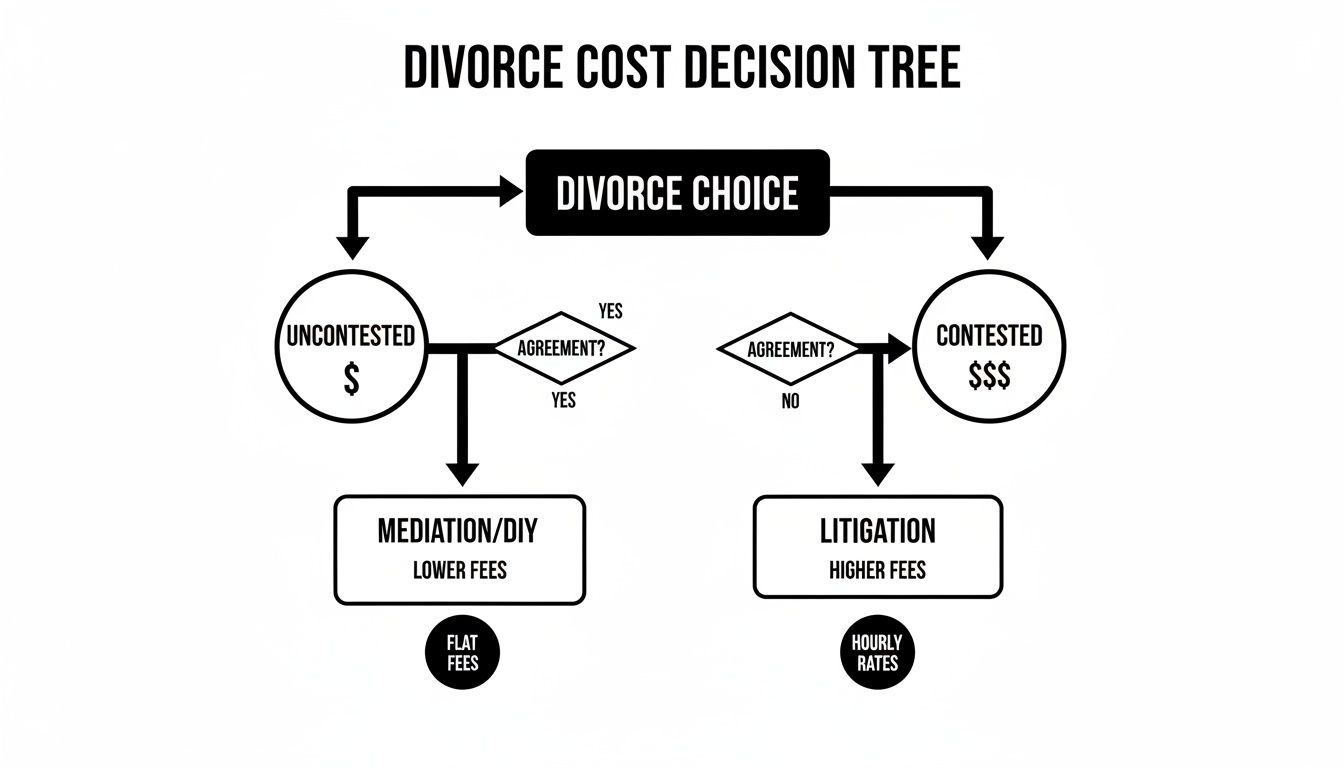
The decision tree below maps out the primary trade-off, showing how your choice will directly impact your financial reality.
As the chart makes clear, the uncontested path gives you financial predictability. The contested route, on the other hand, introduces significant and often escalating costs. This financial truth should be a central factor in your decision.
When an Uncontested Divorce Is the Best Fit
An uncontested divorce is the ideal path forward when you and your spouse can still operate from a foundation of mutual respect and a genuine commitment to fairness. This approach works best when:
You can communicate effectively: You are both capable of having productive, even if difficult, conversations about your finances and children.
There is mutual trust: You both believe the other will provide full and honest financial disclosure without being forced to by a court.
You agree on the major issues: While you may need to negotiate the fine print, you are aligned on the big picture for property division, support, and a co-parenting plan.
In Ontario, there is a strong preference for resolving matters amicably. Although specific data for Ontario is collected, experiences from places like California reveal that almost 90% of divorces end up being uncontested. This indicates that many couples manage to reach an agreement without enduring a lengthy court dispute, helping to preserve assets and protect children from extended conflict.
When a Contested Divorce Is Unavoidable
Sometimes, collaboration just isn't possible or safe. A contested divorce then becomes a necessary measure to protect your rights and ensure a just outcome under the law. This path is often required in situations involving:
A refusal to negotiate: One spouse is completely unwilling to communicate, compromise, or participate in the process in good faith.
Significant power imbalances or abuse: If there is a history of domestic violence, coercion, or financial control, the formal structure of the court system provides essential protection.
Hidden assets or financial dishonesty: If you suspect your spouse is hiding money or misrepresenting their income, the formal discovery process in a contested divorce is the only tool to uncover the truth.
Pursuing a fair settlement should always be the starting point. However, when faced with a spouse who refuses to be reasonable or transparent, litigation becomes your tool for ensuring fairness under the law.
At Badesha Law, we provide the strategic advice you need to make this crucial choice. As your Brampton divorce lawyer, we can act as skilled negotiators to secure a peaceful settlement or as determined litigators to fight for your rights in court. We are fully equipped to guide you down the path that best protects your future. Schedule a consultation today to create a clear, strategic plan.
Frequently Asked Questions
When you're trying to figure out the difference between a contested vs. uncontested divorce, a lot of specific questions come up. Here are some clear, straightforward answers to the queries we hear most often, grounded in the realities of Ontario's family law system.
Can a Contested Divorce Become Uncontested?
Yes, absolutely. In fact, this is a very common and welcome outcome. A divorce might kick off as contested because of some initial, heated disagreements, but it can settle through negotiation at any point before you find yourself in a trial.
The court system actually encourages this. Steps like Case Conferences are specifically designed to push both sides toward a resolution. A sharp Brampton divorce lawyer knows how to use these mandatory meetings to bring a reluctant spouse to the table. When you successfully resolve those sticking points mid-process, you can switch gears and finalize everything as an uncontested divorce, saving an enormous amount of time and money.
What if We Only Disagree on One Issue?
Even if you and your spouse are stuck on just one significant point—like the final number for spousal support or a particular detail in the parenting schedule—your divorce is technically considered contested.
But that doesn't automatically mean you're doomed to a long, drawn-out court battle. Instead, you can use targeted strategies like mediation or focused lawyer-to-lawyer negotiations to attack that single issue. Once you reach an agreement and get it down in writing, the rest of the divorce can move forward on a simple, uncontested basis. It’s all about containing the conflict and the costs.
The goal is to isolate the disagreement and resolve it efficiently. A single dispute doesn't have to derail the entire process if handled strategically.
Is a Lawyer Necessary for an Uncontested Divorce?
While it’s not legally mandatory in Ontario, trying to handle an uncontested divorce without a lawyer is a risky move. A family lawyer’s real value is in drafting a Separation Agreement that is ironclad, legally binding, and fully protects your rights under the Family Law Act.
Beyond that, a lawyer manages the entire court filing process. It’s a minefield of technical rules, and simple errors on the forms can get your application rejected or cause months of delays. A firm like Badesha Law handles these details efficiently—often for a transparent flat fee—which gives you invaluable peace of mind.
What Is a Separation Agreement and Why Do I Need One?
Think of a Separation Agreement as the master blueprint for your post-marriage life. It’s a comprehensive, legally binding contract that spells out exactly how you and your spouse have agreed to untangle your lives. It covers everything:
Division of property and debts
Child and spousal support arrangements
Parenting time and decision-making responsibility
In Ontario, having a signed Separation Agreement is the absolute cornerstone of an uncontested divorce. It acts as definitive proof for the court that all issues are settled, which allows a judge to grant the divorce order without getting involved in your personal affairs.
Understanding the nuances of a contested vs. uncontested divorce is the first step toward a resolution that protects your future. The experienced team at Badesha Law is ready to provide the clear, strategic guidance you need, whether you are aiming for an amicable agreement or require strong advocacy in court. Contact us for a consultation to discuss your situation and create a plan to move forward with confidence.
Choosing a legal representative during a divorce is one of the most critical decisions you will make. The right lawyer not only champions your interests but also provides clarity and stability during a turbulent period. In a city as large as Toronto, the options can feel overwhelming, making it difficult to know where to start your search for the best divorce lawyers in Toronto.
This guide is designed to simplify that process. We have curated a list of top-rated law firms and indispensable directories to help you find the right legal counsel for your unique circumstances. Whether you are navigating a complex contested divorce, negotiating child custody arrangements, or seeking an amicable uncontested resolution, this resource provides a clear path forward.
Each entry offers a detailed overview, highlighting key practice strengths and explaining how their services align with provincial and federal legislation, including Ontario's Family Law Act. We provide direct links and practical insights to help you connect with a professional who can protect your rights and guide you toward a favourable outcome. Our goal is to equip you with the information needed to confidently select the best representation for this pivotal chapter in your life.
1. Badesha Law
Badesha Law stands out as a premier choice for those seeking the best divorce lawyers in Toronto and the wider GTA, offering a blend of compassionate client support and sharp legal precision. Based in Brampton, the firm provides comprehensive family law services that cater to the diverse needs of individuals navigating one of life's most challenging transitions. Their approach is rooted in providing clear, step-by-step guidance, which helps demystify the legal process and empowers clients to make informed decisions with confidence.
What truly distinguishes Badesha Law is its commitment to both accessibility and specialized expertise. The firm handles the full spectrum of divorce proceedings, from straightforward uncontested divorces to complex contested litigation involving significant assets. This versatility ensures clients receive tailored strategies, whether they require skillful negotiation for a separation agreement or robust advocacy in court.
Key Strengths and Specialized Services
Badesha Law demonstrates exceptional proficiency across several critical areas of family law, making them a well-rounded and reliable option. Their lawyers offer strategic counsel on parenting time, decision-making responsibility, and the calculation of child and spousal support in accordance with federal guidelines and Ontario's Family Law Act.
A significant advantage is their focused expertise in matters concerning the matrimonial home, a key asset and often a point of contention in divorce. Furthermore, the firm offers a unique and invaluable service for newcomers to Canada: the preparation of foreign divorce opinion letters. This specialized service validates divorces granted overseas, a necessary step for those looking to remarry or for immigration purposes in Ontario, making Badesha Law an essential resource for a multicultural city like Toronto.
Client-Centric Approach and Accessibility
The firm’s operations are built around the client’s experience, prioritizing transparency and convenience. Key benefits include:
Free Initial Consultations: An opportunity for potential clients to discuss their case and understand their options without financial commitment.
Transparent Fees: While specific flat rates are not published online, the firm emphasizes a transparent fee structure without hidden costs. You can explore their blog to understand more about what impacts Ontario divorce costs before your consultation.
Extended Hours and Broad Service Area: With extended weekday hours and a service reach that includes Mississauga, Toronto, Hamilton, and Scarborough, they accommodate busy schedules across the GTA.
2. Law Society of Ontario – Lawyer and Paralegal Directory + Law Society Referral Service
Before you hire any lawyer, your first step should be to verify their credentials. The Law Society of Ontario (LSO) is the official governing body for all lawyers and paralegals in the province, making its directory the most authoritative and reliable source for due diligence. This platform isn't a commercial listing site; it's a regulatory tool designed to protect the public.
Here, you can confirm a lawyer’s status, check for any disciplinary history, and verify their contact information. This ensures the professional you're considering is in good standing and licensed to practise law in Ontario. For anyone navigating the complex divorce process in Ontario, this verification step provides essential peace of mind.
Key Features and How to Use Them
The LSO offers two distinct but related services that are invaluable for finding some of the best divorce lawyers in Toronto.
Lawyer and Paralegal Directory: This is a comprehensive search tool. You can search by name, city (e.g., Toronto), or practice area (family law). Each profile confirms the lawyer’s licence status, contact details, and any practice restrictions.
Law Society Referral Service (LSRS): If you're unsure where to start, the LSRS is an excellent resource. It connects you with a lawyer or paralegal for a free, up to 30-minute consultation. This initial meeting can help you understand your rights, assess your situation, and decide on the next steps without an upfront financial commitment.
Pro Tip: When using the directory, pay close attention to the "Status" field. It will indicate if a lawyer is actively practising, retired, or has had their licence suspended. This is non-negotiable information you need before proceeding.
Platform Breakdown: Pros and Cons
Feature
Pros
Cons
Credibility
Unmatched authority. As the official regulator, the information is guaranteed to be accurate and up-to-date.
Listings are basic and lack detailed bios, client reviews, or fee structures found on commercial sites.
Cost
Completely free. Both the directory search and the LSRS referral consultation are offered at no charge.
The LSRS matching is subject to lawyer availability; you may need to try more than once to get a referral.
Accessibility
Simple interface and a crisis line for urgent matters provide a straightforward path to verified legal help.
You won't get a "curated" list; the directory is a database, so you must still do your own research to find the right fit.
3. Ontario Bar Association – Find‑a‑Lawyer (public directory)
The Ontario Bar Association (OBA) is a professional organization for lawyers in the province, and its Find-a-Lawyer tool is another excellent public resource. Unlike the LSO's regulatory directory, the OBA’s platform connects you with lawyers who are actively engaged in the legal community through their membership. This often includes professionals committed to ongoing legal education and professional development.
This directory is particularly useful for finding practitioners with specific expertise or those who serve clients in different languages. For anyone starting to explore their options, from understanding the difference between legal separation and divorce to finding a specialist in complex asset division, the OBA provides a well-organized starting point.
Key Features and How to Use Them
The OBA platform stands out by offering more than just a list of names; it provides context and specialized search functions.
Advanced Search Filters: You can search for lawyers not just by location and practice area (Family/Divorce), but also by the language spoken. This is a critical feature for Toronto's diverse population.
Professional Context: Listings are for OBA members, indicating a lawyer's connection to the broader professional community. This can be a signal of a lawyer's commitment to their field.
Legal Resources: The OBA site also offers valuable public resources, including legal information and "legal health checks," which can help you understand your situation before you even speak to a lawyer.
Pro Tip: Use the "Language" filter early in your search if English is not your first language. Securing a lawyer you can communicate with clearly and comfortably is a massive advantage in any family law case.
Platform Breakdown: Pros and Cons
Feature
Pros
Cons
Specialization
Strong filtering options. The ability to search by language and specific legal areas makes it easier to narrow down the best divorce lawyers in Toronto for your unique needs.
The directory only includes OBA/CBA members, so it is not a complete list of every licensed lawyer in Ontario.
Context
Listings are tied to a professional association, which can indicate a lawyer's engagement with the legal community and continuing professional development.
Profile details can be inconsistent; some lawyers provide extensive information, while others have very basic listings.
Cost & Access
Free to use. The search tool and accompanying legal resources are available to the public at no charge.
It's a directory, not a referral service, so you are responsible for contacting and vetting the lawyers you find.
With roots stretching back over 150 years, Martindale is one of the most established and internationally recognized legal directories available. For those searching for a lawyer in Toronto, it offers a reputation-focused platform that goes beyond simple contact information, providing peer and client ratings to help you gauge a professional’s standing in the legal community. This makes it a valuable tool for shortlisting candidates based on experience and peer-reviewed credibility.
The platform is particularly useful for understanding a lawyer's professional reputation, which can be a critical factor in complex cases involving significant assets or contentious issues. For example, knowing the specifics of matrimonial home rights in Ontario is one thing, but having a lawyer with a proven track record is another. Martindale helps bridge that gap by providing a layer of social proof.
Key Features and How to Use Them
Martindale excels at compiling detailed professional profiles that help you compare some of the best divorce lawyers in Toronto based on reputation and experience.
Peer and Client Ratings: The directory’s signature feature is its rating system, including the prestigious "AV Preeminent" rating, which signifies the highest level of professional excellence as judged by peers. Client Champion awards are based on client reviews.
Detailed Profiles: Profiles often include a lawyer’s biography, practice areas, educational background, and years in practice. This allows for a more comprehensive comparison than basic directories.
Direct Contact and Website Links: Each listing provides direct contact information and often links to the firm’s website, making it easy to take the next step and conduct further research.
Pro Tip: Use the "Find a Lawyer" search bar and filter by "Practice Area" (Divorce, Family Law) and "City" (Toronto). Once you have a list, look for lawyers with "AV Preeminent" or "Client Champion" badges as a starting point for your shortlist.
Platform Breakdown: Pros and Cons
Feature
Pros
Cons
Reputation Metrics
Deep, reputation-oriented profiles. The peer and client ratings provide valuable insight into a lawyer's standing.
Not every lawyer is listed or has ratings, so the absence of a rating isn't necessarily a negative signal.
Credibility
An internationally recognized directory with a long history and a consistent, professional format for profiles.
Some profile information is submitted by the law firms themselves, so it's wise to verify claims independently.
User Experience
Easy to navigate and filter results to find lawyers specializing in divorce and family law in the Toronto area.
The site can feel more corporate than newer, user-review-focused platforms; the interface is functional but basic.
For those looking to cast a wide net, the Canadian Law List (CanadaLawList) is a longstanding, comprehensive directory of lawyers, firms, and courts across the country. As a traditional legal publication that has transitioned online, it offers a straightforward, no-frills approach to finding legal practitioners. This platform is less of a consumer review site and more of a professional index, making it an excellent resource for building a broad list of potential divorce lawyers in Toronto to contact.
Unlike algorithm-driven platforms, CanadaLawList provides neutral, information-based listings. You can search for family law firms in Toronto and find essential contact details like addresses, phone numbers, and the names of individual lawyers at each practice. This is particularly useful for identifying lawyers who may not have a large digital marketing presence but possess decades of experience in complex areas like navigating shared and joint custody arrangements.
Key Features and How to Use Them
The value of CanadaLawList lies in its simplicity and comprehensive scope. It's designed to give you a starting point for your own research.
Canada-Wide Search: The directory covers the entire country, but you can easily filter your search to "Toronto" and specify "Family Law" as the area of practice to narrow down the results.
Firm and Lawyer Profiles: Each listing provides basic but crucial information, including the firm’s name, address, phone number, and a roster of its lawyers. This allows you to quickly compile a list of firms to investigate further.
Print and Online Availability: As a respected publication with a long history, its presence both online and in print lends it a degree of traditional credibility.
Pro Tip: Use CanadaLawList to create an initial, long list of potential lawyers. Then, take the names you find and cross-reference them on platforms like the Law Society of Ontario's directory and consumer review sites to vet their credentials and client feedback.
Platform Breakdown: Pros and Cons
Feature
Pros
Cons
Coverage
Broad scope. Its Canada-wide listings provide one of the most extensive databases for finding family lawyers in the Toronto area.
The user interface is more traditional and has fewer advanced filtering options compared to modern legal tech platforms.
Neutrality
Unbiased listings. The directory presents contact information without sponsored placements, offering a level field for comparison.
Lacks consumer-focused features like client reviews, ratings, or detailed lawyer bios, requiring you to do more external research.
Cost
Free to use. Accessing the online directory and its information comes at no cost to the user.
Information is limited to contact details; you won't find specifics on fee structures or consultation policies directly on the site.
6. Google Maps – Local Listings and Reviews for “divorce lawyer Toronto”
While not a dedicated legal directory, Google Maps has become an essential first-glance tool for anyone searching for local services, including the best divorce lawyers in Toronto. Its primary value lies in its immediacy, convenience, and wealth of user-generated feedback, offering a real-world perspective on a law firm's client service and reputation.
By simply searching "divorce lawyer Toronto," you get an instant, map-based overview of nearby firms. Each listing is a mini-profile complete with star ratings, contact information, hours, and direct links to the firm’s website. This platform excels at helping you quickly create a shortlist of potential lawyers based on location and public opinion.
Key Features and How to Use Them
Google Maps is more than just a navigational tool; it’s a powerful research platform for evaluating local family law practices.
Crowdsourced Ratings and Reviews: This is the platform's standout feature. You can read firsthand accounts from previous clients, which often provide insights into a lawyer’s communication style, professionalism, and effectiveness.
Quick Actions: Listings include buttons to call the firm, get directions, or visit their website with a single click. Many also feature an appointment link, allowing you to request a consultation directly from the search results.
Map-Based Filtering: You can easily filter results by proximity, hours of operation, and user rating, which helps narrow down your options to firms that are both convenient and highly regarded.
Pro Tip: Don’t just look at the star rating. Read through a mix of positive and negative reviews to identify recurring themes. Consistent praise for clear communication or fair billing is a great sign, while repeated complaints about unreturned calls should be a red flag.
Platform Breakdown: Pros and Cons
Feature
Pros
Cons
Accessibility
Huge coverage and real-time info. It’s easy to shortlist lawyers by location, rating, and office hours from any device.
Review quality and authenticity can vary. You must read multiple reviews to look for credible patterns.
Convenience
Appointment integrations and visible booking links can significantly speed up the process of scheduling an initial consultation.
Not every law firm enables direct booking; many links simply redirect to the firm’s own contact or scheduling system.
Cost
Entirely free to use. There are no fees or subscriptions required to access listings, reviews, or contact information.
Information is not verified by a regulatory body. Always cross-reference your findings with the Law Society of Ontario directory.
7. ThreeBestRated – Curated “Best Divorce Lawyers in Toronto”
When you're overwhelmed by choice, a curated list can be an excellent starting point. ThreeBestRated cuts through the noise by presenting a hand-picked list of what it deems the top three divorce lawyers in Toronto. The platform uses a proprietary 50-Point Inspection to evaluate candidates, considering factors like reputation, client reviews, history, and satisfaction. This makes it a quick, high-level resource for identifying a few prominent firms to research further.
Unlike a comprehensive directory, this platform’s value is in its brevity and clear evaluation process. It provides a summarized profile for each lawyer, complete with contact details, areas of practice, and links to their website. For someone just beginning their search, it serves as a convenient launchpad to find a few of the best divorce lawyers in Toronto without getting bogged down in endless listings.
Key Features and How to Use Them
ThreeBestRated is designed for simplicity, offering a focused approach to your initial research.
City-Specific "Top 3" Lists: The platform is localized, so you can specifically search for divorce lawyers in Toronto and get a concise list of three highly-rated professionals.
50-Point Inspection: The site discloses its evaluation criteria, which includes checking business credibility, online reputation, and client complaints. This transparency helps users understand why a particular firm was chosen.
Summarized Profiles: Each listing offers a quick snapshot of the lawyer or firm, pulling in key details and reviews to help you form a first impression.
Pro Tip: Use ThreeBestRated as a starting point, not a final decision maker. After identifying a promising lawyer from their list, use the Law Society of Ontario directory to verify their licence and check for any disciplinary history before booking a consultation.
Platform Breakdown: Pros and Cons
Feature
Pros
Cons
Efficiency
Time-saving shortlist. It provides just a few vetted options, which is ideal if you want to avoid analysis paralysis.
The very small sample (only three) may omit many other excellent and highly qualified firms in the city.
Transparency
The 50-Point Inspection criteria are clearly disclosed, offering insight into their ranking methodology.
It is not an official regulator; rankings are proprietary and should always be cross-checked with official sources.
Usability
The interface is straightforward and provides essential information like contact details and service areas at a glance.
Profiles are summaries and lack the depth of a lawyer’s own website or a detailed consultation.
⚡ Free/basic access; simpler filters and contact formats
⭐ Broad coverage for building contact lists; limited consumer reviews 📊
💡 Cast a wide net to compile potential Toronto family law contacts
Google Maps – Local Listings & Reviews
🔄 Low — map-based discovery with crowdsourced reviews and booking links
⚡ Free; real-time info and appointment links speed scheduling
⭐ High coverage and convenience; review reliability varies 📊
💡 Quickly find nearby firms, check ratings, and request appointments
ThreeBestRated – Curated “Top 3”
🔄 Low — curated shortlist using a 50‑Point Inspection
⚡ Free; very small sample (top 3)
⭐ Time-saving curated picks but proprietary and small-sample; verify independently 📊
💡 Fast starting point to identify a few high-visibility firms to vet further
Making an Informed Choice for Your Future
Navigating the end of a marriage is one of life’s most significant challenges, and choosing the right legal advocate is the first crucial step toward a stable future. This guide has provided you with a curated list of powerful resources and top-tier legal representation, designed to help you find the best divorce lawyers in Toronto for your unique circumstances. We have explored everything from the official directories of the Law Society of Ontario and the Ontario Bar Association to the highly vetted listings on ThreeBestRated and the real-world client feedback found on Google Maps.
Your journey begins not with a single choice, but with a structured process of research and evaluation. The tools we’ve detailed empower you to move beyond a simple search and into a phase of informed decision-making. By cross-referencing lawyers you find on directories like Martindale with client reviews and their firm’s stated specializations, you create a comprehensive picture of their suitability for your case.
Key Takeaways for Your Search
As you move forward, keep these core principles at the forefront of your selection process:
Define Your Needs First: Are you facing a high-conflict contested divorce involving complex assets, or do you require an efficient, amicable uncontested separation? Is child custody your primary concern, or do you need a foreign divorce opinion letter? Clarity on your goals will immediately narrow your search.
Leverage Multiple Resources: No single directory or list is exhaustive. Start with a broad tool like the Law Society’s directory to verify a lawyer's standing, then use curated lists and client reviews to gauge their reputation and client-centric approach.
The Consultation is Your Interview: The initial consultation is more than just a free chat; it is your opportunity to interview a potential legal partner. Ask targeted questions about their experience with cases like yours, their communication style, their fee structure, and their proposed legal strategy.
Trust Your Instincts: Legal expertise is paramount, but a strong client-lawyer relationship is built on trust and clear communication. You must feel comfortable and confident that your chosen advocate understands your priorities and will represent you effectively.
Ultimately, finding one of the best divorce lawyers in Toronto is about matching your specific legal needs with a professional who possesses the right expertise, strategy, and temperament. The path to a fair and favourable resolution, as defined under Ontario's Family Law Act, starts with this deliberate and thoughtful selection. By taking a methodical approach and utilizing the resources outlined in this article, you are not just hiring a lawyer; you are investing in a strategic partner who will guide you toward your next chapter with confidence and clarity.
Ready to take the next step with a firm that prioritizes clear communication and tailored legal strategies? The team at Badesha Law is dedicated to helping clients navigate every aspect of family law in Toronto with compassion and expertise. Schedule your confidential consultation today to discuss your case with a dedicated legal professional at Badesha Law.
Yes, you absolutely can get a divorce without a lawyer in Ontario. But let’s be very clear: this path, often called a "DIY divorce," is only advisable for truly uncontested cases where you and your spouse are in complete agreement on every single issue. This approach means you’ll handle all the court filings and paperwork yourself, which can save a significant amount on legal fees.
Under Canada's Divorce Act, the grounds for divorce are straightforward, but the process of resolving finances and parenting requires careful attention to Ontario's Family Law Act.
Is a DIY Divorce the Right Path for You?
Choosing to handle your own divorce is a major decision. The cost savings are tempting, no question. But the process demands meticulous attention to detail and, most importantly, zero conflict between you and your spouse. One mistake on a form or a single overlooked financial detail can snowball into major headaches and far greater expenses down the road.
This section is a reality check. It’s here to help you honestly assess if your situation is a good fit for the DIY route.
Key Factors for a Successful DIY Divorce
The entire foundation of a successful divorce without lawyers is mutual agreement. If you and your spouse can communicate productively and are truly on the same page, the process becomes manageable.
Here’s what that looks like in practice:
Total Agreement: You must agree on everything. This includes parenting time, decision-making for the kids, child and spousal support, and how every last asset and debt will be divided. There can be no "we'll figure it out later" items.
Full Financial Transparency: Both of you must lay all your financial cards on the table. Hiding assets or debts isn’t just unethical; it can completely invalidate the agreement you worked so hard to create.
Amicable Communication: You need to be able to talk through sensitive topics without the conversation devolving into a fight. High-conflict dynamics and DIY divorce are a recipe for disaster.
Confidence with Paperwork: You have to be comfortable navigating official court forms, tracking deadlines, and making sense of legal terminology on your own.
Remember, you aren’t just ending a marriage—you are creating a legally binding blueprint for your separate futures. Even if you do it all yourself, every detail must comply with Ontario’s Family Law Act.
To figure out where you stand, use this checklist as a quick assessment tool.
Your DIY Divorce Suitability Checklist
Key Issue
Required Agreement for DIY Divorce
When to Seek Legal Advice
Parenting & Custody
You have a detailed, agreed-upon parenting plan covering schedules and decision-making.
Any disagreement over custody, access, or how major decisions for the children will be made.
Financial Support
You have agreed on child and spousal support amounts (or have agreed none is payable) based on full financial disclosure.
You can't agree on support amounts, one spouse is hiding income, or there are complex self-employment finances.
Property Division
You have a complete list of all assets and debts and have agreed on how everything will be split.
You disagree on the value of an asset (like a house or business), or there are pensions or investments to divide.
Communication
You can have calm, productive conversations about these sensitive issues.
Communication is hostile, there's a history of domestic violence, or there is a significant power imbalance.
This checklist should give you a clearer picture. If you found yourself in the "When to Seek Legal Advice" column for any of these issues, a DIY divorce is likely not the right fit and could cause serious problems.
The Financial and Legal Realities
The "no-fault" ground for divorce (separation for one year) has made self-representation more common. On average, a DIY approach can save thousands in legal fees. But there are real risks involved.
Without legal guidance, parenting plans can fail, often because of vague terms that lead to unequal decision-making power later on. The legal system empowers you to handle things yourself, but it also underscores the need for extreme caution, especially if your situation is anything less than 100% amicable.
Before you go any further, it’s crucial to understand that getting the divorce order is just one piece of the puzzle. You must also formally resolve all your issues in a separation agreement first. If you’re fuzzy on how these two things connect, our guide on the difference between legal separation and divorce can clear things up.
And if you start the process and realize it’s more than you can handle? That's okay. You can bring in a professional at any point. Badesha Law offers consultations and uncontested divorce packages, whether you just need an expert to review your paperwork or want us to take over the filing to ensure it's done right.
Building a Bulletproof Separation Agreement
Before you even touch a court form, your entire focus needs to be on the Separation Agreement. This isn't just a piece of paper; it's the single most critical document in your entire uncontested divorce. Think of it as the legal blueprint for your new reality, defining the terms of your split so you both can move forward without any confusion or future conflict.
A well-crafted Separation Agreement is what makes a divorce without a lawyer even possible. It takes what could be a messy court battle and turns it into a straightforward administrative filing. Without one, you simply don't have an uncontested divorce.
The Core Components of Your Agreement
Under Ontario's Family Law Act, your agreement needs to be rock-solid, covering every issue that stems from your marriage. If you leave things out or use vague language, you're setting yourself up for serious legal and financial headaches down the road.
Your agreement must clearly map out:
Parenting Time and Decision-Making Responsibility: These are the modern terms for "custody" and "access." You need a detailed schedule spelling out exactly where the children will live and when. It also has to state how big decisions about their health, education, and religious upbringing will be made—either together or by one parent.
Child Support: This is calculated using the Federal Child Support Guidelines, and it’s not negotiable. The amount is determined by the paying parent's income and how many children you have.
Spousal Support: Will one of you pay support to the other? If so, the agreement needs to specify how much and for how long. If no support is being paid, you must include a clear waiver to prevent future claims.
Division of Property: This is where you handle the equalization of your Net Family Property. Every asset and debt you both acquired during the marriage has to be listed, valued, and divided. This includes the house, pensions, investments, and even business assets.
Your Separation Agreement isn’t just a private deal between you two. It’s a legally binding contract a judge will review. If it doesn't meet the legal standards for fairness and full financial disclosure, it could be thrown out, blowing up your entire divorce settlement.
A Real-World Brampton Example
Let's picture a Brampton couple, Priya and Raj, who agree to handle their divorce themselves. They own a home, Priya has a pension from her job, Raj has an RRSP, and they have two kids.
Their Separation Agreement would need to lock down these specifics:
Parenting: They agree on a week-on/week-off schedule and will make major decisions for the kids jointly.
Child Support: As the higher earner, Raj will pay Priya the mandatory table amount of child support each month based on his income.
Property: They decide to sell the matrimonial home and split the profit 50/50 after the mortgage is paid off.
Equalization: They'll get Priya's pension and Raj's RRSP professionally valued. After calculating their Net Family Property, one will make a payment to the other to make sure the division is perfectly equal.
This level of detail is non-negotiable for the court to accept the agreement. To get a feel for the structure and necessary clauses, it's a good idea to look over a professionally drafted Separation Agreement template for Ontario.
Financial Disclosure and Independent Legal Advice
Two things are absolutely essential to making your agreement "bulletproof": full financial disclosure and Independent Legal Advice (ILA).
Full financial disclosure means you and your spouse must provide complete, honest documentation of everything you own and owe. Trying to hide an asset or lowball the value of a business is a rookie mistake that can invalidate the entire agreement if it's discovered later.
Independent Legal Advice (ILA) is when each of you takes the finished agreement to your own lawyer for a final review. That lawyer's job is to make sure you fully understand your rights and obligations and are signing the document without being pressured. While it sounds strange for a "divorce without a lawyer," getting ILA is the best insurance policy you can buy. It proves to the court that the agreement was fair and that you both entered into it knowingly, making your divorce truly final.
Decoding the Ontario Court Forms and Process
Once your Separation Agreement is signed and sealed, you’re ready to tackle the official court paperwork. This is where your private agreement gets its legal legs, transforming it into a formal reality recognized by the court. The process can feel a bit intimidating, but it’s really just a detailed to-do list where getting the small things right makes all the difference for a smooth divorce without a lawyer.
Before we dive into the forms, it's helpful to see how this fits into the bigger picture. The court filing stage only begins after you've done the foundational work.
This flowchart nails it: you need to successfully navigate financial disclosure, draft the agreement, and get a final review before you even think about court forms.
Sole vs. Joint Application: The First Big Decision
Before you download a single thing, you need to decide how you’re going to file: together (jointly) or on your own (sole). This choice dictates the specific forms you'll use and the steps that follow.
Joint Application: This is the most cooperative path forward. You and your spouse fill out and sign everything together as co-applicants. It’s simpler, uses less paperwork, and completely skips the formal step of "serving" documents on the other person. This route is perfect for couples who are truly on the same page and can tackle administrative tasks together.
Sole Application: One person (the Applicant) files the divorce paperwork, and the other person (the Respondent) is formally served. This is the more common approach, even in friendly separations, because it doesn't demand direct cooperation on the paperwork itself. Your spouse doesn’t have to sign anything for you to get started, but they must be properly notified.
For most people navigating this on their own, a Sole Application is often the most practical choice. It lets one person drive the process without needing the other’s signature at every turn, which can prevent frustrating delays.
The Essential Forms for an Uncontested Divorce
Trying to find the right forms on the court’s website can feel like a maze. For a simple, uncontested divorce in Ontario, you’ll really only need to work with a core set of documents.
The single biggest mistake people make is using outdated forms or giving incomplete answers. Always, always double-check the official Ontario government website for the latest versions before you start filling anything out.
Here are the main forms you’ll be working with:
Form 8A Application (Divorce): This is the official starting gun for your divorce. It gives the court the basic who, what, when, and where about you, your spouse, your marriage, and your separation.
Form 36 Affidavit for Divorce: This is a sworn statement. You are confirming under oath that everything in your application is true, that you’ve met the one-year separation requirement, and that proper arrangements are in place for any children.
Form 25A Divorce Order: Think of this as the finish line. It's the draft order that you prepare for the judge to sign. When a judge’s signature hits this page, your divorce is legally granted.
Marriage Certificate: You have to submit the original, government-issued marriage certificate. A photocopy won't cut it. If you were married outside Canada, you’ll likely need to get it officially translated.
Avoiding Common and Costly Paperwork Errors
Going through a divorce without a lawyer is absolutely doable, but the administrative details can trip you up. Incomplete or incorrect forms are the number one reason applications get rejected, sometimes pushing timelines back by months.
To keep your application on track and avoid getting bogged down, pay laser-focused attention to these details:
Exact Names: The names on your Form 8A must be an exact match to what's on your marriage certificate. A missing middle name or a slight misspelling is enough to get the whole thing sent back.
Complete Information: Don't leave sections blank unless the form specifically tells you to. If a question doesn’t apply to your situation, just write "N/A."
Financial Details: Even if everything is settled, you might still need to file financial statements if you're asking the court to make an order for support as part of the divorce. To get a better handle on this, check out our guide on completing a Form 13.1 Financial Statement.
Proper Signatures: Make sure every form is signed, dated, and witnessed (or "commissioned") where it’s required. An Affidavit, for instance, isn't legally valid until you swear to its contents in front of a Commissioner for Taking Affidavits.
Treating the paperwork with the seriousness it deserves is the best way to increase your odds of getting your divorce finalized without any frustrating and unnecessary delays.
How to File and Finalize Your Divorce
You’ve done the hard work of preparing your paperwork, and now you’re at the courthouse door, ready to officially start the final chapter. This stage is all about logistics—getting the forms filed, making sure your spouse is properly notified, and understanding the court's timeline. It’s the last major hurdle on your journey.
Submitting Your Application
In Ontario, you have two main options for filing your divorce application: online or in person. The government's online portal is designed for convenience, letting you upload your documents and pay the fees right from home. It's often the quickest way to get your file into the system.
Alternatively, you can go old-school and file in person at the Superior Court of Justice. For anyone in Peel Region, that means heading to the courthouse in Brampton. The big advantage of filing in person is that a court clerk can give your documents a quick once-over, catching any obvious errors that might cause delays down the road. It’s a valuable safety net.
No matter which method you choose, you'll have to pay the mandatory court fees. Heads up: there are two separate fees. The first is paid when you file the application, and the second is due later, right before the court reviews your file to grant the divorce.
The Critical Step of Serving Your Spouse
If you filed a Sole Application, you have a crucial legal duty to formally notify your spouse that you've started the divorce. This is called "serving" the documents. A Joint Application, on the other hand, skips this step entirely since you both signed off on everything from the get-go.
For a Sole Application, someone else has to physically give your spouse a copy of the filed Form 8A (Application for Divorce). You cannot do this yourself. The papers must be delivered by another person over the age of 18—a friend, a family member, or a professional process server will do.
After your spouse has been served, the person who delivered the documents must complete Form 6B (Affidavit of Service). This is a sworn statement that proves to the court your spouse was properly notified. You must file this affidavit to keep your case moving.
Without a properly filed Affidavit of Service, your divorce application will stall indefinitely. The court cannot proceed until it has proof that the other party is aware of the case.
Understanding the Timeline and Waiting Periods
Once all your initial documents are filed and service is complete, the waiting game begins. The timeline for a simple, uncontested divorce in Ontario is fairly predictable, but it’s not instant. A few things have to happen first, including mandatory waiting periods and the court’s own processing times.
A judge can't legally grant your divorce until you and your spouse have been separated for at least one full year.
On top of that, if you filed a Sole Application, your spouse gets 30 days to file a response (or 60 days if they were served outside Canada or the US). Only after this response period passes without any objection can your file move to a judge's desk for review.
Estimated Timeline and Costs for an Uncontested Divorce
Here's a quick look at the typical timeline and the non-negotiable court fees you'll encounter during an uncontested divorce in Ontario.
Step
Estimated Timeline
Associated Costs (Mandatory Fees)
Initial Filing of Application
Day 1
$224 to file Form 8A
Spouse's Response Period
30 days (if served in Canada/US)
N/A
Final Document Filing
After response period ends
$445 to file Form 36 and other final forms
Clerk and Judge Review
2-4 months
N/A
Divorce Order Appeal Period
31 days after order is granted
N/A
Applying for Certificate of Divorce
After appeal period ends
$25 to get the final certificate
Keep in mind that these timelines are estimates and can vary based on the courthouse's workload, especially in busy jurisdictions like Brampton.
From Divorce Order to Final Certificate
Once the 31-day appeal period is over, your divorce is legally final. But here's a detail many people miss: the Divorce Order itself isn't the document you need if you plan to remarry. For that, you need one last piece of paper: the Certificate of Divorce.
The court doesn't automatically send this to you. You have to apply for it by submitting a specific form and paying a small fee. This certificate is the official, government-issued proof that your marriage has been legally dissolved.
Going through a divorce without a lawyer can feel empowering, but even the simplest cases have hidden traps. The path is littered with small mistakes that can create huge financial and emotional problems years down the road. Knowing what these mistakes look like is the best way to steer clear of them.
This isn't to scare you off the DIY path. It's about flagging the red lines. Recognizing when your situation has become too complex to handle on your own is a sign of strength, not failure. It’s about protecting yourself from costly errors that are a lot harder and more expensive to fix later.
Miscalculating Property and Pensions
One of the most frequent and damaging mistakes is messing up property division, especially when it comes to the matrimonial home and pensions. It’s easy to make assumptions that seem fair on the surface but don’t hold up under Ontario's Family Law Act.
Imagine a couple where one spouse keeps the house and the other takes the cash from a joint savings account, believing it's an equal trade. The problem? They never got the house formally appraised and forgot to account for the $50,000 mortgage still attached to it. The spouse who kept the home actually received far less in net value, throwing the whole equalization payment way off.
Pensions are an even bigger blind spot. They are incredibly complex assets that have to be professionally valued as of the date you separated. Simply guessing what a pension is worth or trading it for another asset without a proper valuation is a recipe for disaster. It leaves your agreement wide open to a legal challenge that could unravel the entire thing.
Creating Unenforceable Parenting Plans
When kids are involved, the temptation is to create a parenting plan based on goodwill and vague verbal understandings. While the spirit is right, these agreements often crumble under the pressure of real-life co-parenting, leaving everyone confused and back in conflict.
Here’s a real-world scenario we see all the time: a separation agreement simply says, "The parents will have reasonable and generous parenting time as they may agree." For the first few months, it works. Then a fight over a holiday schedule causes a total communication breakdown. Because the agreement has no specific schedule, no process for resolving disputes, and no clear rules for decision-making, neither parent knows what to do next. This often lands them right back in court—the very thing they wanted to avoid.
A legally sound parenting plan is detailed and specific. It anticipates future disagreements over things like travel, extracurriculars, and medical decisions, and it builds in a clear process for how to resolve them before they blow up.
Forgetting About Independent Legal Advice
Perhaps the single biggest mistake is skipping Independent Legal Advice (ILA). Many people think, "We agree on everything, so why pay a lawyer just to look it over?" This completely misunderstands what ILA is for. It isn't about looking for a fight; it's about preventing one down the road.
Here’s what happens without it: Years after the divorce, one spouse feels the agreement was unfair. They hire a lawyer who argues their client signed the document under duress or without fully understanding their legal rights—especially their right to spousal support or their share of a complex asset.
Without a certificate of ILA from each party's lawyer, the agreement is vulnerable. A judge might set aside parts of it, or even the whole thing, forcing you to start negotiating all over again. This can create absolute financial chaos, undoing years of settled plans.
When to Call in a Professional
Knowing when you’re in over your head is key. If any of the following situations sound familiar, it’s time to pause the DIY process and get some professional guidance:
A Power Imbalance: One of you has always handled the finances, leaving the other feeling intimidated or completely in the dark.
Complex Assets: There is a business, stock options, or a pension plan that needs to be divided.
Refusal of Disclosure: Your spouse is dragging their feet or refusing to provide full financial information.
High Conflict: You simply cannot have a productive conversation about the divorce issues without it turning into a fight.
Special Needs Children: You need a highly customized and detailed parenting plan that addresses unique future needs.
If you've hit a roadblock or just want an expert to review your work before you file, Badesha Law can help. A single consultation can clarify your rights, spot potential errors in your paperwork, and give you the confidence to move forward the right way.
Your Ontario Divorce Questions Answered
Even with the clearest instructions, real-life questions always come up when you're navigating the divorce process. Let's tackle some of the most common ones we hear from people handling their own divorce without a lawyer in Ontario, with practical answers grounded in the Family Law Act.
How Long Must We Be Separated to Get Divorced?
The magic number in Ontario is one full year. You and your spouse must have lived separate and apart for a continuous 12-month period before a judge can legally grant your divorce order. This is the primary "no-fault" ground for divorce under Canada's Divorce Act.
But here’s a pro tip: you don’t have to sit on your hands for that year. You can get a huge head start by preparing your Separation Agreement and filing your Form 8A (Application for Divorce) with the court before the one-year mark officially passes. It’s a smart way to get the administrative work done so you’re ready to go, but the final divorce won't be granted until after that one-year anniversary.
What if My Spouse Refuses to Sign the Papers?
This is a common fear, but it's usually based on a misunderstanding of the process. Your spouse's signature is only an absolute requirement if you are filing a Joint Application for Divorce.
If you file a Sole Application, your spouse doesn't actually need to sign anything for you to move forward. Your legal duty is simply to "serve" them with the filed court documents. Once you’ve done that, they have 30 days to file a response with the court. If they do nothing, your case can proceed as an uncontested divorce. If they decide to contest it, your file becomes more complex, and that's the point where you should get legal advice.
A Sole Application puts the power back in your hands. It lets you drive the process forward, whether your spouse is cooperative or not. Their signature isn't a roadblock to starting the divorce proceedings in court.
Can I Get Divorced Here if We Married Elsewhere?
Yes, absolutely. Where you got married doesn’t matter—it’s where you live now that counts. To file for divorce in Ontario, either you or your spouse must have been ordinarily resident in the province for at least one year immediately before starting the divorce application.
The main complication that comes up is with your marriage certificate. If you were married in another country, you have to provide the original certificate. If it isn't in English or French, you'll also need to get it professionally translated and submit both the translation and the original to the court. For anyone navigating complex international custody issues, it's also wise to review your options for shared or joint custody arrangements.
In some situations, the court may also ask for a foreign divorce opinion letter from a lawyer. This is a specialized letter that confirms your foreign marriage is considered valid in Canada, giving the court the legal assurance it needs to grant your Ontario divorce.
Facing a separation can feel like trying to navigate a maze in the dark. A free divorce lawyer consultation is often the first real light you'll find on that path. This initial meeting isn’t some sales pitch; it's a critical, strategic session designed to arm you with the knowledge you need to make smart decisions, all without any upfront financial commitment.
Why a Free Consultation Is Your Most Important First Step
A free consultation is your chance to turn overwhelming uncertainty into a clear, actionable plan. In this one meeting, you can get a solid, foundational understanding of your rights and obligations under Ontario's Family Law Act. It’s a completely confidential space to discuss sensitive issues and get a professional, objective assessment of your unique situation.
Think of it as getting a legal roadmap. Instead of guessing about what might happen, you get preliminary insights on the core issues of any separation, including:
Parenting Time and Decision-Making Responsibility: You'll learn the correct terminology and the legal standards that courts in Ontario actually use when it comes to children, as outlined in the Divorce Act and the Children's Law Reform Act.
Property Division: You can start to understand how assets and debts accumulated during the marriage, especially the matrimonial home, are typically divided under the equalization of net family property rules in Ontario.
Child and Spousal Support: You'll get a general idea of how support is calculated based on the Federal Child Support Guidelines and Spousal Support Advisory Guidelines and what factors a judge would consider in your case.
Gaining Clarity and Reducing Anxiety
The emotional toll of a separation is immense, and the fear of the unknown almost always makes it worse. A consultation demystifies the entire process, replacing that raw anxiety with a sense of clarity. You’ll walk away knowing what to expect, the potential next steps, and what common pitfalls to avoid.
This early guidance helps you steer clear of mistakes that can be incredibly costly and difficult to fix down the road. For example, simply knowing your rights regarding the matrimonial home under the Family Law Act can prevent you from moving out prematurely without first understanding the serious legal implications.
A free consultation is also a vital screening process. It lets you size up a lawyer’s communication style, their expertise, and their strategic thinking to see if they're the right fit for you and your family before you put any money down.
A Crucial Step in a Complex System
The family law system is intricate and emotionally charged. Even with divorce rates fluctuating in different regions, the volume of family law cases remains incredibly high. Take California, for instance—despite a recent drop in its divorce rate, its courts still handled roughly 4.5 million cases between 2022 and 2023, many of which were complex family law matters that would have benefited from early legal guidance. You can explore more about California's divorce rate trends and what they mean for legal needs.
This high volume just underscores the value of that initial consultation. It gives people a way to gauge their needs without an immediate financial burden—a model that firms like Badesha Law provide to clients across Brampton and the GTA to make sure they start off on the right foot.
How to Prepare for Your No-Cost Legal Consultation
To get the absolute most out of your free consultation, a bit of prep work goes a very long way. This isn’t about showing up with every single document you own or having all the answers. It’s about organizing your thoughts and key information so the lawyer can give you specific, meaningful insights right from the start.
Honestly, walking in with a clear summary allows for a much more productive chat. A simple step that makes a huge difference is jotting down a quick timeline of your relationship. You don’t need to write a novel—just a few key dates on a piece of paper can frame the entire conversation and give the lawyer immediate context.
Create a Simple Relationship Timeline
Start by listing the handful of dates that are legally significant under Canada's Divorce Act and Ontario's Family Law Act. This information helps a lawyer quickly get a handle on jurisdiction and important deadlines.
Date of Marriage: The official start of your legal union.
Date of Cohabitation: If you lived together before getting married, this date is crucial for property and sometimes support calculations.
Date of Separation: This is the day one of you decided the marriage was over and communicated it to the other—even if you were still living under the same roof. It’s a critical date.
Children's Birthdays: Just list the names and birthdates of any children from the relationship.
This simple timeline gives the lawyer an instant snapshot of your circumstances, letting them zero in on the issues that matter most to you.
Outline Your Financial Picture
Next, pull together a high-level overview of your family's finances. You don’t need exact figures down to the penny, but a general list of assets and debts is incredibly helpful.
I often see clients from Mississauga who just jot down notes about their shared home, their RRSPs, and a joint car loan before a meeting. This simple act allows me to offer specific initial thoughts on property division right away, turning confusion into a clear path forward.
This is the entire goal of your initial consultation: to move from a place of uncertainty to having a concrete plan.
As you can see, the consultation is the turning point where all that stress and confusion gets channelled into an actionable strategy.
To make this happen, try to list the major financial items, noting whether they are in your name, your spouse's name, or held jointly:
Assets: Real estate (like the matrimonial home), vehicles, bank accounts, investments (RRSPs, TFSAs), and pensions.
Debts: Mortgages, lines of credit, car loans, credit card balances, and any personal loans.
Gathering these key details beforehand will help your prospective lawyer provide the most relevant and helpful guidance during your free meeting.
Your Pre-Consultation Checklist
Information to Gather
Examples and Why It Matters
Key Relationship Dates
Marriage, cohabitation, and separation dates. This helps the lawyer instantly understand the legal framework and timelines for your case.
Children's Details
Full names and birthdates. This is essential for discussing parenting arrangements, decision-making, and child support.
List of Major Assets
The house, cars, bank accounts, RRSPs, pensions. A rough idea of value helps frame the conversation around property division.
List of Major Debts
Mortgage, lines of credit, credit card debt. This gives a complete picture of the family's net worth and financial obligations.
Income Information
Your and your spouse's approximate annual income. This is the starting point for any discussion about spousal or child support.
Top 3 Questions
"Can I stay in the house?" "How is child support calculated?" "What are my rights?" Writing them down ensures you don't forget.
Key Takeaway: The goal isn't to create a perfect financial statement for your first meeting. It's to provide enough information for the lawyer to identify potential issues and explain how Ontario's property division laws might apply to your situation.
Finally, think about your main concerns and goals. Are you most worried about parenting arrangements, staying in the matrimonial home, or just understanding spousal support? Write down your top three questions. This ensures you leave the divorce lawyer consultation free of charge with answers that bring you peace of mind and a clear direction for what to do next.
Crucial Questions to Ask Your Potential Divorce Lawyer
That first consultation isn't just about you telling your story; it's a two-way interview. You're looking to hire a professional who will navigate you through one of the most stressful periods of your life, and finding the right fit is absolutely critical.
Sure, fees are important, but the best questions go much deeper. You need to understand a lawyer's strategy, their real-world experience, and how they communicate. This is your chance to see if their professional style actually lines up with what you need. Are you aiming for a quiet, collaborative separation, or do you know a tough fight is coming? The right lawyer will have a philosophy that matches your goals.
Questions About Strategy and Experience
Don't be afraid to ask direct questions that show you how they think and operate, especially within the framework of Ontario's Family Law Act. Go beyond the basics.
"Based on what I’ve shared, what do you see as the biggest potential hurdle in my case?" This is a great test. It shows you if they were actually listening and can spot the key issues right away. Their answer will reveal whether they’ve grasped the unique details of your situation.
"What is your philosophy on mediation versus litigation?" A good family lawyer needs to be skilled at both negotiation and courtroom battles. Their answer tells you if they lean towards costly, aggressive tactics by default or if they prioritize finding collaborative, more affordable solutions first.
"How much experience do you have with cases like mine in the Brampton courthouse?" Local experience matters. A lot. A lawyer who knows the judges and specific procedures at the A. Grenville and William Davis Courthouse can give you far more practical and realistic advice.
These kinds of questions get past the surface-level facts and into strategic thinking, giving you a much clearer idea of what it would actually be like to have them on your side. Understanding their approach is a huge part of learning what a family lawyer in Ontario actually does and how they can best help you.
Questions About Communication and Logistics
The day-to-day practicalities of working with a lawyer are just as important as their legal skills. If your expectations around communication don't match up, it can lead to a ton of frustration down the road.
Your relationship with your divorce lawyer is a professional partnership. Clear communication, transparent billing, and a shared strategic vision are the cornerstones of a successful outcome.
Get on the same page from day one by asking these simple, direct questions:
"What is your preferred way to communicate, and what’s your policy on returning calls or emails?" This question sets clear boundaries and expectations for how and when you'll get updates.
"Who will be my main point of contact? Will I be working directly with you, or mostly with a paralegal or junior lawyer?" You need to know who is handling your file day-to-day. It’s essential for building trust and making sure nothing falls through the cracks.
"Can you walk me through your fee structure and billing in detail?" Don't just ask for the hourly rate. Ask about the initial retainer, when it needs to be topped up, and what other costs get billed (like photocopies or courier fees). This kind of transparency prevents nasty surprises on your invoice later.
By asking these crucial questions during your divorce lawyer consultation free of charge, you empower yourself to make a truly informed decision. You aren't just looking for any legal expert; you're looking for a trusted partner to help you move forward.
What Happens During and After the Consultation
A free consultation should feel like a safe harbour—a confidential space where you can finally get your bearings. When you connect with a firm like Badesha Law, our goal is to provide a no-pressure, informative session that helps you see a clear path forward.
During the meeting, the lawyer’s most important job is to listen. They'll go over the timeline and notes you’ve prepared, asking clarifying questions to get a complete picture of your life. From there, they can offer an initial assessment, pointing out the key issues that fall under Ontario's Family Law Act and explaining how the law might apply to your specific circumstances.
This entire conversation is protected by solicitor-client privilege. That means everything you say is completely confidential, whether you decide to hire the lawyer or not.
Reflecting on the Advice You Received
After you leave, take some time to let everything sink in. The objective isn't just to find a lawyer; it's to find the right lawyer for you.
Think about how the conversation felt. Did they explain complex legal ideas in a way that made sense? Did you feel heard and respected, or did they seem to dismiss your concerns? Trust your gut. A strong lawyer-client relationship is built on trust and communication, and if you felt rushed or pressured, that’s a major red flag. You should walk away feeling more informed and empowered, not more confused and anxious.
A critical part of this process is getting a handle on the potential costs. Vague answers about fees are a recipe for stress down the road. A trustworthy lawyer will be upfront about their retainer and how they bill for their time.
Understanding the Financial Big Picture
The financial reality of divorce is a huge source of anxiety for many people, which is what makes a free consultation so valuable. It’s your chance to get clarity on costs right from the start.
While every case is different, understanding the potential financial road ahead is crucial. The cost of a divorce can range from a few thousand dollars for a simple, uncontested case to six-figure sums for high-conflict battles over complex assets. A good consultation helps you understand what to expect and avoid the kind of financial surprises that can derail your life. For context on how divorce costs can escalate in contested cases, it’s clear why getting upfront clarity is so essential.
After your meeting, you should receive a clear explanation of the firm’s retainer agreement. This document outlines exactly what they will do for you and how their fees work. Read it carefully. Never sign anything you don't fully understand. If you're comfortable and ready to move forward, this is the final step before officially starting the divorce process in Ontario.
Taking the Next Steps in Brampton and the GTA
That first consultation is a huge step. You've gone from uncertainty to having a clear picture of the road ahead. Now, for those of us in Brampton, Mississauga, and across the GTA, it's time to shift gears from gathering information to taking real, practical action.
Your first move is to formally hire the lawyer you’ve chosen. This means signing a retainer agreement and providing the initial funds that allow them to officially represent you. Once that’s done, they can get to work immediately, often by sending the first formal communication to your spouse or their lawyer.
Beginning the Financial Disclosure Process
One of the most critical, non-negotiable next steps under Ontario law is financial disclosure. This is where you and your spouse exchange comprehensive financial statements, creating a complete and honest picture of your assets, debts, and income. It might sound tedious, but this transparency is the absolute foundation for negotiating everything from property division to support payments.
This isn't just paperwork; it's the bedrock of a fair settlement. Your lawyer will guide you through completing the necessary forms, helping you pull together key documents like:
Tax returns and recent pay stubs
Statements for bank and investment accounts
Property assessments and mortgage details
Pension valuations
Taking control of your future starts with these structured, necessary steps. From drafting a separation agreement to filing documents at the Brampton courthouse, each action moves you closer to resolution and a new beginning.
While the legal process can feel isolating, it helps to see the bigger picture. In California, for instance, the divorce rate has seen a steady decline, hitting 5.88 divorces per 1,000 women in 2022. For those of us here in the Greater Toronto Area facing these same challenges, numbers like these highlight why getting clear, early legal advice is so important. Without it, you risk getting stuck in drawn-out proceedings that drain you emotionally and financially. You can discover more insights about these divorce statistics to understand the broader context.
If you are ready to take control, the next step is straightforward. You can learn more about finding the right family law lawyer in Brampton to represent your interests. At Badesha Law, we offer a no-obligation, free consultation to provide the compassionate, clear guidance needed to navigate this transition with confidence.
Frequently Asked Questions
When you’re just starting to navigate a separation, it’s natural to have a lot of specific, pressing questions. Here are some straightforward answers to the most common things people ask about a divorce lawyer consultation free of charge in Ontario, designed to give you some much-needed clarity.
Is a Free Consultation with a Divorce Lawyer Really Confidential?
Yes, absolutely. In Ontario, any conversation you have with a lawyer for the purpose of getting legal advice is protected by what’s called solicitor-client privilege. This is a powerful legal shield that means everything you share is kept in the strictest confidence.
This protection kicks in the moment your consultation begins, and it doesn't matter whether you end up hiring that lawyer or not. It's a fundamental part of our legal system, creating a safe space for you to be completely honest about your situation without worrying about your words leaving the room.
Will I Get Real Legal Advice in a Free Consultation?
You’ll walk away with valuable legal information and a professional's initial take on your case. A lawyer can explain your rights and responsibilities under Ontario’s Family Law Act, sketch out some potential strategies, and talk about possible outcomes based on the details you've shared.
While this is definitely a form of legal advice, it's preliminary. A deep-dive legal opinion or the actual drafting of court documents would only happen after you formally hire the lawyer with a retainer agreement. Think of the free session as getting a clear, professional map of the road ahead.
Do I Need a Consultation if My Spouse and I Agree on Everything?
Even in the most amicable, uncontested divorce, getting a consultation is one of the smartest things you can do. A family lawyer can review your separation agreement to make sure it’s legally sound, fair, and covers all the bases required by Ontario law for things like property division and support.
A quick, professional check-up like this can prevent massive and expensive legal headaches down the road. A free consultation is the perfect, no-risk way to confirm you’ve covered everything before you finalize your agreement and file it with the court.
Having an expert eye on your agreement ensures its terms are actually enforceable and that you haven't accidentally missed a critical detail that could come back to haunt you later.
How Does a Free Consultation Help with a Foreign Divorce Opinion Letter?
A free consultation is the perfect starting point if you need to get a foreign divorce recognized here in Canada. It's your chance to explain the specifics—why you need the letter, whether it's for getting remarried, for immigration, or for some other official reason.
During this meeting, the lawyer can lay out the exact process. They'll tell you which documents you'll need from your home country, give you a realistic timeline, and explain the steps required to get your foreign divorce officially validated in Ontario. This initial chat turns a confusing, bureaucratic process into a clear, manageable plan.
For more in-depth answers, you might find what you're looking for on our comprehensive family law FAQ page, which covers a much wider range of topics.
At Badesha Law, we believe that clarity and confidence are the best tools you can have when facing a separation. We are committed to providing compassionate, practical guidance to help you move forward. If you are in Brampton or the GTA and ready to take the next step, schedule your free, no-obligation consultation with our experienced family law team today. https://badeshalaw.ca