

Divorce Lawyer Consultation Free: Your Ontario Guide to Next Steps
Facing a separation can feel like trying to navigate a maze in the dark. A free divorce lawyer consultation is often the first real light you'll find on that path. This initial meeting isn’t some sales pitch; it's a critical, strategic session designed to arm you with the knowledge you need to make smart decisions, all without any upfront financial commitment.
Why a Free Consultation Is Your Most Important First Step
A free consultation is your chance to turn overwhelming uncertainty into a clear, actionable plan. In this one meeting, you can get a solid, foundational understanding of your rights and obligations under Ontario's Family Law Act. It’s a completely confidential space to discuss sensitive issues and get a professional, objective assessment of your unique situation.
Think of it as getting a legal roadmap. Instead of guessing about what might happen, you get preliminary insights on the core issues of any separation, including:
- Parenting Time and Decision-Making Responsibility: You'll learn the correct terminology and the legal standards that courts in Ontario actually use when it comes to children, as outlined in the Divorce Act and the Children's Law Reform Act.
- Property Division: You can start to understand how assets and debts accumulated during the marriage, especially the matrimonial home, are typically divided under the equalization of net family property rules in Ontario.
- Child and Spousal Support: You'll get a general idea of how support is calculated based on the Federal Child Support Guidelines and Spousal Support Advisory Guidelines and what factors a judge would consider in your case.
Gaining Clarity and Reducing Anxiety
The emotional toll of a separation is immense, and the fear of the unknown almost always makes it worse. A consultation demystifies the entire process, replacing that raw anxiety with a sense of clarity. You’ll walk away knowing what to expect, the potential next steps, and what common pitfalls to avoid.
This early guidance helps you steer clear of mistakes that can be incredibly costly and difficult to fix down the road. For example, simply knowing your rights regarding the matrimonial home under the Family Law Act can prevent you from moving out prematurely without first understanding the serious legal implications.
A free consultation is also a vital screening process. It lets you size up a lawyer’s communication style, their expertise, and their strategic thinking to see if they're the right fit for you and your family before you put any money down.
A Crucial Step in a Complex System
The family law system is intricate and emotionally charged. Even with divorce rates fluctuating in different regions, the volume of family law cases remains incredibly high. Take California, for instance—despite a recent drop in its divorce rate, its courts still handled roughly 4.5 million cases between 2022 and 2023, many of which were complex family law matters that would have benefited from early legal guidance. You can explore more about California's divorce rate trends and what they mean for legal needs.
This high volume just underscores the value of that initial consultation. It gives people a way to gauge their needs without an immediate financial burden—a model that firms like Badesha Law provide to clients across Brampton and the GTA to make sure they start off on the right foot.
How to Prepare for Your No-Cost Legal Consultation
To get the absolute most out of your free consultation, a bit of prep work goes a very long way. This isn’t about showing up with every single document you own or having all the answers. It’s about organizing your thoughts and key information so the lawyer can give you specific, meaningful insights right from the start.
Honestly, walking in with a clear summary allows for a much more productive chat. A simple step that makes a huge difference is jotting down a quick timeline of your relationship. You don’t need to write a novel—just a few key dates on a piece of paper can frame the entire conversation and give the lawyer immediate context.
Create a Simple Relationship Timeline
Start by listing the handful of dates that are legally significant under Canada's Divorce Act and Ontario's Family Law Act. This information helps a lawyer quickly get a handle on jurisdiction and important deadlines.
- Date of Marriage: The official start of your legal union.
- Date of Cohabitation: If you lived together before getting married, this date is crucial for property and sometimes support calculations.
- Date of Separation: This is the day one of you decided the marriage was over and communicated it to the other—even if you were still living under the same roof. It’s a critical date.
- Children's Birthdays: Just list the names and birthdates of any children from the relationship.
This simple timeline gives the lawyer an instant snapshot of your circumstances, letting them zero in on the issues that matter most to you.
Outline Your Financial Picture
Next, pull together a high-level overview of your family's finances. You don’t need exact figures down to the penny, but a general list of assets and debts is incredibly helpful.
I often see clients from Mississauga who just jot down notes about their shared home, their RRSPs, and a joint car loan before a meeting. This simple act allows me to offer specific initial thoughts on property division right away, turning confusion into a clear path forward.
This is the entire goal of your initial consultation: to move from a place of uncertainty to having a concrete plan.
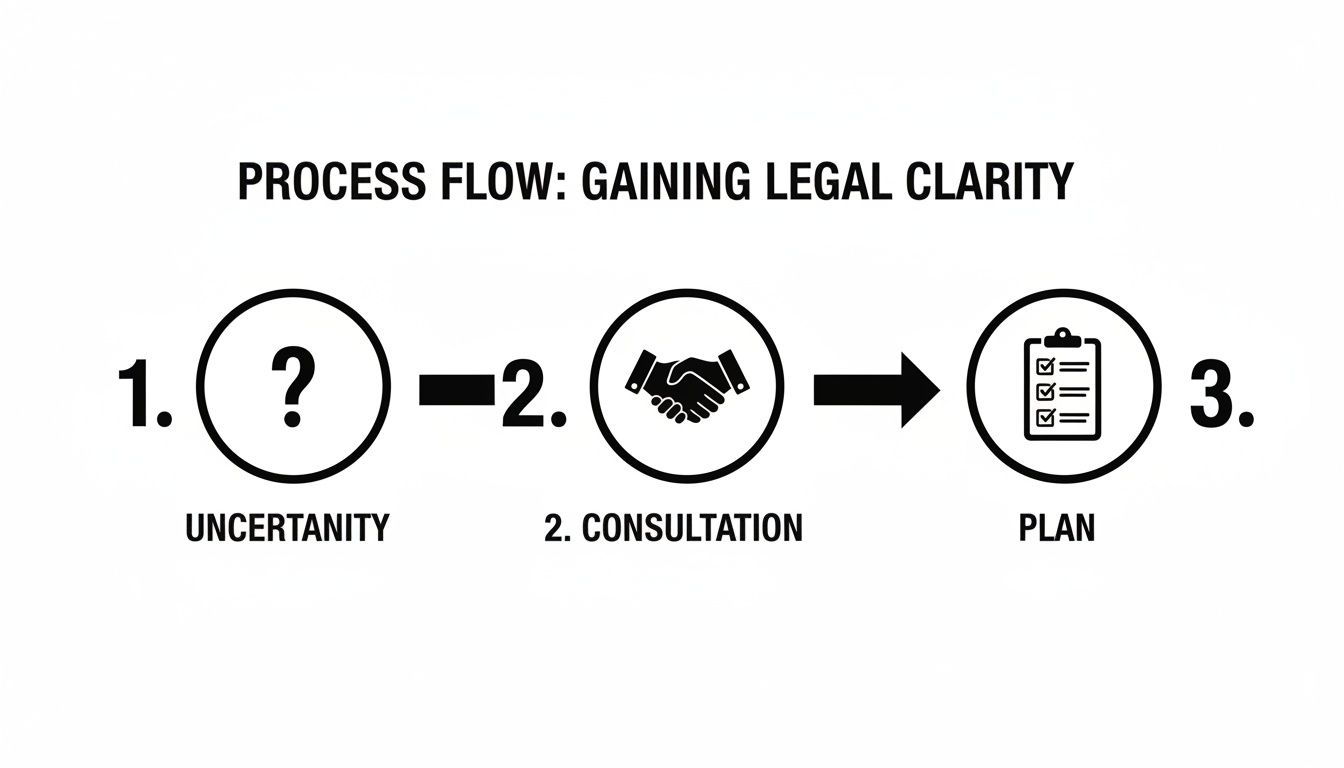
As you can see, the consultation is the turning point where all that stress and confusion gets channelled into an actionable strategy.
To make this happen, try to list the major financial items, noting whether they are in your name, your spouse's name, or held jointly:
- Assets: Real estate (like the matrimonial home), vehicles, bank accounts, investments (RRSPs, TFSAs), and pensions.
- Debts: Mortgages, lines of credit, car loans, credit card balances, and any personal loans.
Gathering these key details beforehand will help your prospective lawyer provide the most relevant and helpful guidance during your free meeting.
Your Pre-Consultation Checklist
| Information to Gather | Examples and Why It Matters |
|---|---|
| Key Relationship Dates | Marriage, cohabitation, and separation dates. This helps the lawyer instantly understand the legal framework and timelines for your case. |
| Children's Details | Full names and birthdates. This is essential for discussing parenting arrangements, decision-making, and child support. |
| List of Major Assets | The house, cars, bank accounts, RRSPs, pensions. A rough idea of value helps frame the conversation around property division. |
| List of Major Debts | Mortgage, lines of credit, credit card debt. This gives a complete picture of the family's net worth and financial obligations. |
| Income Information | Your and your spouse's approximate annual income. This is the starting point for any discussion about spousal or child support. |
| Top 3 Questions | "Can I stay in the house?" "How is child support calculated?" "What are my rights?" Writing them down ensures you don't forget. |
This preliminary list is just a starting point. For the more detailed breakdown required later, you can learn more about completing an official Form 13.1 Financial Statement in our comprehensive guide.
Key Takeaway: The goal isn't to create a perfect financial statement for your first meeting. It's to provide enough information for the lawyer to identify potential issues and explain how Ontario's property division laws might apply to your situation.
Finally, think about your main concerns and goals. Are you most worried about parenting arrangements, staying in the matrimonial home, or just understanding spousal support? Write down your top three questions. This ensures you leave the divorce lawyer consultation free of charge with answers that bring you peace of mind and a clear direction for what to do next.
Crucial Questions to Ask Your Potential Divorce Lawyer
That first consultation isn't just about you telling your story; it's a two-way interview. You're looking to hire a professional who will navigate you through one of the most stressful periods of your life, and finding the right fit is absolutely critical.
Sure, fees are important, but the best questions go much deeper. You need to understand a lawyer's strategy, their real-world experience, and how they communicate. This is your chance to see if their professional style actually lines up with what you need. Are you aiming for a quiet, collaborative separation, or do you know a tough fight is coming? The right lawyer will have a philosophy that matches your goals.

Questions About Strategy and Experience
Don't be afraid to ask direct questions that show you how they think and operate, especially within the framework of Ontario's Family Law Act. Go beyond the basics.
- "Based on what I’ve shared, what do you see as the biggest potential hurdle in my case?" This is a great test. It shows you if they were actually listening and can spot the key issues right away. Their answer will reveal whether they’ve grasped the unique details of your situation.
- "What is your philosophy on mediation versus litigation?" A good family lawyer needs to be skilled at both negotiation and courtroom battles. Their answer tells you if they lean towards costly, aggressive tactics by default or if they prioritize finding collaborative, more affordable solutions first.
- "How much experience do you have with cases like mine in the Brampton courthouse?" Local experience matters. A lot. A lawyer who knows the judges and specific procedures at the A. Grenville and William Davis Courthouse can give you far more practical and realistic advice.
These kinds of questions get past the surface-level facts and into strategic thinking, giving you a much clearer idea of what it would actually be like to have them on your side. Understanding their approach is a huge part of learning what a family lawyer in Ontario actually does and how they can best help you.
Questions About Communication and Logistics
The day-to-day practicalities of working with a lawyer are just as important as their legal skills. If your expectations around communication don't match up, it can lead to a ton of frustration down the road.
Your relationship with your divorce lawyer is a professional partnership. Clear communication, transparent billing, and a shared strategic vision are the cornerstones of a successful outcome.
Get on the same page from day one by asking these simple, direct questions:
- "What is your preferred way to communicate, and what’s your policy on returning calls or emails?" This question sets clear boundaries and expectations for how and when you'll get updates.
- "Who will be my main point of contact? Will I be working directly with you, or mostly with a paralegal or junior lawyer?" You need to know who is handling your file day-to-day. It’s essential for building trust and making sure nothing falls through the cracks.
- "Can you walk me through your fee structure and billing in detail?" Don't just ask for the hourly rate. Ask about the initial retainer, when it needs to be topped up, and what other costs get billed (like photocopies or courier fees). This kind of transparency prevents nasty surprises on your invoice later.
By asking these crucial questions during your divorce lawyer consultation free of charge, you empower yourself to make a truly informed decision. You aren't just looking for any legal expert; you're looking for a trusted partner to help you move forward.
What Happens During and After the Consultation
A free consultation should feel like a safe harbour—a confidential space where you can finally get your bearings. When you connect with a firm like Badesha Law, our goal is to provide a no-pressure, informative session that helps you see a clear path forward.
During the meeting, the lawyer’s most important job is to listen. They'll go over the timeline and notes you’ve prepared, asking clarifying questions to get a complete picture of your life. From there, they can offer an initial assessment, pointing out the key issues that fall under Ontario's Family Law Act and explaining how the law might apply to your specific circumstances.
This entire conversation is protected by solicitor-client privilege. That means everything you say is completely confidential, whether you decide to hire the lawyer or not.
Reflecting on the Advice You Received
After you leave, take some time to let everything sink in. The objective isn't just to find a lawyer; it's to find the right lawyer for you.
Think about how the conversation felt. Did they explain complex legal ideas in a way that made sense? Did you feel heard and respected, or did they seem to dismiss your concerns? Trust your gut. A strong lawyer-client relationship is built on trust and communication, and if you felt rushed or pressured, that’s a major red flag. You should walk away feeling more informed and empowered, not more confused and anxious.
A critical part of this process is getting a handle on the potential costs. Vague answers about fees are a recipe for stress down the road. A trustworthy lawyer will be upfront about their retainer and how they bill for their time.
Understanding the Financial Big Picture
The financial reality of divorce is a huge source of anxiety for many people, which is what makes a free consultation so valuable. It’s your chance to get clarity on costs right from the start.
While every case is different, understanding the potential financial road ahead is crucial. The cost of a divorce can range from a few thousand dollars for a simple, uncontested case to six-figure sums for high-conflict battles over complex assets. A good consultation helps you understand what to expect and avoid the kind of financial surprises that can derail your life. For context on how divorce costs can escalate in contested cases, it’s clear why getting upfront clarity is so essential.
After your meeting, you should receive a clear explanation of the firm’s retainer agreement. This document outlines exactly what they will do for you and how their fees work. Read it carefully. Never sign anything you don't fully understand. If you're comfortable and ready to move forward, this is the final step before officially starting the divorce process in Ontario.
Taking the Next Steps in Brampton and the GTA
That first consultation is a huge step. You've gone from uncertainty to having a clear picture of the road ahead. Now, for those of us in Brampton, Mississauga, and across the GTA, it's time to shift gears from gathering information to taking real, practical action.
Your first move is to formally hire the lawyer you’ve chosen. This means signing a retainer agreement and providing the initial funds that allow them to officially represent you. Once that’s done, they can get to work immediately, often by sending the first formal communication to your spouse or their lawyer.

Beginning the Financial Disclosure Process
One of the most critical, non-negotiable next steps under Ontario law is financial disclosure. This is where you and your spouse exchange comprehensive financial statements, creating a complete and honest picture of your assets, debts, and income. It might sound tedious, but this transparency is the absolute foundation for negotiating everything from property division to support payments.
This isn't just paperwork; it's the bedrock of a fair settlement. Your lawyer will guide you through completing the necessary forms, helping you pull together key documents like:
- Tax returns and recent pay stubs
- Statements for bank and investment accounts
- Property assessments and mortgage details
- Pension valuations
Taking control of your future starts with these structured, necessary steps. From drafting a separation agreement to filing documents at the Brampton courthouse, each action moves you closer to resolution and a new beginning.
While the legal process can feel isolating, it helps to see the bigger picture. In California, for instance, the divorce rate has seen a steady decline, hitting 5.88 divorces per 1,000 women in 2022. For those of us here in the Greater Toronto Area facing these same challenges, numbers like these highlight why getting clear, early legal advice is so important. Without it, you risk getting stuck in drawn-out proceedings that drain you emotionally and financially. You can discover more insights about these divorce statistics to understand the broader context.
If you are ready to take control, the next step is straightforward. You can learn more about finding the right family law lawyer in Brampton to represent your interests. At Badesha Law, we offer a no-obligation, free consultation to provide the compassionate, clear guidance needed to navigate this transition with confidence.
Frequently Asked Questions
When you’re just starting to navigate a separation, it’s natural to have a lot of specific, pressing questions. Here are some straightforward answers to the most common things people ask about a divorce lawyer consultation free of charge in Ontario, designed to give you some much-needed clarity.
Is a Free Consultation with a Divorce Lawyer Really Confidential?
Yes, absolutely. In Ontario, any conversation you have with a lawyer for the purpose of getting legal advice is protected by what’s called solicitor-client privilege. This is a powerful legal shield that means everything you share is kept in the strictest confidence.
This protection kicks in the moment your consultation begins, and it doesn't matter whether you end up hiring that lawyer or not. It's a fundamental part of our legal system, creating a safe space for you to be completely honest about your situation without worrying about your words leaving the room.
Will I Get Real Legal Advice in a Free Consultation?
You’ll walk away with valuable legal information and a professional's initial take on your case. A lawyer can explain your rights and responsibilities under Ontario’s Family Law Act, sketch out some potential strategies, and talk about possible outcomes based on the details you've shared.
While this is definitely a form of legal advice, it's preliminary. A deep-dive legal opinion or the actual drafting of court documents would only happen after you formally hire the lawyer with a retainer agreement. Think of the free session as getting a clear, professional map of the road ahead.
Do I Need a Consultation if My Spouse and I Agree on Everything?
Even in the most amicable, uncontested divorce, getting a consultation is one of the smartest things you can do. A family lawyer can review your separation agreement to make sure it’s legally sound, fair, and covers all the bases required by Ontario law for things like property division and support.
A quick, professional check-up like this can prevent massive and expensive legal headaches down the road. A free consultation is the perfect, no-risk way to confirm you’ve covered everything before you finalize your agreement and file it with the court.
Having an expert eye on your agreement ensures its terms are actually enforceable and that you haven't accidentally missed a critical detail that could come back to haunt you later.
How Does a Free Consultation Help with a Foreign Divorce Opinion Letter?
A free consultation is the perfect starting point if you need to get a foreign divorce recognized here in Canada. It's your chance to explain the specifics—why you need the letter, whether it's for getting remarried, for immigration, or for some other official reason.
During this meeting, the lawyer can lay out the exact process. They'll tell you which documents you'll need from your home country, give you a realistic timeline, and explain the steps required to get your foreign divorce officially validated in Ontario. This initial chat turns a confusing, bureaucratic process into a clear, manageable plan.
For more in-depth answers, you might find what you're looking for on our comprehensive family law FAQ page, which covers a much wider range of topics.
At Badesha Law, we believe that clarity and confidence are the best tools you can have when facing a separation. We are committed to providing compassionate, practical guidance to help you move forward. If you are in Brampton or the GTA and ready to take the next step, schedule your free, no-obligation consultation with our experienced family law team today. https://badeshalaw.ca