

When navigating a separation, your children's well-being is the top priority. This guide demystifies shared joint custody in Ontario, helping you create a stable and loving future for your family. At its core, shared joint custody means both parents collaborate on major life decisions (decision-making responsibility) and the child spends a significant amount of time with each parent—at least 40%, to be exact (parenting time). This arrangement is designed to keep both parents actively and meaningfully involved.
What Shared Joint Custody Means for Your Family

Navigating a separation is tough, especially with kids. The good news is that Ontario's legal system is now completely child-centred. The old, adversarial language of "custody" and "access" is gone. Today, the law revolves around two core ideas: decision-making responsibility and parenting time.
A shared joint custody arrangement is a commitment to effective co-parenting. It’s built on the understanding that even though you are no longer a couple, you are both essential to your child's stability.
The Two Pillars of Shared Custody
Think of shared custody as having two essential pillars:
-
Shared Decision-Making Responsibility: You and the other parent must consult each other on big issues like choosing a school, consenting to medical treatment, or deciding on religious education.
-
Shared Parenting Time: To officially qualify as "shared," the child must spend at least 40% of the time with each parent, as set by the Federal Child Support Guidelines. This ensures deep involvement in daily routines.
A successful shared parenting plan is more than a schedule; it's a commitment to cooperative, child-focused communication that puts your child’s need for stability and connection with both parents first.
This guide is your roadmap for understanding the legal landscape in Brampton and the GTA. For a deeper dive into these legal terms, see our guide on understanding child custody in Ontario.
How Shared Custody Differs from Other Parenting Arrangements
Before deciding if a shared custody arrangement is right for you, you need to understand the alternatives. The main difference between models comes down to decision-making power and parenting time.
Shared joint custody is a true co-parenting partnership. Both parents get an equal say, and the child spends significant time in each home. This is very different from arrangements where one parent has all the decision-making authority.
Comparing Shared Custody with Sole Custody
Sole custody is the opposite of a shared arrangement. A court gives one parent both the child's primary residence and the exclusive authority to make all major decisions, including:
-
Education and school choice
-
Non-emergency medical and dental care
-
Religious instruction
-
Extracurricular activities
The other parent has scheduled parenting time but no legal say in these critical decisions. Courts in Ontario typically grant sole custody only in difficult situations, such as high-conflict separations, family violence, or when one parent is unable to care for the child.
Shared Custody Versus Split Custody
Split custody is a rare arrangement for families with two or more children. The siblings are separated, with at least one child living primarily with one parent and at least one other child living with the other parent.
For example, the son might live with his father while the daughter lives with her mother. Each parent would have sole decision-making power for the child in their home.
Courts generally avoid this setup because the sibling bond is vital. However, it might be ordered if older children have strong, clear, and reasonable preferences.
Comparing Ontario's Parenting Arrangements
The table below offers a straightforward comparison of the main parenting arrangements in Ontario.
| Arrangement Type | Decision-Making Responsibility | Typical Parenting Time | Best Suited For |
|---|---|---|---|
| Shared Custody | Both parents must agree on major decisions regarding education, health, and religion. | The child lives with each parent for at least 40% of the time over the course of a year. | Parents who can communicate effectively and cooperate in the child's best interests. |
| Sole Custody | One parent has the full legal authority to make all major decisions independently. | The child lives primarily with one parent. The other parent has scheduled parenting time. | High-conflict situations or when one parent is unable to provide adequate care. |
| Split Custody | Each parent has sole decision-making power for the child living primarily with them. | At least one child lives with one parent, and at least one child lives with the other. | Rare cases, typically involving multiple older children with strong, differing preferences. |
Ultimately, the goal is always to honour the single most important principle in Ontario family law: protecting the best interests of the child.
The Factors Ontario Courts Use to Decide Custody
When parents can't agree on a parenting plan, a judge must decide. The process isn't arbitrary. Ontario judges follow a clear legal test from the Divorce Act and Children's Law Reform Act: the best interests of the child.
This principle is the only factor guiding every custody decision. It's not about what a parent wants, but what will best support a child's safety, well-being, and development. It's a myth that courts automatically default to a 50/50 shared joint custody arrangement.
The Best Interests of the Child Test
To determine a child's best interests, the court considers a specific list of factors. No single factor is definitive; the judge looks at the complete picture.
Key factors a judge will analyze include:
-
The Child's Needs: This includes their need for stability, considering their age and stage of development.
-
Relationships with Each Parent: The court examines the emotional bonds between the child and each parent.
-
Each Parent's Willingness to Support the Other's Role: A judge looks for evidence that you will both encourage a healthy relationship with the other parent.
-
History of Care: The court considers who has been the primary caregiver, handling daily tasks like meals, appointments, and school help.
The court's primary goal is to protect the child’s right to a loving relationship with both parents, as long as it is safe. Any behaviour undermining this can be viewed negatively by a judge.
Stability and the Ability to Co-Parent
A critical piece for any joint custody arrangement is whether the parents can communicate and cooperate. The court needs to be convinced you can make decisions together without constant conflict. For more details on this process, read our article on how courts decide child custody matters.
Public Sentiment vs. Legal Reality
While there is no automatic legal presumption for shared parenting in Ontario, public opinion strongly supports it. A National Parents Organization survey found that 93% of respondents believe children benefit from spending maximum time with both parents. This shows a societal shift recognizing that kids thrive when both parents are involved. A skilled family lawyer can help reflect this principle in your parenting plan.
Designing a Practical Shared Parenting Schedule

The success of a shared joint custody arrangement depends on its schedule. The goal is to create a practical, predictable rhythm that gives your children stability.
There's no one-size-fits-all solution. The best schedule fits your family's unique circumstances, considering your child's age, school location, and the distance between your homes.
Popular Shared Parenting Schedules
Several common schedules can be effective starting points.
-
The Week-On/Week-Off Schedule: Children spend one full week with Parent A, then the next with Parent B. This works well for older children as it reduces exchanges.
-
The 2-2-5-5 Schedule: Each parent gets the same two weekdays (e.g., Parent A has Mon/Tues, Parent B has Wed/Thurs). You then alternate long weekends.
-
The 2-2-3 Schedule: The kids are with Parent A for two days, Parent B for two days, then back with Parent A for a three-day weekend. The rotation flips the next week. This is ideal for younger children who need frequent contact.
For more legal context, see our guide on defining parenting time in Ontario.
Comparing Common Schedules
This table breaks down the key features of these popular schedules to help you decide.
| Schedule Name | How It Works | Pros | Cons |
|---|---|---|---|
| Week-On/Week-Off | The child spends 7 days with one parent, then 7 days with the other. | Fewer transitions; simple to track; works well for older children. | A week can feel very long for younger children to be away from a parent. |
| 2-2-5-5 Rotation | Parent A has Mon/Tues, Parent B has Wed/Thurs. Weekends alternate. | Consistent school week schedule; each parent gets longer weekend time. | Can feel complex; requires careful calendar tracking. |
| 2-2-3 Rotation | 2 days with Parent A, 2 with Parent B, then a 3-day weekend that alternates. | Frequent contact with both parents; ideal for very young children. | High number of transitions can be disruptive for some kids. |
Tips for a Successful Schedule
A successful joint parenting agreement requires detail and communication.
Plan for Holidays and Vacations
Your parenting plan must clearly outline:
-
How major holidays will be divided or alternated.
-
The process for scheduling summer vacation time.
-
How birthdays will be handled.
The most effective parenting schedules are child-focused, predictable, and flexible. They provide a reliable routine while allowing for adjustments as needs change.
Embrace Flexibility and Communication
Life is unpredictable. Successful co-parenting plans allow parents to communicate respectfully and adapt. Consider using a co-parenting schedule app to manage calendars, track expenses, and keep communication organized.
How Shared Custody Affects Child Support Payments
A common myth is that 50/50 parenting time means no one pays child support. This is false. In Ontario, both parents must financially support their children, regardless of the schedule. The goal is to provide a consistent standard of living in both homes.
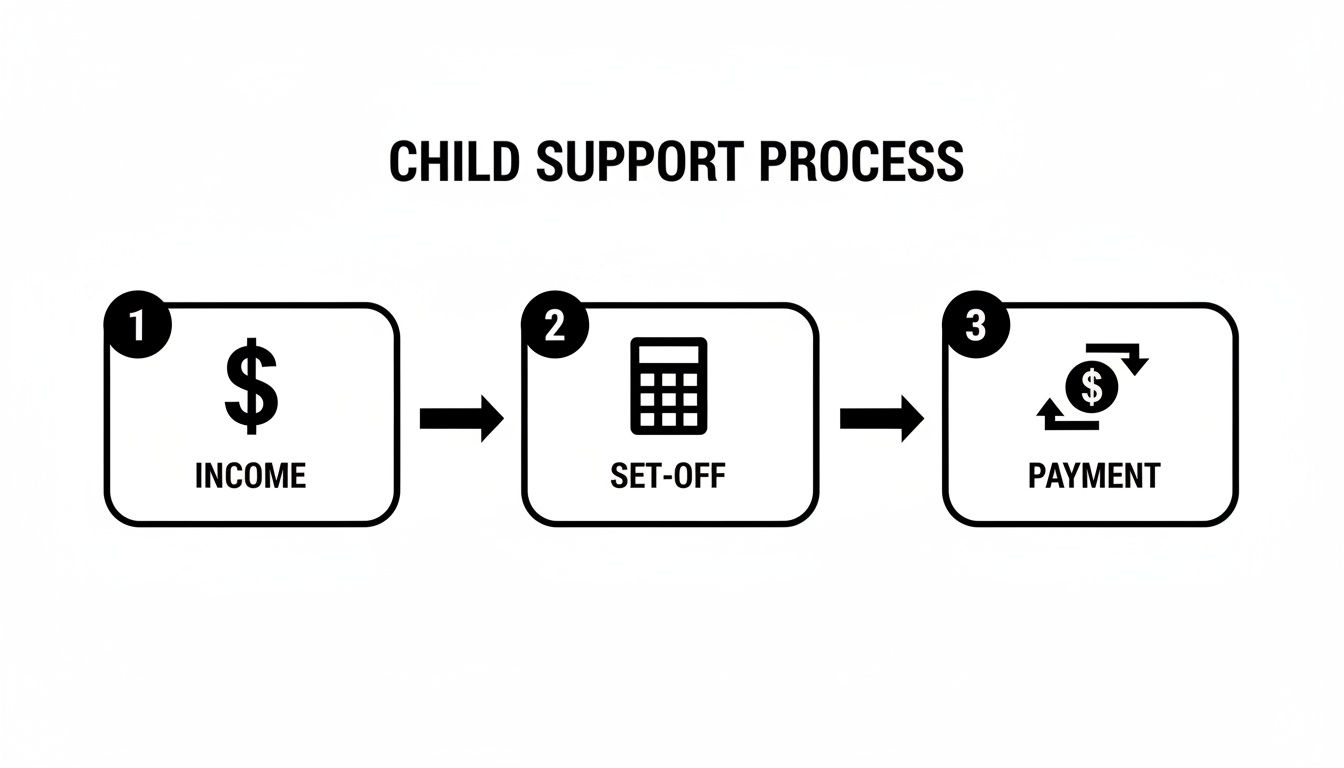
A shared joint custody arrangement changes how child support is calculated. The law recognizes that running two households increases costs. Therefore, the calculation uses a "set-off" amount, as outlined in the Federal Child Support Guidelines.
The Set-Off Calculation Explained
The set-off calculation levels the financial playing field for your child.
-
Determine Each Parent's Table Amount: First, determine what each parent would pay based on their gross annual income using the official child support tables.
-
Factor in Increased Costs: The court considers the increased costs of maintaining two separate households.
-
Calculate the Difference: The smaller table amount is subtracted from the larger one. The parent with the higher income pays the difference (the "set-off" amount) to the parent with the lower income.
This method ensures financial support reflects both parents' incomes and the costs of a shared parenting schedule.
A Simplified Child Support Example
Let's walk through an example:
-
Parent A has a gross annual income of $80,000. Their monthly table amount for one child is $743.
-
Parent B has a gross annual income of $50,000. Their table amount is $450.
The set-off amount is the difference: $743 – $450 = $293.
In this shared custody scenario, Parent A pays Parent B $293 per month. For clear guidance on your obligations, learn more about navigating child support in Ontario.
It's a myth that 50/50 shared joint custody means no child support. Courts use a formula to ensure children maintain their standard of living. The higher-earning parent often pays the difference to the other to equalize the financial resources available to the child in each home. Discover more about how shared custody impacts support obligations on californiafamilylawgroup.com.
Navigating Common Co-Parenting Challenges
Even with the best intentions, co-parenting under a shared joint custody agreement has challenges. Success comes from managing disagreements constructively. Common hurdles include poor communication and inconsistent household rules.
Addressing Inconsistent Rules and Discipline
Different rules in each house can confuse children. The key is to align on the big stuff.
Focus on a united front for non-negotiables:
-
Safety: Rules around internet use and curfews.
-
Health: Bedtimes, screen time limits, and nutrition.
-
Academics: A consistent plan for homework.
-
Respect: Universal expectations for behaviour.
Improving Communication and Decision Making
Bad communication fuels most co-parenting conflicts. Treat your co-parenting relationship like a business partnership where the "business" is raising a healthy child. Other conflicts, like dealing with disputes over the marital home, can create tension, so it's vital to compartmentalize.
A game-changing strategy is to keep communication frequent, brief, and strictly about the kids. Schedule a regular 15-minute "business" call weekly to discuss appointments and updates.
If you are already in a high-conflict situation, understand your options when you are in a fight in family court for your child. Clear channels and firm boundaries can help you build a stable future.
Serving Brampton & The Greater Toronto Area
At Badesha Law, we have extensive experience helping families in Brampton and across the Greater Toronto Area navigate the complexities of shared joint custody. If you need a family lawyer "near me" who understands local court procedures and can provide tailored advice, our team is here to help. We are committed to finding practical, child-focused solutions for your family.
Ready to Create a Stable Future for Your Child?
Navigating shared custody can feel overwhelming, but you don't have to do it alone. Our experienced family lawyers can help you create a fair and practical parenting plan that protects your child's best interests.
Book a consultation today to discuss your unique situation and take the first step toward a stable co-parenting future. For more immediate information, download our free Co-Parenting Checklist to start organizing your thoughts.
Written by the legal team at Badesha Law. This article is for informational purposes only and does not constitute legal advice.
Related Reading
Frequently Asked Questions About Shared Joint Custody
Do we need to go to court for a shared custody agreement?
Not usually. Most parents negotiate a legally binding shared custody agreement through methods like mediation or collaborative family law. A lawyer then drafts a formal separation agreement, making the terms enforceable without court intervention. Court is a last resort for parents who cannot agree.
What happens if one parent wants to move?
A parent cannot simply relocate with a child if it would significantly disrupt the other parent's time under a joint custody arrangement. This is a complex legal issue called "mobility." You need the other parent's written consent or a court order allowing the move, based on the child’s best interests.
Can our shared custody arrangement be changed later?
Absolutely. Parenting plans are living documents. To modify a court order or separation agreement, you must show a "material change in circumstances" since the original agreement. This could be a major job change, remarriage, or the changing needs of a growing child.
At what age can a child choose who to live with?
There is no "magic age" in Ontario where a child's wishes become the final word. A judge will consider a child’s preferences, giving them more weight as the child matures. However, the child's wish is just one of many factors in the court's final decision, which is always based on their overall best interests.
What is the difference between shared custody and joint custody?
"Joint custody" traditionally refers to joint decision-making, while "shared custody" refers to the parenting time schedule (where the child spends at least 40% of the time with each parent). Today, many use "shared joint custody" to describe an arrangement that includes both shared decision-making and a shared parenting schedule.