

A Client’s Guide to Divorce in Brampton: Process, Custody, and Costs
When a marriage concludes, securing an effective divorce lawyer in Brampton is a crucial initial move to reestablish control. A proficient lawyer not only handles paperwork but also outlines a clear and practical course of action, safeguarding your rights under Ontario's family law from the outset. This guide provides valuable insights into the divorce process in Brampton, emphasizing essential information to help you make well-informed decisions. Badesha Law, a respected divorce lawyer in Brampton, offers expert guidance and support throughout this challenging period, ensuring your interests are prioritized.
Starting The Divorce Process In Brampton
Facing a divorce can be overwhelming. Understanding the process is key to navigating it with clarity and confidence. In Ontario, the journey is governed by the provincial Family Law Act and the federal Divorce Act. Your Brampton divorce lawyer is your personal strategist, guiding you through complex issues like property division and child custody with expertise tailored to the Brampton courts.
The goal is to move you from a state of uncertainty to a position of strength. An experienced lawyer cuts through the legal jargon, breaking down the process into understandable steps. They help you anticipate challenges, making the entire journey less intimidating and empowering you to make the best decisions for your future.
The First Steps And Legal Realities
In Ontario, the decision to end a marriage leads to a series of legal procedures, beginning with the preparation and filing of an Application for Divorce at the Ontario Superior Court of Justice. This document is essential as it outlines the reasons for divorce, typically citing a separation of one year. It also highlights critical issues that need addressing, such as parenting arrangements, financial support, and asset division. When considering divorce in Brampton, it is important to understand the current legal environment. The Ontario court system has experienced significant changes, including a 36% decrease in divorce filings between 2019 and 2020, largely due to pandemic-related disruptions. These circumstances have led to backlogs and procedural changes, making it crucial to consult a lawyer who is well-versed in the system to effectively guide clients through the process. To apply for a divorce, you need to be separated from your spouse for at least one year. Additionally, you must provide necessary documentation, including your marriage certificate, financial statements, and any relevant agreements or court orders. These documents ensure that all aspects of the divorce, including custody, support, and property division, are adequately addressed.
From Simple To Contested: Why Cooperation Matters
Every couple hopes for a simple, uncontested divorce. That’s the ideal scenario where both people agree on all the major terms, including:
-
Property Division: How to fairly divide the assets and debts you accumulated together.
-
Spousal Support: Whether one person needs financial help from the other, for how long, and how much.
-
Parenting Arrangements: Who makes the major decisions for the children and how parenting time is shared.
What starts as a "simple" separation can quickly spiral into a contested fight if disagreements pop up. Hidden assets, unresolved anger, or a breakdown in communication can turn an amicable split into a draining and expensive court battle.
This is exactly why cooperating with your ex-spouse is so powerful. When you work together through negotiation or mediation, guided by your respective lawyers, the process becomes more efficient, less costly, and far less stressful for everyone—especially your kids. Your lawyer's job isn't to create a fight, but to facilitate productive conversations while always defending your legal rights.
A Step-by-Step Guide to Getting Divorced in Ontario
Figuring out the legal side of a divorce in Ontario can feel overwhelming, but it follows a predictable path. Once you understand the roadmap, you can make smarter decisions with your Brampton divorce lawyer guiding you. The journey really starts before any papers are filed and doesn't end until a court order makes the end of your marriage official.
At its heart, the entire Ontario divorce process hinges on a key principle from Canada's Divorce Act: you must be separated from your spouse for at least one year before a judge can grant your divorce. This "one-year separation" rule is the most common reason for divorce, as it proves the marriage has broken down with no real chance of getting back together.
But "separation" doesn't always mean packing bags and moving out. You can be legally "separate and apart" even while living in the same house, as long as you're no longer living like a married couple. Think sleeping in different rooms, handling your own finances, and stopping social outings together. A lawyer can give you crucial advice on how to properly document this kind of in-home separation.
The Formal Legal Steps
Once you've started your separation, the official legal process can kick off. It’s not a single event but a series of deliberate steps designed to make sure everything is fair and transparent.
-
Filing the Application for Divorce: This is the first formal move. Your lawyer will prepare and file an "Application for Divorce" (Form 8A) with the Ontario Superior Court of Justice in Brampton. This document explains why you're divorcing and lists everything that needs to be sorted out, like property, support, and parenting arrangements.
-
Serving Your Spouse: After the application is filed, a copy has to be legally delivered—or "served"—to your spouse. This makes sure they are officially notified and have a chance to respond. Under Ontario law, you can't serve the papers yourself; a neutral third party has to do it.
-
Financial Disclosure: This is one of the most important stages. Both you and your spouse are legally required to provide a complete and honest picture of your finances. This means everything—income, assets, debts, and pensions. Full transparency isn't optional; it's the foundation for a fair settlement.
A simple divorce can quickly turn into a messy, contested one if one person suspects the other is hiding financial information. An experienced divorce lawyer in Brampton knows exactly what to look for to ensure every asset is on the table for a fair division.
This visual guide breaks down the essential journey, from the moment you separate to the final resolution with your divorce lawyer in Brampton.
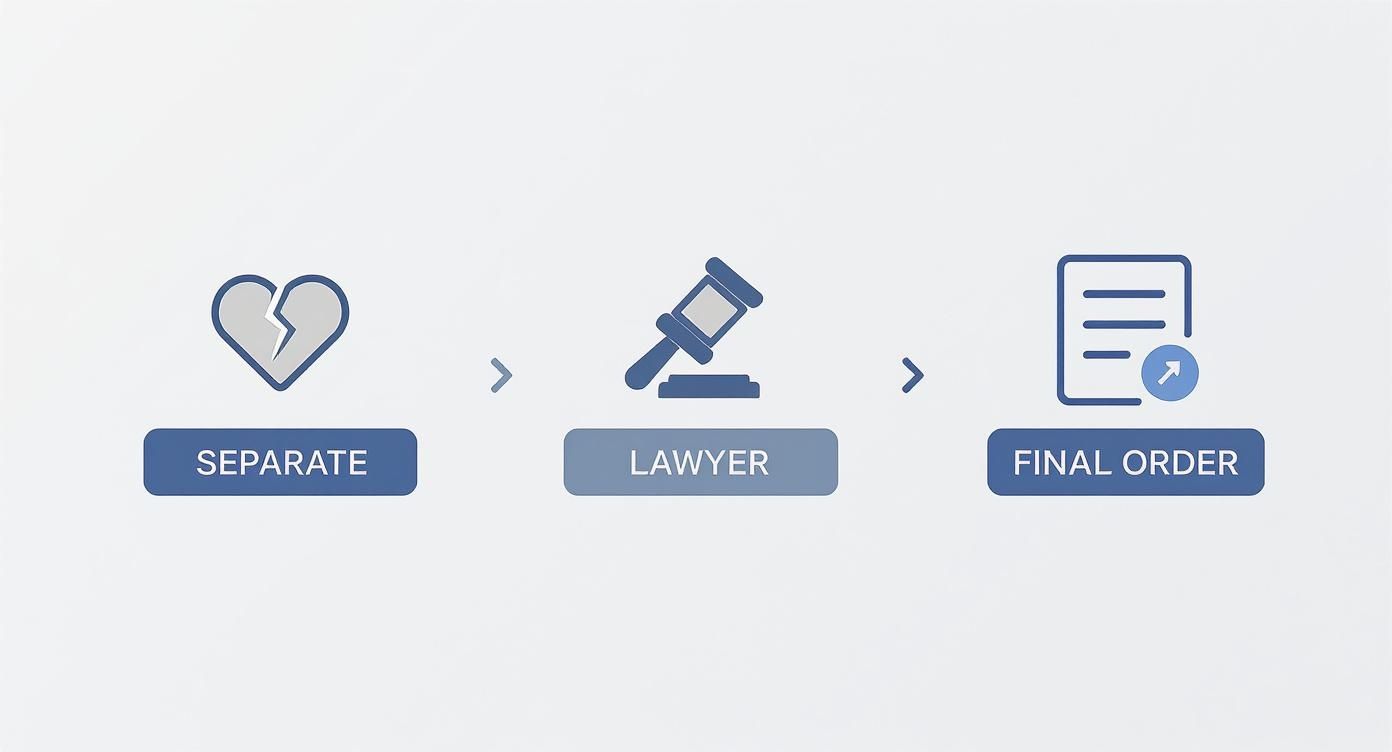
As the infographic shows, the formal legal steps you take with a lawyer are built on that initial foundation of separation.
Reaching a Resolution and Finalizing the Divorce
The good news is that most divorce cases in Brampton are settled without ever seeing the inside of a courtroom. Working collaboratively with your ex-spouse, through your lawyers, is almost always the most cost-effective and least stressful way to go.
-
Negotiation and Separation Agreements: Your lawyer will negotiate with your spouse's lawyer to agree on all the outstanding issues. These terms are then put into a legally binding Separation Agreement.
-
Mediation or Collaborative Law: These are great alternatives to court. They involve neutral professionals who help you and your spouse find common ground, avoiding the need for a judge to step in.
Once every issue is settled and your one-year separation period is over, your lawyer files the last of the paperwork. A judge reviews everything, and if it’s all in order, they will sign the Divorce Order. This is the document that officially and legally ends your marriage, freeing both of you to move on.
Why Simple Separations Become Complicated Divorces
Most couples start their separation hoping for the best. They promise to be reasonable and aim for a quick, simple divorce. Yet, many well-intentioned separations spiral into contested, complicated, and expensive battles. The emotional pressure of a separation can easily cloud judgment, turning minor disagreements into major disputes.
The truth is, what begins as a small disagreement over a piece of furniture can explode into a full-blown dispute over property division. A successful outcome requires a clear strategy from the start, guided by a level-headed legal professional.
From Agreement to Disagreement: The Common Triggers
There are a few key issues that act like flashpoints, turning a straightforward separation into a contested divorce. An experienced divorce lawyer in Brampton has seen these patterns and can help you get ahead of them.
The most common triggers are:
-
Hidden or Undisclosed Finances: The entire process is built on trust. If one spouse suspects the other is hiding assets or downplaying their income to reduce support payments, that trust is shattered. This is a primary reason simple matters become contested.
-
Disputes Over Property Value: You might agree to split everything 50/50, but what happens when you can’t agree on the value of the family home in Brampton's real estate market? Or the value of a business? This alone can bring negotiations to a halt.
-
Emotional Conflicts and New Partners: The arrival of a new partner can stir up old feelings of hurt, making objective negotiations nearly impossible. Unresolved emotional baggage often resurfaces, turning practical decisions into personal battles.
Under Ontario's Family Law Act, full and frank financial disclosure isn't just a suggestion—it's a legal requirement. Failing to be completely transparent can lead to serious penalties from the court and will almost certainly turn a simple divorce into a high-conflict nightmare.
The Slippery Slope of Parenting Disagreements
While money is a frequent source of conflict, nothing complicates a divorce faster than disagreements over the children. What might start as a small difference in parenting styles can escalate into a major fight over decision-making responsibility (formerly custody) and parenting time.
One parent might feel the other isn't spending enough meaningful time with the kids, while the other feels their parenting choices are constantly under attack. These conflicts are deeply personal and make it incredibly difficult for parents to find common ground. This is exactly where having a calm, objective legal advisor becomes essential.
How a Lawyer Prevents Escalation
The real value of hiring the best divorce lawyer in Brampton isn’t just to fight for you in court—it’s to keep you out of it in the first place. An expert lawyer acts as a buffer and a strategist, de-escalating conflict before it even begins.
They can spot potential trouble areas early on and suggest practical solutions, like using a neutral third-party valuator for your property or bringing in a parenting coordinator to help resolve disputes. By managing communication and focusing on resolution instead of conflict, a skilled lawyer steers the process back toward a cost-effective and peaceful conclusion.
Understanding Parenting Time and Decision-Making in Brampton
For parents separating in Brampton, nothing matters more than the well-being of their children. The legal framework in Ontario is built on one simple idea: the best interests of the child. The law separates parenting into two key areas:
-
Decision-Making Responsibility: This refers to who makes major decisions about a child’s life—such as schooling, significant healthcare choices, and religious upbringing.
-
Parenting Time: This is the schedule that outlines when the children are in each parent's care.
The courts in Brampton, guided by the Family Law Act, strongly prefer arrangements where both parents are actively involved. The goal is to ensure the child maintains a strong, meaningful relationship with each parent. A knowledgeable divorce lawyer in Brampton can help you craft a detailed parenting plan that fits your family's unique needs.

When Does a Court Grant Sole Decision-Making?
It's a common question: what does it take for a court to give one parent 100% of the decision-making authority? It's crucial to understand that this is the exception, not the rule. Ontario courts only grant sole decision-making responsibility (what used to be called sole custody) in serious situations where a child's safety or well-being is clearly at risk.
A judge must be convinced that sharing decisions would actively harm the child. This requires solid, documented evidence, not just disagreements over parenting styles.
The "best interests of the child" is the only test the court uses when making parenting orders. This standard is defined in Ontario's Children's Law Reform Act and considers all factors related to the child's physical, emotional, and psychological safety and well-being.
Circumstances Leading to Sole Authority
To award sole decision-making, a Brampton court needs compelling evidence of issues that make co-parenting unworkable or dangerous. These are serious problems that directly threaten a child's welfare:
-
Family Violence or Abuse: A documented history of physical, emotional, or psychological abuse by one parent—directed at the child or the other parent—is a primary factor. The court will act decisively to protect the child, as this is taken extremely seriously under both family law and the Criminal Code of Canada.
-
Substance Abuse: If a parent has an ongoing, unmanaged addiction to drugs or alcohol that impairs their judgment and ability to care for a child, a sole decision-making order may be granted. The key is showing how the substance abuse puts the child in direct danger.
-
Severe Mental Health Issues: A severe, untreated mental health condition that renders a parent incapable of making rational, safe decisions for their child could lead to the other parent being granted sole authority.
-
Extreme Parental Alienation: This is a pattern of behaviour where one parent actively and consistently tries to destroy the child's relationship with the other parent without justification. If severe enough to be considered emotionally abusive, a court may intervene.
-
Abandonment: When one parent has been absent from the child's life for a long period with no interest in being involved, the court may formalize the existing reality by giving the involved parent sole decision-making power.
In these high-stakes scenarios, finding the best divorce lawyer in Brampton is absolutely critical. An experienced lawyer knows how to gather the right evidence and advocate fiercely for an arrangement that truly serves your child’s best interests.
How Cooperation Can Reduce Your Divorce Costs
The financial impact of a divorce is a major source of stress. While you can't sidestep the emotional toll, you have control over the financial strain. The single most effective way to protect your finances is to work cooperatively with your ex-spouse.
Choosing collaboration over conflict is a strategic decision to keep money in your pocket instead of funding escalating legal fees. Every hour spent arguing in court or exchanging hostile emails through lawyers adds to your final bill. A cost-effective divorce is achieved when both parties commit to finding a fair and efficient resolution.
The Financial Reality of a Contested Divorce
The difference in cost between an amicable split and a high-conflict court battle is staggering. When you and your spouse agree on major issues, the process becomes about efficient paperwork. When you disagree, it quickly involves motions, court appearances, and potentially a trial, with each step adding thousands to your costs.
An uncontested divorce might cost a few thousand dollars, but a contested matter can easily skyrocket to tens of thousands. This stark contrast is why more couples are choosing to work together. You can learn more about the financial implications of divorce in Canada from nussbaumlaw.ca.
When a divorce is framed as a battle to be won, both parties often lose financially. A cooperative approach, guided by an experienced Brampton divorce lawyer, reframes the goal as finding a fair resolution that preserves assets for both of your futures.
Actionable Strategies for a Cost-Effective Process
Working together doesn’t mean you have to be best friends; it means you agree to approach the separation as a shared problem to solve. This mindset opens the door to more affordable resolution methods.
Here are some practical ways to cut down on conflict and costs:
-
Choose Mediation: A neutral third-party mediator helps you and your spouse communicate and find common ground on tough issues. It’s far less adversarial—and significantly cheaper—than going to court.
-
Embrace Collaborative Family Law: In this process, both of you, along with your respective lawyers, sign an agreement to resolve everything without going to court. It commits everyone to a cooperative, problem-solving approach from the start.
-
Focus on Business-Like Negotiations: Try to separate the emotional side of the breakup from the practical decisions that need to be made. Treat negotiations about property and finances like a business transaction, focusing on facts and fair outcomes.
Hiring the best divorce lawyer in Brampton for your situation means finding someone who is a strong advocate and a skilled negotiator. Their expertise can guide you toward a settlement that protects your rights without draining your savings.
How to Choose the Right Brampton Divorce Lawyer for You
Picking your legal counsel is easily one of the most important decisions you'll make during your divorce. The right lawyer isn’t just a legal expert; they're your strategic partner, advocate, and guide through what can be an emotionally and financially draining process. Finding the best divorce lawyer in Brampton for your unique situation means looking for the right mix of legal skill, local experience, and a personality that clicks with yours.
Your goal is to find an advocate who not only knows Ontario’s Family Law Act inside and out but also makes you feel heard, respected, and confident about the road ahead. This partnership is the bedrock of a successful outcome.

What to Look for in a Top Brampton Lawyer
When you first start looking, it's easy to feel overwhelmed. To cut through the noise, focus on a few key qualities that separate a good lawyer from a great one. A truly effective lawyer has a blend of technical expertise and interpersonal skills that match what you need.
Here are the essential traits to watch for:
-
Exclusive Focus on Family Law: This area of law is incredibly specialized. You want a lawyer who lives and breathes divorce cases, not someone who just dabbles in it on the side.
-
Deep Brampton Court Experience: A lawyer who is a familiar face at the Brampton courthouse—who knows the judges and local procedures—brings a priceless home-field advantage to your case.
-
A Clear Communication Style: Your lawyer needs to be able to break down complex legal concepts into plain English. You should never leave a conversation feeling confused or in the dark about your own case.
-
A Balanced Approach to Conflict: Look for someone who is a skilled negotiator and wants to find a resolution, but is also more than ready to fight for you in court if it comes to that.
This is especially critical for more complex cases. For example, there's been a noticeable rise in "grey divorce" among couples over 50. These situations often involve complicated finances, like tangled assets and retirement income, which demand a lawyer with very specific knowledge. You can find more insights on this trend and how it's affecting divorce in Canada over at athenalawoffice.com.
Critical Questions for Your Initial Consultation
That first meeting is your chance to interview potential lawyers and see who feels right. Don't be shy about asking direct, detailed questions. This meeting is for you to size them up just as much as it is for them to assess your case.
Come to your consultation ready with a list of questions. The clarity and confidence in their answers will tell you a lot about their experience and whether their approach lines up with your goals.
Get ready to ask things like:
-
Strategy and Approach: "Based on what I've shared, what’s your initial take on my case? What kind of strategy would you suggest we start with?"
-
Conflict Resolution: "What's your philosophy on negotiation versus going to court? How do you help clients avoid unnecessary legal battles?"
-
Caseload and Communication: "Who will I be dealing with day-to-day at your firm? What’s your policy for getting back to calls and emails?"
-
Fees and Billing: "Can you walk me through your fee structure? What is your retainer, and what are the potential total costs I should be prepared for?"
Choosing the right advocate is an investment in your future. By focusing on experience, communication, and a clear strategy, you can select the best divorce lawyer in Brampton to protect your interests and guide you toward a fair resolution.
Common Questions About Divorce in Brampton
Going through a separation brings up a flood of urgent questions. Getting straight answers from an experienced divorce lawyer in Brampton is the first real step toward getting your feet back on solid ground. Here are a few of the most common questions we hear from clients in our community.
How Long Must I Be Separated Before a Divorce?
In Ontario, the law says you need to be separated for at least one full year before a court can officially grant your divorce. This is the most common reason given for a divorce, as it proves the marriage has broken down.
But here’s a critical detail: you don't have to wait that year to get started. In fact, you shouldn’t. You can—and should—begin sorting out a separation agreement right away. This is where you’ll tackle the big issues like property division, support, and parenting arrangements. The final Divorce Order is just the last piece of the puzzle, issued once the 12-month period is over.
Divorce vs. Separation Agreement: What Is the Difference?
Think of it this way: the separation agreement is the detailed game plan for your new reality, while the divorce is the final whistle that officially ends the match.
-
A Separation Agreement is a legally binding contract that you and your spouse create to settle everything. It’s the rulebook covering finances, property, and parenting in detail.
-
A Divorce Order is the official court document that legally ends your marriage, allowing you both to remarry if you choose.
Before a court in Brampton will grant your divorce, you must have all your issues settled, which is almost always done through a comprehensive separation agreement. A lawyer is crucial here to make sure your agreement is iron-clad, enforceable, and actually protects your rights.
Do I Have to Go to Court in Brampton for My Divorce?
It's one of the biggest myths out there—that every divorce ends in a dramatic courtroom battle. The truth is, the vast majority of divorces in Brampton are settled out of court, usually through negotiation or mediation.
If you and your spouse can work out all the terms and create an uncontested divorce, your lawyer simply files the right paperwork with the court. In most of these cases, you will never have to step foot in front of a judge. Court is really the last resort, reserved for high-conflict situations where reaching an agreement on your own just isn't possible.
Can I Get Divorced Without a Lawyer?
Technically, you can represent yourself, but it's an incredibly risky move. Ontario's family law is a complex web of rules and procedures. A simple mistake in a legal document or a poorly worded clause in an agreement can lead to severe, long-term financial consequences that are a nightmare to fix later on.
Hiring a divorce lawyer in Brampton isn't just a cost; it's an investment in your future. It’s the best way to ensure your rights are protected, all the financial details are handled correctly, and your final agreement is built to last, saving you from a world of trouble and expense down the road.
At Badesha Law, we provide clear, strategic guidance to help you navigate your separation with confidence. For expert legal support with your family law matter in Brampton, contact our team today. Visit Badesha Law to schedule your consultation.