What Happens After a DUI in Brampton, Ontario? A Guide to the Penalties
Being stopped and charged with impaired driving (DUI) in Brampton is a disorienting and stressful experience. From the moment you see flashing lights in your rearview mirror, a complex legal process begins, governed by Canada’s Criminal Code and Ontario’s Highway Traffic Act. The consequences are immediate, severe, and can impact every aspect of your life long after the initial arrest.
So, what happens after a DUI? It is not a single event but a cascade of administrative and criminal hurdles. You face an immediate licence suspension, vehicle impoundment, and the start of a challenging journey through the justice system. For Brampton residents, navigating this process requires a clear understanding of your rights and the steps ahead.
This guide provides the actionable insights you need. We will break down the critical stages you will face, from the roadside breathalyzer to the courtroom in Brampton, insurance hikes, and potential criminal records. Understanding these steps is the first and most crucial move toward protecting your rights, your licence, and your future. The aftermath of a DUI charge is confusing and intimidating, which is why the guidance of an experienced criminal lawyer in Brampton is not just recommended, it is essential for mounting a proper defence. This article will explain exactly what happens in a DUI case and how to prepare for the road ahead, whether this is your first offence or a second offence.
1. Immediate Licence Suspension
One of the most immediate and impactful consequences of a DUI charge in Ontario is an automatic administrative licence suspension. This is not a criminal penalty decided by a judge at the Brampton courthouse but an immediate administrative action taken by the Ministry of Transportation (MTO) under the authority of the Highway Traffic Act.
This suspension is separate from any potential suspension you might face later if convicted in court. It is designed to remove potentially impaired drivers from the road immediately, prioritizing public safety. If you are charged with an impaired driving offence in Brampton, the police will seize your physical driver’s licence at the roadside or at the station.
How it Works in Ontario
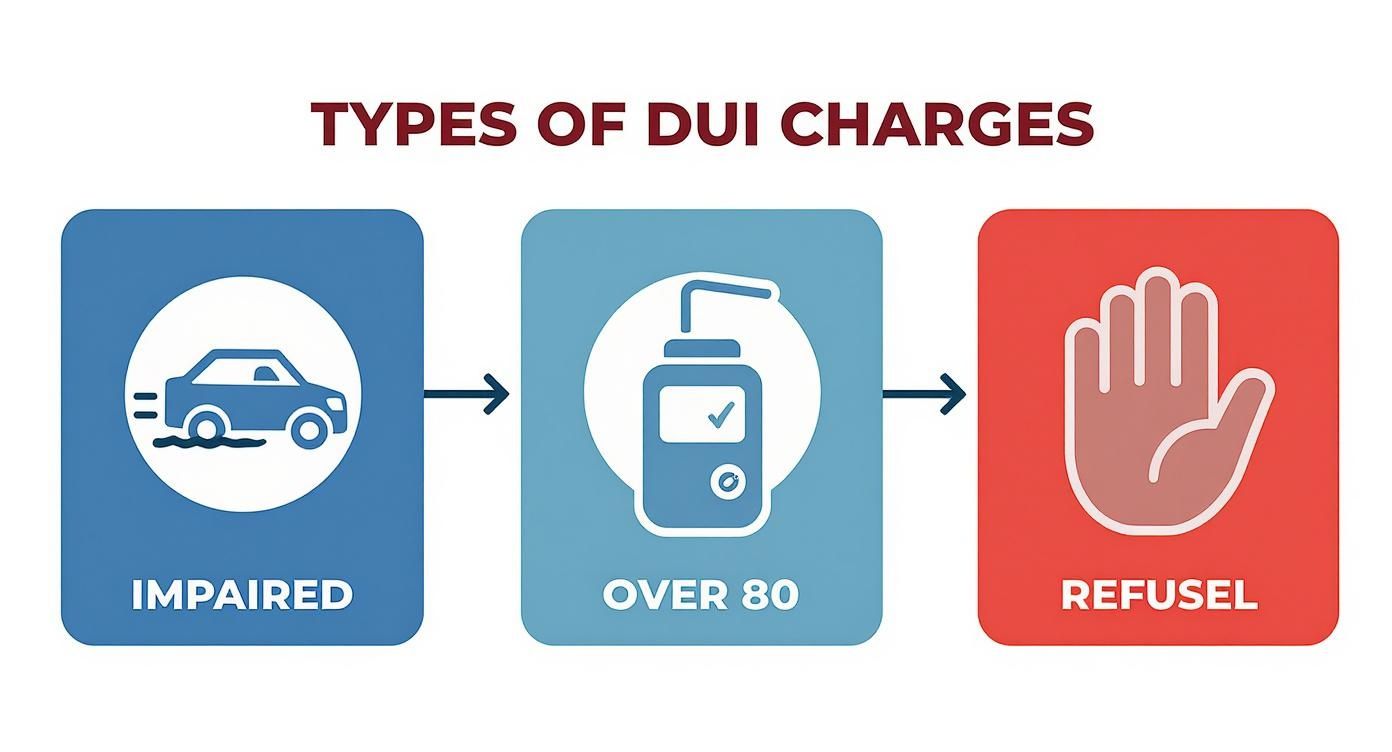
The moment you are charged with having a blood alcohol concentration (BAC) of 80 milligrams or more per 100 millilitres of blood (“Over 80”), or for refusing to provide a breath or fluid sample, you are subject to an Administrative Driver’s Licence Suspension (ADLS).
- Duration: This is a firm 90-day suspension.
- Vehicle Impoundment: Your vehicle will also be impounded for 7 days. You are responsible for all towing and storage fees.
This initial 90-day suspension is a critical period. You cannot drive under any circumstances; there are no hardship or work-related exceptions for an ADLS. Driving while under this suspension is a serious offence that can lead to further criminal charges, significant fines, and even jail time. For anyone searching for a “DUI lawyer in Brampton,” understanding this immediate consequence is the first step in navigating the complex process ahead. This administrative action underscores the seriousness of the charge before you even step into a courtroom.
2. Criminal Charges and Court Proceedings in Brampton
Separate from the immediate administrative penalties, a DUI charge invariably involves the formal criminal justice process. Once you are charged by Peel Regional Police, a legal case is opened against you by the Crown, and you are required to navigate the complexities of the Canadian criminal court system at the Brampton courthouse. This journey is often lengthy and stressful, underscoring the importance of securing expert legal representation from a local criminal lawyer from the outset.

This process determines your guilt or innocence under the Criminal Code of Canada. It involves several key stages, from your first appearance to a potential trial, and the outcome will have a profound and lasting impact on your future. For anyone needing a criminal lawyer in Brampton, understanding these steps is crucial to mounting a proper defence.
How it Works in Ontario
After being charged and released, you will be given a date for your first court appearance at the Brampton Court of Justice. This is not your trial date but the start of the court proceedings, where the Crown will provide the initial evidence against you (known as “disclosure”) to your legal counsel.
- First Appearance: Your lawyer typically attends this on your behalf to obtain disclosure and set a date for the next step.
- Crown Pre-Trial: Your lawyer meets with the Crown prosecutor to discuss the case. This is where strengths and weaknesses are debated, and potential resolutions, such as a plea bargain to a lesser charge, might be explored.
- Judicial Pre-Trial: If no resolution is reached, a meeting with a judge and the Crown may occur to discuss legal issues and trial timelines.
- Trial: If the case proceeds, a trial is held where the Crown must prove your guilt beyond a reasonable doubt.
Each step requires strategic legal navigation. An experienced DUI lawyer in Brampton will meticulously review the evidence, identify police errors or charter rights violations, and build the strongest possible defence tailored to the specifics of your Brampton case. A conviction can lead to a criminal record, significant fines, further licence suspensions, and even jail time, especially for a second offence.
3. Fines and Financial Penalties
Beyond the administrative penalties and potential for jail time, a DUI conviction in Ontario brings significant mandatory fines and financial penalties. These are not merely administrative fees; they are criminal sentences imposed by a judge and are a core part of what happens after a DUI. The total cost is often much higher than the base fine, as it includes a mandatory victim fine surcharge.
This monetary punishment is a direct consequence of being found guilty in court. It is designed to act as a deterrent and to hold the offender financially accountable for their actions. The amount varies based on the specifics of your case, including your blood alcohol concentration and whether it is a first or subsequent offence. For anyone facing charges in Brampton, understanding these financial implications is crucial for preparing for the road ahead.
How it Works in Ontario
Under the Criminal Code of Canada, the fines for impaired driving are mandatory minimums, meaning a judge cannot impose a lesser amount upon conviction. These fines escalate sharply for repeat offenders.
- First Offence: A mandatory minimum fine of $1,000. If your BAC was particularly high (120-159 mg), the fine increases to a minimum of $1,500. For a BAC of 160 mg or more, or for a refusal to provide a sample, the minimum fine is $2,000.
- Second Offence: Mandatory minimum of 30 days in jail.
- Third and Subsequent Offences: Mandatory minimum of 120 days in jail.
On top of the base fine, the court will add a victim fine surcharge, which is typically 30% of the fine amount. For a base $1,000 fine, this adds another $300. These financial penalties are just one aspect of the overall cost of a DUI, which also includes legal fees, increased insurance premiums, and program costs. Consulting with a criminal lawyer in Brampton can help you understand the full scope of potential financial penalties you may be facing.
4. Jail or Prison Sentences
While fines and licence suspensions are common, one of the most severe consequences of a DUI conviction in Ontario is the potential for incarceration. A jail sentence is a very real possibility, particularly for repeat offenders or in cases where the impaired driving incident caused bodily harm or death. The court’s decision to impose jail time reflects the gravity of the offence and serves as a significant deterrent.
This penalty is handed down by a judge as part of the criminal sentencing process and is separate from any immediate administrative consequences. Understanding the circumstances that can lead to jail time is crucial for anyone facing an impaired driving charge. For those seeking a “criminal lawyer in Brampton,” comprehending these potential outcomes is a vital part of preparing a strong defence.
How it Works in Ontario
Under the Criminal Code of Canada, mandatory minimum sentences are in place for certain impaired driving convictions. These minimums increase substantially with each subsequent offence, highlighting the system’s focus on escalating penalties for repeat offenders.
- First Offence: While there is no mandatory minimum jail sentence for a standard first-time DUI, a judge can impose imprisonment up to a maximum of two years less a day for a summary conviction, or up to 10 years for an indictable offence.
- Second Offence: A conviction for a second impaired driving offence carries a mandatory minimum of 30 days in jail.
- Third and Subsequent Offences: For a third or any subsequent offence, the mandatory minimum sentence increases to 120 days in jail.
It is important to note that these are minimums; the actual sentence can be much longer depending on the aggravating factors of your case. Factors such as a very high BAC reading, having a child in the vehicle, or causing an accident can all lead a judge to impose a sentence far exceeding the mandatory minimum, even for a first offence. This demonstrates the critical need for an experienced DUI lawyer in Brampton to navigate the complexities of your case.
5. Mandatory DUI Education and Treatment Programs
Beyond court-imposed fines and licence suspensions, another critical step in resolving what happens after a DUI conviction in Ontario is the completion of a mandatory remedial measures program. This is not optional; it is a provincially mandated requirement designed to educate offenders on the risks of impaired driving and address underlying issues with substance use. Successful completion is a prerequisite for having your driver’s licence reinstated.
These programs are administered under Ontario’s Ministry of Transportation (MTO) and are separate from any criminal sentence. The goal is to reduce recidivism by tackling the behavioural and health aspects of impaired driving, ensuring that drivers understand the serious consequences of their actions before they are permitted to operate a vehicle again. Anyone convicted will receive instructions from the MTO on how to register.
How it Works in Ontario
If convicted of an impaired driving offence in Brampton or elsewhere in the province, you will be required to complete the “Back on Track” program. This is Ontario’s official remedial program for alcohol and drug-related driving offences.
- Assessment: The program begins with an assessment of your substance use to determine the appropriate program stream.
- Program Components: Depending on the assessment, you will be required to complete either an 8-hour educational workshop or a 16-hour treatment workshop. A follow-up interview is also required six months after completion.
- Cost: You are responsible for the full cost of the program, which can be several hundred dollars.
It is crucial to enrol and complete this program as directed. Failure to do so will prevent the MTO from reinstating your driver’s licence, even if you have served your entire court-ordered suspension and paid all your fines. For anyone seeking advice from a criminal lawyer in Brampton, understanding this mandatory administrative requirement is essential for planning a clear path back to legal driving.
6. Probation and Supervised Release
If convicted, one of the key elements of what happens after a DUI sentence is often a period of probation. This is a court-ordered term of community supervision that can be imposed either in addition to, or sometimes in place of, a jail sentence. The primary purpose of probation is to rehabilitate the offender while allowing them to remain in the community, all under a set of strict, legally binding conditions.
Probation is designed to ensure public safety and to help prevent the individual from reoffending. A probation order is a formal contract with the court; any breach of its terms is a separate criminal offence that can lead to new charges and potentially imprisonment. For anyone convicted of a DUI in Brampton, understanding and adhering to a probation order is absolutely critical to moving past the charge.
How it Works in Ontario
When a judge imposes a sentence that includes probation, they will issue a probation order outlining specific conditions that you must follow for a set period, which can last up to three years. These conditions are tailored to the circumstances of the offence and the offender.
- Mandatory Conditions: Every probation order in Canada includes mandatory conditions, such as keeping the peace, being of good behaviour, and appearing in court when required.
- Optional Conditions: The judge can also add specific conditions relevant to your DUI case. These often include reporting to a probation officer, abstaining from alcohol, completing substance abuse counselling or treatment (like the “Back on Track” program), and not operating a motor vehicle.
Navigating these conditions requires diligence and a clear understanding of your obligations. Failing to report to your probation officer or being caught consuming alcohol can result in a charge for “Breach of Probation,” which carries its own serious penalties. A criminal lawyer in Brampton can help you understand the full scope of your probation order and the severe consequences of non-compliance.
7. Ignition Interlock Device (IID) Installation
Following a DUI conviction in Ontario, one of the most significant requirements you may face is the mandatory installation of an Ignition Interlock Device (IID). This is a court-ordered or ministry-mandated condition for licence reinstatement, designed to ensure public safety by preventing a vehicle from starting if the driver has consumed alcohol.
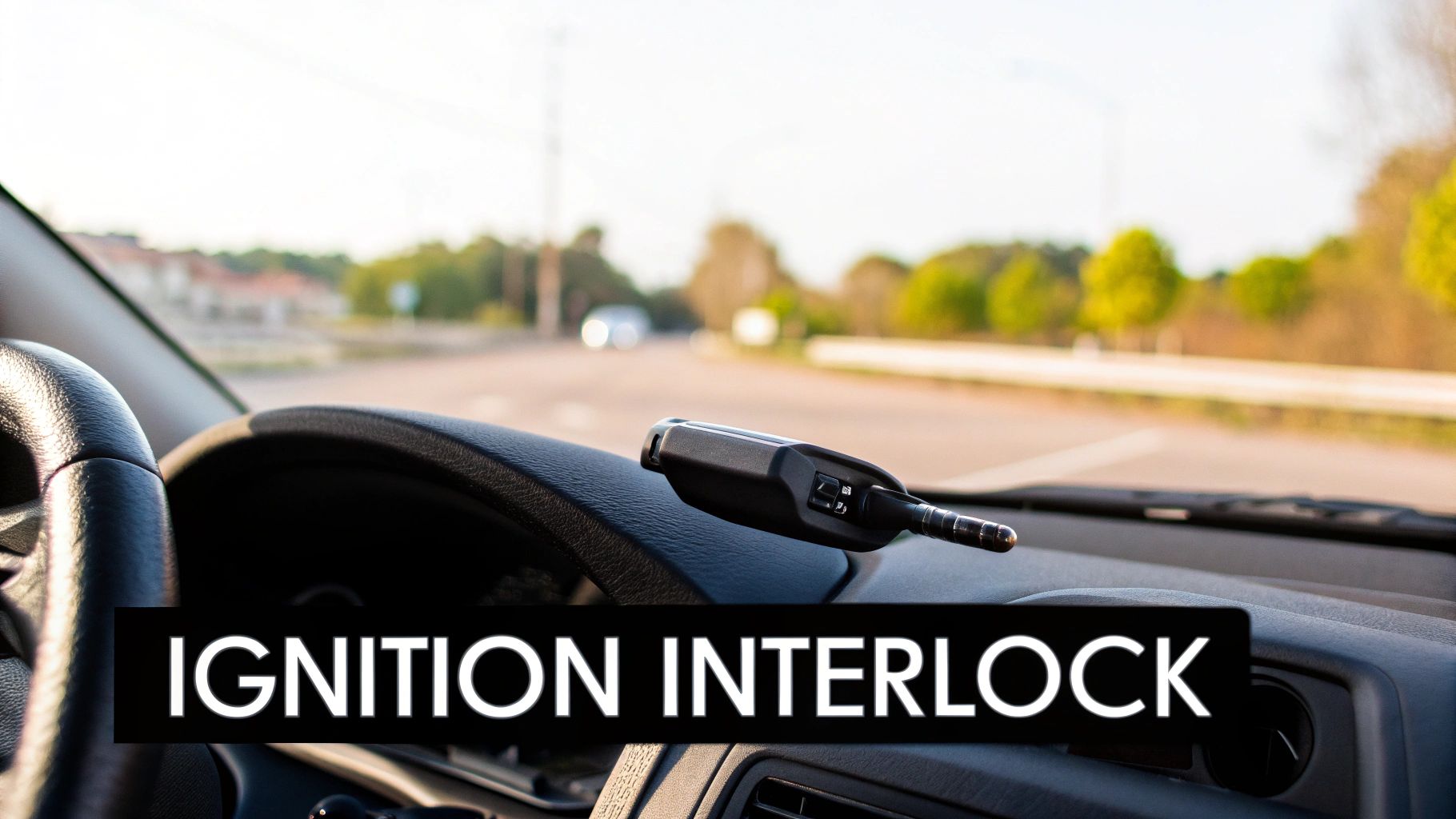
The device is an in-car breathalyzer connected to your vehicle’s ignition system. Before you can start the engine, you must provide a breath sample into the device. If your Blood Alcohol Concentration (BAC) is above a pre-set low limit (typically .02 or lower), the vehicle will not start. The IID will also require random re-tests while you are driving to ensure continued sobriety.
How it Works in Ontario
Under Ontario’s Highway Traffic Act, the Ignition Interlock Program is mandatory for drivers convicted of impaired driving offences. The length of the required installation period depends on the number of prior convictions.
- First Offence: Mandatory installation for a minimum of one year.
- Second Offence: Mandatory installation for a minimum of three years.
- Third Offence: A potential lifetime licence suspension, with the possibility of reinstatement after 10 years, which would require an IID for life.
All costs associated with the device, including installation, monthly monitoring fees, and removal, are the sole responsibility of the driver. These costs can be substantial, often exceeding a thousand dollars per year. Failing to comply with the program’s rules, such as a failed test or attempting to tamper with the device, results in a program violation. These violations can extend the time you are required to have the device installed, adding significant time and expense to what happens after a DUI. For anyone facing a conviction, discussing the IID program with a criminal lawyer in Brampton is essential to understanding the full scope of long-term consequences.
8. Criminal Record and Background Check Consequences
Beyond the immediate penalties like fines and licence suspensions, one of the most lasting and serious consequences of a DUI conviction in Ontario is the creation of a permanent criminal record. This isn’t a temporary mark; it’s a formal record of a criminal conviction that follows you for life unless it is formally suspended (pardoned), impacting numerous aspects of your personal and professional life.
This criminal record is accessible through background checks, which are now standard procedure for many of life’s important applications. A DUI conviction can therefore create significant and long-term barriers, turning what started as a single incident on the road into a persistent obstacle. For anyone charged in Brampton or the GTA, understanding these far-reaching effects is crucial.

How it Works in Ontario
A conviction for a criminal driving offence, such as Impaired Driving or Over 80, is registered in the Canadian Police Information Centre (CPIC) database. This makes the conviction visible on nearly any type of criminal background check, from basic employment screenings to more in-depth vulnerable sector checks.
- Employment: Many Brampton employers require a clean criminal record. A DUI can disqualify you from jobs in fields like education, healthcare, finance, or any role that requires driving or a high level of trust. A teacher, for instance, could face review by the Ontario College of Teachers.
- Professional Licences: Regulated professions, such as nursing, law, or engineering, may review, deny, or revoke a licence following a criminal conviction.
- Travel and Immigration: A DUI conviction can render you criminally inadmissible to other countries, most notably the United States. It can also severely complicate immigration, permanent residency, and citizenship applications in Canada.
Successfully navigating these challenges often requires the expertise of a criminal lawyer in Brampton. They can advise on the record suspension (pardon) process and help mitigate the damage by presenting your case in the best possible light. A conviction has consequences that extend far beyond the courthouse.
9. Enhanced Penalties for a Second Offence and Aggravating Factors
The consequences of a DUI conviction are not uniform; they are significantly influenced by your prior record and the specific details of the incident. The Criminal Code of Canada mandates increasingly severe punishments for individuals with previous impaired driving convictions. Furthermore, certain circumstances surrounding the charge, known as aggravating factors, can lead a judge to impose a harsher sentence even for a first-time offence.
This system is designed to deter repeat behaviour and to reflect the increased danger posed by certain situations. If you are facing a second or subsequent DUI charge, or if your case involves aggravating factors, the potential penalties escalate dramatically. Understanding these enhancements is crucial when facing the legal system, especially for those seeking a criminal lawyer in Brampton who can navigate these complex cases.
How it Works in Ontario
Penalties are enhanced based on a “lookback” period for prior convictions. Additionally, aggravating factors are specific elements of the offence that the Crown prosecutor will highlight during sentencing to argue for a more severe penalty.
- Second Offence: For a second offence, there is a mandatory minimum of 30 days in jail. A third or subsequent offence carries a mandatory minimum of 120 days in jail. The Crown can look back at convictions over the last 10 years, and sometimes even longer, to establish a prior record.
- Aggravating Factors: These can include a particularly high blood alcohol concentration (BAC), causing an accident that resulted in bodily harm or death, having a child under 16 in the vehicle, or driving recklessly at high speeds while impaired.
The presence of any of these factors removes the possibility of a minimum sentence. The judge is required to impose a penalty that is more significant than the mandatory minimums, which could mean longer jail sentences, higher fines, and extended driving prohibitions. For anyone facing a DUI, particularly a second offence, it is critical to understand that the stakes are substantially higher from the very beginning.
10. Insurance Consequences and High-Risk Designation
A significant financial consequence of a DUI conviction in Ontario is the dramatic impact on your car insurance. Once convicted, your insurance provider will classify you as a “high-risk” driver. This designation leads to a steep and often long-lasting increase in your insurance premiums, making it much more expensive to legally operate a vehicle in Brampton.
This financial penalty is separate from any court-imposed fines or other costs associated with a DUI. Insurance companies view a conviction as a major indicator of risky behaviour, and they adjust your rates to reflect this increased liability. For many, the cumulative cost of these higher premiums over several years can be one of the most substantial financial burdens resulting from an impaired driving charge.
How it Works in Ontario
In Ontario, a DUI conviction obligates you to seek coverage through “high-risk” or “facility” insurance markets. Your current provider may cancel your policy altogether, forcing you to find a new insurer specializing in high-risk drivers.
- Premium Increases: It is not uncommon for insurance premiums to double, triple, or even increase by more, costing thousands of extra dollars per year. This increase typically remains in effect for three to six years after the conviction date.
- Proof of Insurance: You must maintain this high-risk insurance continuously. Any lapse in coverage could lead to a further licence suspension and additional penalties.
The financial strain of these insurance consequences underscores the importance of a strong defence. For those searching for a “DUI lawyer in Brampton,” mitigating these long-term financial impacts is a crucial goal. An experienced criminal lawyer in Brampton can explore every avenue to fight the charges, as an acquittal is the only way to completely avoid the high-risk insurance designation and its severe financial fallout.
10-Point Comparison of Post-DUI Consequences
| Penalty / Action | Implementation complexity | Resource requirements | Expected outcomes | Ideal use cases | Key advantages |
|---|---|---|---|---|---|
| License Suspension or Revocation | Low–medium; administrative process with strict timelines | MTO hearings, legal representation, alternative transport | Immediate loss of driving privileges for a set period | Immediate post-arrest administrative sanction | Rapid removal of driving privileges; challengeable via appeal |
| Criminal Charges and Court Proceedings | High; formal court procedures, discovery, trial phases | Defense attorney, prosecutor, court time, evidence management | Possible conviction or acquittal; fines, jail, criminal record | Formal prosecution of DUI cases in Brampton | Enables evidentiary challenges and plea negotiations |
| Fines and Financial Penalties | Low; court-imposed monetary sanctions | Significant cash payments, payment plans, higher insurance costs | Financial burden and deterrence; contributions to fees/programs | Most convicted DUI cases, first-time or repeat | Deterrent effect; funds victim/program services; sometimes reducible |
| Jail or Prison Sentences | Medium–high; sentencing and custody logistics | Correctional facility capacity, supervision, legal defense | Incarceration, loss of liberty, criminal record | Serious offenses, repeat offenders, injury/death cases | Incapacitates dangerous drivers; strong public-safety deterrent |
| Mandatory DUI Education & Treatment Programs | Medium; enrollment, attendance tracking, completion proof | Program fees, time commitment, qualified treatment providers | Behavior change, reduced recidivism; certificate for reinstatement | Court/MTO-ordered rehabilitation and reinstatement conditions | Supports rehabilitation; can reduce future risk and penalties |
| Probation and Supervised Release | Medium; supervision, reporting, testing requirements | Probation officer oversight, drug/alcohol testing, compliance costs | Community supervision with conditions; avoid immediate incarceration | Alternative to incarceration or post-release supervision | Allows continued employment and reintegration; lower cost than jail |
| Ignition Interlock Device (IID) Installation | Medium; installation, calibration, and reporting systems | Installation fees, monthly monitoring, maintenance appointments | Prevents vehicle start if alcohol detected; compliance logs | License reinstatement conditions; repeat offenders | Significantly reduces repeat DUI risk while permitting driving |
| Criminal Record & Background Check Consequences | Low; creation and public indexing of conviction records | Minimal admin; potential record suspension legal fees | Long-term public record affecting jobs, housing, licenses | Result of conviction across jurisdictions | Public accountability; possible record suspension options |
| Enhanced Penalties for Repeat Offenses & Aggravators | High; compounded sentencing and statutory enhancements | Greater legal defense needs, longer incarceration, higher fines | Substantially increased sanctions, mandatory jail time | Second offence, high BAC, injury, minors involved, refusals | Strong deterrent effect; increased protection for public safety |
| Insurance Consequences | Low–medium; insurer filings and policy adjustments | Higher premiums, limited insurer options | Significantly higher insurance costs; mandatory proof of continuous coverage | Post-conviction licensing and high-risk driver monitoring | Ensures continuous insurance coverage; enforces financial accountability |
Your Next Step: Taking Control After a DUI Charge in Brampton
Navigating the aftermath of an impaired driving charge in Ontario is a complex and daunting experience. As we have detailed, the consequences are not a single event but a cascade of interconnected penalties that affect every aspect of your life. Understanding what happens after a DUI is the crucial first step, but what you do with that knowledge is what truly defines your outcome.
From the immediate administrative licence suspension and vehicle impoundment to the intricate and often intimidating criminal court process in Brampton, the system is designed to be severe. The financial burden alone is staggering, encompassing hefty fines, mandatory program fees for “Back on Track,” ignition interlock costs, and dramatically increased insurance premiums. Beyond the monetary penalties, a conviction leaves a permanent stain on your record, potentially closing doors to employment opportunities, restricting international travel, and altering your future in ways you may not yet anticipate.
Strategic Recap: Your Key Takeaways
Mastering the information in this guide is about more than just knowing the penalties; it’s about understanding the strategic pressure points where a strong defence can make a difference. The moments following a Brampton DUI arrest are critical. Your right to counsel, the procedures for breath or blood samples, and the details of your release are not just formalities—they are the foundational elements of your defence.
Here is a summary of the most critical insights to remember:
- Two Parallel Processes: A DUI charge triggers both an immediate administrative penalty from the Ministry of Transportation (the 90-day licence suspension) and a separate, more severe criminal proceeding in the Brampton court. Winning in criminal court is the only way to reverse the long-term consequences.
- Evidence is Paramount: The Crown’s case often hinges on technical evidence, such as the approved screening device readings, the Intoxilyzer results, and the arresting officer’s observations. Every piece of this evidence can and should be scrutinized by a skilled DUI lawyer for procedural errors or Charter rights violations.
- Penalties Escalate: While a first-time offence carries significant penalties, the consequences for a second offence are exponentially more severe, involving mandatory minimum jail sentences. Aggravating factors like an accident or a high blood alcohol concentration can also lead to harsher outcomes even for a first offence.
- Proactivity is Your Best Defence: The worst thing you can do after being charged is wait. Key evidence can be lost, and crucial deadlines can be missed. Engaging a criminal lawyer in Brampton immediately allows for the preservation of evidence, a thorough review of disclosure, and the development of a tailored defence strategy from the very beginning.
Your Actionable Path Forward in Brampton
The overwhelming nature of what happens after a DUI can lead to paralysis, but taking decisive action is your most powerful tool. The path to a successful resolution begins with a clear, strategic plan. Rather than being a passive participant in the process, you must become an active agent in your own defence.
Your immediate priorities should be to:
- Document Everything: Write down every detail you can recall about the traffic stop, the arrest, the questions you were asked, and the tests you performed. No detail is too small.
- Preserve Evidence: Secure any relevant documents, such as your release papers, the notice of suspension, and any tickets you were issued. If there were witnesses, get their contact information.
- Seek Expert Legal Counsel: This is the single most important step. A criminal lawyer in Brampton who specializes in DUI cases understands the local courts, the Crown prosecutors, and the specific defence strategies that are most effective. They are your guide and your advocate, translating complex legal procedures into a clear plan of action.
Ultimately, the goal is to protect your future. A DUI charge is a serious crossroads, but it does not have to be a dead end. With the right knowledge and the right professional guidance, you can navigate this challenge, fight the allegations against you, and work towards the best possible outcome—securing your licence, your freedom, and your peace of mind.
Facing an impaired driving charge is not a journey you should take alone. The complexities of the Criminal Code and the specific procedures at the Brampton courthouse demand expert representation. At Badesha Law, we specialize in mounting a strategic and vigorous defence for individuals charged with DUI, providing the critical guidance needed from the moment of arrest to the final verdict. Contact Badesha Law today to protect your rights and start building your defence.