

A settlement conference is one of the most important steps in your family law case—a mandatory meeting designed to get you and the other party to find a resolution without going to trial. Think of it as a guided, high-stakes negotiation with a judge acting as an expert referee. This is your chance to settle big issues like parenting time, property division, or support payments with the help of your divorce lawyer in Brampton, ultimately saving you money, reducing conflict, and giving you far more control over the final outcome.

Understanding the Settlement Conference in Ontario Family Law
When you’re navigating a separation or divorce in Ontario, the court system can feel like a maze. The process includes several required steps to keep cases moving fairly and efficiently, and one of the most critical milestones is the settlement conference. This process is governed by the Family Law Act and the Family Law Rules in Canada, ensuring a structured approach to resolving disputes.
This isn't a trial where a judge bangs a gavel and makes a final ruling. Far from it. This is a formal but private meeting where a judge acts as a neutral facilitator. Their one and only goal is to help you and the other party find enough common ground to reach a mutually acceptable agreement on some, or even all, of your outstanding issues.
The Judge's Role as a Facilitator
The judge’s job here is to offer an experienced, third-party perspective on your case. They will have read the materials filed by both sides, and they’ll give you their candid opinion on what would likely happen if your case went all the way to trial. This "reality check" is often the most valuable part of the day, helping both parties step back and see their positions more objectively.
A key thing to remember is that the judge at the settlement conference is there to guide you, not decide for you. Their insights come from seeing hundreds of cases just like yours, giving them a unique ability to point out the strengths and weaknesses in each side's arguments.
Key Issues Addressed in a Conference
Family law disputes can touch every part of your life, from your finances to your relationship with your children. A settlement conference is the perfect setting to negotiate these sensitive topics. A skilled family lawyer in Brampton will help you focus on resolving the core issues, such as:
-
Parenting Time and Decision-Making: Hammering out the schedules and responsibilities for your children, always with their best interests as the primary focus, as required by Canadian family law.
-
Child and Spousal Support: Calculating fair financial support based on legal guidelines and your family's specific circumstances.
-
Division of Property: Equitably dividing the assets and debts you accumulated during the marriage, including the all-important matrimonial home.
In Ontario's incredibly busy family courts, this step is more than just a formality—it works. In fact, data has shown that settlement conferences successfully resolved 21% of cases, highlighting just how crucial they are in helping families find a way forward without the immense stress and expense of a trial.
Successfully settling these matters gives you a clear, legally binding agreement so you can finally move on. For a deeper dive into the first steps of the process, you might find our guide on how to get a divorce in Canada helpful. Getting advice from a divorce lawyer in Brampton early on is the best way to make sure you walk into this critical meeting fully prepared.
The True Purpose and Goals of the Conference
Let's clear up a common misconception. While the name says "settle," the purpose of a settlement conference is much broader than just signing an agreement on the spot. Think of it as a strategic, judge-led meeting designed to break through the gridlock that keeps families stuck in expensive, draining court battles.
Its primary goal is to create a structured, off-the-record space for a candid conversation about how to resolve your case.
This is a world away from a trial. At trial, a judge hears evidence and imposes a final, binding decision on your family. In a settlement conference, the judge’s role is completely different. They act as a facilitator and guide—not a final decision-maker. Their job is to offer a neutral, expert opinion on how a trial might play out, pushing both sides toward a reasonable compromise.
Narrowing the Issues in Dispute
One of the most valuable things that happens in a settlement conference is narrowing the scope of the conflict. Even if you can’t solve the whole puzzle, you can often put a few key pieces in place.
For example, you might not agree on spousal support, but you might be able to agree on the value of the family home or a specific holiday schedule for the kids. By getting these smaller items off the table, you simplify the entire case. This saves a mountain of time and legal fees, ensuring that if you do end up at trial, it’s only to fight over the one or two core issues that truly need a judge’s ruling. This is precisely why a sharp divorce lawyer in Brampton will tell you how critical this step is.
The judge’s insight is like getting a sneak peek at how a court might view your case. This "reality check" can be powerful, often prompting both sides to reconsider entrenched positions and move closer to a fair agreement, empowering you to maintain control over the outcome.
Ensuring Full Financial Disclosure
Another critical function of the conference is to act as a financial checkpoint. Under Ontario’s Family Law Act, full and frank financial disclosure isn't optional—it's mandatory. This meeting is where the judge ensures everyone has laid their cards on the table.
The judge will confirm that all essential documents have been exchanged, such as:
-
Proof of income (pay stubs, tax returns)
-
Bank and investment account statements
-
Property valuations
-
Credit card and loan statements
If one side is holding back information, the judge can make a direct order compelling them to produce it. This ensures no one is negotiating in the dark and is the absolute bedrock of any fair settlement.
Finally, the conference is about exploring every possible path to resolution. This could mean brainstorming creative solutions you hadn’t considered or talking through different settlement proposals. For anyone weighing their options, understanding the massive difference between a negotiated settlement and a court battle is crucial. You can learn more about how these paths diverge in our article on contested vs. uncontested divorce.
Ultimately, the conference helps you and your family lawyer in Brampton map out the most efficient and effective way forward for your family.
How to Prepare for Your Settlement Conference
Success in a settlement conference isn't about luck—it's a direct result of meticulous preparation. Walking into that meeting unprepared is like trying to navigate a new city without a map. You'll get lost, fast. By taking deliberate steps beforehand, you and your family lawyer in Brampton can build a strong, clear, and persuasive case for your desired outcome.
The cornerstone of this preparation is your Settlement Conference Brief (Form 17C). This is, without a doubt, one of the most important documents you will file in your entire case. It's your formal opportunity to tell your story to the judge, outline the history of the dispute, clearly state what's left to resolve, and—most importantly—present your formal Offer to Settle.
Mastering the Settlement Conference Brief
Think of the brief as the judge’s roadmap to your case. A well-organized, compelling brief allows the judge to quickly grasp the core of the conflict and the reasonableness of your position before you even step into the room.
Your brief must include several key parts:
-
A Summary of the Issues: A clean, concise overview of what you've already agreed on and what's still in dispute.
-
Your Proposed Solutions: This is where you get specific. You'll detail your proposal for resolving each outstanding issue, whether it’s parenting time, property division, or something else.
-
Updated Financial Statements: Complete and accurate financial disclosure is non-negotiable. For a detailed breakdown, you can learn more about the Form 13.1 Financial Statement in our guide.
-
A Formal Offer to Settle: This is a crucial strategic document detailing the exact terms under which you are willing to resolve the entire case.
Filing this document on time is absolutely critical. Missing the court-mandated deadline can lead to cost penalties or even force the conference to be rescheduled, causing unnecessary delays and expenses.
Developing Your Negotiation Strategy
Beyond the paperwork, effective preparation means working closely with your divorce lawyer in Brampton to develop a clear and realistic negotiation strategy. This isn't about just showing up; it's about going into the conference with a firm understanding of your goals and your limits.
This infographic shows the fundamental goals of the settlement process.
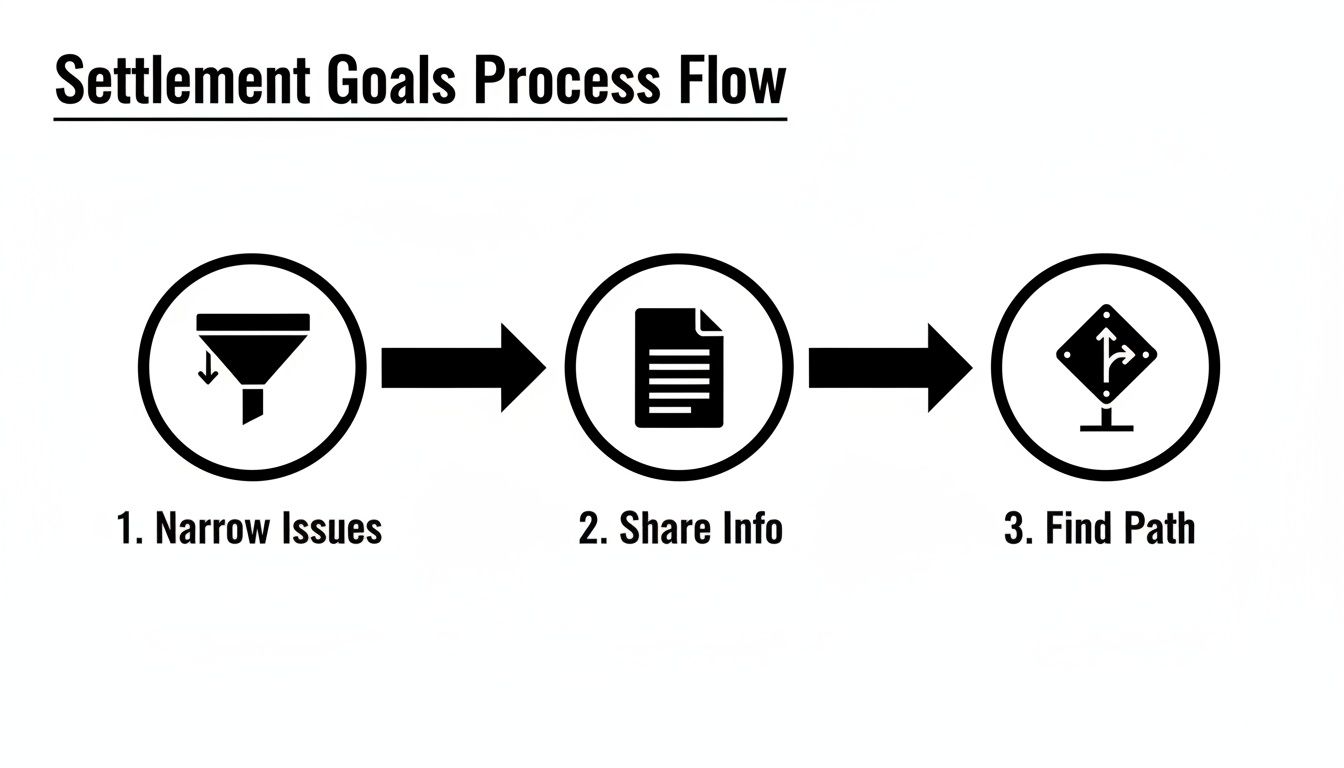
As you can see, success comes from a structured approach: focus the dispute, ensure everyone has the right information, and then work together to find a path forward.
Before the conference, you and your lawyer should define three key settlement positions:
-
Your Ideal Outcome (Best-Case Scenario): This is the opening position you will aim for.
-
Your Acceptable Middle Ground: A reasonable compromise you are willing to consider.
-
Your Bottom Line (Worst-Case Scenario): The absolute minimum you will accept before deciding to proceed to trial.
Knowing these three positions empowers you to negotiate from a place of strength and confidence. It prevents you from making reactive decisions under pressure and ensures any agreement you make aligns with your fundamental needs.
Ultimately, thorough preparation demystifies the entire process. It reduces anxiety and significantly increases the odds of achieving a fair and lasting resolution at your settlement conference.
Pros and Cons of a Settlement Conference
Heading to a settlement conference can bring a mix of hope and apprehension. While these conferences are a powerful tool for resolving your case, it's wise to enter with a balanced perspective. Understanding the potential upsides and downsides helps you and your divorce lawyer in Brampton set realistic goals and make clear-headed decisions.
The Pros: Clear Advantages of Settling
The benefits are significant, primarily saving you time, money, and emotional energy. A successful conference can conclude months or years of legal battles in a single day, allowing you to avoid the immense stress and expense of a full trial.
-
Cost and Time Savings: A trial is an incredibly expensive and slow process. Settling here means you avoid staggering legal fees, expert witness costs, and days spent in a courtroom.
-
Reduced Emotional Strain: The constant conflict of a trial takes a serious toll on you and your family. A settlement provides closure and allows everyone to move forward.
-
You Control the Outcome: In a trial, a judge makes the final decision. Here, you and the other party are in control, allowing for creative and personalized solutions that fit your family’s unique needs.
-
Priceless Judicial Insight: You get a rare chance to hear a judge’s honest, off-the-record take on your case. This feedback is invaluable, whether you settle that day or not.
The Cons: Potential Drawbacks and Risks
Of course, the process isn't perfect, and there are potential downsides. Knowing these risks helps you avoid disappointment and ensures you aren't pressured into an unfair compromise. A sharp family lawyer in Brampton will be your safeguard against these possibilities.
-
No Guaranteed Resolution: Despite best efforts, a settlement isn't guaranteed. If you can't reach an agreement, you'll have spent time and money on a meeting that didn't end the dispute.
-
Pressure to Settle: The environment is geared toward compromise, which can sometimes create intense pressure to accept an offer that feels unfair or falls short of your needs.
-
Emotional Burnout: The day can be long and emotionally draining. Fatigue can cloud your judgment when making critical decisions.
A settlement conference is a strategic fork in the road. It provides an excellent off-ramp from the lengthy and expensive highway of litigation, but only if the destination is fair and acceptable to you. Never feel forced to take an exit that doesn't lead where you need to go.
Effective Strategies for a Settlement Conference
Showing up to your settlement conference with a skilled legal advocate is like bringing a seasoned guide on a tough expedition. An experienced divorce lawyer in Brampton does more than just file paperwork; they come armed with specific, proven strategies designed to protect your interests and steer the negotiations toward a resolution in your favour.
A core strategy is shifting from positional bargaining ("I want the house") to interest-based negotiation ("I need the house for the children's stability"). This approach uncovers the real needs driving both sides, often revealing creative solutions that break through deadlocks.
The Power of the Offer to Settle
One of the most powerful tools is the formal Offer to Settle, submitted with your conference brief. This is a strategic legal move with serious weight under Ontario's Family Law Rules. A well-crafted offer clearly lays out a reasonable solution and creates significant cost consequences for the other party if they unreasonably reject it and fail to get a better result at trial.
An Offer to Settle is a calculated move that turns the tables. It's not a sign of weakness; it's a demonstration of reasonableness that puts the financial risk squarely on the other party if they choose to drag out the conflict.
Leveraging Judicial Feedback and Strategic Concessions
Throughout the conference, the judge will give candid feedback. An astute family lawyer in Brampton knows how to use these insights to your advantage. If the judge hints your position is strong, your lawyer will press that advantage. If the judge raises a concern, your lawyer will know how to pivot. Part of this involves making calculated concessions on lower-priority issues to build goodwill and encourage reciprocation on what matters most to you.
For those just starting this journey, understanding what to expect from an initial meeting is key. You can learn more by reading our guide on what happens during a free divorce lawyer consultation. This expert guidance ensures that every move made during the conference is deliberate and aimed at achieving your best possible outcome.
What Happens After the Conference Ends
The meeting is over, the discussions have ended, and you’re walking out of the courthouse. So, what’s next? The path forward now splits into two very different tracks, and it all depends on what happened inside that conference room—whether you managed to reach a full agreement, a partial one, or no deal at all.

If You Reach an Agreement
This is the best-case scenario. When you and the other party successfully resolve all the outstanding issues, your divorce lawyer in Brampton immediately shifts gears to make that agreement official and legally binding. A handshake deal isn't enough; it needs to be properly documented and filed with the court.
This usually happens in two main steps:
-
Minutes of Settlement: This is the document often drafted right there at the courthouse while the terms are fresh in everyone’s mind. It lays out everything you agreed upon. Both you and the other party (and your lawyers) sign it, and it's filed with the court.
-
Consent Order: The terms from those Minutes of Settlement are then converted into a formal Consent Order. A judge signs this document, transforming your private agreement into a powerful, legally enforceable court order.
A signed agreement provides finality. Once it’s turned into a court order, it carries the full weight of the law. This ensures both sides must follow the terms you negotiated, bringing the dispute to an official close.
To get a clearer picture of this final step, you can learn more about what a consent order is and see how it cements your settlement into law.
If No Agreement Is Reached
Don’t lose hope if you can't solve every single issue. A settlement conference is almost never a waste of time. Even reaching a partial agreement is a win because it narrows down the list of things you still have to fight about in court.
For any issues that remain unresolved, the judge will set the schedule for the next phase of the court process. This typically includes:
-
A Trial Management Conference: This is another meeting, but its purpose is purely logistical. You'll plan out the details of a trial, like scheduling witnesses and confirming what evidence will be presented.
-
Trial: If a settlement just isn't possible, the remaining issues will ultimately be decided by a judge at a formal trial.
Even without a full resolution, the conference forces both sides to put their cards on the table. It clarifies everyone's position and gives your family lawyer in Brampton invaluable insight into the other party’s case—all of which is critical for trial preparation.
Frequently Asked Questions
When you're heading into a settlement conference, it's natural to have a lot of questions. Here are some straightforward answers to the most common ones we hear from our clients in Brampton.
Is a Settlement Conference Mandatory in Ontario?
Yes, for most contested family law cases, it absolutely is. Before you can even get a date for a trial, the court system in Ontario requires you to go through a settlement conference. Think of it as a mandatory, structured opportunity for you and your spouse to resolve your issues with the guidance of a judge and an experienced family lawyer in Brampton. The goal is to avoid the cost and stress of a trial if at all possible.
Can the Judge at the Settlement Conference Make a Final Decision?
No, and this is a critical point to understand. The judge's role at a settlement conference is to be a guide, not a final decision-maker. They'll listen to both sides, offer their experienced opinion on the likely outcome at trial, and help facilitate a productive discussion. However, they cannot impose a final, binding order on any contested issue unless both you and your spouse agree to it. To ensure fairness, the judge who oversees your settlement conference will never be the same judge who would preside over your trial if your case doesn't settle.
What if We Don’t Settle at the Conference?
Don't worry, this happens all the time. If you can't reach a full agreement, the conference is still incredibly valuable. The judge will make a note of any progress you made, which often helps narrow down the list of issues that actually need to go to trial. From there, the judge will set dates for the next steps in your case, which is usually a Trial Management Conference. A divorce lawyer in Brampton can walk you through what comes next and how to prepare.
Navigating a settlement conference successfully requires a clear strategy and strong, experienced advocacy. If you still have questions about what a settlement conference is or need clear guidance on your family law matter, the team at Badesha Law is here to help. We bring the expertise needed to protect your interests and work toward a fair, lasting resolution.
Contact us for a consultation at https://badeshalaw.ca.